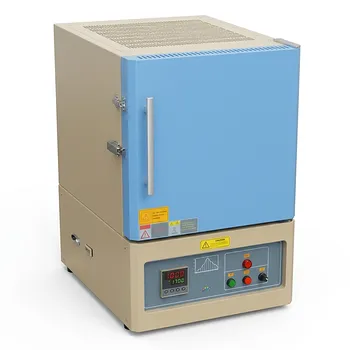
How does a high-purity quartz reaction chamber liner protect the growth environment? Ensure Pure Nanowire Synthesis
Updated 3 months ago
High-purity quartz liners act as a critical chemical and thermal shield. During the synthesis of gallium oxide nanowires at 1000°C, the liner isolates the reaction zone from contaminants released by external heating elements and ensures the stability of the gaseous environment. This prevents unintentional doping, which is essential for preserving the nanowires' ultra-wide bandgap and specific photoelectric properties.
The quartz liner functions as an inert physical barrier that maintains the chemical integrity of the reaction atmosphere at extreme temperatures. By blocking external impurities from entering the growth zone, it ensures the production of high-purity $\beta$-$\text{Ga}_2\text{O}_3$ nanowires with predictable electronic characteristics.
Thermal and Chemical Isolation
Blocking External Contaminants
At 1000°C, external heating elements can outgas or release microscopic metallic impurities. The high-purity quartz liner serves as the core reaction zone, physically separating these contaminants from the sensitive growth environment.
Maintaining Atmospheric Integrity
The synthesis process typically relies on a precise mixture of argon and trace oxygen. Because quartz is chemically inert at these temperatures, it does not react with or alter this atmosphere, ensuring the gaseous environment remains stable for nanowire formation.
High-Temperature Structural Resistance
Quartz is selected for its ability to withstand sustained 1000°C temperatures without degrading. This thermal resistance ensures that the structural integrity of the reaction chamber is maintained throughout the entire growth cycle.
Precursor Purity and Reaction Dynamics
Protecting the Liquid Gallium Source
The growth of nanowires relies on the generation of high-purity gallium vapor from a metallic precursor. Using high-purity crucibles (often quartz or alumina) prevents the liquid gallium from reacting with its container, which would otherwise introduce impurities into the vapor stream.
Preventing Unintentional Doping
Unintentional doping occurs when foreign atoms integrate into the gallium oxide crystal lattice. The quartz liner prevents this by ensuring only the intended precursors and gases are present, which is vital for maintaining the 4.8 eV ultra-wide bandgap.
Preserving Photoelectric Properties
The performance of gallium oxide in optoelectronic applications depends on its purity. By eliminating external contamination, the quartz liner ensures that the resulting nanowires exhibit the specific photoelectric responses required for advanced research and device fabrication.
Understanding the Trade-offs
Thermal Limits and Devitrification
While quartz is excellent at 1000°C, it approaches its structural limits at slightly higher temperatures. Prolonged exposure to extreme heat can lead to devitrification, where the quartz transitions from a glassy state to a crystalline state, potentially causing the liner to become brittle or opaque.
Chemical Sensitivity to Specific Agents
Quartz is highly resistant to most acids and neutral gases, but it can be etched by hydrofluoric acid or strong basic solutions. If the synthesis process involves these specific chemicals, the quartz liner may degrade rapidly, compromising the purity of the environment.
Cost vs. Longevity
High-purity quartz components are more expensive than standard laboratory glassware. While they provide the necessary environment for high-grade synthesis, they are consumable components that will eventually need replacement due to thermal fatigue or accumulated deposits.
Optimizing Your Synthesis Environment
Selecting the right environment for nanowire growth requires balancing material purity with the specific requirements of your precursor.
- If your primary focus is maximum electronic purity: Always utilize a high-purity quartz liner to prevent metallic outgassing from heating elements.
- If your primary focus is precursor stability: Use high-purity alumina or quartz crucibles to ensure the liquid gallium source does not react with the container.
- If your primary focus is long-term equipment health: Monitor the liner for signs of devitrification or clouding, as these physical changes can eventually lead to structural failure at 1000°C.
The strategic use of high-purity quartz ensures that the synthesis environment remains a controlled, uncontaminated zone for the development of high-performance semiconductor nanostructures.
Summary Table:
| Feature | Protection Benefit | Material Impact |
|---|---|---|
| Thermal Shielding | Blocks outgassing from heating elements | Prevents metallic contamination |
| Chemical Inertness | Remains stable in Argon/Oxygen mixes | Maintains 4.8 eV ultra-wide bandgap |
| Structural Integrity | Sustains high-heat (1000°C) environments | Ensures a stable growth zone |
| Isolation Barrier | Separates precursors from external zones | Prevents unintentional doping |
Elevate Your Material Research with THERMUNITS Precision
Achieving high-purity results in semiconductor synthesis requires world-class thermal control. THERMUNITS is a leading manufacturer of high-temperature laboratory equipment designed for material science and industrial R&D. We provide the reliable, high-performance tools necessary to maintain the integrity of your most sensitive growth environments.
Our comprehensive thermal processing solutions include:
- Advanced Furnaces: Muffle, Vacuum, Atmosphere, Tube, Rotary, and Hot Press furnaces.
- Specialized Systems: CVD/PECVD systems, Dental Furnaces, and Electric Rotary Kilns.
- Melting & Elements: Vacuum Induction Melting (VIM) furnaces and high-grade Thermal Elements.
Whether you are developing gallium oxide nanowires or conducting complex heat treatments, THERMUNITS offers the expertise and equipment to ensure your success.
Contact us today to discuss your laboratory requirements!
References
- G. A. Dorsey, W. E. Collins. The growth and characterization of Au-catalyzed gallium oxide nanowires. DOI: 10.1557/s43580-024-00843-y
Mentioned Products
- 1100°C High Temperature Quartz Chamber Furnace 8 Inch OD with 7.6 Liter Capacity and Vacuum Atmosphere Capability
- 1100C High Temperature Vacuum Crucible Furnace with Quartz Chamber for Thermal Processing and Sintering
- Vertical Vacuum Furnace 1100C High Temperature 8 Inch Quartz Chamber Water Cold Flange System
- High Temperature Cold Wall High Vacuum Chamber Furnace 1400C for Advanced Material Processing
- High Temperature Benchtop Muffle Furnace 1500C with 3.6L Chamber and Quartz Observation Window
People Also Ask
- Why is a quartz tube furnace necessary for phosphorus-doped MoS2/GO preparation? Ensure Purity & Precise Synthesis
- Benefits of high-vacuum quartz tube furnaces with N2 for Co3O4 nanosheets: Purity and Structural Integrity.
- What conditions does a quartz tube furnace provide for AlxCoCrFeNi steam corrosion tests? Achieve Precise R&D Control.
- Why is high-temperature annealing in a quartz tube furnace done after HfO2 deposition? Unlock peak film performance.
- Why is a high-purity quartz tube used for SP-Fe3O4-C? Ensure Chemical Purity & Catalytic Stability

Tech Team · ThermUnits
Last updated on Jun 02, 2026
Related Products
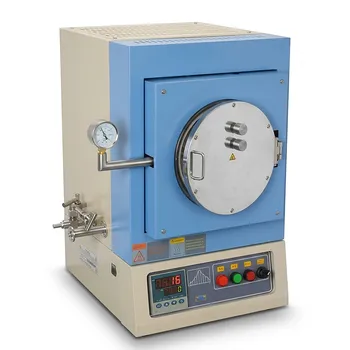
1100°C High Temperature Quartz Chamber Furnace 8 Inch OD with 7.6 Liter Capacity and Vacuum Atmosphere Capability
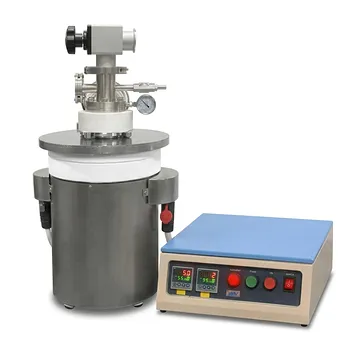
1100C High Temperature Vacuum Crucible Furnace with Quartz Chamber for Thermal Processing and Sintering
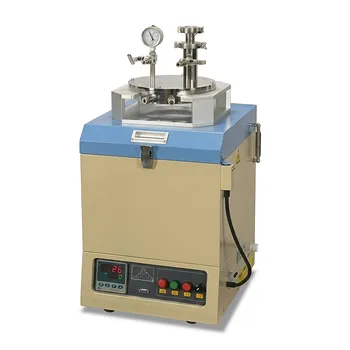
Vertical Vacuum Furnace 1100C High Temperature 8 Inch Quartz Chamber Water Cold Flange System
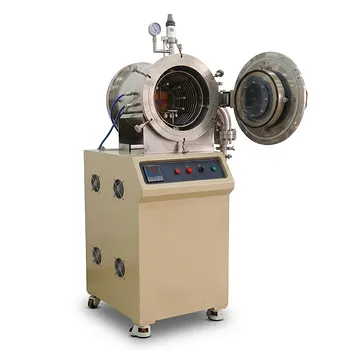
High Temperature Cold Wall High Vacuum Chamber Furnace 1400C for Advanced Material Processing
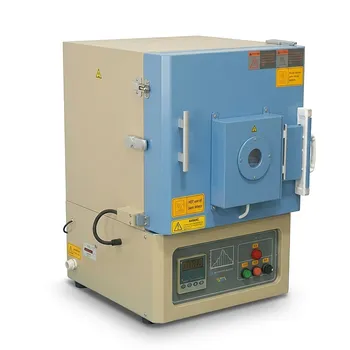
High Temperature Benchtop Muffle Furnace 1500C with 3.6L Chamber and Quartz Observation Window
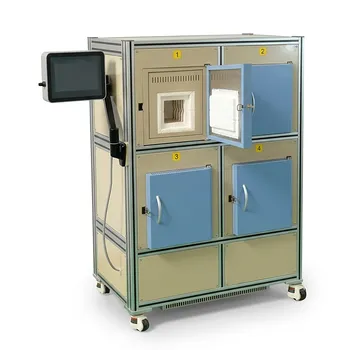
High Temperature Four Chamber Box Furnace for High Throughput Materials Research and Space Saving Thermal Processing
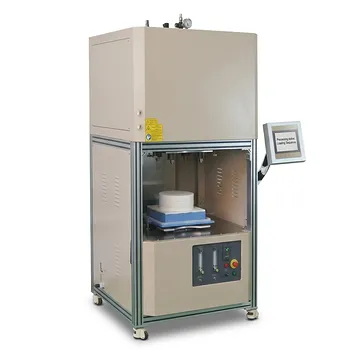
High Temperature Vertical Atmosphere Controlled Furnace with Automatic Bottom Loading and 1700°C Capacity for Advanced Material Research
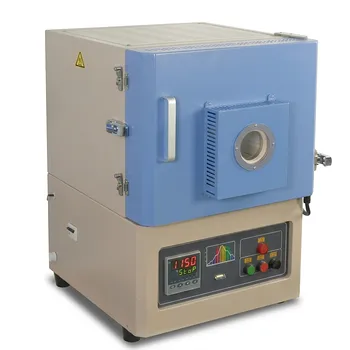
High Temperature Benchtop Muffle Furnace with Quartz Observation Window for Thermal Imaging and Material Analysis
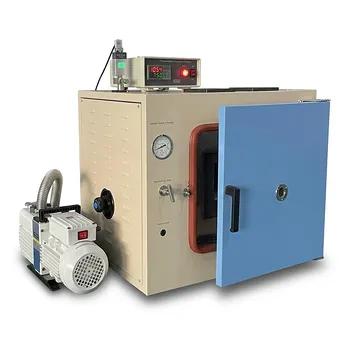
Compact High Vacuum Box Furnace 1050C Max 6.2L Ceramic Chamber Stainless Steel Shell Programmable Temperature Controller for Material Science Research

1200°C 5 Inch Vertical Quartz Tube Furnace with Stainless Steel Vacuum Flanges