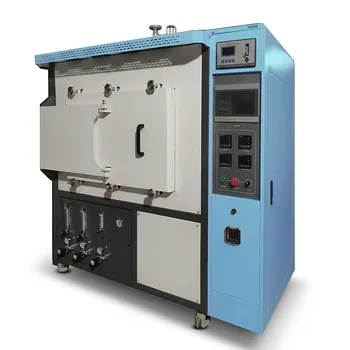
How does a high-temperature activation furnace facilitate biomass carbon enhancement? Optimize SSA and Pore Growth
Updated 3 months ago
A high-temperature activation furnace facilitates biomass carbon enhancement by providing the precise thermal energy required for Potassium Hydroxide (KOH) to chemically etch the carbon framework. At temperatures typically reaching 800°C, the furnace triggers an intensive redox reaction that removes amorphous substances between carbon layers and creates a vast network of micropores and mesopores. This transformation significantly increases the specific surface area—often from as low as 10 m²/g to over 2400 m²/g—dramatically improving the material's capacity for chemical adsorption and charge storage.
Core Takeaway: The activation furnace serves as the essential reactor for a thermochemical "etching" process, where KOH penetrates the carbon matrix to expand its internal structure. This results in a high-surface-area material with optimized pore distribution, tailored for advanced applications like supercapacitors and chemical filtration.
The Mechanism of Thermochemical Etching
Triggering the Redox Reaction
The furnace provides the high-energy environment necessary for KOH to transition from a solid to a molten state, allowing it to penetrate the internal structure of the pre-carbonized biomass. Once at temperature, a redox reaction occurs between the activator and the carbon matrix, where carbon atoms are strategically removed from the skeleton.
Gas Release and Pore Creation
As the etching progresses, the reaction releases byproduct gases such as carbon monoxide (CO) and carbon dioxide ($CO_2$). The escape of these gases from the interior of the material forces the creation of a complex network of pores, ranging from sub-nanometer micropores to larger mesopores.
Potassium Atom Intercalation
At temperatures near 800°C, metallic potassium or potassium compounds can intercalate (insert) themselves between the graphitic carbon layers. This physical insertion causes the carbon layers to peel or expand, permanently increasing the spacing and the accessible internal surface area.
Structural Transformation and Performance Gains
Removal of Amorphous Substances
Raw biochar often contains disordered, "amorphous" carbon that blocks potential active sites. The high-temperature environment enables the activator to selectively target and remove these substances, "cleaning" the channels between carbon layers.
Maximizing Specific Surface Area (SSA)
The primary performance metric for activated carbon is its Specific Surface Area. Through controlled furnace heating, the SSA can be elevated from negligible levels to over 2407 m²/g, providing a massive increase in the number of sites available for electrolyte ions or molecular adsorption.
Optimizing Pore Size Distribution
The furnace's ability to maintain a uniform thermal field ensures that the activation is consistent throughout the sample. This precision allows for a controllable pore size distribution, which is critical for applications like polyiodide interception, where specific pore diameters are needed to "trap" molecules.
Understanding the Trade-offs
Temperature Sensitivity
If the furnace temperature exceeds the optimal range (e.g., going significantly above 900°C), the carbon framework may begin to collapse or over-etch. This results in a decrease in surface area as smaller micropores merge into larger, less effective macropores.
Material Corrosivity
At 800°C, the combination of KOH and biomass is highly corrosive to many standard furnace materials. Frequent use of chemical activators can lead to the degradation of heating elements and ceramic linings, requiring specialized tube furnaces or protective crucibles.
Energy Consumption and Yield
The chemical activation process is energy-intensive and results in "burn-off," where a significant portion of the initial biomass weight is lost to gasification. Balancing the activation time and temperature is essential to ensure a high-quality product without sacrificing too much material yield.
Making the Right Choice for Your Goal
To maximize the performance of your biomass carbon, consider these recommendations based on your specific application:
- If your primary focus is Supercapacitor Electrodes: Use a high-temperature tube furnace with a programmed temperature ramp to 850°C to maximize SSA and ion-accessible mesopores.
- If your primary focus is Chemical Adsorption (e.g., Polyiodides): Maintain a steady 800°C environment to focus on creating a high density of micropores for physical interception.
- If your primary focus is Production Scalability: Utilize a muffle furnace with a large internal volume, ensuring a uniform thermal field to prevent localized over-activation of the biochar.
By precisely controlling the thermal energy within the furnace, you can transform low-value biomass into a high-performance carbon material tailored for the next generation of energy and environmental technologies.
Summary Table:
| Activation Stage | Thermal/Chemical Process | Key Performance Outcome |
|---|---|---|
| Redox Reaction | KOH melts and etches carbon framework | Removal of amorphous carbon & impurities |
| Gasification | Release of CO and $CO_2$ | Creation of complex micro/mesopore networks |
| Intercalation | Potassium atoms insert between layers | Expansion of internal Specific Surface Area (SSA) |
| Optimization | Precise 800°C - 850°C thermal control | Controlled pore distribution for supercapacitors |
Elevate Your Material Research with THERMUNITS Precision Furnaces
Are you looking to maximize the Specific Surface Area of your biomass carbon? Achieving consistent, high-performance results requires precise thermal control and equipment built to withstand corrosive activators like KOH.
THERMUNITS is a leading manufacturer of high-temperature laboratory equipment for material science and industrial R&D. We provide the robust thermal processing solutions you need to push the boundaries of energy storage and chemical filtration, including:
- Tube & Atmosphere Furnaces: Perfect for controlled gas environments and precise KOH activation.
- Muffle & Rotary Furnaces: Ideal for uniform heating and scalable biochar production.
- Specialized Systems: Vacuum induction melting (VIM), CVD/PECVD, and Hot Press furnaces for advanced material synthesis.
Ready to optimize your heat treatment process? Our experts are here to help you select the ideal furnace for your specific research goals.
Contact THERMUNITS Today to Request a Quote
References
- Shanshuai Chen, Hongliang Wang. Biomaterial-derived porous carbon doped with heteroatoms as a separator coating for high-energy–density Zn-I batteries. DOI: 10.1007/s42773-024-00399-y
Mentioned Products
- High Temperature 1500C Benchtop Muffle Furnace 3.6L Alumina Fiber Chamber Programmable Controller Sintering Annealing Carbonization Thermal Processing System
- High Temperature Oxygen and Inert Atmosphere Controlled Furnace 8 Liter 1700C Sintering System for Advanced Materials RD
- 1650C High Temperature Atmosphere Controlled Box Furnace with 65L Chamber for Advanced Material Sintering and Industrial Heat Treatment
- 1200 C Maximum Three Sided Heating Top Loading Furnace with 12 x 12 x 8 Inch Chamber for Solid Oxide Fuel Cell Testing and High Temperature RD
- Vertical Hybrid High Temperature Furnace 1500C Alumina Tube SOFC Fuel Cell Testing Laboratory Heat Treatment Research Equipment
People Also Ask
- Why is annealing in a high-temperature muffle furnace necessary for SiO2/Si substrate pretreatment before monolayer WS2 synthesis?
- What is the purpose of using muffle or tube furnaces in glass synthesis? Achieve Precise Melt-Quenching & Homogeneity
- What is the role of a high-temperature muffle furnace in the synthesis of graphitic carbon nitride (g-C3N4)? - Guide
- What is the necessity of 950 °C muffle furnace for aluminate spinel supports? Achieve Phase Purity & Lattice Integration
- What is the function of a high-temp muffle furnace in Ni-V oxide synthesis? Optimize your material's performance.

Tech Team · ThermUnits
Last updated on Jun 03, 2026
Related Products
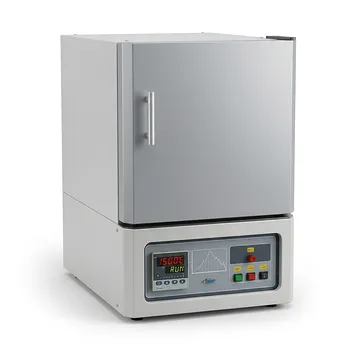
High Temperature 1500C Benchtop Muffle Furnace 3.6L Alumina Fiber Chamber Programmable Controller Sintering Annealing Carbonization Thermal Processing System
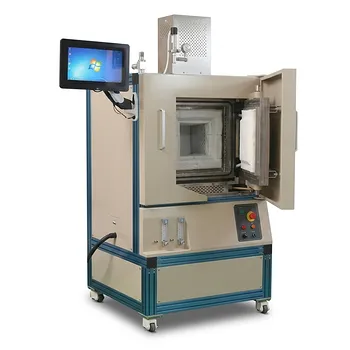
High Temperature Oxygen and Inert Atmosphere Controlled Furnace 8 Liter 1700C Sintering System for Advanced Materials RD
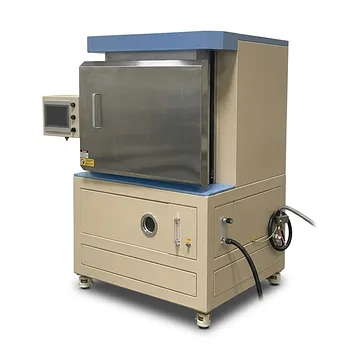
1650C High Temperature Atmosphere Controlled Box Furnace with 65L Chamber for Advanced Material Sintering and Industrial Heat Treatment
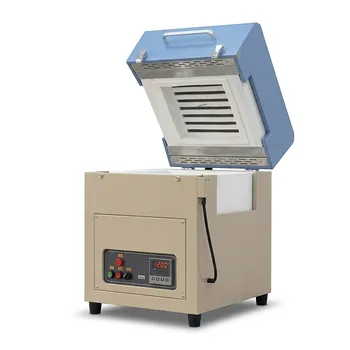
1200 C Maximum Three Sided Heating Top Loading Furnace with 12 x 12 x 8 Inch Chamber for Solid Oxide Fuel Cell Testing and High Temperature RD
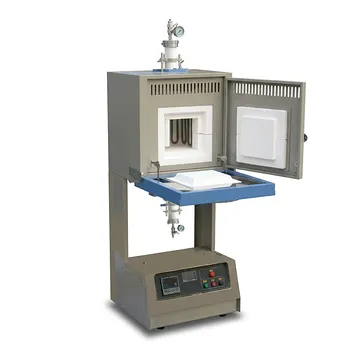
Vertical Hybrid High Temperature Furnace 1500C Alumina Tube SOFC Fuel Cell Testing Laboratory Heat Treatment Research Equipment
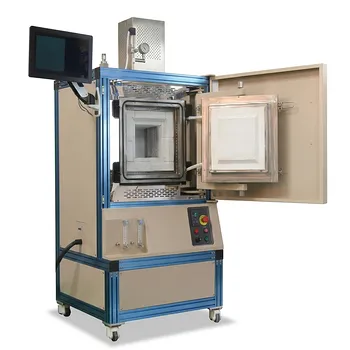
High Temperature Hydrogen Atmosphere Box Furnace 1650C Max Reducing Environment Material Synthesis System 8x8x8 Chamber

High Temperature Tube Furnace 1500C with Sliding Flanges and 50mm OD for Rapid Thermal Processing Fast Heating and Cooling
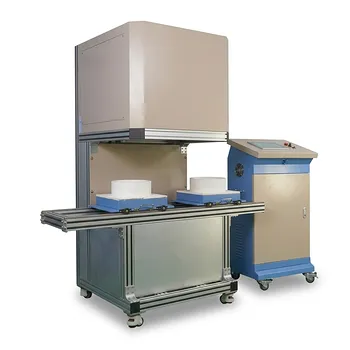
High Temperature Bottom Loading Vertical Furnace 1700C Dual Stage Sample Processing System 18L Large Capacity Thermal Treatment Equipment
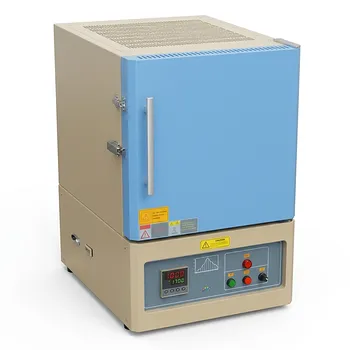
Large Bench Top 1700C High Temperature Muffle Furnace with 19L Chamber for Advanced Material Sintering and Annealing
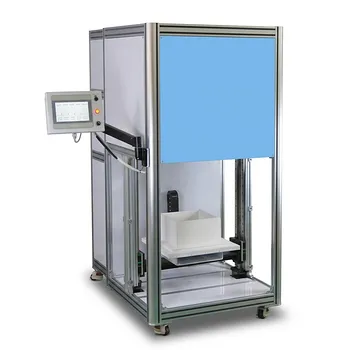
High Temperature 1600°C Three Zone Heated Bottom Loading Box Furnace with Rapid Thermal Processing Chamber 72L Volume
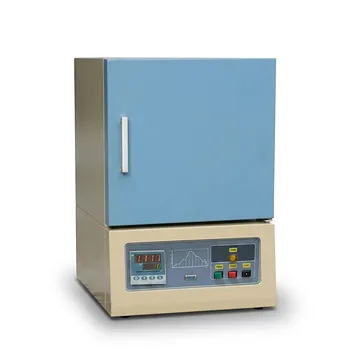
Ultra High Temperature Bench Top Muffle Furnace 1750C Sintering System with Kanthal Super Heating Elements and Precision Digital Control
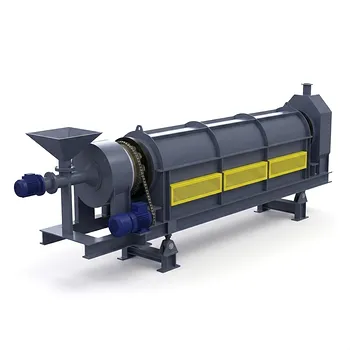
Electric Rotary Kiln Small Rotary Furnace for Activated Carbon Regeneration
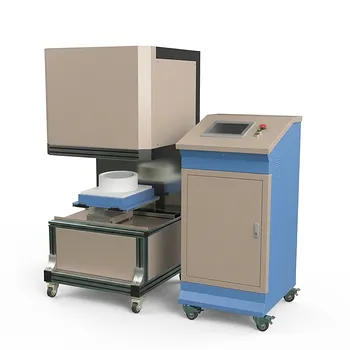
High Temperature Bottom Loading Box Furnace for Rapid Thermal Processing 1700C 40L Capacity
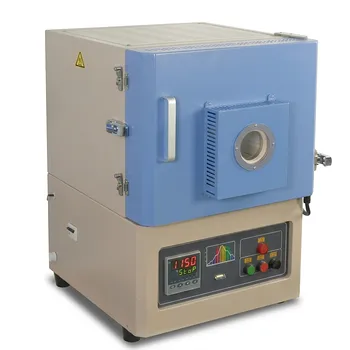
High Temperature Benchtop Muffle Furnace with Quartz Observation Window for Thermal Imaging and Material Analysis
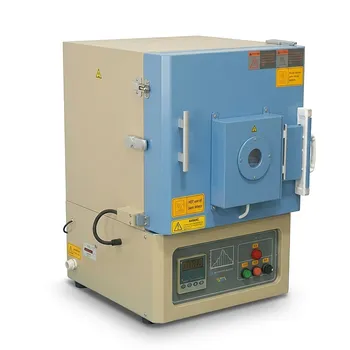
High Temperature Benchtop Muffle Furnace 1500C with 3.6L Chamber and Quartz Observation Window
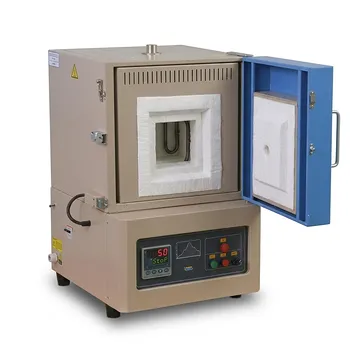
1800°C Bench Top Ultra High Temperature Muffle Furnace with Sapphire Observation Window and Top Feeding Port for Materials Research and Thermal Processing
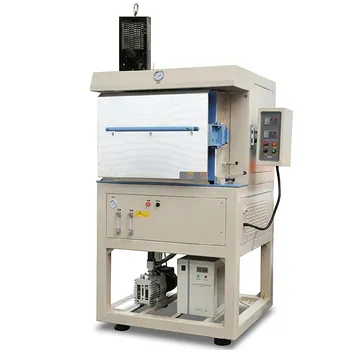
1200C Hydrogen Atmosphere Box Furnace with 5 Heated Sides and 64L Chamber
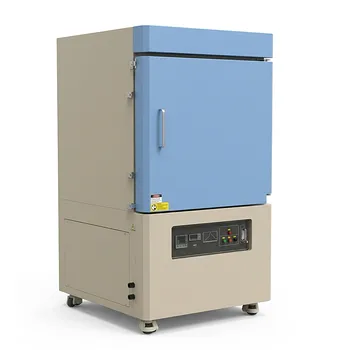
Industrial Large Box Furnace 1700C 216L High Temp Muffle Sintering System
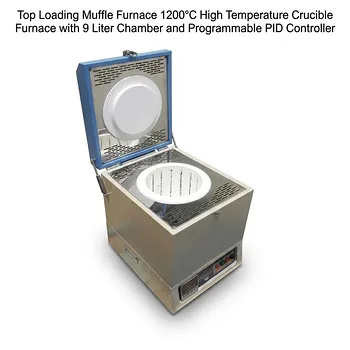
Top Loading Muffle Furnace 1200°C High Temperature Crucible Furnace with 9 Liter Chamber and Programmable PID Controller