How does a high-temperature atmosphere tube furnace facilitate CoN@Co growth on biochar? Precision Synthesis Guide
Updated 3 months ago
A high-temperature atmosphere tube furnace is the critical reactor for synthesizing CoN@Co nanoparticles because it provides the simultaneous control of an oxygen-free environment and a precise thermal ramp. This specific environment enables the concurrent carbonization of biomass, the reduction of cobalt ions into metallic cores, and the in-situ nitridation of those cores into protective shells. By maintaining a strictly controlled nitrogen atmosphere and consistent heating zones, the furnace ensures that nanoparticles are encapsulated into stable core-shell structures within the biochar framework.
The tube furnace facilitates CoN@Co growth by acting as a sealed thermal reactor where nitrogen serves both as a protective shield against oxidation and a reactant for shell formation. This process transforms raw precursors into hierarchical nanostructures through precisely timed chemical reactions.
The Role of Controlled Atmospheric Environments
Preventing Oxidation via Oxygen-Free Sealing
The furnace’s superior sealing performance is fundamental for maintaining a high-purity inert environment. By purging oxygen with nitrogen, the furnace prevents the cobalt precursors and the resulting biochar from oxidizing into inactive oxides.
Facilitating In-Situ Nitridation
Unlike standard furnaces, an atmosphere tube furnace allows the nitrogen (N2) to act as a reactive gas at high temperatures. This enables the surface of the cobalt core to react directly with nitrogen, forming the cobalt nitride (CoN) shell that stabilizes the nanoparticle.
Supporting Multi-Step Chemical Reactions
The controlled atmosphere allows for the co-reduction and carbonization of the biomass and metal ions. This ensures that the cobalt ions are reduced to metallic states precisely as the biochar framework develops, locking the particles into the carbon matrix.
Precision Thermal Programming for Nanostructure Growth
Regulating Nucleation and Growth
Precise heating rates, often between 5-10°C/min, are used to control the nucleation tempo of the cobalt cores. This slow, steady rise in temperature prevents the rapid, uncontrolled growth that leads to oversized particles and poor performance.
Sustaining Constant High-Temperature Zones
Maintaining a stable temperature (typically around 900°C to 1000°C) is essential for the thorough carbonization of biomass. This stability ensures that the pore structure of the biochar is well-developed, providing a high surface area to anchor the CoN@Co particles.
Preventing High-Temperature Agglomeration
At high temperatures, metal nanoparticles naturally tend to "clump" together, a process known as agglomeration. The furnace facilitation of the in-situ shell growth effectively encapsulates the cores, creating a barrier that keeps the particles small and uniformly dispersed.
Understanding the Trade-offs and Challenges
Integrity of Atmospheric Seals
The primary risk in these experiments is the compromise of the vacuum or gas seal. Even a trace amount of oxygen leakage can result in the formation of cobalt oxides rather than nitrides, which significantly alters the catalytic or magnetic properties of the material.
Temperature Gradients Within the Tube
While tube furnaces offer precise control, the temperature gradient between the center and the ends of the tube can vary. If the sample is not placed within the "constant temperature zone," the degree of nitridation and carbonization may be inconsistent across the batch.
Thermal Expansion and Material stress
Rapid cooling or heating cycles can put immense mechanical stress on the quartz or alumina furnace tubes. This requires careful management of heating curves to avoid equipment failure while still achieving the desired material properties.
How to Optimize Your Synthesis for Best Results
Strategy Based on Specific Research Goals
- If your primary focus is maximum surface area: Utilize slower heating rates and stable high temperatures to allow for thorough gas etching and pore development.
- If your primary focus is phase purity of the CoN shell: Ensure the furnace sealing is absolute and consider increasing the nitrogen flow rate to maintain a high partial pressure during the nitridation phase.
- If your primary focus is uniform particle size: Place samples strictly within the furnace's calibrated constant temperature zone to minimize thermal fluctuations during nucleation.
By masterfully balancing the atmospheric chemistry and thermal ramp, the high-temperature tube furnace transforms simple biomass and metal salts into sophisticated, functionalized core-shell nanomaterials.
Summary Table:
| Feature | Role in Synthesis | Key Benefit |
|---|---|---|
| Inert Atmosphere | Prevents oxidation & acts as nitrogen reactant | High-purity CoN shell formation |
| Precision Ramp | Controls nucleation tempo (5-10°C/min) | Uniform nanoparticle size distribution |
| Constant Hot Zone | Ensures thorough biomass carbonization | High-surface area biochar framework |
| Sealed Reactor | Maintains high-purity environment | Prevents inactive oxide contamination |
Optimize Your Nanomaterial Synthesis with THERMUNITS
Elevate your research with THERMUNITS, a leading manufacturer of high-temperature laboratory equipment for material science and industrial R&D. Our precision Atmosphere Tube Furnaces are specifically engineered to provide the stable thermal zones and airtight seals required for complex in-situ growths like CoN@Co nanoparticles.
From Muffle, Vacuum, and Tube furnaces to advanced CVD/PECVD systems, Dental Furnaces, and Vacuum Induction Melting (VIM) units, we offer a comprehensive range of thermal processing solutions tailored to your specific R&D needs.
Ready to enhance your lab's performance? Contact our technical experts today to discuss the perfect equipment for your material science applications!
References
- Qiang Yang, Yujun Wang. Core–shell CoN@Co ultra-stable nanoparticles on biochar for contamination remediation in water and soil. DOI: 10.1007/s44246-024-00113-4
Mentioned Products
- 1750°C High Temperature Benchtop Vacuum Atmosphere Tube Furnace with Kanthal Super 1800 Heating Elements and 60mm Alumina Processing Tube
- Vertical 1700C Vacuum and Atmosphere Tube Furnace with 80mm Alumina Tube
- 1200°C Atmosphere Controlled Automatic Bottom Loading Furnace with 6 Inch Quartz Tube
- 1200C Hybrid Muffle and Tube Furnace for Material Research with Dual Atmosphere Control Quartz Tubes
- Compact Hybrid Muffle and Tube Furnace for 1000C Controlled Atmosphere Laboratory Material Sintering
People Also Ask
- What core functions does a high-temperature vacuum tube furnace provide? Optimize np-CuSn Sintering & Joint Integrity
- What is the role of a high-temperature tube furnace in the calcination process of ZnO/In2O3 nanocomposites?
- What role does a high-temperature tube furnace play in the sulfidation heat treatment of CoS@C/MXene nanocomposites? Guide
- Why is a high-temperature tube furnace required for CuAlO2 heat treatment? Master Phase Transformation Today
- What role does a high-temperature tube furnace play in executing nitrogen absorption kinetic experiments? Expert Insights

Tech Team · ThermUnits
Last updated on Jun 03, 2026
Related Products
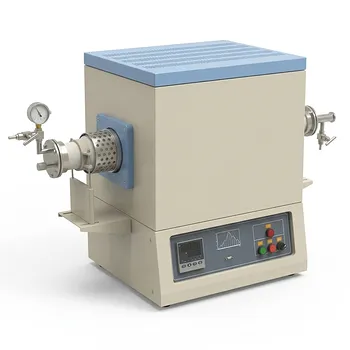
1750°C High Temperature Benchtop Vacuum Atmosphere Tube Furnace with Kanthal Super 1800 Heating Elements and 60mm Alumina Processing Tube

Vertical 1700C Vacuum and Atmosphere Tube Furnace with 80mm Alumina Tube
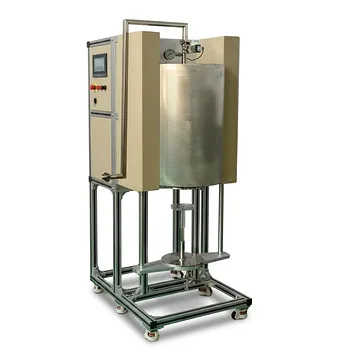
1200°C Atmosphere Controlled Automatic Bottom Loading Furnace with 6 Inch Quartz Tube
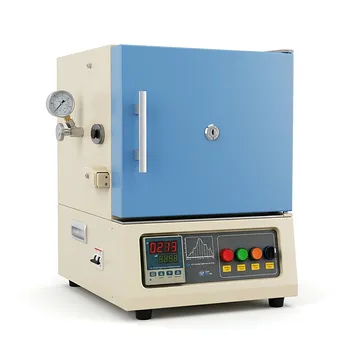
1200C Hybrid Muffle and Tube Furnace for Material Research with Dual Atmosphere Control Quartz Tubes
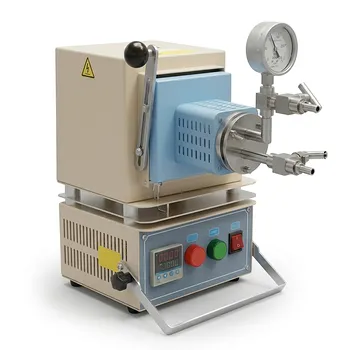
Compact Hybrid Muffle and Tube Furnace for 1000C Controlled Atmosphere Laboratory Material Sintering
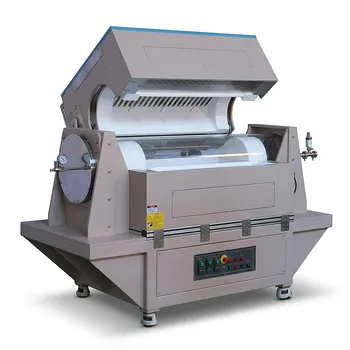
Three Zone Tube Furnace with 11 Inch or 15 Inch Quartz Tube and Hinged Flanges for Vacuum Atmosphere Heat Treatment
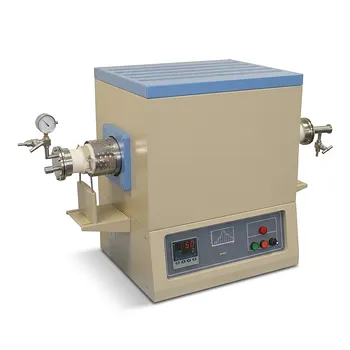
1700C High Temperature Alumina Tube Furnace with 18 Inch Heated Zone and Vacuum Sealing Flanges
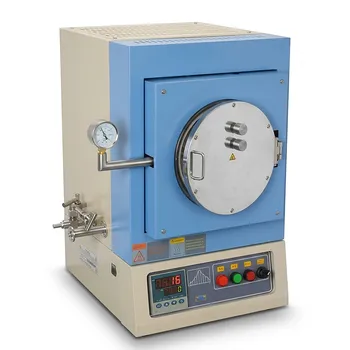
1100°C High Temperature Quartz Chamber Furnace 8 Inch OD with 7.6 Liter Capacity and Vacuum Atmosphere Capability

High Temperature 1700C Vertical Tube Furnace for Powder Spherification and Material Sintering

Compact High Temperature 1600C Tube Furnace with 50mm Alumina Tube and Vacuum Flanges for Material Sintering

High Temperature 1700C Six Zone Split Tube Furnace with Alumina Tube and Water Cooled Flanges
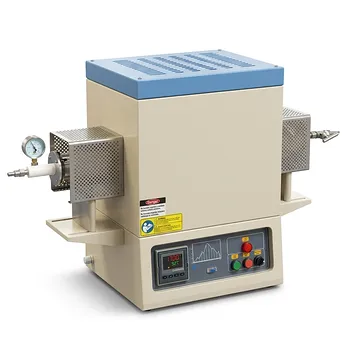
High Temperature Three Zone Tube Furnace 1700C with Alumina Tube and Water Cooled Flanges

1800C High Temperature Compact Vacuum Tube Furnace with 60mm OD Alumina Tube and Kanthal MoSi2 Heating Elements

1200C High Throughput Multi Channel Tube Furnace with 50mm Quartz Tubes for Annealing and Material Phase Diagram Research

High Temperature 1700C Tube Furnace with High Vacuum Turbomolecular Pump System and Multi Channel Mass Flow Controller Gas Mixer

1100C Tube Furnace with Vacuum Flange and Programmable Temperature Controller for Material Science and Industrial Heat Treatment
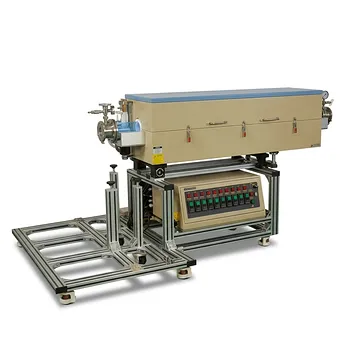
Ten Zone Multi Orientation Laboratory Tube Furnace for 1200C High Temperature Gradient Thermal Processing
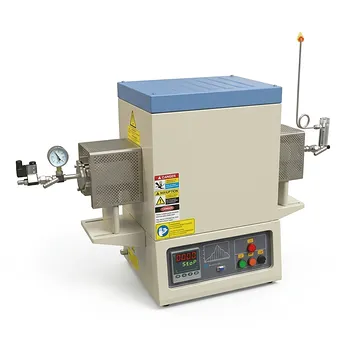
1700C Hydrogen Gas Tube Furnace with 60mm Alumina Process Tube and Integrated Hydrogen Safety Detector

High Temperature 1700C Benchtop Tube Furnace with 5 Inch Heating Zone High Purity Alumina Tube and Vacuum Sealing Flanges
