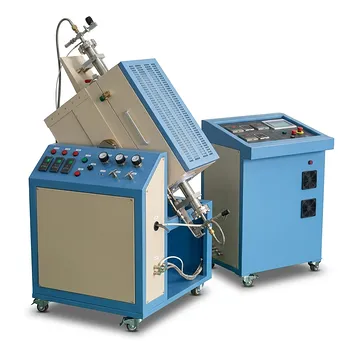
What is the function of a high-temperature tube furnace in Fe-BN-C pyrolysis? Optimize Catalyst Active Site Formation
Updated 3 months ago
The high-temperature tube furnace is the fundamental reactor for one-step pyrolysis. It provides the precisely controlled thermal environment, typically around 900 °C, required for the simultaneous carbonization and activation of catalyst precursors. By facilitating the transformation of organometallic frameworks into nitrogen, boron, and iron co-doped porous carbon materials, the furnace serves as the engine for molecular restructuring.
The high-temperature tube furnace enables the transition from chemical precursors to functional catalysts by maintaining a stable, oxygen-free thermal environment. This process is critical for locking iron atoms into nitrogen and boron sites, creating the active centers necessary for electrocatalytic reactions.
Facilitating Molecular Transformation and Carbonization
The Conversion of Organometallic Frameworks
The primary role of the furnace is to induce molecular-level collapse and restructuring of the precursor materials. Under intense heat, organic ligands are carbonized to form a stable, conductive carbon network that serves as the catalyst's backbone.
Precision Temperature Control
Precise thermal regulation, often around 900 °C to 1,000 °C, is essential to ensure the precursors reach the energy threshold for activation without destroying the desired framework. The furnace’s ability to maintain temperature uniformity ensures that the resulting catalyst has a consistent density of active sites throughout the batch.
Programming Thermal Ramping
The furnace allows for programmed temperature ramping, which dictates the rate at which the precursors decompose. A controlled heating rate is vital for managing the devolatilization reaction, ensuring that the formation of the porous structure is orderly rather than chaotic.
Atmospheric Integrity and Surface Protection
Preventing Substrate Oxidation
The tube furnace features high-performance atmospheric sealing that isolates the reaction from the outside environment. This is critical because the carbon substrate would otherwise oxidize and burn away at the high temperatures required for pyrolysis.
Creating a Reducing or Inert Environment
By providing a continuous flow of inert gases like Argon or Nitrogen, the furnace creates an anaerobic environment. In some configurations, a reducing atmosphere (such as a Hydrogen/Argon mixture) is used to facilitate the specific chemical reduction of metal precursors into their active states.
Stabilization via In-Situ Encapsulation
The controlled environment within the furnace facilitates the in-situ encapsulation of metal nanoparticles. This process prevents the iron and boron components from agglomerating, ensuring they remain highly dispersed and active within the nitrogen-doped graphene layers.
Engineering the Active Catalytic Sites
Anchoring Iron into Nitrogen Coordination Sites
The furnace provides the thermal energy required for solid-phase reactions that anchor iron atoms into nitrogen coordination sites. This results in the formation of Fe-Nx or Fe-N4 single-atom structures, which are the primary drivers of the material's electrocatalytic performance.
Co-Doping with Boron and Nitrogen
During the one-step pyrolysis, the furnace enables the simultaneous integration of boron and nitrogen into the carbon framework. This co-doping process modifies the electronic structure of the carbon, significantly enhancing its electrical conductivity and catalytic efficiency.
Regulation of Pore Structure
By managing the heat treatment conditions, the tube furnace helps regulate the mesopore volume and surface area of the catalyst. This porosity is essential for ensuring that reactants can easily access the active sites during chemical applications.
Understanding the Trade-offs
Temperature vs. Active Site Density
While higher temperatures (above 1,000 °C) improve electrical conductivity, they can also lead to the sintering of metal atoms. This reduces the number of available active sites, creating a trade-off between the material's conductivity and its overall catalytic activity.
Energy Consumption and Throughput
High-temperature tube furnaces are energy-intensive and typically operate in batch processes, which can limit production throughput. Furthermore, the slow cooling cycles required to maintain structural integrity increase the overall synthesis time.
Atmosphere Maintenance Challenges
Any failure in the sealing performance of the furnace during pyrolysis can result in the total loss of the catalyst batch. Even trace amounts of oxygen can lead to the formation of undesired metal oxides instead of the target single-atom coordination sites.
How to Apply This to Your Project
Refining the Pyrolysis Protocol
- If your primary focus is Maximum Catalytic Activity: Prioritize precise temperature control near 900 °C and slow ramping rates to maximize the formation of highly dispersed Fe-N4 active sites.
- If your primary focus is High Electrical Conductivity: Opt for higher pyrolysis temperatures closer to 1,100 °C to enhance the graphitization of the carbon substrate, acknowledging a potential slight reduction in active site density.
- If your primary focus is Material Stability: Ensure the use of high-purity inert gas (Argon) and rigorous atmospheric sealing to prevent any oxidative degradation of the porous carbon framework.
The high-temperature tube furnace is the indispensable tool that bridges the gap between raw chemical precursors and the sophisticated, co-doped architectures of modern Fe-BN-C catalysts.
Summary Table:
| Key Function | Mechanism | Research Outcome |
|---|---|---|
| Molecular Transformation | Controlled 900-1000°C carbonization | Formation of stable, conductive carbon networks |
| Atmospheric Integrity | Inert gas (Ar/N2) sealing | Prevents substrate oxidation and ensures catalyst purity |
| Active Site Engineering | Solid-phase reaction & co-doping | Anchoring Fe-N4 structures for high catalytic activity |
| Structural Regulation | Programmed temperature ramping | Optimization of mesopore volume and surface area |
Elevate Your Catalyst Research with THERMUNITS
High-performance catalysts require precision thermal environments. THERMUNITS is a leading manufacturer of high-temperature laboratory equipment dedicated to material science and industrial R&D. We provide the advanced thermal processing solutions necessary to bridge the gap between chemical precursors and sophisticated co-doped architectures.
Our comprehensive range includes:
- Tube Furnaces & CVD/PECVD Systems: Perfect for one-step pyrolysis and single-atom site engineering.
- Atmosphere & Vacuum Furnaces: Ensuring the oxygen-free environments critical for carbon-based materials.
- Muffle, Rotary, & Hot Press Furnaces: Versatile solutions for diverse heat treatment needs.
- Specialized Equipment: Including Dental Furnaces, VIM systems, and high-quality Thermal Elements.
Whether you are refining a pyrolysis protocol for Fe-BN-C catalysts or scaling up industrial production, THERMUNITS offers the reliability and temperature uniformity your project demands.
Ready to optimize your laboratory's efficiency?
Contact our technical experts today to find the perfect furnace for your specific research goals.
References
- Jialu Ma, Supeng Pei. Preparation of Fe-BN-C catalysts derived from ZIF-8 and their performance in the oxygen reduction reaction. DOI: 10.1039/d3ra07188j
Mentioned Products
- High Temperature Tube Furnace 1500C with Sliding Flanges and 50mm OD for Rapid Thermal Processing Fast Heating and Cooling
- High Temperature 1700C Tube Furnace with High Vacuum Turbomolecular Pump System and Multi Channel Mass Flow Controller Gas Mixer
- 1750°C High Temperature Benchtop Vacuum Atmosphere Tube Furnace with Kanthal Super 1800 Heating Elements and 60mm Alumina Processing Tube
- High Temperature 1700C Benchtop Tube Furnace with 5 Inch Heating Zone High Purity Alumina Tube and Vacuum Sealing Flanges
- 1700C High Temperature Alumina Tube Furnace with 18 Inch Heated Zone and Vacuum Sealing Flanges
People Also Ask
- How are high-temperature tube furnaces utilized to repair etching damage? Precision Lattice Restoration Solutions
- What core conditions does a high-temperature tube furnace provide for rGO aerogels? Mastering Precision Synthesis.
- What role does a high-temperature tube furnace play in CVD synthesis of silicon nanowires? Master VLS Growth Precision.
- How does precision tube furnace control influence CoFe nanoparticle formation? Master Your Bimetallic Synthesis.
- What role does a high-temperature tube furnace play in the sulfidation heat treatment of CoS@C/MXene nanocomposites? Guide

Tech Team · ThermUnits
Last updated on Jun 03, 2026
Related Products

High Temperature Tube Furnace 1500C with Sliding Flanges and 50mm OD for Rapid Thermal Processing Fast Heating and Cooling

High Temperature 1700C Tube Furnace with High Vacuum Turbomolecular Pump System and Multi Channel Mass Flow Controller Gas Mixer

1750°C High Temperature Benchtop Vacuum Atmosphere Tube Furnace with Kanthal Super 1800 Heating Elements and 60mm Alumina Processing Tube

High Temperature 1700C Benchtop Tube Furnace with 5 Inch Heating Zone High Purity Alumina Tube and Vacuum Sealing Flanges

1700C High Temperature Alumina Tube Furnace with 18 Inch Heated Zone and Vacuum Sealing Flanges
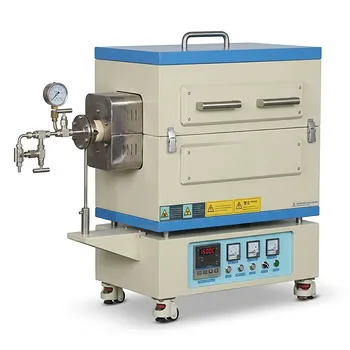
High Temperature Split Tube Furnace 1500C for Material Research Vacuum and Atmosphere Thermal Processing

Compact High Temperature 1600C Tube Furnace with 50mm Alumina Tube and Vacuum Flanges for Material Sintering

1800C High Temperature Compact Vacuum Tube Furnace with 60mm OD Alumina Tube and Kanthal MoSi2 Heating Elements
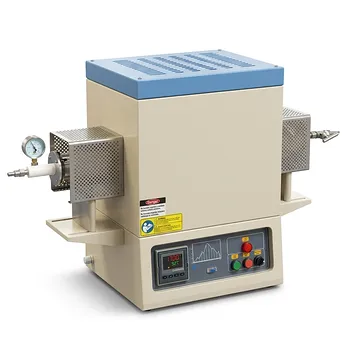
High Temperature Three Zone Tube Furnace 1700C with Alumina Tube and Water Cooled Flanges
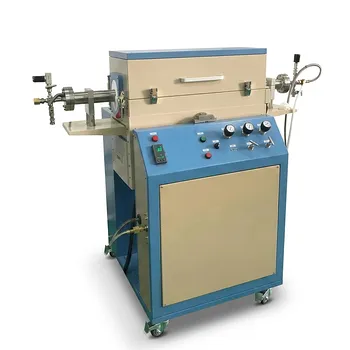
High Temperature Rocking Tube Furnace 1700°C Alumina Processing Tube with Precision Oscillation for Material Synthesis

High Temperature 1700C Tube Furnace with 4 Inch OD Alumina Tube and Vacuum Sealing Flanges

High Temperature 1700C Vertical Tube Furnace for Powder Spherification and Material Sintering
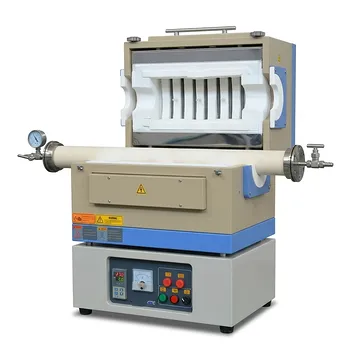
High Temperature 1600C Split Tube Furnace Vacuum Flanges Valves Optional 60mm 80mm Alumina Tube

High Temperature Automated 5 Inch Tube Furnace for Autonomous Material Research and Advanced Laboratory R&D

High Temperature 1700C Six Zone Split Tube Furnace with Alumina Tube and Water Cooled Flanges
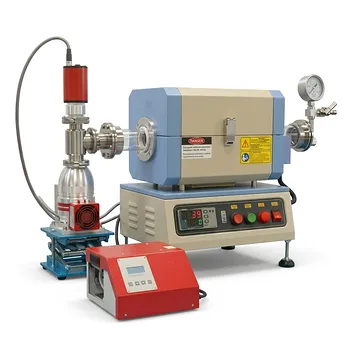
High Vacuum Compact Tube Furnace 1200C with Integrated Turbo Pump System and 8 Inch Heating Zone
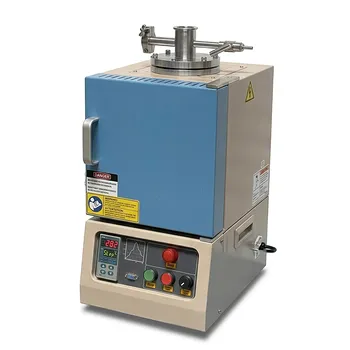
High Temperature Hybrid Muffle and Tube Furnace with Vacuum Capability and PID Control

1100°C High Temperature Quartz Chamber Furnace 8 Inch OD with 7.6 Liter Capacity and Vacuum Atmosphere Capability

1100C Tube Furnace with Vacuum Flange and Programmable Temperature Controller for Material Science and Industrial Heat Treatment