How a Tube Atmosphere Furnace Ensures Performance in TiO2 to TiN Nitridation: Precise Thermal & Gas Control
Updated 3 months ago
The tube atmosphere furnace ensures material performance by providing a precise thermal environment and a controlled reducing atmosphere, typically using ammonia (NH3) or nitrogen (N2). This configuration facilitates the substitution of oxygen atoms in the Titanium Dioxide (TiO2) crystal lattice with nitrogen atoms at controlled temperatures, usually around 900 °C. By managing the gas-solid reaction kinetics, the furnace transforms TiO2 into Titanium Nitride (TiN), a material characterized by high electrical conductivity, superior mechanical hardness, and excellent chemical stability.
The core value of a tube atmosphere furnace lies in its ability to maintain a stable, oxygen-free environment that dictates the stoichiometric accuracy and microstructural phase of the resulting Titanium Nitride. This precision prevents unwanted oxidation and ensures the material meets the rigorous demands of electrocatalytic and industrial applications.
Precise Control of the Nitridation Reaction
Facilitating Atomic Substitution
The furnace provides the energy required to break the Ti-O bonds and replace them with Ti-N bonds. By maintaining a stable flow of ammonia (NH3), the furnace creates a reducing environment that actively strips oxygen from the TiO2 lattice. This transformation is critical for converting an insulator into a high-conductivity TiN carrier.
Managing Thermal Gradients
A high-precision temperature control system establishes a stable thermal gradient within the furnace tube. This stability is essential for the decomposition of TiO2 powder and the subsequent reaction with nitrogen sources. Consistent heating ensures that the transition from an amorphous or anatase state to the final crystalline TiN phase occurs uniformly throughout the sample.
Optimization of Stoichiometric Accuracy
The airtightness of the tube furnace prevents the ingress of oxygen, which would otherwise lead to incomplete nitridation. By controlling the gas-solid reaction parameters, the furnace ensures that the resulting TiN achieves the correct stoichiometry. This accuracy is the primary driver of the material’s final mechanical hardness and chemical resistance.
Protecting Microstructural Integrity
Preventing Excessive Grain Growth
In a controlled atmosphere, such as flowing nitrogen, the furnace can utilize carbon components or specific heating rates to restrict TiO2 grain growth. Without this control, high temperatures would cause the crystals to enlarge and the surface to roughen. A precise furnace environment maintains the integrated microsphere structure necessary for high initial Coulombic efficiency (ICE).
Formation of Heterophase Interfaces
Advanced thermal processing allows for the in-situ conversion of TiO2 to TiN on organic substrates or carbon frameworks. The furnace facilitates the creation of a heterophase interface, which enhances catalytic activity for polysulfides. This complex architecture is only possible through the tight coordination of temperature and nitrogen source availability.
Removal of Impurities and Volatiles
Beyond the chemical reaction, the furnace serves to calcine the material, removing residual moisture and volatile organic compounds. This purification process stabilizes the precursors and establishes a clean structural foundation. It ensures that the final TiN support can firmly anchor active components like nickel or platinum.
Understanding the Trade-offs and Challenges
Gas Flow Dynamics and Uniformity
While the furnace provides a controlled atmosphere, the length of the uniform heating zone can be a limiting factor. If the tube is too long or the gas flow is poorly calibrated, a concentration gradient of the reactant gas may develop. This can result in non-uniform nitridation across a large batch of material.
Risk of Atmospheric Contamination
The most significant pitfall in tube furnace operation is a breach in airtightness. If the furnace operates with even trace amounts of air instead of a pure inert gas, carbon components may undergo high-temperature combustion. This leads to a loss of the protective carbon layer and a failure to form the desired functional microstructure.
Material Compatibility and Cooling Rates
The choice of tube material (e.g., quartz vs. alumina) must be compatible with the high-temperature nitridation process. Furthermore, the quenching or cooling rate after the reaction is critical. Improper cooling in an unprotected atmosphere can lead to surface oxidation or decarburization of the newly formed TiN film.
How to Optimize Your Nitridation Process
The success of the TiO2 to TiN conversion depends heavily on aligning furnace parameters with your specific material goals.
- If your primary focus is high electrical conductivity: Prioritize a stable flow of ammonia (NH3) at 900 °C to ensure maximum nitrogen substitution within the lattice.
- If your primary focus is catalytic activity and surface area: Use a nitrogen-doped carbon framework as a precursor and maintain lower temperatures (around 700 °C) to create high-activity heterophase interfaces.
- If your primary focus is mechanical hardness or coating integrity: Ensure absolute airtightness and utilize a nitrogen atmosphere during the cooling phase to inhibit surface oxidation and decarburization.
By masterfully controlling the intersection of temperature, time, and atmospheric chemistry, the tube furnace transforms a simple oxide into a high-performance functional nitride.
Summary Table:
| Parameter | Role in Nitridation Process | Key Performance Benefit |
|---|---|---|
| Temperature (~900°C) | Facilitates Ti-O bond breaking & atomic substitution | Ensures uniform crystalline phase transition |
| Reducing Atmosphere (NH3/N2) | Strips oxygen and replaces it with nitrogen atoms | High electrical conductivity & chemical stability |
| Airtightness/Vacuum | Prevents oxygen ingress and atmospheric contamination | Maximum stoichiometric accuracy & purity |
| Gas Flow Dynamics | Manages gas-solid reaction kinetics | Batch-wide uniformity and microstructural integrity |
| Cooling Rate Control | Protects newly formed TiN film during quenching | Prevents surface oxidation and decarburization |
Elevate Your Material Research with THERMUNITS
Achieving the perfect stoichiometry in nitridation processes requires absolute control over thermal and atmospheric variables. THERMUNITS is a leading manufacturer of high-temperature laboratory equipment dedicated to supporting material science and industrial R&D.
Our comprehensive range of thermal processing solutions—including Tube, Atmosphere, Vacuum, and Muffle furnaces, as well as CVD/PECVD systems and Rotary kilns—is engineered to provide the airtightness and thermal stability necessary for critical transitions like TiO2 to TiN conversion. Whether you are working on electrocatalytic carriers or high-hardness coatings, we offer specialized equipment like Vacuum Induction Melting (VIM) furnaces and Hot Press systems tailored to your specific research goals.
Ready to optimize your lab’s efficiency and material performance?
Contact our technical experts today to find your ideal solution!
References
- Jia Zhao, Jingshan Luo. Rationally designed Ru catalysts supported on TiN for highly efficient and stable hydrogen evolution in alkaline conditions. DOI: 10.1038/s41467-024-50691-5
Mentioned Products
- 1750°C High Temperature Benchtop Vacuum Atmosphere Tube Furnace with Kanthal Super 1800 Heating Elements and 60mm Alumina Processing Tube
- Vertical 1700C Vacuum and Atmosphere Tube Furnace with 80mm Alumina Tube
- 1200C Hybrid Muffle and Tube Furnace for Material Research with Dual Atmosphere Control Quartz Tubes
- Compact Hybrid Muffle and Tube Furnace for 1000C Controlled Atmosphere Laboratory Material Sintering
- Compact Vertical Split Quartz Tube Furnace with Stainless Steel Vacuum Flanges for Rapid Thermal Quenching and Controlled Atmosphere Material Processing
People Also Ask
- What core functions does a high-temperature vacuum tube furnace provide? Optimize np-CuSn Sintering & Joint Integrity
- What is the role of a high-temperature tube furnace in the calcination process of ZnO/In2O3 nanocomposites?
- What role does a high-temperature tube furnace play in the sulfidation heat treatment of CoS@C/MXene nanocomposites? Guide
- Why is a high-temperature tube furnace required for CuAlO2 heat treatment? Master Phase Transformation Today
- What role does a high-temperature tube furnace play in executing nitrogen absorption kinetic experiments? Expert Insights

Tech Team · ThermUnits
Last updated on Jun 02, 2026
Related Products
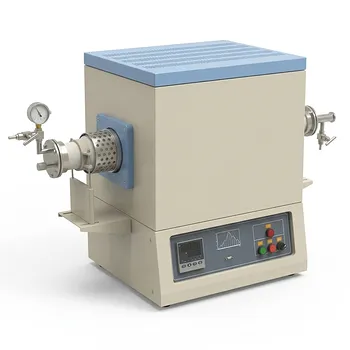
1750°C High Temperature Benchtop Vacuum Atmosphere Tube Furnace with Kanthal Super 1800 Heating Elements and 60mm Alumina Processing Tube

Vertical 1700C Vacuum and Atmosphere Tube Furnace with 80mm Alumina Tube
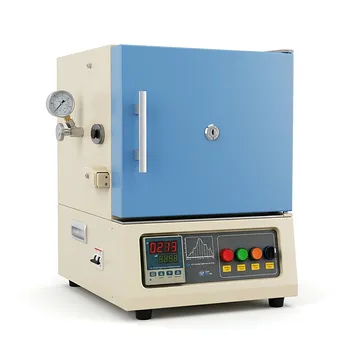
1200C Hybrid Muffle and Tube Furnace for Material Research with Dual Atmosphere Control Quartz Tubes
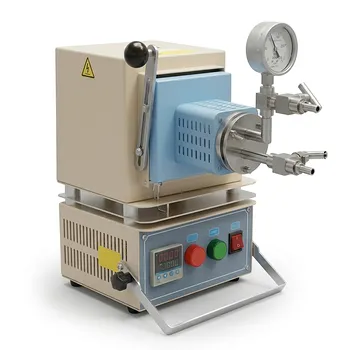
Compact Hybrid Muffle and Tube Furnace for 1000C Controlled Atmosphere Laboratory Material Sintering

Compact Vertical Split Quartz Tube Furnace with Stainless Steel Vacuum Flanges for Rapid Thermal Quenching and Controlled Atmosphere Material Processing
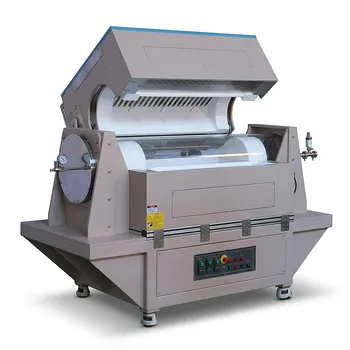
Three Zone Tube Furnace with 11 Inch or 15 Inch Quartz Tube and Hinged Flanges for Vacuum Atmosphere Heat Treatment
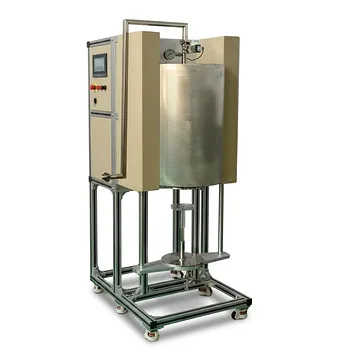
1200°C Atmosphere Controlled Automatic Bottom Loading Furnace with 6 Inch Quartz Tube
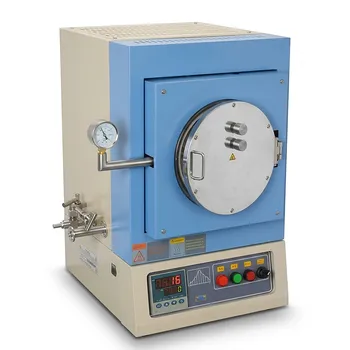
1100°C High Temperature Quartz Chamber Furnace 8 Inch OD with 7.6 Liter Capacity and Vacuum Atmosphere Capability
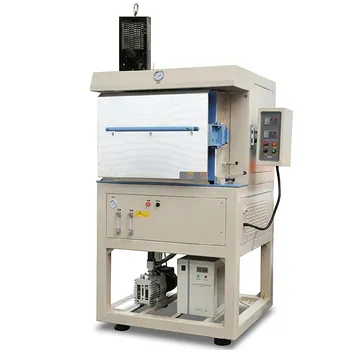
1200C Hydrogen Atmosphere Box Furnace with 5 Heated Sides and 64L Chamber
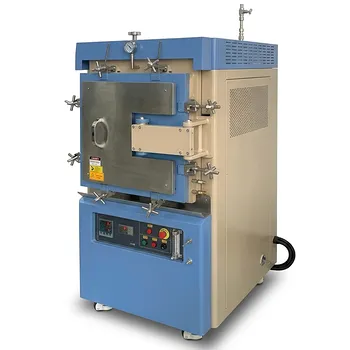
Atmosphere Controlled Muffle Furnace 1700C Maximum Temperature 80L High Capacity Vacuum Inert Gas Box Furnace
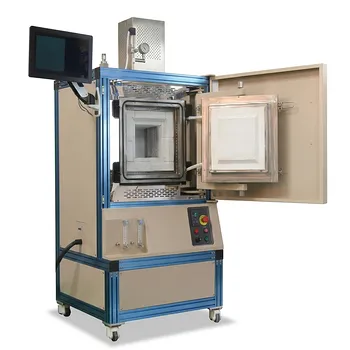
High Temperature Hydrogen Atmosphere Box Furnace 1650C Max Reducing Environment Material Synthesis System 8x8x8 Chamber

High Temperature 1700C Vertical Tube Furnace for Powder Spherification and Material Sintering

High Temperature 1700C Six Zone Split Tube Furnace with Alumina Tube and Water Cooled Flanges
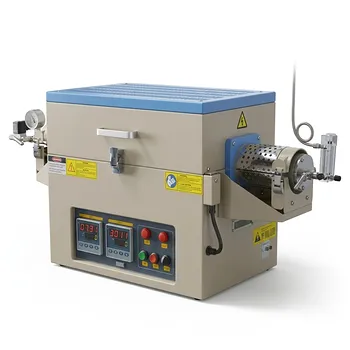
1100C Dual Zone Hydrogen Gas Tube Furnace with Quartz Tube and Integrated H2 Leak Detection System

High Temperature 1700C Tube Furnace with High Vacuum Turbomolecular Pump System and Multi Channel Mass Flow Controller Gas Mixer

1800C High Temperature Compact Vacuum Tube Furnace with 60mm OD Alumina Tube and Kanthal MoSi2 Heating Elements
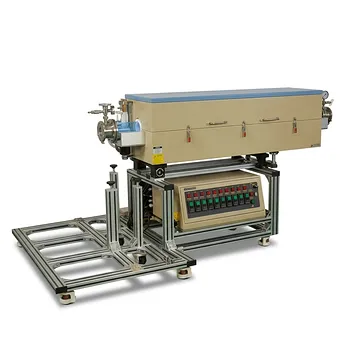
Ten Zone Multi Orientation Laboratory Tube Furnace for 1200C High Temperature Gradient Thermal Processing
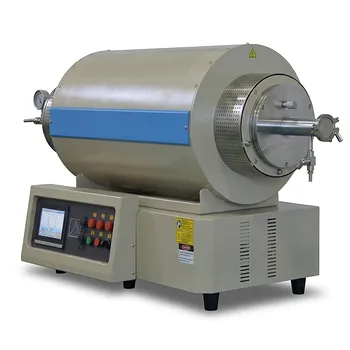
1200C Max Three Zone Tube Furnace 6 Inch OD Max with Tube and Flange

High Temperature 1700C Benchtop Tube Furnace with 5 Inch Heating Zone High Purity Alumina Tube and Vacuum Sealing Flanges
