How does a tube atmosphere furnace facilitate the absorption-annealing process for Ag-CNT films? Process Optimization
Updated 3 months ago
The tube atmosphere furnace facilitates the absorption-annealing of Ag-CNT films by providing a precisely controlled thermal and chemical environment that triggers metal-particle formation while protecting the film's structural integrity. It drives the in-situ thermal decomposition of silver-amine complexes, allowing silver ions to reduce, nucleate, and grow into particles that bridge the carbon nanotubes. Simultaneously, the furnace maintains an inert atmosphere that prevents the oxidation of both the silver and the nanotubes, which is essential for maintaining high electrical conductivity.
The core function of the tube atmosphere furnace is to manage the delicate balance between thermal energy and chemical reactivity. By providing a stable, oxygen-free environment, it allows for the precise synthesis of silver nanoparticles directly onto carbon nanotubes without compromising the material's underlying properties.
Driving the Chemical Transformation
Thermal Decomposition and Nucleation
The furnace provides a high-temperature environment, typically set at 200°C, which serves as the catalyst for the in-situ thermal decomposition of silver-amine complexes. This thermal energy is what drives the reduction of silver ions, facilitating their transformation into solid metallic silver.
As the temperature remains stable, these silver atoms undergo nucleation and growth. This process ensures that the silver particles are evenly distributed and correctly sized to interact with the carbon nanotube (CNT) network.
Building the Bridging Structure
The controlled heat treatment is critical for forming a robust bridging structure between the metal particles and the nanotubes. This bridge is the primary mechanism for improving electrical contact and mechanical stability within the Ag-CNT film.
By precisely controlling the heating rate—often as specific as 5°C per minute—the furnace ensures that the conversion of precursors into the final film structure is stable and uniform across the entire surface.
The Role of the Protective Atmosphere
Preventing Oxidative Degradation
At the high temperatures required for annealing, silver and carbon nanotubes are highly susceptible to oxidation. The tube furnace mitigates this risk by introducing a nitrogen or argon protective atmosphere that displaces oxygen within the chamber.
This oxygen-free environment is vital because it prevents the silver from turning into poorly-conductive oxides. It also protects the carbon nanotubes from oxidative damage, which would otherwise degrade their structural and electrical performance.
Removal of Residual Impurities
Beyond protecting the primary materials, the atmosphere-controlled environment helps in the removal of residual organic solvents and ligands. These impurities are often left over from the initial film-forming process and can hinder carrier mobility.
The continuous flow of gas (such as argon or a hydrogen-argon mixture) carries away these decomposed organic components. This leads to a cleaner film with improved electrical contact between the individual nanosheets and the silver particles.
Understanding the Trade-offs
Temperature Sensitivity
While higher temperatures can speed up the decomposition process, exceeding the optimal range can lead to uncontrolled particle growth. Large, oversized silver clusters may reduce the surface area contact with the CNTs, paradoxically lowering the efficiency of the film.
Atmosphere Purity and Flow Rates
The effectiveness of the furnace depends heavily on the purity of the gas flow. If the nitrogen or argon contains trace amounts of oxygen, secondary oxidation reactions can occur, introducing impurities that alter the micro-morphology of the film.
Furthermore, an incorrect gas flow rate can lead to non-uniform heat distribution. This can result in localized areas of the film being under-annealed or over-processed, leading to inconsistent electrical properties across the sample.
How to Apply This to Your Project
When utilizing a tube atmosphere furnace for Ag-CNT film production, your settings should be dictated by your specific performance requirements.
- If your primary focus is Maximum Conductivity: Prioritize a strictly inert nitrogen atmosphere and a steady annealing temperature near 200°C to ensure clean silver-to-CNT bridging.
- If your primary focus is Structural Uniformity: Utilize a slow heating rate (e.g., 5°C/min) to allow for even nucleation and growth of silver particles across the entire film surface.
- If your primary focus is Removing Contaminants: Increase the gas flow rate of your protective atmosphere to effectively purge decomposed organic ligands and precursors from the furnace chamber.
By mastering the intersection of thermal precision and atmospheric control, you can consistently produce high-performance Ag-CNT films with tailored electronic properties.
Summary Table:
| Process Aspect | Mechanism & Parameter | Impact on Ag-CNT Films |
|---|---|---|
| Thermal Catalyst | Stable 200°C environment | Triggers in-situ decomposition of silver-amine complexes |
| Heating Precision | Controlled rate (e.g., 5°C/min) | Ensures uniform nucleation and robust bridging structures |
| Atmosphere Control | Nitrogen or Argon displacement | Prevents oxidation of silver and carbon nanotubes |
| Impurity Removal | Continuous gas flow | Purges residual organic ligands to improve carrier mobility |
| Growth Control | Managed thermal energy | Prevents oversized silver clusters to maintain surface area |
Elevate Your Material Research with THERMUNITS Precision
Are you looking to achieve superior conductivity and structural integrity in your Ag-CNT films? THERMUNITS is a leading manufacturer of high-temperature laboratory equipment specifically designed for advanced material science and industrial R&D.
Our comprehensive range of thermal processing solutions—including Tube, Atmosphere, Vacuum, and Muffle furnaces, as well as CVD/PECVD systems—provides the precise thermal and chemical control necessary for complex annealing and deposition processes. Whether you require a specialized electric rotary kiln, a vacuum induction melting furnace (VIM), or high-performance thermal elements, our equipment ensures the stability and uniformity your research demands.
Ready to optimize your lab’s thermal processing? Contact our technical experts today to discuss a customized solution for your specific application!
References
- Yuying Shi, Yan‐Jun Wan. Enhancing the Interaction of Carbon Nanotubes by Metal–Organic Decomposition with Improved Mechanical Strength and Ultra-Broadband EMI Shielding Performance. DOI: 10.1007/s40820-024-01344-1
Mentioned Products
- 1750°C High Temperature Benchtop Vacuum Atmosphere Tube Furnace with Kanthal Super 1800 Heating Elements and 60mm Alumina Processing Tube
- Vertical 1700C Vacuum and Atmosphere Tube Furnace with 80mm Alumina Tube
- 1200C Hybrid Muffle and Tube Furnace for Material Research with Dual Atmosphere Control Quartz Tubes
- Compact Hybrid Muffle and Tube Furnace for 1000C Controlled Atmosphere Laboratory Material Sintering
- Compact Vertical Split Quartz Tube Furnace with Stainless Steel Vacuum Flanges for Rapid Thermal Quenching and Controlled Atmosphere Material Processing
People Also Ask
- What core functions does a high-temperature vacuum tube furnace provide? Optimize np-CuSn Sintering & Joint Integrity
- What is the role of a high-temperature tube furnace in the calcination process of ZnO/In2O3 nanocomposites?
- What role does a high-temperature tube furnace play in the sulfidation heat treatment of CoS@C/MXene nanocomposites? Guide
- Why is a high-temperature tube furnace required for CuAlO2 heat treatment? Master Phase Transformation Today
- What role does a high-temperature tube furnace play in executing nitrogen absorption kinetic experiments? Expert Insights

Tech Team · ThermUnits
Last updated on Jun 02, 2026
Related Products

1750°C High Temperature Benchtop Vacuum Atmosphere Tube Furnace with Kanthal Super 1800 Heating Elements and 60mm Alumina Processing Tube

Vertical 1700C Vacuum and Atmosphere Tube Furnace with 80mm Alumina Tube
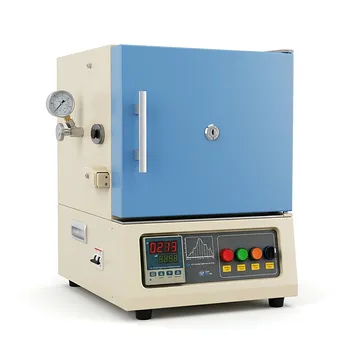
1200C Hybrid Muffle and Tube Furnace for Material Research with Dual Atmosphere Control Quartz Tubes
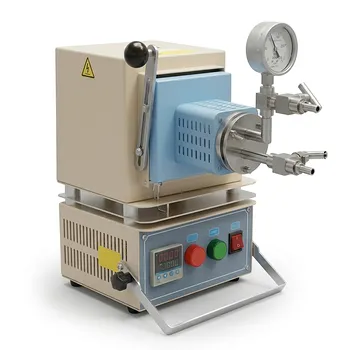
Compact Hybrid Muffle and Tube Furnace for 1000C Controlled Atmosphere Laboratory Material Sintering

Compact Vertical Split Quartz Tube Furnace with Stainless Steel Vacuum Flanges for Rapid Thermal Quenching and Controlled Atmosphere Material Processing

Three Zone Tube Furnace with 11 Inch or 15 Inch Quartz Tube and Hinged Flanges for Vacuum Atmosphere Heat Treatment
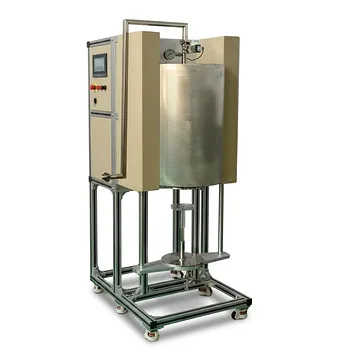
1200°C Atmosphere Controlled Automatic Bottom Loading Furnace with 6 Inch Quartz Tube
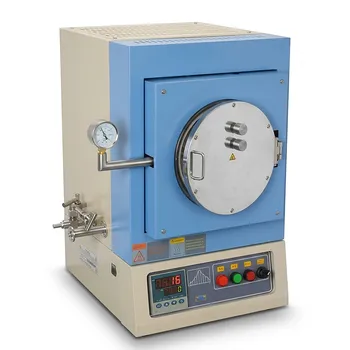
1100°C High Temperature Quartz Chamber Furnace 8 Inch OD with 7.6 Liter Capacity and Vacuum Atmosphere Capability
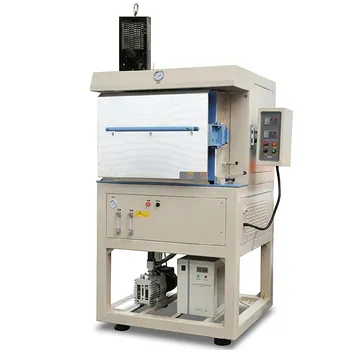
1200C Hydrogen Atmosphere Box Furnace with 5 Heated Sides and 64L Chamber
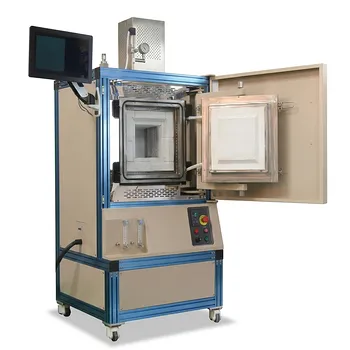
High Temperature Hydrogen Atmosphere Box Furnace 1650C Max Reducing Environment Material Synthesis System 8x8x8 Chamber
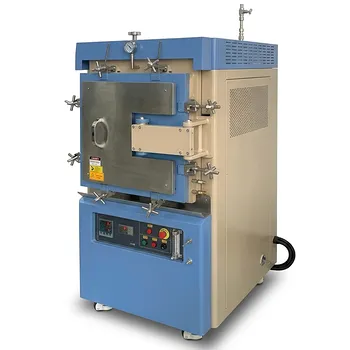
Atmosphere Controlled Muffle Furnace 1700C Maximum Temperature 80L High Capacity Vacuum Inert Gas Box Furnace

High Temperature 1700C Vertical Tube Furnace for Powder Spherification and Material Sintering

High Temperature 1700C Six Zone Split Tube Furnace with Alumina Tube and Water Cooled Flanges
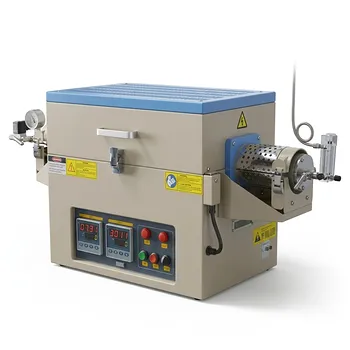
1100C Dual Zone Hydrogen Gas Tube Furnace with Quartz Tube and Integrated H2 Leak Detection System

High Temperature 1700C Tube Furnace with High Vacuum Turbomolecular Pump System and Multi Channel Mass Flow Controller Gas Mixer
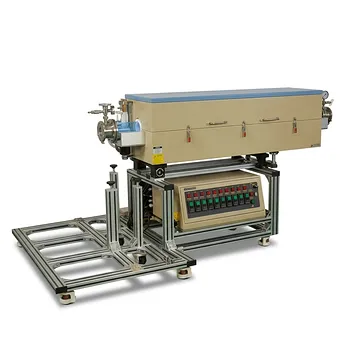
Ten Zone Multi Orientation Laboratory Tube Furnace for 1200C High Temperature Gradient Thermal Processing

1800C High Temperature Compact Vacuum Tube Furnace with 60mm OD Alumina Tube and Kanthal MoSi2 Heating Elements
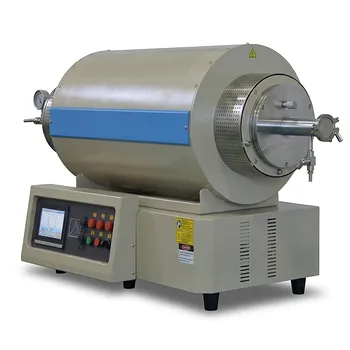
1200C Max Three Zone Tube Furnace 6 Inch OD Max with Tube and Flange

High Temperature Automated 5 Inch Tube Furnace for Autonomous Material Research and Advanced Laboratory R&D
