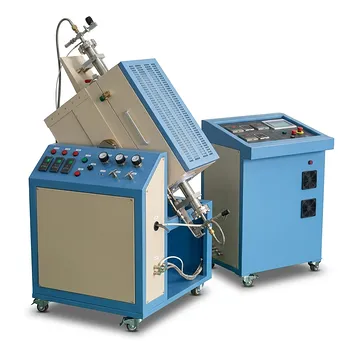
What role does a high-temperature tube furnace play in the sulfidation heat treatment of CoS@C/MXene nanocomposites? Guide
Updated 3 months ago
The high-temperature tube furnace is the indispensable reactor for the synthesis of CoS@C/MXene nanocomposites. It provides the precisely controlled thermal and atmospheric environment (700–900 °C) necessary for the simultaneous carbonization and sulfidation of precursors like ZIF-67. By maintaining a sealed, reductive atmosphere of argon and hydrogen sulfide (H₂S), the furnace facilitates the in-situ transformation of metal-organic frameworks into cobalt sulfides while ensuring the structural integrity and bonding of the MXene component.
Core Takeaway: The tube furnace acts as a precision chemical reactor that enables complex phase transitions and structural bonding through strictly regulated thermal and gaseous parameters. It is the only way to achieve the simultaneous reduction, carbonization, and sulfidation required for high-performance nanocomposites.
Facilitating In-Situ Chemical Transitions
Carbonization of ZIF-67 Precursors
The furnace provides the high-temperature environment required to convert metal-organic frameworks (MOFs) like ZIF-67 into a conductive carbon matrix. This thermal decomposition removes organic ligands while leaving behind a stable carbon framework that supports the active material.
Sulfidation into Cobalt Sulfide (CoS)
Under a controlled flow of hydrogen sulfide (H₂S), the furnace enables the chemical conversion of cobalt ions into cobalt sulfides. This "reductive sulfidation" occurs in-situ, ensuring that the sulfur atoms are integrated directly into the emerging carbon framework at the atomic level.
Driving Solid-State Diffusion
The furnace maintains a stable thermal field that promotes solid-state diffusion reactions. This allows different elements to diffuse sufficiently at the atomic scale, ensuring the formation of a stable, uniform crystalline structure across the entire sample.
Engineering the Synthesis Atmosphere
Prevention of MXene Oxidation
MXenes are highly sensitive to oxygen and can easily degrade at high temperatures. The tube furnace provides a sealed environment that allows for the total displacement of oxygen by inert gases like Argon, preserving the two-dimensional structure and metallic-grade conductivity of the MXene.
Gas Phase Reaction Management
The furnace facilitates the introduction of specific gaseous precursors, such as thiourea vapor or H₂S, which are necessary for the sulfidation process. Precise flow control within the tube ensures that these gases react uniformly with the solid precursors throughout the heating cycle.
Pressure and Flow Dynamics
By regulating the flow of carrier gases, the furnace ensures that reaction byproducts are continuously removed. This maintains the chemical equilibrium necessary for the in-situ growth of carbon nanotubes or the formation of heterojunctions within the composite.
Optimizing Nanocomposite Architecture
Interfacial Bonding and Integration
The high-temperature treatment within the furnace is what "locks" the materials together, firmly bonding the MXene to the resulting cobalt sulfide/carbon framework. This intimate contact is critical for efficient electron transfer and long-term structural stability in energy storage applications.
Temperature Uniformity and Phase Purity
Advanced tube furnaces provide precise programmed temperature control, which is essential for obtaining single-phase polycrystalline samples. Avoiding temperature fluctuations prevents the formation of unwanted impurities or mixed phases that could degrade the electrochemical performance.
Structural Preservation of 2D Materials
While the furnace reaches high temperatures to drive reactions, it also preserves the highly conductive carbon matrix and the two-dimensional nature of the MXenes. This results in a material that is both mechanically flexible and electrically superior.
Understanding the Trade-offs and Pitfalls
Temperature Precision vs. Phase Impurity
Operating outside the optimal 700–900 °C range can lead to incomplete sulfidation or the collapse of the carbon framework. If the temperature is too low, the ZIF-67 may not fully carbonize; if too high, the MXene may begin to degrade despite the inert atmosphere.
Corrosive Gas Management
Using H₂S or sulfur vapors creates a highly corrosive environment within the furnace tube. Frequent maintenance of the quartz or alumina tubes and seals is necessary to prevent leaks that could introduce oxygen and ruin the batch.
Slow Heating Rates
While rapid heating can save time, it often leads to non-uniform diffusion. Many successful protocols require slow heating programs (sometimes as low as 17 °C/h) to ensure the atomic-scale stability of complex structures like paracostibite or heterojunctions.
How to Apply This to Your Project
When utilizing a high-temperature tube furnace for nanocomposite synthesis, your specific goals should dictate your furnace parameters:
- If your primary focus is Maximum Conductivity: Prioritize a strictly inert Argon environment and temperatures at the higher end of the range to ensure complete carbonization of the organic precursors.
- If your primary focus is Phase Purity: Use a slow heating ramp and extended dwell times (24–48 hours) to allow for sufficient atomic diffusion and uniform sulfidation.
- If your primary focus is Structural Integrity of MXenes: Ensure the furnace seals are vacuum-tested and maintain a constant flow of protective gas to prevent even trace amounts of oxidation.
The high-temperature tube furnace is the vital bridge between raw precursors and the sophisticated, multi-functional architecture of a CoS@C/MXene nanocomposite.
Summary Table:
| Process Function | Description | Impact on Nanocomposite |
|---|---|---|
| Carbonization | High-temp decomposition of ZIF-67 | Creates stable, conductive carbon matrix |
| Sulfidation | In-situ H2S chemical conversion | Integrates cobalt sulfide at atomic level |
| Atmosphere Control | Sealed Argon environment | Prevents MXene oxidation & degradation |
| Thermal Stability | Regulated 700–900 °C field | Ensures phase purity & interfacial bonding |
| Gas Management | Controlled precursor flow | Enables uniform growth & heterojunctions |
Elevate Your Material Research with THERMUNITS
As a leading manufacturer of high-temperature laboratory equipment, THERMUNITS provides the precision thermal solutions required for advanced material science and industrial R&D. Our high-performance Tube Furnaces, Atmosphere Furnaces, and CVD/PECVD systems are engineered to handle corrosive gases like H‒S and maintain the strict inert environments necessary for synthesizing CoS@C/MXene and other complex nanocomposites.
From Muffle and Vacuum furnaces to specialized Rotary and Hot Press systems, we offer a comprehensive range of equipment to ensure your heat treatment processes achieve maximum phase purity and structural integrity.
Ready to optimize your synthesis workflow? Contact our engineering experts today to discuss your specific laboratory requirements and discover how our thermal processing solutions can drive your innovation forward.
References
- Komal Farooq, Yongde Xia. MXene boosted MOF-derived cobalt sulfide/carbon nanocomposites as efficient bifunctional electrocatalysts for OER and HER. DOI: 10.1039/d4na00290c
Mentioned Products
- High Temperature Tube Furnace 1500C with Sliding Flanges and 50mm OD for Rapid Thermal Processing Fast Heating and Cooling
- High Temperature 1700C Tube Furnace with High Vacuum Turbomolecular Pump System and Multi Channel Mass Flow Controller Gas Mixer
- 1750°C High Temperature Benchtop Vacuum Atmosphere Tube Furnace with Kanthal Super 1800 Heating Elements and 60mm Alumina Processing Tube
- High Temperature 1700C Benchtop Tube Furnace with 5 Inch Heating Zone High Purity Alumina Tube and Vacuum Sealing Flanges
- 1700C High Temperature Alumina Tube Furnace with 18 Inch Heated Zone and Vacuum Sealing Flanges
People Also Ask
- How are high-temperature tube furnaces utilized to repair etching damage? Precision Lattice Restoration Solutions
- What core conditions does a high-temperature tube furnace provide for rGO aerogels? Mastering Precision Synthesis.
- What role does a high-temperature tube furnace play in CVD synthesis of silicon nanowires? Master VLS Growth Precision.
- How does precision tube furnace control influence CoFe nanoparticle formation? Master Your Bimetallic Synthesis.
- What is the function of a high-temperature tube furnace in zirconia catalyst prep? Optimize phase and performance.

Tech Team · ThermUnits
Last updated on Jun 03, 2026
Related Products

High Temperature Tube Furnace 1500C with Sliding Flanges and 50mm OD for Rapid Thermal Processing Fast Heating and Cooling

High Temperature 1700C Tube Furnace with High Vacuum Turbomolecular Pump System and Multi Channel Mass Flow Controller Gas Mixer

1750°C High Temperature Benchtop Vacuum Atmosphere Tube Furnace with Kanthal Super 1800 Heating Elements and 60mm Alumina Processing Tube

High Temperature 1700C Benchtop Tube Furnace with 5 Inch Heating Zone High Purity Alumina Tube and Vacuum Sealing Flanges
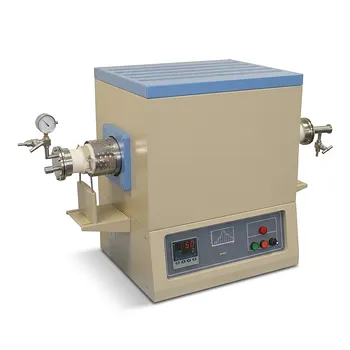
1700C High Temperature Alumina Tube Furnace with 18 Inch Heated Zone and Vacuum Sealing Flanges
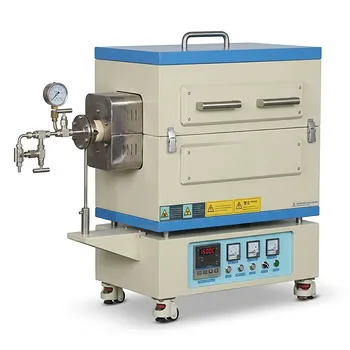
High Temperature Split Tube Furnace 1500C for Material Research Vacuum and Atmosphere Thermal Processing

Compact High Temperature 1600C Tube Furnace with 50mm Alumina Tube and Vacuum Flanges for Material Sintering

1800C High Temperature Compact Vacuum Tube Furnace with 60mm OD Alumina Tube and Kanthal MoSi2 Heating Elements
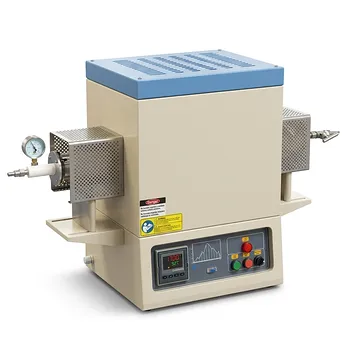
High Temperature Three Zone Tube Furnace 1700C with Alumina Tube and Water Cooled Flanges
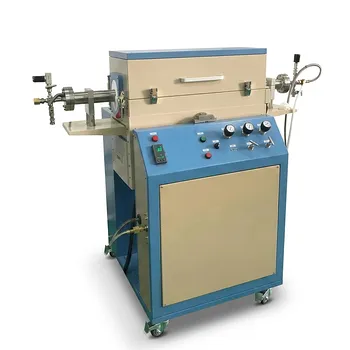
High Temperature Rocking Tube Furnace 1700°C Alumina Processing Tube with Precision Oscillation for Material Synthesis
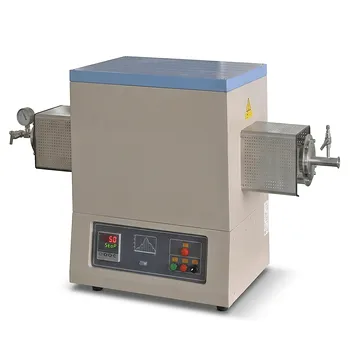
High Temperature 1700C Tube Furnace with 4 Inch OD Alumina Tube and Vacuum Sealing Flanges

High Temperature 1700C Vertical Tube Furnace for Powder Spherification and Material Sintering
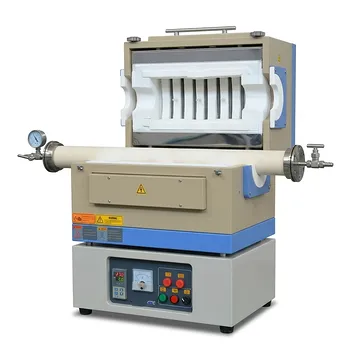
High Temperature 1600C Split Tube Furnace Vacuum Flanges Valves Optional 60mm 80mm Alumina Tube

High Temperature Automated 5 Inch Tube Furnace for Autonomous Material Research and Advanced Laboratory R&D

High Temperature 1700C Six Zone Split Tube Furnace with Alumina Tube and Water Cooled Flanges
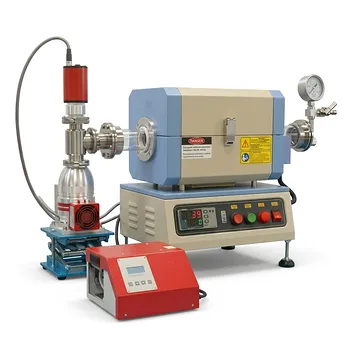
High Vacuum Compact Tube Furnace 1200C with Integrated Turbo Pump System and 8 Inch Heating Zone
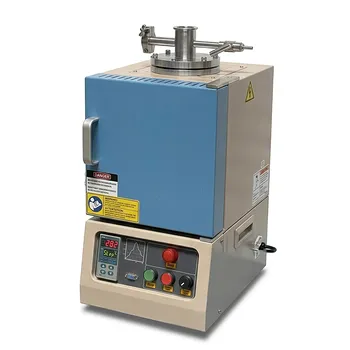
High Temperature Hybrid Muffle and Tube Furnace with Vacuum Capability and PID Control
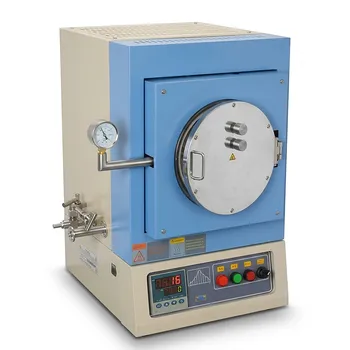
1100°C High Temperature Quartz Chamber Furnace 8 Inch OD with 7.6 Liter Capacity and Vacuum Atmosphere Capability

1100C Tube Furnace with Vacuum Flange and Programmable Temperature Controller for Material Science and Industrial Heat Treatment