How does a tube atmosphere furnace facilitate biomass carbonization? Advanced N2 Pyrolysis & Atmosphere Control
Updated 3 months ago
A tube atmosphere furnace facilitates biomass carbonization by creating a strictly controlled, oxygen-free environment that enables anaerobic pyrolysis. This process uses high-purity nitrogen ($N_2$) to displace oxygen, preventing the biomass from combusting into ash and instead forcing the organic matter to decompose into a solid, carbon-rich biochar structure with a preliminary porous framework.
Core Takeaway: The furnace serves as a high-precision reactor that uses $N_2$ to shield biomass from oxidation, allowing heat to drive off volatiles and rearrange molecular structures into a stable carbon skeleton without losing the material to open-air burning.
The Role of High-Purity Nitrogen in Atmosphere Control
Creating an Inert Environment
The primary function of high-purity nitrogen ($N_2$) is to displace oxygen within the furnace tube. By maintaining a continuous flow of 99.99% pure nitrogen, the system ensures that the biomass residues do not undergo aerobic combustion even at temperatures reaching 700°C.
Facilitating Anaerobic Pyrolysis
In the absence of oxygen, biomass undergoes pyrolysis rather than burning. This thermal decomposition breaks down complex organic polymers—such as cellulose, hemicellulose, and lignin—into a solid carbon-rich framework while releasing non-carbon components as gases.
Stabilizing the Internal Environment
The continuous flow of nitrogen does more than just exclude oxygen; it acts as a carrier gas. It actively carries away pyrolysis by-products and volatile impurities, preventing them from reacting further with the developing carbon skeleton and stabilizing the internal furnace pressure.
Thermal Management and Structural Development
Precision Thermal Fields
Tube furnaces provide a uniform and controlled thermal field, which is essential for consistent carbonization. This uniformity ensures that every part of the biomass sample experiences the same temperature, leading to a homogenous final product.
Formation of Preliminary Pore Structures
As temperatures rise (typically between 400°C and 700°C), the removal of volatile matter begins the formation of a preliminary microporous structure. This initial porosity is critical, as it sets the foundation for subsequent chemical activation processes required for high-performance activated carbons.
Retention of Vital Heteroatoms
Using an inert atmosphere is essential for doped carbon production. The $N_2$ shield helps maximize the retention of nitrogen and phosphorus heteroatoms within the carbon matrix, which are often lost if the material is exposed to even trace amounts of oxygen during heating.
Understanding the Trade-offs and Pitfalls
Gas Flow Rate vs. Temperature Stability
While a high nitrogen flow rate ensures a pure inert environment, excessively high flow can lead to thermal gradients across the tube. If the gas moves too quickly, it may cool the sample surface, leading to uneven carbonization and structural defects.
The Risk of Under-Carbonization
Operating at the lower end of the temperature scale (e.g., 400°C) may fail to remove enough volatile matter. This results in a material that is not fully carbonized, retaining high levels of oxygen and hydrogen which can hinder the effectiveness of the final biochar in industrial or laboratory applications.
Purity Constraints
Using lower-purity nitrogen can introduce trace amounts of oxygen or moisture. At high temperatures, these impurities can cause oxidative loss, where the carbon material is etched away, reducing the total yield and damaging the delicate pore structures being formed.
How to Optimize Your Carbonization Process
To achieve the best results when utilizing a tube atmosphere furnace for biomass residues, consider your specific material goals:
- If your primary focus is high carbon yield: Maintain a slower heating rate and a moderate temperature (approx. 500°C) to allow for orderly dehydration and skeleton formation without excessive mass loss.
- If your primary focus is maximum porosity: Utilize higher temperatures (up to 700°C) and a consistent nitrogen flow to ensure the complete removal of volatiles and the opening of the initial pore structure.
- If your primary focus is heteroatom doping (N or P): Use the highest purity nitrogen available (99.999%) and ensure the furnace is fully purged before heating to prevent the oxidation of sensitive nitrogen or phosphorus species.
By precisely balancing temperature, atmosphere purity, and gas flow, the tube furnace transforms raw organic waste into a sophisticated, high-value carbon material.
Summary Table:
| Parameter | Role in Carbonization | Benefit |
|---|---|---|
| N2 Atmosphere | Displaces oxygen ($O_2$) | Prevents combustion; enables anaerobic pyrolysis |
| Temperature | Controlled thermal field | Uniform decomposition and structural development |
| Gas Flow | Carrier gas function | Removes volatile impurities and stabilizes pressure |
| Tube Design | Sealed environment | Maintains high-purity inert conditions for doping |
Elevate your material research with THERMUNITS. As a leading manufacturer of high-temperature laboratory equipment, we provide advanced Tube and Atmosphere furnaces designed for precise biomass carbonization, CVD/PECVD applications, and industrial R&D. Our comprehensive range—including Muffle, Vacuum, Rotary, and Hot Press furnaces—ensures superior thermal processing for material science. Contact our experts today to find the perfect thermal solution for your lab!
References
- Wen Kong, Wanju Zhang. Biological pretreatment with white rot fungi for preparing hierarchical porous carbon from Banlangen residues with high performance for supercapacitors and dye adsorption. DOI: 10.3389/fmicb.2024.1374974
Mentioned Products
- Compact Vertical Split Quartz Tube Furnace with Stainless Steel Vacuum Flanges for Rapid Thermal Quenching and Controlled Atmosphere Material Processing
- Compact Hybrid Muffle and Tube Furnace for 1000C Controlled Atmosphere Laboratory Material Sintering
- Vertical 1700C Vacuum and Atmosphere Tube Furnace with 80mm Alumina Tube
- 1750°C High Temperature Benchtop Vacuum Atmosphere Tube Furnace with Kanthal Super 1800 Heating Elements and 60mm Alumina Processing Tube
- 1700C Compact Hybrid Furnace with Dual Layer Box Sintering and Controlled Atmosphere Alumina Tubes
People Also Ask
- Why integrate a vertical split tube furnace with hydraulic loading for HSECC? Essential for In-Situ Fire Simulation.
- What is the role of a split vertical tube furnace during flash sintering of 8YSZ and 20SDC? Master Ultra-Fast R&D
- What is the primary engineering purpose for using a customized ventilation hood when operating a split tube furnace? RCF Safety
- Why is a quartz tube furnace necessary for phosphorus-doped MoS2/GO preparation? Ensure Purity & Precise Synthesis
- What is the primary function of a Quartz Tube Furnace in ZnO VLS growth? Master High-Precision Nanowire Synthesis

Tech Team · ThermUnits
Last updated on Jun 02, 2026
Related Products

Compact Vertical Split Quartz Tube Furnace with Stainless Steel Vacuum Flanges for Rapid Thermal Quenching and Controlled Atmosphere Material Processing
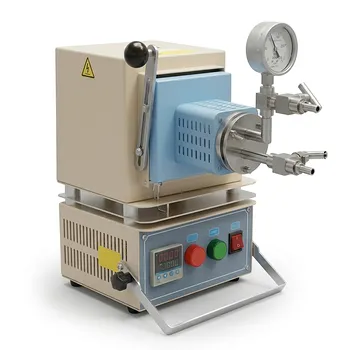
Compact Hybrid Muffle and Tube Furnace for 1000C Controlled Atmosphere Laboratory Material Sintering

Vertical 1700C Vacuum and Atmosphere Tube Furnace with 80mm Alumina Tube

1750°C High Temperature Benchtop Vacuum Atmosphere Tube Furnace with Kanthal Super 1800 Heating Elements and 60mm Alumina Processing Tube
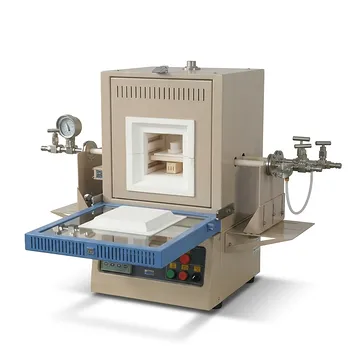
1700C Compact Hybrid Furnace with Dual Layer Box Sintering and Controlled Atmosphere Alumina Tubes

High Temperature 1700C Vertical Tube Furnace for Powder Spherification and Material Sintering
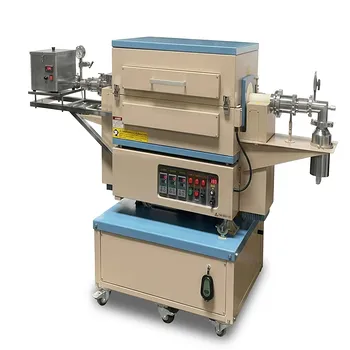
1500C 3-Zone Rotary Tube Furnace 60mm with Automatic Powder Feeding and Receiving System for Continuous Material Synthesis
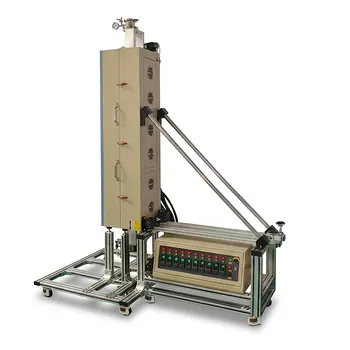
1200°C 10-Zone Split Tube Furnace with Horizontal and Vertical Mounting for Multi-Zone Thermal Gradients and Large Diameter Material Processing
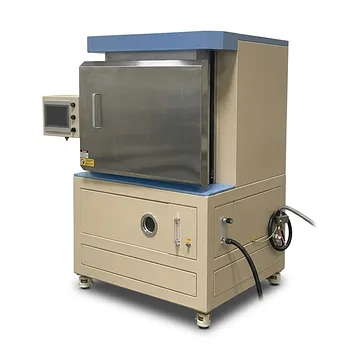
1650C High Temperature Atmosphere Controlled Box Furnace with 65L Chamber for Advanced Material Sintering and Industrial Heat Treatment
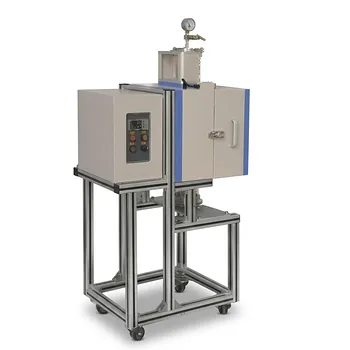
1200°C 5 Inch Vertical Quartz Tube Furnace with Stainless Steel Vacuum Flanges
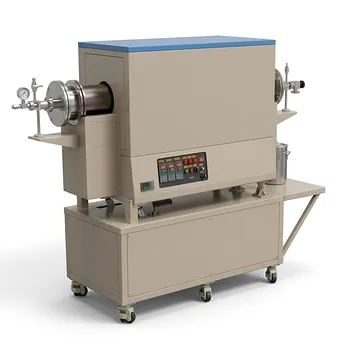
900°C Max Rotary Tube Furnace with 8 Inch 310S Alloy Tube and Optional Multi Zone Heating for Industrial Material Calcination

High Temperature Automated 5 Inch Tube Furnace for Autonomous Material Research and Advanced Laboratory R&D
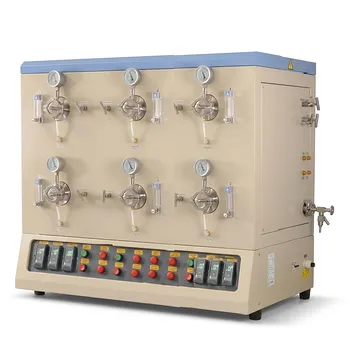
1200C High Throughput Multi Channel Tube Furnace with 50mm Quartz Tubes for Annealing and Material Phase Diagram Research
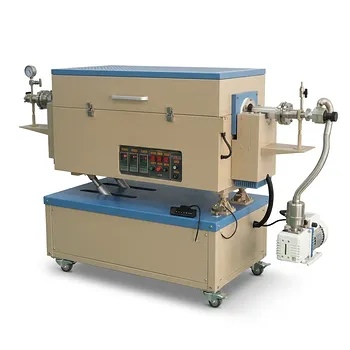
Three Zone Rotary Tube Furnace for High Temperature Powder Processing and Material Research

1800C High Temperature Compact Vacuum Tube Furnace with 60mm OD Alumina Tube and Kanthal MoSi2 Heating Elements
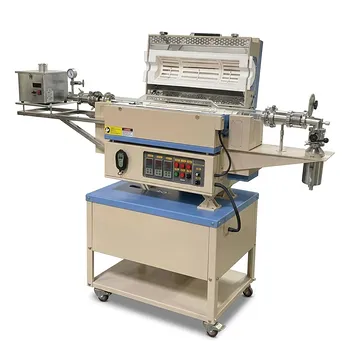
5 Inch Rotary Tube Furnace with Automatic Feeding and Receiving System 1200C Three Zone CVD Powder Processing

High Temperature 1700C Tube Furnace with High Vacuum Turbomolecular Pump System and Multi Channel Mass Flow Controller Gas Mixer
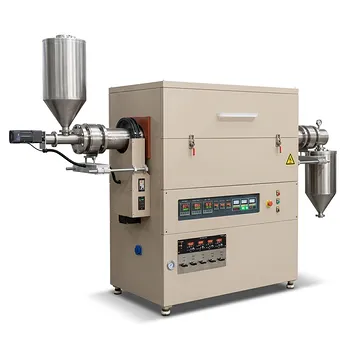
High Temperature Tilting Rotary Tube Furnace with Integrated Mass Flow Control and Multi Zone Heating
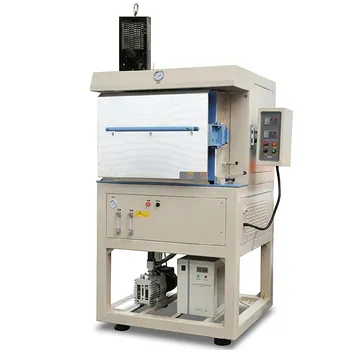
1200C Hydrogen Atmosphere Box Furnace with 5 Heated Sides and 64L Chamber