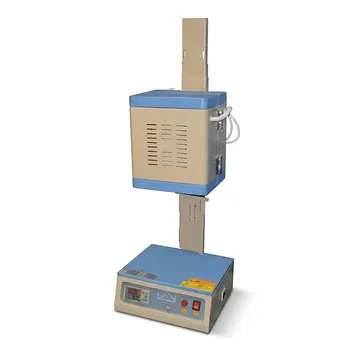
What are the specific advantages and use cases for a split tube furnace? Optimize Lab Efficiency & Material Research
Updated 5 months ago
The split tube furnace is a versatile thermal processing tool defined by its hinged, split-chamber design.
By allowing the heating chamber to open lengthwise, this furnace provides immediate access to the process tube and reaction zone. This accessibility is essential for complex experimental setups, rapid cooling cycles, and streamlined maintenance without disturbing delicate sample configurations or pre-assembled components.
The split tube furnace bridges the gap between high-precision thermal control and operational flexibility. Its unique opening mechanism simplifies the management of complex reactor systems while maintaining the vacuum and atmospheric integrity required for advanced material synthesis.
Maximizing Operational Efficiency
Streamlined Sample Handling
The primary advantage of the split design is the ability to load and unload samples by opening the furnace body directly. This eliminates the need to slide long process tubes through narrow openings, which protects fragile samples and pre-assembled components from mechanical stress.
Simplified Integration of Reactor Piping
Researchers can install and debug complex reactor piping and instrumentation while the furnace shell is open. This physical access ensures all connections are secure and properly aligned before the heating process begins, reducing the risk of leaks or experimental failure.
Scalability and Modularity
Split tube furnaces are highly modular, allowing operators to interchange work tubes of different diameters and materials. This flexibility enables a single furnace to accommodate samples ranging from microgram quantities to multi-kilogram batches with minimal reconfiguration.
Precision Thermal and Atmospheric Management
Rapid Post-Experiment Cooling
Opening the furnace shell after a run allows heat to dissipate into the ambient environment much faster than through the insulation alone. This significantly reduces the cooldown time between experiments, increasing the overall throughput of the laboratory.
Uniform Thermal Fields
Modern split tube furnaces provide a constant temperature zone—often spanning up to 12 inches—to ensure samples remain within a uniform thermal field. This uniformity is critical for maintaining consistent material properties, such as in the processing of catalyst monoliths.
Environmental Isolation
Despite the split design, these furnaces offer superior sealing capabilities for high-vacuum or protective gas environments. This isolation is vital for preventing oxidation or moisture contamination during sensitive reactions like carbonization or annealing.
Common Use Cases in Industry and Research
Semiconductor Processing
Split tube furnaces are widely used for diffusion doping, thermal oxidation, and chemical vapor deposition (CVD). They allow for the safe handling of hazardous precursors, such as silane or ammonia, within a sealed and controlled thermal environment.
Advanced Materials Synthesis
These furnaces are ideal for high-temperature annealing and reduction reactions where precise control over microstructure is required. The ability to quickly inspect the reaction tube after a cycle helps researchers refine their synthesis protocols more efficiently.
Understanding the Trade-offs
Potential for Thermal Leakage
The longitudinal seam where the two halves of the furnace meet can be a point of heat loss if the insulation is damaged or misaligned. Operators must regularly inspect the furnace seals to ensure they maintain a tight fit for maximum energy efficiency.
Mechanical Stress on Process Tubes
Repeatedly opening and closing the furnace can put mechanical stress on the process tube and its vacuum seals. It is critical to use high-quality mounting brackets and ensure the tube is correctly centered to prevent cracking or seal degradation over time.
Choosing the Right Setup for Your Goal
When selecting or configuring a split tube furnace, your decision should be guided by your specific throughput and atmospheric requirements.
- If your primary focus is rapid throughput: Prioritize a model with a high-performance split design to take full advantage of accelerated cooling times between experimental runs.
- If your primary focus is complex gas delivery: Utilize the open-chamber access to safely route and inspect internal reactor piping before sealing the system for hazardous gas use.
- If your primary focus is versatile research: Choose a system with interchangeable work-tube diameters to support a wide variety of sample sizes and materials within a single unit.
By combining the accessibility of a split chamber with the precision of a sealed reactor, you can achieve both experimental flexibility and rigorous material control.
Summary Table:
| Key Feature | Core Advantage | Primary Applications |
|---|---|---|
| Hinged Design | Easy sample loading & complex piping setup | Complex reactor systems, fragile samples |
| Rapid Cooling | Faster cooldown by opening the shell | High-throughput testing, rapid thermal cycling |
| Modularity | Supports interchangeable work tubes | Versatile R&D, varied sample sizes |
| Sealed Environment | Precise vacuum & atmospheric control | CVD, semiconductor doping, annealing |
| Thermal Uniformity | Consistent heat fields (up to 12 inches) | Catalyst processing, material synthesis |
Elevate Your Research with Precision Thermal Solutions
Looking to optimize your thermal processing workflow? THERMUNITS is a leading manufacturer of high-temperature laboratory equipment dedicated to advancing material science and industrial R&D. Our split tube furnaces are engineered to provide the accessibility and precision required for the most demanding experimental setups.
Why Choose THERMUNITS?
- Comprehensive Catalog: We offer a full range of equipment including Muffle, Vacuum, Atmosphere, Tube, Rotary, and Hot Press furnaces.
- Specialized Systems: High-performance CVD/PECVD systems, Dental Furnaces, and Vacuum Induction Melting (VIM) furnaces.
- Expert Support: From thermal elements to custom electric rotary kilns, we provide end-to-end heat treatment solutions tailored to your specific research goals.
Ready to find the perfect furnace for your laboratory? Contact THERMUNITS today to discuss your requirements with our technical experts!
Mentioned Products
- 1250C Split Tube Furnace with 3 Inch Mullite Tube and Vacuum Sealing Flanges for Precision Thermal Processing
- Split Vertical Tube Furnace with 1200C Quartz Tube and Stainless Steel Vacuum Flanges for Rapid Thermal Processing
- High Temperature 1200C Split Tube Furnace with Hinged Vacuum Flanges and 4 Inch Quartz Tube for Laboratory Research
- 1250C Compact Split Tube Furnace with 8 Inch Heating Zone and Programmable Controller
- 24 Inch Three Zone Split Tube Furnace with Optional Quartz Tube and Vacuum Flange System for High Temperature Material Synthesis
People Also Ask
- What is the primary engineering purpose for using a customized ventilation hood when operating a split tube furnace? RCF Safety
- How does a split tube furnace contribute to the thermal stabilization of Clignin@H-TiO2? Achieve Structural Precision
- What are the advantages of using a split tube furnace for heating a catalytic reactor? Boost Efficiency and Precision
- How does a split tube furnace facilitate debinding of ceramic green bodies? Master Precise Thermal & Atmosphere Control
- What is the core function of a laboratory split-tube furnace in carbon dioxide capture testing? - Key Thermal Precision

Tech Team · ThermUnits
Last updated on Apr 14, 2026
Related Products
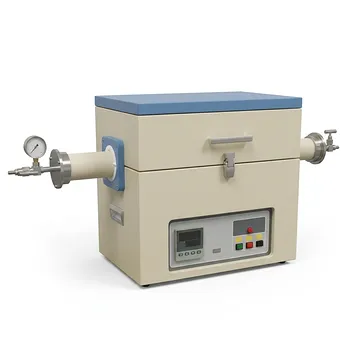
1250C Split Tube Furnace with 3 Inch Mullite Tube and Vacuum Sealing Flanges for Precision Thermal Processing
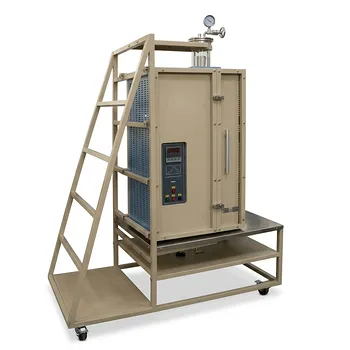
Split Vertical Tube Furnace with 1200C Quartz Tube and Stainless Steel Vacuum Flanges for Rapid Thermal Processing
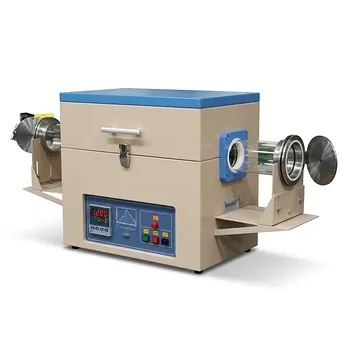
High Temperature 1200C Split Tube Furnace with Hinged Vacuum Flanges and 4 Inch Quartz Tube for Laboratory Research
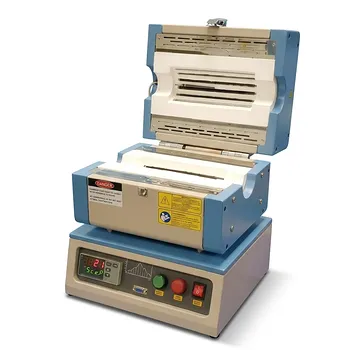
1250C Compact Split Tube Furnace with 8 Inch Heating Zone and Programmable Controller
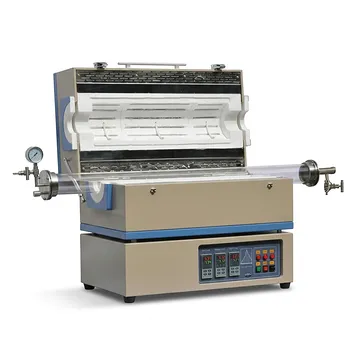
24 Inch Three Zone Split Tube Furnace with Optional Quartz Tube and Vacuum Flange System for High Temperature Material Synthesis
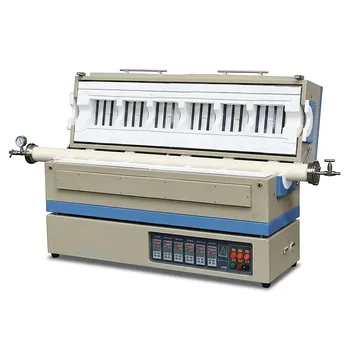
Six Zone Split Tube Furnace with Alumina Tube and Vacuum Flanges for 1500C High Temperature Thermal Processing and CVD
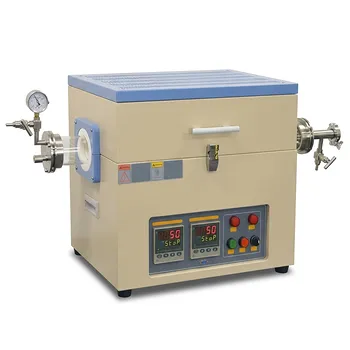
1200C Dual Zone Split Tube Furnace with Fused Quartz Tube and Vacuum Flanges Available in 60mm 80mm and 100mm Diameters
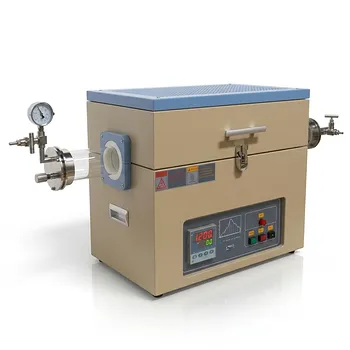
High Temperature 1200C Split Tube Furnace with Optional Quartz Tube Sizes and Vacuum Sealing Flanges for Material Science Research
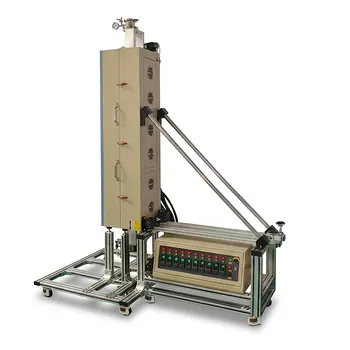
1200°C 10-Zone Split Tube Furnace with Horizontal and Vertical Mounting for Multi-Zone Thermal Gradients and Large Diameter Material Processing
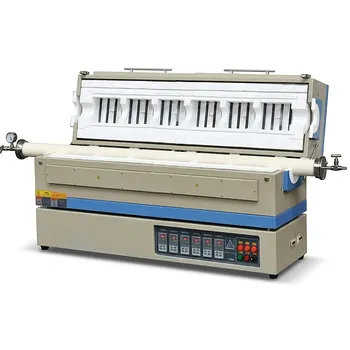
High Temperature 1700C Six Zone Split Tube Furnace with Alumina Tube and Water Cooled Flanges

Compact Vertical Split Quartz Tube Furnace with Stainless Steel Vacuum Flanges for Rapid Thermal Quenching and Controlled Atmosphere Material Processing
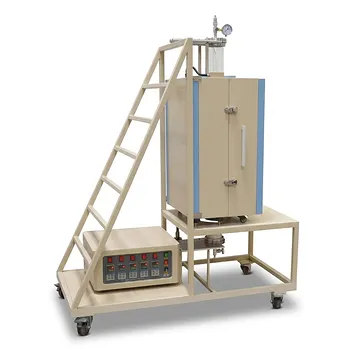
Five Zone Split Vertical Tube Furnace 1200C Max with 4 Inch Quartz Tube and Stainless Steel Vacuum Flanges
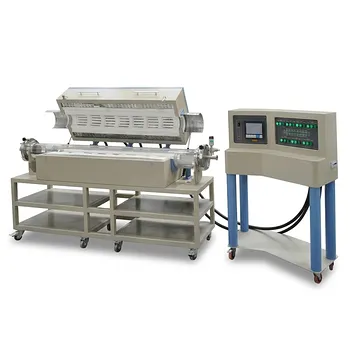
Seven Zone 1200C Split Tube Furnace with Precision Temperature Controller and Quick Flange Vacuum System
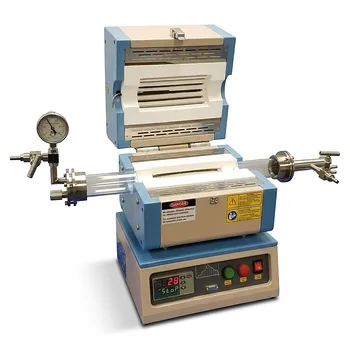
Compact Split Tube Furnace with Integrated Vacuum System and Precision Temperature Calibrator
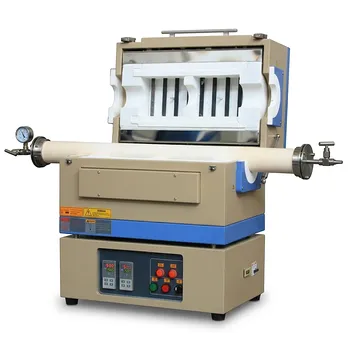
1500C Two Zone Split Tube Furnace with Vacuum Flange and 80mm Alumina Tube
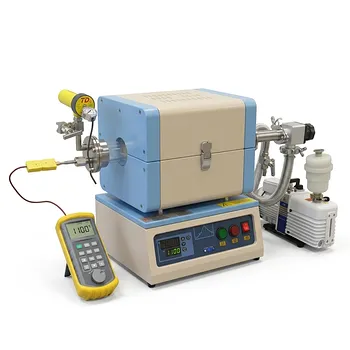
Compact Split Tube Furnace with Insertable Temperature Calibrator and Integrated Vacuum System
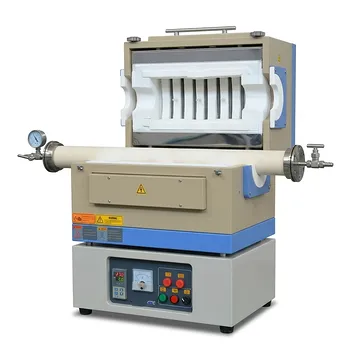
High Temperature 1600C Split Tube Furnace Vacuum Flanges Valves Optional 60mm 80mm Alumina Tube
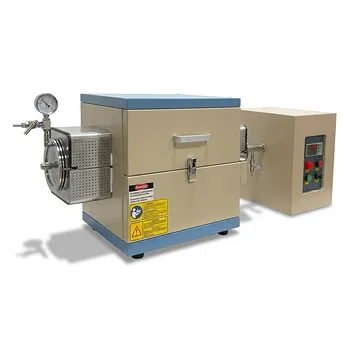
1200C High Temperature 5 Inch Split Vacuum Tube Furnace with 12 Inch Heating Zone and Separated PID Controller
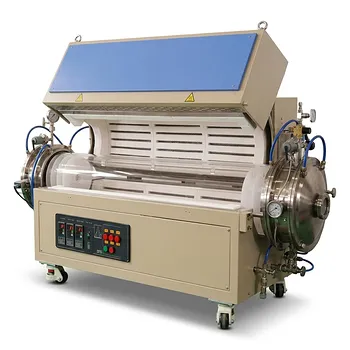
High Temperature Three Zone Split Tube Furnace 1200C Max 35.4 Inch Heating Length 8 Inch ID Tube