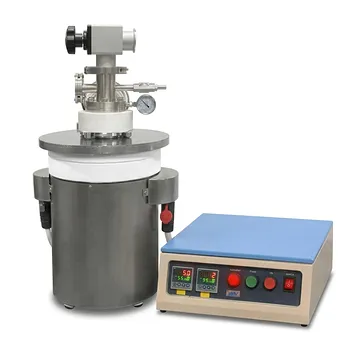
What is the function of a quartz tube furnace in simulating sulfate hot corrosion for turbine materials?
Updated 3 months ago
A quartz tube furnace functions as a high-precision reaction vessel that replicates the extreme thermal and chemical environments found within the hot sections of industrial gas turbines. It serves as the core thermal unit, providing the precise temperature control and gas-tight isolation required to study how sulfate-induced corrosion degrades critical superalloys.
The quartz tube furnace is the indispensable tool for transforming a laboratory environment into a simulated turbine "micro-climate," allowing researchers to isolate chemical variables and measure the kinetic rates of material degradation with high repeatability.
Achieving Thermodynamic Stability
The primary role of the furnace is to maintain a stable energy state that mirrors the operating conditions of a turbine.
Precise Temperature Control for Specific Corrosion Types
Industrial sulfate hot corrosion is generally categorized into Type I (900°C) and Type II (700°C) regimes. The furnace provides the stability required to hold these exact temperatures, ensuring the salt deposits on the material remain in their most corrosive molten or semi-molten states.
Minimizing Transient Temperature Effects
Utilizing strict heating rates, such as 10 K/min, is critical for minimizing the time samples spend in "non-steady-state" temperature ranges. This precision reduces the impact of transient oxidation, allowing for the accurate calculation of parabolic rate constants ($k_c$) and the study of phase-change-induced transitions.
Uniform Thermal Fields
Horizontal tube furnaces are often selected because they provide a long constant-temperature zone. This ensures that multiple Fe-Cr alloy samples are exposed to an identical thermal field, which is vital for comparing how different material compositions react to the same corrosive stress.
Atmosphere Management and Chemical Isolation
Beyond heat, the furnace must manage the complex chemistry of combustion by-products.
Gas-Tight Reaction Spaces
The furnace creates a strictly controlled environment where researchers can introduce specific mixed gases, such as synthetic air containing 0.1% sulfur dioxide ($SO_2$). This mimics the sulfur-rich atmosphere generated by burning industrial fuels, which is the catalyst for sulfate hot corrosion.
The Role of the Quartz Vessel
The quartz tube itself acts as the primary barrier between the experiment and the external atmosphere. Its high-temperature chemical stability ensures it does not react with the corrosive gases or sample vapors, maintaining the purity of the nitrogen-hydrogen or sulfur-bearing protective atmospheres.
Simulating Thermodynamic Realism
By controlling both the atmosphere and the thermodynamic curves, the furnace can simulate the low-carbon processes or high-temperature sintering conditions found in modern industrial machines. This level of control allows for the evaluation of how microstructure and reduction performance change under specific, simulated carbon-heavy or carbon-light environments.
Understanding the Trade-offs
While the quartz tube furnace is a standard for hot corrosion, it possesses inherent limitations that must be managed.
Temperature and Chemical Constraints
Quartz has a practical upper limit (typically around 1100°C–1200°C for long-term use) and can become brittle over time through devitrification. If an experiment requires temperatures up to 1350°C, alternative ceramic tubes (like alumina) may be necessary, though they may offer different chemical resistance profiles.
Pressure and Flow Dynamics
Standard tube furnaces are excellent for static or low-flow gas environments, but they do not perfectly replicate the high-velocity, high-pressure gas flows found in a real turbine. Results obtained in a quartz tube represent the chemical kinetics of corrosion rather than the mechanical "erosion-corrosion" seen in field operations.
How to Apply This to Your Project
When selecting a furnace configuration for hot corrosion testing, your choice should be driven by the specific degradation mechanism you intend to study.
- If your primary focus is Kinetic Modeling: Prioritize a furnace with a high-accuracy controller and a defined "constant temperature zone" to ensure $k_c$ values are not skewed by thermal gradients.
- If your primary focus is Type II (Low-Temp) Corrosion: Ensure the system is rated for high gas-tightness at 700°C, as the partial pressure of $SO_3$ is critical for maintaining the stability of the corrosive liquid salt.
- If your primary focus is High-Temperature Sintering: Select a vertical furnace capable of reaching 1350°C with integrated gas-mixing systems for CO2 and CO combinations.
Selecting the right quartz tube furnace allows you to bridge the gap between theoretical material science and the harsh reality of industrial turbine operation.
Summary Table:
| Feature | Function in Corrosion Simulation | Key Specification |
|---|---|---|
| Temperature Stability | Maintains Type I (900°C) & Type II (700°C) regimes | ±1°C precision |
| Atmosphere Control | Isolates synthetic air and $SO_2$ gas mixtures | Gas-tight quartz vessel |
| Heating Dynamics | Minimizes transient oxidation effects | Controlled rates (e.g., 10 K/min) |
| Thermal Uniformity | Ensures consistent exposure across multiple alloy samples | Long constant-temperature zone |
Elevate Your Material Research with THERMUNITS Precision
As a leading manufacturer of high-temperature laboratory equipment, THERMUNITS provides the advanced thermal processing solutions required for rigorous industrial R&D and material science. Our comprehensive range of equipment—including Tube, Muffle, Vacuum, Atmosphere, and Rotary furnaces, as well as CVD/PECVD systems and Hot Press furnaces—is engineered to deliver the thermodynamic realism needed for simulating extreme environments like sulfate hot corrosion.
Whether you are testing superalloys for turbines or developing new ceramic coatings, our systems offer the precise control and reliability your project demands. Contact our technical experts today to discuss how THERMUNITS can optimize your laboratory heat treatment processes.
References
- Katharina Beck, Mathias C. Galetz. Hot corrosion behavior of Mo–9.0Si–8.0B. DOI: 10.1002/maco.202414347
Mentioned Products
- Dual Zone Quartz Tube Furnace with 80mm Diameter 1200C Max Temperature 3 Channel Gas Mixer and Vacuum Pump System
- 1100°C High Temperature Quartz Chamber Furnace 8 Inch OD with 7.6 Liter Capacity and Vacuum Atmosphere Capability
- Compact Vertical Split Quartz Tube Furnace with Stainless Steel Vacuum Flanges for Rapid Thermal Quenching and Controlled Atmosphere Material Processing
- 1100°C Large Diameter Quartz Tube Furnace with 24 Inch Heating Zone and Water Cooled Flanges
- 1200°C 5 Inch Vertical Quartz Tube Furnace with Stainless Steel Vacuum Flanges
People Also Ask
- How do dual-zone quartz tube furnaces achieve controllable material preparation? Optimize Perovskite VD Processes
- What are the technical advantages of using a dual-zone tube furnace for growing large PdCoO2 crystals via CVT? Expert Tips
- Purpose of the reverse gradient step in CVT growth? Master Crystal Purity with Dual-Zone Furnaces
- Why is it necessary to place MoS2 devices in a dual-zone tube furnace for annealing? Optimize Lattice Repair & Doping
- Why is a dual-zone tube furnace necessary for ReO3-doped Cu2Te CVD? Essential for precise precursor synchronization.

Tech Team · ThermUnits
Last updated on Jun 02, 2026
Related Products
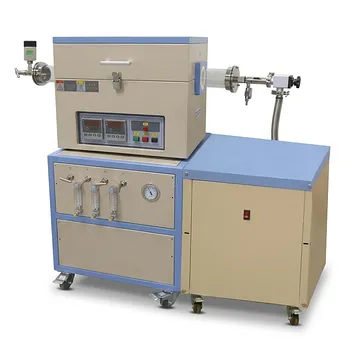
Dual Zone Quartz Tube Furnace with 80mm Diameter 1200C Max Temperature 3 Channel Gas Mixer and Vacuum Pump System
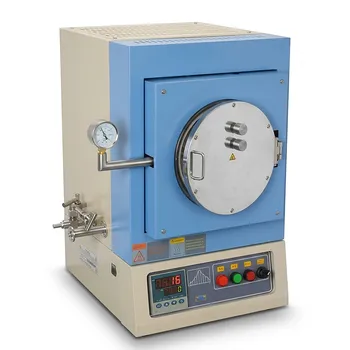
1100°C High Temperature Quartz Chamber Furnace 8 Inch OD with 7.6 Liter Capacity and Vacuum Atmosphere Capability

Compact Vertical Split Quartz Tube Furnace with Stainless Steel Vacuum Flanges for Rapid Thermal Quenching and Controlled Atmosphere Material Processing
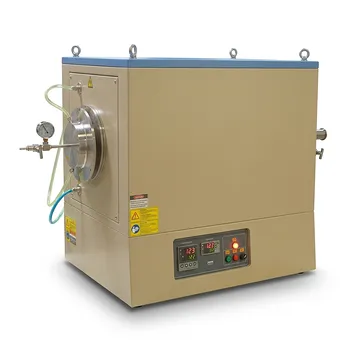
1100°C Large Diameter Quartz Tube Furnace with 24 Inch Heating Zone and Water Cooled Flanges

1200°C 5 Inch Vertical Quartz Tube Furnace with Stainless Steel Vacuum Flanges
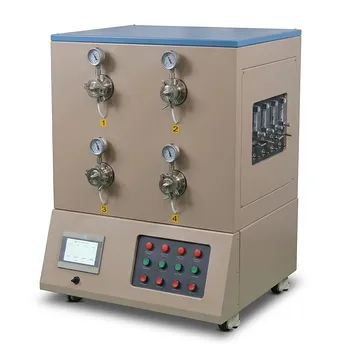
High Throughput 1200C Four Channel Tube Furnace with 3 Inch Quartz Tubes for Multi Zone Annealing and Material Research
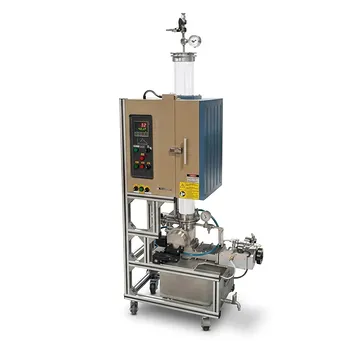
1200C High Temperature Atmosphere Controlled Vertical Quenching Tube Furnace with 4 Inch Quartz Tube
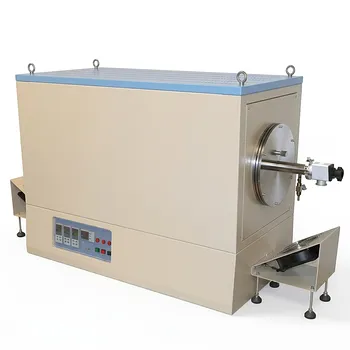
1100°C Three Zone Tube Furnace with 8.5 to 11 Inch OD Quartz Tube and Vacuum Flanges for Large Wafer Processing
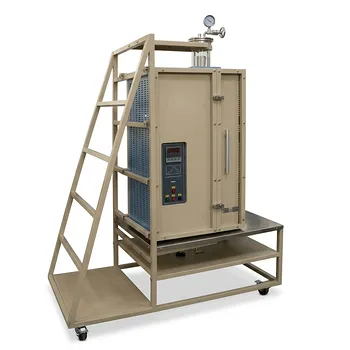
Split Vertical Tube Furnace with 1200C Quartz Tube and Stainless Steel Vacuum Flanges for Rapid Thermal Processing
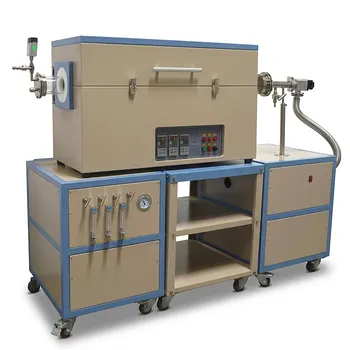
Three Zone Quartz Tube Furnace with 3 Channel Gas Mixer Vacuum Pump and Anti Corrosive Vacuum Gauge
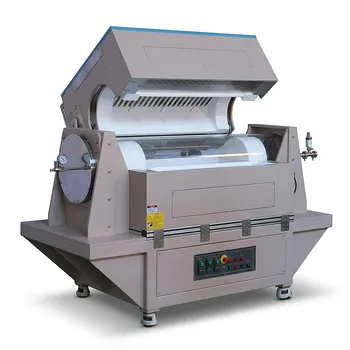
Three Zone Tube Furnace with 11 Inch or 15 Inch Quartz Tube and Hinged Flanges for Vacuum Atmosphere Heat Treatment
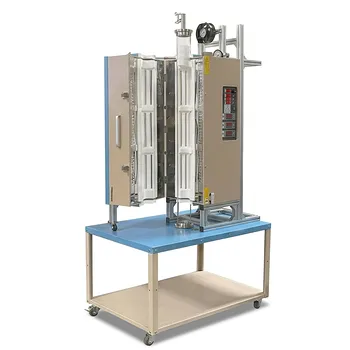
1200C Three Zone Split Vertical Tube Furnace 4 Inch Quartz Tube Stainless Steel Vacuum Flanges
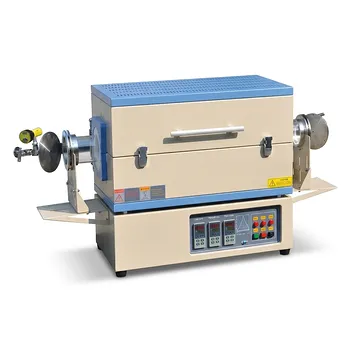
Three Zone Tube Furnace with 24 Inch Heating Length and Hinged Flange Quartz Tube System
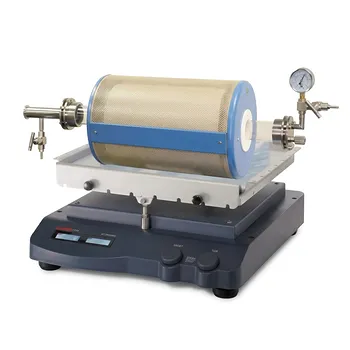
High Temperature Rocking Tube Furnace with Quartz Tube and Vacuum Flange for Materials Synthesis
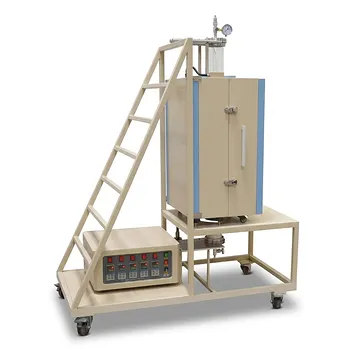
Five Zone Split Vertical Tube Furnace 1200C Max with 4 Inch Quartz Tube and Stainless Steel Vacuum Flanges
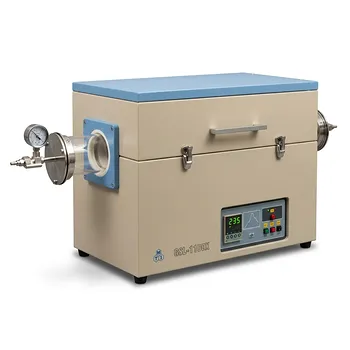
Single Zone Tube Furnace 5 Inch Quartz Tube 36 Inch Heating Zone Vacuum Flanges
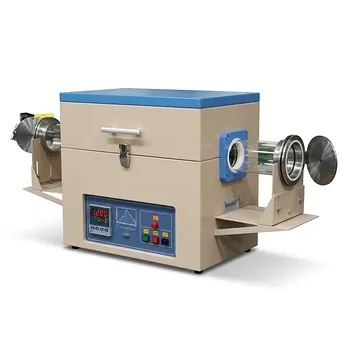
High Temperature 1200C Split Tube Furnace with Hinged Vacuum Flanges and 4 Inch Quartz Tube for Laboratory Research
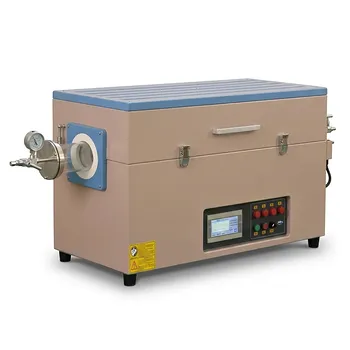
1200C Four Zone Split Tube Furnace with Touch Screen Control and High Purity Quartz Tube and Vacuum Sealing Flanges

High Temperature Automated 5 Inch Tube Furnace for Autonomous Material Research and Advanced Laboratory R&D