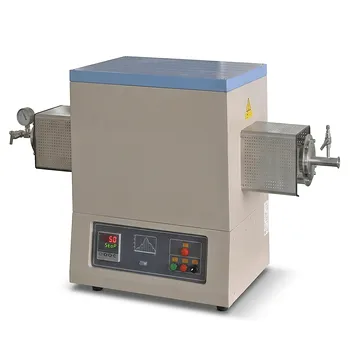
How does a tube furnace achieve precise hydrogen control during Zircaloy-4 hydrogenation? Master Atmospheric Control
Updated 3 months ago
Precise hydrogen control in Zircaloy-4 is achieved through the synergy of stable thermal fields and controlled gas-phase diffusion. A tube furnace maintains a constant high-temperature environment—typically around 400°C—while introducing a specific hydrogen-argon mixture, such as 4% $H_2$ and 96% $Ar$. By modulating the furnace temperature and atmospheric pressure, the system regulates the dissolution and precipitation of hydrogen atoms into the alloy lattice to reach exact concentrations, such as 240 ppm or 360 ppm.
The tube furnace acts as a precision reactor that utilizes thermodynamic equilibrium and kinetic control to manage hydrogen uptake. By balancing thermal energy with gas partial pressures, it drives hydrogen into the Zircaloy-4 matrix with surgical accuracy while preserving the material's structural integrity.
The Mechanisms of Thermal and Atmospheric Control
Maintaining Thermodynamic Equilibrium
Zircaloy-4 requires an exceptionally stable environment to ensure consistent solubility of hydrogen. Because the solubility of hydrogen in zirconium alloys is temperature-dependent, a tube furnace must provide a stable high-temperature field to prevent unintended precipitation of hydrides during the soaking phase.
Precision Gas Mixing
Using a precisely proportioned gas mixture, such as 4% hydrogen and 96% argon, is critical for fine-tuning the reaction. This dilution slows the reaction kinetics compared to pure hydrogen, providing a wider window of control to reach specific low-concentration targets like 240 ppm without overshooting.
Pressure-Driven Diffusion
The furnace utilizes gas-phase diffusion principles to move hydrogen atoms into the crystal lattice gaps of the alloy. By adjusting the atmospheric pressure within the sealed tube, the operator can increase or decrease the driving force that pushes hydrogen into the metal, effectively "loading" the sample to the desired level.
The Role of the Controlled Microenvironment
Preventing Material Sintering
High-precision tube furnaces are designed to prevent the agglomeration of particles or excessive sintering of the material. This is vital for Zircaloy-4, as maintaining the original grain structure is often necessary for subsequent mechanical testing or nuclear applications.
Managing Soaking Times and Cooling Curves
The furnace allows for the precise regulation of soaking times, which determines how long the sample is exposed to the hydrogen atmosphere. Furthermore, controlling the cooling curve is essential to manage how hydrogen precipitates within the alloy, ensuring a uniform distribution rather than localized concentrations that could cause brittleness.
In-Situ Environmental Integrity
The sealed nature of the tube furnace creates a controlled microenvironment that protects the sample from oxidation. By maintaining a strictly inert-plus-reactive atmosphere, the furnace ensures that the hydrogen enters the alloy without the interference of surface oxides that could block diffusion.
Understanding the Trade-offs
Kinetics vs. Precision
Higher temperatures and pressures increase the speed of hydrogenation but reduce the margin for error. If the temperature is too high, the hydrogen may diffuse too rapidly, making it difficult to stop the process at a precise ppm count like 240 ppm.
Embrittlement Risks
Over-hydrogenation is a significant risk when working with Zircaloy-4. If the hydrogen content exceeds the target, the material can become excessively brittle, leading to failure during handled or testing; this necessitates rigorous control over gas flow rates and exposure duration.
Equipment Sensitivity
Achieving precise control requires high-end sensors and mass flow controllers. Any minor leak or calibration error in the gas mixing system can lead to significant deviations in the final hydrogen content of the alloy, rendering the samples unusable for high-stakes research.
How to Apply This to Your Project
Recommendations Based on Research Goals
- If your primary focus is reaching low, exact ppm targets (e.g., <100 ppm): Use highly diluted hydrogen mixtures (less than 4%) and lower temperatures to slow the diffusion rate for maximum control.
- If your primary focus is maintaining specific crystal phase structures: Prioritize the precision of the thermal field and the cooling rate to ensure hydrogen remains in the desired state within the lattice.
- If your primary focus is rapid sample throughput: Increase the atmospheric pressure and temperature within the alloy's safe limits, but implement automated "soaking time" shut-offs to prevent over-hydrogenation.
Mastering the balance between thermal stability and gas partial pressure is the definitive way to ensure repeatable and accurate hydrogenation of Zircaloy-4.
Summary Table:
| Control Mechanism | Function in Hydrogenation | Key Parameter/Method |
|---|---|---|
| Thermal Stability | Maintains hydrogen solubility & prevents hydride precipitation | Constant field (~400°C) |
| Gas Composition | Slows reaction kinetics for fine-tuned ppm targets | 4% $H_2$ / 96% $Ar$ Mixture |
| Pressure Control | Regulates the driving force of lattice diffusion | Adjusted Atmospheric Pressure |
| Cooling Regulation | Ensures uniform hydrogen distribution | Controlled Cooling Curves |
| Inert Environment | Prevents oxidation & surface diffusion barriers | Sealed Tube Microenvironment |
Optimize Your Material Research with THERMUNITS Precision
Achieving exact hydrogen concentrations in Zircaloy-4 requires uncompromising control over temperature and atmosphere. THERMUNITS is a leading manufacturer of high-temperature laboratory equipment, providing the advanced thermal solutions necessary for cutting-edge material science and industrial R&D.
Whether you need specialized Tube furnaces for gas-phase hydrogenation, CVD/PECVD systems, or high-performance Vacuum, Atmosphere, and Muffle furnaces, our equipment is engineered for surgical accuracy. We also offer Rotary kilns, Vacuum Induction Melting (VIM) furnaces, and Hot Press systems tailored to your specific heat treatment requirements.
Ready to elevate your lab's capabilities? Contact our technical experts today to find the perfect thermal processing solution for your project!
References
- Huifang Yue, Meiyi Yao. Effects of Hydrogenation on the Corrosion Behavior of Zircaloy-4. DOI: 10.3390/ma17051101
Mentioned Products
- Three Zone Hydrogen Gas Tube Furnace with 82mm Superalloy Tube and Dual Hydrogen Detectors 1200C High Temperature Material Processing System
- 1500C Compact Hydrogen Gas Tube Furnace with 2 Inch Alumina Tube and Hydrogen Detector
- 1100C Dual Zone Hydrogen Gas Tube Furnace with Quartz Tube and Integrated H2 Leak Detection System
- 1700C Hydrogen Gas Tube Furnace with 60mm Alumina Process Tube and Integrated Hydrogen Safety Detector
- High Temperature 1000C Hydrogen Vertical Quenching Furnace with 4 Inch Stainless Steel Tube
People Also Ask
- What advantages does a three-zone tube furnace offer for nanoparticle synthesis? Unlock Superior Thermal Precision.
- What role does an industrial-grade three-zone tube furnace play in VOx@VACNT synthesis? Precision Phase-State Control
- Why Use a Three-Zone vs. Single-Zone Furnace for Fe-Ni-Cu Diffusion? Key Benefits for Lab Accuracy
- What is the primary function of a three-zone tube furnace in the synthesis process of corn-derived carbon nanotubes?
- What functions does a 3-zone tube furnace provide for graphene-coated alumina fibers? Expert CVD Heat Treatment Guide

Tech Team · ThermUnits
Last updated on Jun 03, 2026
Related Products
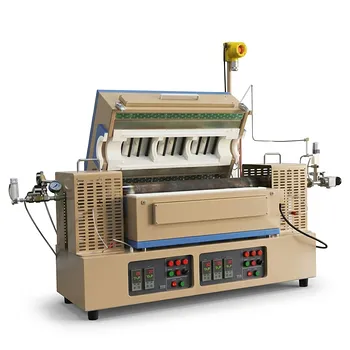
Three Zone Hydrogen Gas Tube Furnace with 82mm Superalloy Tube and Dual Hydrogen Detectors 1200C High Temperature Material Processing System
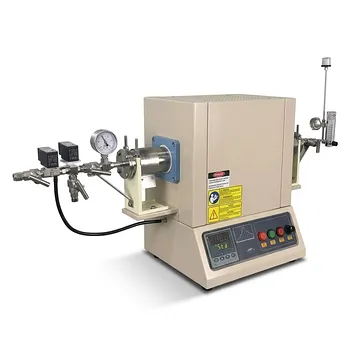
1500C Compact Hydrogen Gas Tube Furnace with 2 Inch Alumina Tube and Hydrogen Detector
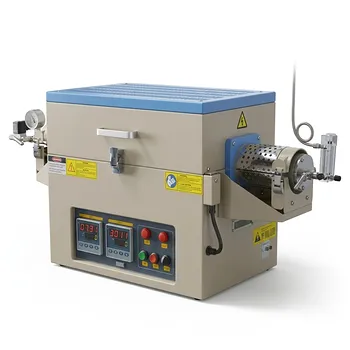
1100C Dual Zone Hydrogen Gas Tube Furnace with Quartz Tube and Integrated H2 Leak Detection System

1700C Hydrogen Gas Tube Furnace with 60mm Alumina Process Tube and Integrated Hydrogen Safety Detector
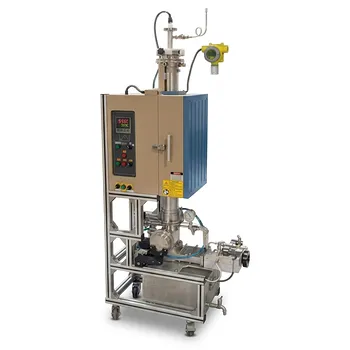
High Temperature 1000C Hydrogen Vertical Quenching Furnace with 4 Inch Stainless Steel Tube
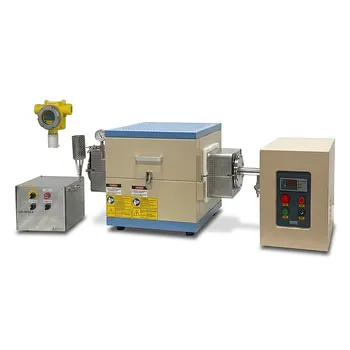
1100C Hydrogen Gas Atmosphere Tube Furnace with 5 Inch Fused Quartz Tube and Integrated Safety Monitoring System
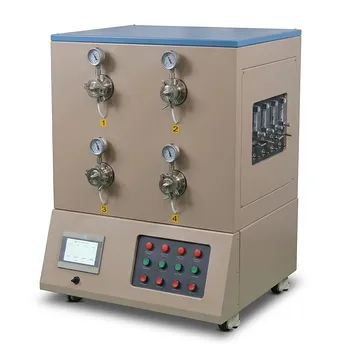
High Throughput 1200C Four Channel Tube Furnace with 3 Inch Quartz Tubes for Multi Zone Annealing and Material Research

High Temperature 1700C Vertical Tube Furnace for Powder Spherification and Material Sintering
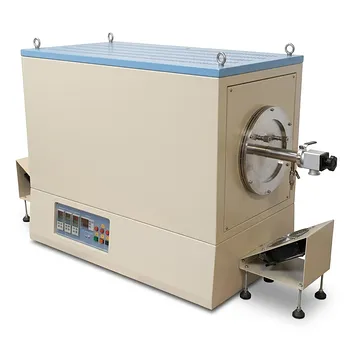
Four Zone Tube Furnace 1100C with 600mm Large Diameter Quartz Tube and Vacuum Flanges
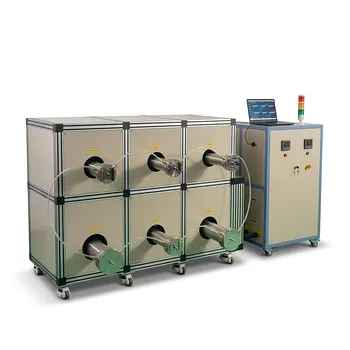
1200C Max 6 Channel High Cleanliness Hydrogen Furnace for High Throughput Annealing
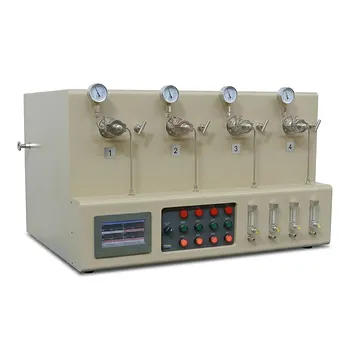
High Temperature 1700C 4 Channel Tube Furnace 1 Inch Alumina Tube for Hi-Throughput Annealing

Compact High Temperature 1600C Tube Furnace with 50mm Alumina Tube and Vacuum Flanges for Material Sintering
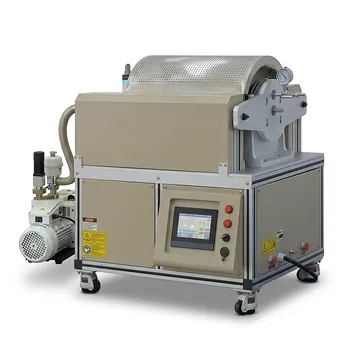
Automated 1200 C Tube Furnace for AI Material Research with 6 Inch OD and Sliding Flange
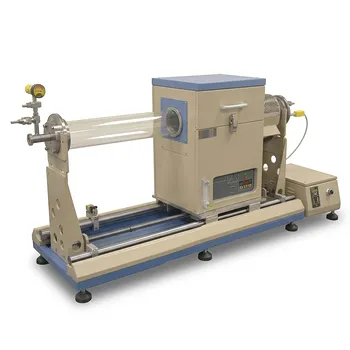
Rapid Thermal Processing Sliding Tube Furnace with 4 Inch OD Quartz Tube and 900C IR Heating

5 Inch Three Zone Rotary Tube Furnace with Integrated Gas Delivery System and 1200C Capability for Advanced Material CVD Processing
1200C Max Four Zone Split Tube Furnace with Optional Large Diameter Quartz Tubes
High Temperature Dual Zone Vacuum Tube Furnace for Material Research and CVD Processing

Vertical 1700C Vacuum and Atmosphere Tube Furnace with 80mm Alumina Tube

High Temperature Automated 5 Inch Tube Furnace for Autonomous Material Research and Advanced Laboratory R&D