How does a vertical induction furnace contribute to BOCVD for BNNT synthesis? Optimize High-Purity Nanotube Growth
Updated 3 months ago
The vertical induction furnace serves as the thermal catalyst for the Boron Oxide-assisted Chemical Vapor Deposition (BOCVD) process. It provides a precise 1300 °C environment that triggers the simultaneous evaporation of precursors to create the necessary reactive vapor phase. This configuration is essential for transforming solid boron and magnesium oxide into the gaseous intermediaries required for gram-scale boron nitride nanotube (BNNT) synthesis.
The vertical induction furnace enables high-purity BNNT production by facilitating the rapid, uniform generation of boron oxide and magnesium vapors. Its vertical architecture and precise induction heating ensure stable reaction kinetics and a consistent ammonia flow field, which are critical for the controlled growth of nanotubes on catalyst surfaces.
Rapid Vapor Generation and Induction Efficiency
The Advantage of Induction Heating
Unlike traditional resistive heating, induction heating provides rapid and uniform energy transfer to the boron nitride crucibles. This efficiency ensures that the boron and magnesium oxide precursors reach the critical reaction threshold of 1300 °C quickly.
Phase Transition Management
The furnace manages the delicate balance of generating boron oxide ($B_2O_2$) and magnesium ($Mg$) vapors. These gaseous components must be produced in specific ratios to react effectively with the incoming ammonia ($NH_3$) gas.
Uniformity of the Thermal Field
The induction system creates a consistent thermal environment that prevents localized hot or cold spots. This uniformity is vital for ensuring that the reaction kinetics remain predictable across the entire volume of the crucible, which is a prerequisite for high-purity output.
The Strategic Role of Vertical Architecture
Optimizing the Ammonia Flow Field
The vertical configuration allows for a stable and continuous flow of ammonia gas through the reaction zone. This stability is vital for maintaining a consistent gas-phase environment where the nanotubes can grow on catalyst particles without turbulence-induced defects.
Gravity and Vapor Dynamics
The vertical setup facilitates the prompt removal of byproduct gases from the reaction zone. By clearing the "spent" gas-phase substances, the furnace ensures that the evaporation reaction can proceed continuously without reaching a state of equilibrium that would stall production.
Sample Suspension and Exposure
Vertical furnaces often allow for the suspension of samples or crucibles within the center of the heat zone. This ensures that the precursors are surrounded by an even distribution of heat and reactant gases, maximizing the surface area available for the CVD process.
Precise Thermodynamic Control
Temperature Ramping and Stability
Achieving high-purity BNNTs requires a specific temperature profile, often involving a controlled ramp rate (such as 10 °C per minute) up to the target 1300 °C. Precision systems maintain this thermal stability for extended durations, allowing for the predictable morphological evolution of the nanotubes.
Crystalline Quality and Yield
Uniformity in the thermal field directly correlates to the crystalline quality of the boron nitride structures. Stable temperatures prevent the formation of unwanted hexagonal boron nitride (h-BN) bulk phases, focusing the energy instead on the growth of high-density nanotube arrays.
Process Repeatability
Industrial-grade furnaces utilize precision control systems to ensure that every run follows the exact same thermal and atmospheric parameters. This repeatability is what allows the transition from laboratory experiments to the gram-scale production of nanotubes.
Understanding the Trade-offs and Pitfalls
Material Compatibility and Contamination
While boron nitride crucibles are used to minimize contamination, the high-temperature environment can lead to crucible degradation over time. Maintaining the high purity required for BNNT synthesis necessitates regular monitoring of crucible integrity and furnace seals.
Complexity of Induction Tuning
Induction heating requires precise coupling between the work coil and the crucible. If the crucible is not perfectly centered or if the induction frequency is poorly tuned, the heating may become uneven, leading to inconsistent vapor generation and lower BNNT yields.
Atmosphere Sensitivity
The BOCVD process is highly sensitive to the redox environment. Any leaks in the vertical tube or inconsistencies in the ammonia flow can introduce oxygen or other impurities, which may terminate nanotube growth prematurely or favor the growth of unintended BN nanostructures.
How to Apply This to Your Synthesis Goals
Strategic Recommendations for BNNT Growth
- If your primary focus is gram-scale production volume: Prioritize an industrial-grade furnace with high heating rates (up to 50 °C per minute) and a large, stable constant temperature zone.
- If your primary focus is maximum crystalline purity: Utilize a vertical configuration that emphasizes a stable ammonia flow field and precise temperature ramping at 10 °C per minute to 1300 °C.
- If your primary focus is morphological control: Opt for a system with advanced vacuum and atmospheric controls to strictly regulate the gas-phase ratios of boron oxide and magnesium vapors.
By integrating precise induction heating with a vertical flow architecture, the furnace transitions from a simple heating element to a sophisticated chemical reactor capable of high-performance nanomaterial synthesis.
Summary Table:
| Feature | Benefit | Role in BOCVD Process |
|---|---|---|
| Induction Heating | Rapid & uniform 1300°C energy transfer | Triggers simultaneous evaporation of B and MgO precursors |
| Vertical Architecture | Stable ammonia ($NH_3$) flow field | Ensures laminar gas dynamics for defect-free nanotube growth |
| Precise Thermal Control | High repeatability & crystalline quality | Prevents unwanted bulk phases; facilitates gram-scale production |
| Vapor Management | Controlled $B_2O_2$ and Mg gas ratios | Optimizes the chemical environment for catalyst-surface reaction |
Elevate Your BNNT Synthesis with THERMUNITS Precision
As a leading manufacturer of high-temperature laboratory equipment for material science and industrial R&D, THERMUNITS provides the advanced thermal technology required for complex processes like BOCVD. Our vertical induction furnaces are engineered to deliver the precise thermal uniformity and gas-phase control necessary for high-purity Boron Nitride Nanotube production.
Beyond induction systems, we offer a comprehensive range of thermal solutions, including:
- Furnaces: Muffle, Vacuum, Atmosphere, Tube, Rotary, and Hot Press models.
- Advanced Systems: CVD/PECVD systems, Dental Furnaces, and Vacuum Induction Melting (VIM) furnaces.
- Components: High-performance Thermal Elements and specialized laboratory heat treatment tools.
Ready to scale your BNNT production from lab experiments to gram-scale output? Contact THERMUNITS today to discuss how our thermal processing solutions can enhance your research and industrial capabilities.
References
- Gunchita Kaur Wadhwa, Shashi Bhushan Sankhyan. 1D and 2D Boron Nitride Nano Structures: A Critical Analysis for Emerging Applications in the Field of Nanocomposites. DOI: 10.1021/acsomega.3c10217
Mentioned Products
- High Temperature 1700C Vertical Tube Furnace for Powder Spherification and Material Sintering
- 1500C Three Zone Vertical Pyrolysis Furnace for Nanoparticle Synthesis and Advanced Oxide Coating
- High Temperature Vertical Atmosphere Controlled Furnace with Automatic Bottom Loading and 1700°C Capacity for Advanced Material Research
- 1100°C Vertical Laboratory Furnace for DIY Tubular Reactors with PID Temperature Controller
- Compact Vertical Split Quartz Tube Furnace with Stainless Steel Vacuum Flanges for Rapid Thermal Quenching and Controlled Atmosphere Material Processing
People Also Ask
- What role does a high-temperature vertical tube furnace play in simulating high-carbon ferromanganese slag formation?
- What functions does a vertical high-temperature tube furnace perform? Master Industrial Sintering & R&D Simulation
- What is the primary function of a high-temperature tube furnace in Cu1-N-C synthesis? Precision Thermal Control.
- High-Temp Tube Furnace Role in Converting Microbial Proteins to Iron Single-Atom Sites: Expert Synthesis Guide
- What impact does the heating rate of a tube furnace have on biochar microstructure? Optimize Your Material R&D.

Tech Team · ThermUnits
Last updated on Jun 02, 2026
Related Products

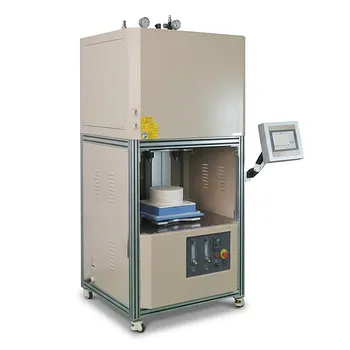
High Temperature 1700C Vertical Tube Furnace for Powder Spherification and Material Sintering
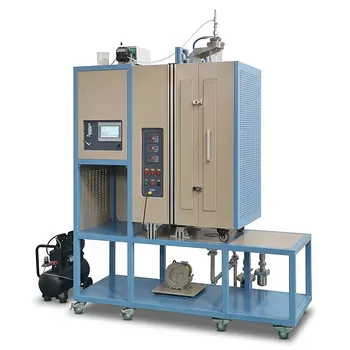
1500C Three Zone Vertical Pyrolysis Furnace for Nanoparticle Synthesis and Advanced Oxide Coating
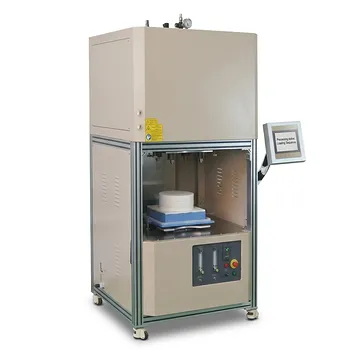
High Temperature Vertical Atmosphere Controlled Furnace with Automatic Bottom Loading and 1700°C Capacity for Advanced Material Research
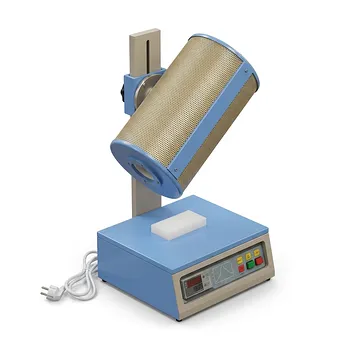
1100°C Vertical Laboratory Furnace for DIY Tubular Reactors with PID Temperature Controller

Compact Vertical Split Quartz Tube Furnace with Stainless Steel Vacuum Flanges for Rapid Thermal Quenching and Controlled Atmosphere Material Processing
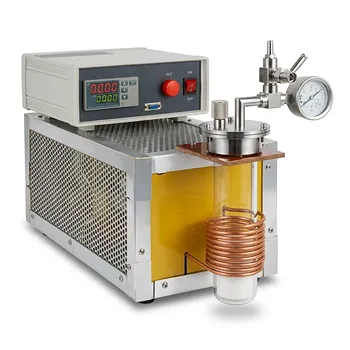
High Temperature Mini Induction Heating Furnace 1600C Laboratory Material Melting System
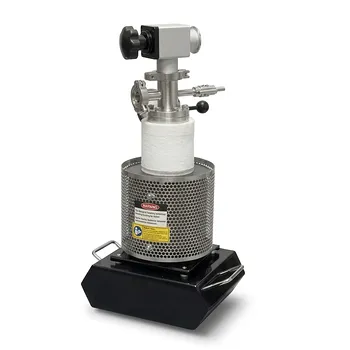
High Temperature 1100C Compact Top Loading Vertical Vacuum Tube Furnace for High Vacuum Noble Metal Melting and Material Research
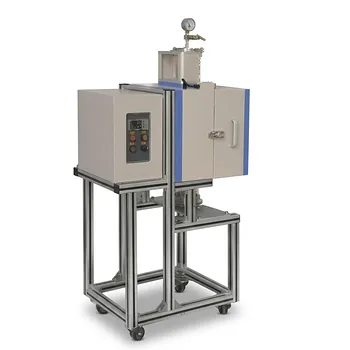
1200°C 5 Inch Vertical Quartz Tube Furnace with Stainless Steel Vacuum Flanges
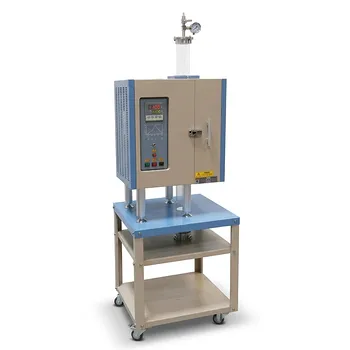
1100°C Split Vertical Tube Furnace with 80mm Quartz Tube and Stainless Steel Vacuum Flanges
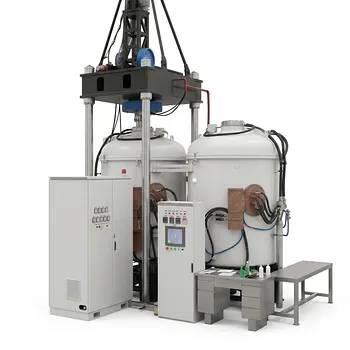
High Pressure 600T Vacuum Induction Hot Press Furnace for Advanced Material Heat Treatment and Sintering
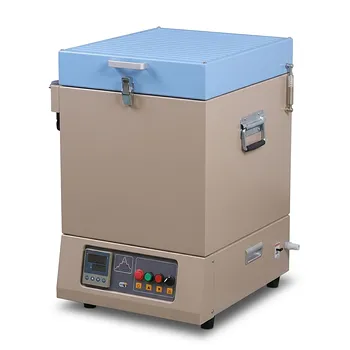
High Temperature Vertical Crucible Furnace with 22L Heating Chamber and 1200C Maximum Temperature

Vertical 1700C Vacuum and Atmosphere Tube Furnace with 80mm Alumina Tube
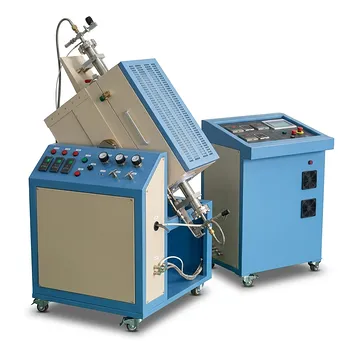
1100C High Pressure Rocking Tube Furnace with 2 Inch Super Alloy Processing Tube for Material Synthesis
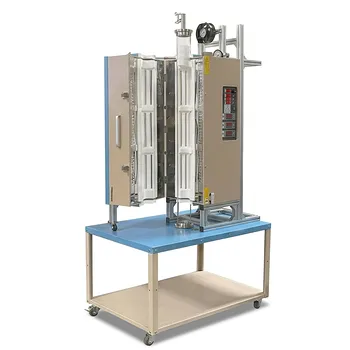
1200C Three Zone Split Vertical Tube Furnace 4 Inch Quartz Tube Stainless Steel Vacuum Flanges
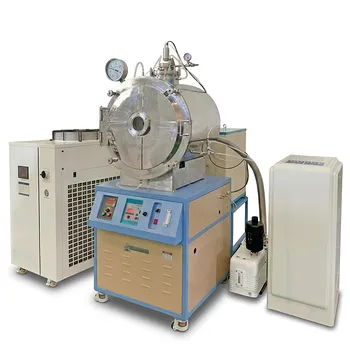
Ultra High Temperature Induction Heated Vacuum Furnace with Molten Salt Electrolysis Capability and 3000 Degree Precision Control
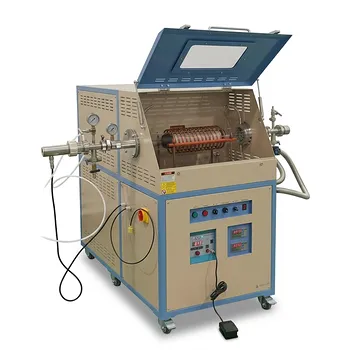
Ultra High Temperature 2300C Induction Heated Graphite Tube Furnace with Infrared Control
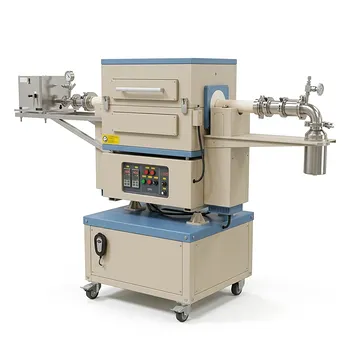
1500C Max Dual Zone Rotary Tube Furnace with 60 mm OD Alumina Tube for High Temperature Material Synthesis
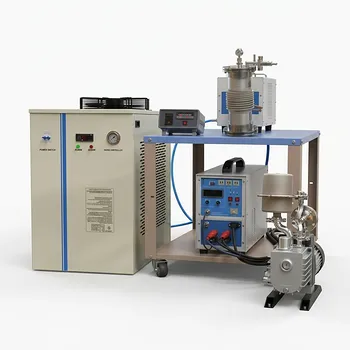
Induction Heating System with Temperature Control for High Temperature Vacuum Sintering and Melting

High Temperature Automated 5 Inch Tube Furnace for Autonomous Material Research and Advanced Laboratory R&D