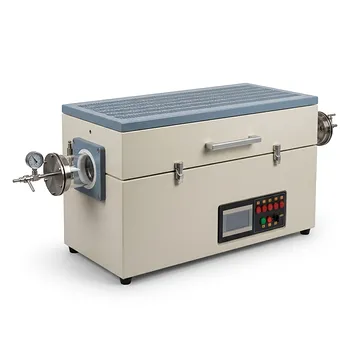
How does an atmosphere tube furnace facilitate the nitrogen doping and structural optimization of MoS2-NG composites? Precision Material Engineering
Updated 3 months ago
The atmosphere tube furnace facilitates the synthesis of MoS2-NG composites by providing a strictly controlled thermal and chemical environment that prevents oxidation while driving atomic-level restructuring. Specifically, it enables the high-temperature calcination required to dope nitrogen into the graphene lattice and simultaneously expands the interlayer spacing of MoS2 (from 0.64 nm to 0.69 nm), which is critical for accelerating lithium-ion diffusion and catalytic activity.
An atmosphere tube furnace acts as a precision reactor that uses inert gas protection and stable thermal fields to replace oxygen with nitrogen in the carbon framework and optimize the MoS2 crystal structure. This dual-action process ensures high phase purity and enhanced electrochemical performance.
Maintaining Phase Purity and Preventing Oxidation
The Role of the Inert Atmosphere
At the high temperatures required for synthesis (600°C–900°C), both MoS2 and carbon are highly susceptible to oxidation. The tube furnace maintains a constant flow of high-purity nitrogen at positive pressure to create an oxygen-free environment. This prevents the formation of unwanted molybdenum oxides and ensures the carbon matrix does not suffer oxidative burn-off.
Chemical Isolation in the Quartz Tube
The use of a chemically inert quartz tube serves as a reaction chamber that withstands extreme heat without introducing impurities. By isolating the precursors from the external environment, the furnace allows for precise control over the chemical stoichiometry. This isolation is essential for preserving the natural nitrogen elements within the precursors during carbonization.
Mechanisms of Nitrogen Doping
Thermal Decomposition of Precursors
The furnace provides the specific thermal energy needed to decompose nitrogen sources like melamine or urea into reactive intermediate species. As these precursors break down, nitrogen-containing functional groups migrate and embed themselves into the carbon lattice. This results in the formation of active species such as pyridinic, pyrrolic, and graphitic nitrogen.
Atomic Integration and Redox Reactions
At temperatures near 800°C–900°C, nitrogen atoms undergo a redox reaction with oxygen-containing functional groups on the graphene surface. The furnace's precise temperature control ensures that oxygen atoms are efficiently replaced, anchoring nitrogen through sp3 hybridized C-N bonds. This redistribution of electronegativity within the material framework is what enhances its overall catalytic activity.
Structural Optimization of MoS2
Expansion of Interlayer Spacing
A primary benefit of the atmosphere tube furnace is the ability to trigger thermal decomposition reactions that physically alter the MoS2 structure. By reaching specific calcination thresholds, the furnace can expand the MoS2 interlayer spacing from 0.64 nm to 0.69 nm. This wider spacing significantly reduces the energy barrier for lithium-ion diffusion and improves the handling of polysulfides.
Crystallinity and Pore Engineering
High-temperature treatment improves the crystallinity of the MoS2-NG composite, resulting in a more stable and conductive material. Simultaneously, the furnace facilitates the in-situ generation of micropores and mesopores within the carbon skeleton. This porous structure increases the surface area available for electrochemical reactions and provides pathways for rapid ion transport.
Understanding the Trade-offs
Temperature Sensitivity
While higher temperatures (above 800°C) improve crystallinity and doping efficiency, they can also lead to the volatilization of nitrogen. If the temperature is too high, the nitrogen content may actually decrease as atoms gain enough energy to leave the lattice. Finding the "sweet spot" is critical to balancing conductivity with doping density.
Precursor Management
The rate of heating must be carefully managed to ensure the nitrogen source decomposes at the same time the carbon framework is receptive to doping. If the heating rate is too fast, the nitrogen source may sublimate and be swept out of the furnace by the nitrogen flow before it can react with the graphene.
How to Apply This to Your Project
Recommendations Based on Goals
- If your primary focus is maximizing ion diffusion rates: Aim for a calcination temperature near 800°C to ensure the maximum expansion of MoS2 interlayer spacing to 0.69 nm.
- If your primary focus is achieving high nitrogen content: Utilize a lower, controlled heating rate with nitrogen sources like melamine to ensure the precursors have sufficient residence time to integrate into the lattice.
- If your primary focus is phase purity and catalyst stability: Maintain a consistent positive pressure (approx. 2.9 psi) of high-purity nitrogen throughout the cooling phase to prevent any atmospheric oxygen from entering the tube.
By mastering the thermal and atmospheric variables of the tube furnace, you can precisely engineer the atomic structure of MoS2-NG composites for superior electrochemical performance.
Summary Table:
| Parameter | Function in Process | Impact on MoS2-NG Composite |
|---|---|---|
| Inert Atmosphere (N2) | Prevents oxidation and oxidative burn-off | Preserves phase purity and integrity of the carbon framework |
| High-Temp Calcination | Drives nitrogen atom integration | Forms active pyridinic, pyrrolic, and graphitic N-species |
| Thermal Expansion | Triggers structural restructuring | Expands interlayer spacing (0.64 to 0.69 nm) for faster ion diffusion |
| Pore Engineering | Facilitates in-situ gas generation | Creates micropores/mesopores to increase catalytic surface area |
Accelerate Your Material Research with THERMUNITS Precision Furnaces
Achieving the perfect MoS2-NG composite requires extreme precision in temperature and atmospheric control. THERMUNITS is a leading manufacturer of high-temperature laboratory equipment designed specifically for material science and industrial R&D. Our systems ensure the stable thermal fields and oxygen-free environments necessary for advanced doping and structural optimization.
Our comprehensive range of thermal processing solutions includes:
- Atmosphere, Vacuum, and Tube Furnaces for precise doping and crystal engineering.
- CVD/PECVD Systems for high-performance thin-film and composite synthesis.
- Muffle, Rotary, Hot Press, and Dental Furnaces for diverse heat treatment applications.
- Vacuum Induction Melting (VIM) and Electric Rotary Kilns for advanced metallurgical needs.
Whether you are expanding interlayer spacing for lithium-ion diffusion or engineering porous carbon frameworks, THERMUNITS provides the reliability and precision your project demands.
Contact our technical experts today to customize your heat treatment solution!
References
- Zhen Wu, Yongsheng Fu. Nitrogen-Doped Graphene Uniformly Loaded with Large Interlayer Spacing MoS2 Nanoflowers for Enhanced Lithium–Sulfur Battery Performance. DOI: 10.3390/molecules29204968
Mentioned Products
- Vertical 1700C Vacuum and Atmosphere Tube Furnace with 80mm Alumina Tube
- 1200C Hybrid Muffle and Tube Furnace for Material Research with Dual Atmosphere Control Quartz Tubes
- 1200°C Atmosphere Controlled Automatic Bottom Loading Furnace with 6 Inch Quartz Tube
- Compact Hybrid Muffle and Tube Furnace for 1000C Controlled Atmosphere Laboratory Material Sintering
- Compact Vertical Split Quartz Tube Furnace with Stainless Steel Vacuum Flanges for Rapid Thermal Quenching and Controlled Atmosphere Material Processing
People Also Ask
- How does a vertical tube furnace facilitate thermoelectric alloy melting? Precision synthesis for material homogeneity.
- Why is a thermocouple sensor indispensable for monitoring the vertical tube furnace during gallium oxide nanowire production? Optimize VLS Growth
- What is the function of a laboratory-grade vertical tube furnace in fast pyrolysis? Optimize Composite Research.
- How is an industrial-grade vertical tube furnace utilized in smelting leaching residues? Enhance Metal Recovery Efficiency
- Why is a vertical tube furnace preferred for Ga2O3 CVD? Optimize Convection & Nanowire Growth

Tech Team · ThermUnits
Last updated on Jun 03, 2026
Related Products

Vertical 1700C Vacuum and Atmosphere Tube Furnace with 80mm Alumina Tube
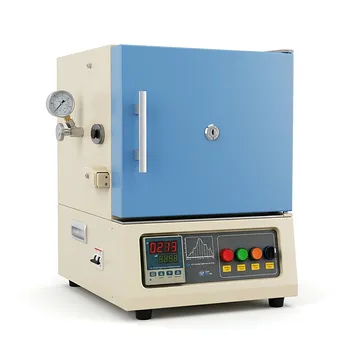
1200C Hybrid Muffle and Tube Furnace for Material Research with Dual Atmosphere Control Quartz Tubes
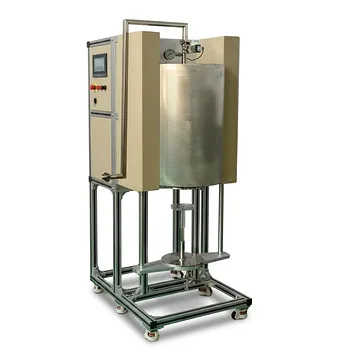
1200°C Atmosphere Controlled Automatic Bottom Loading Furnace with 6 Inch Quartz Tube
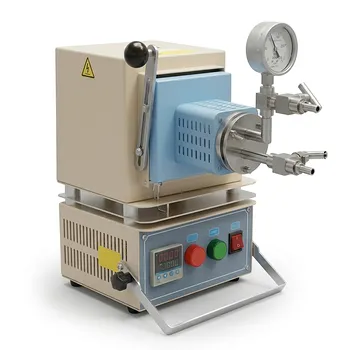
Compact Hybrid Muffle and Tube Furnace for 1000C Controlled Atmosphere Laboratory Material Sintering

Compact Vertical Split Quartz Tube Furnace with Stainless Steel Vacuum Flanges for Rapid Thermal Quenching and Controlled Atmosphere Material Processing

Three Zone Tube Furnace with 11 Inch or 15 Inch Quartz Tube and Hinged Flanges for Vacuum Atmosphere Heat Treatment
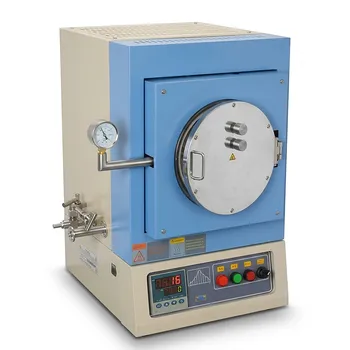
1100°C High Temperature Quartz Chamber Furnace 8 Inch OD with 7.6 Liter Capacity and Vacuum Atmosphere Capability
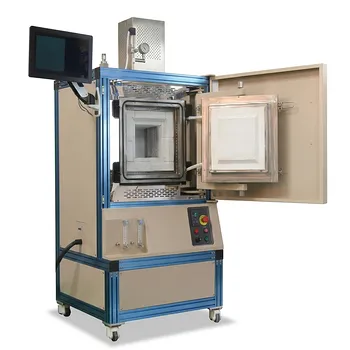
High Temperature Hydrogen Atmosphere Box Furnace 1650C Max Reducing Environment Material Synthesis System 8x8x8 Chamber

High Temperature 1700C Vertical Tube Furnace for Powder Spherification and Material Sintering

Compact High Temperature 1600C Tube Furnace with 50mm Alumina Tube and Vacuum Flanges for Material Sintering

High Temperature 1700C Tube Furnace with High Vacuum Turbomolecular Pump System and Multi Channel Mass Flow Controller Gas Mixer

High Temperature 1700C Six Zone Split Tube Furnace with Alumina Tube and Water Cooled Flanges

1800C High Temperature Compact Vacuum Tube Furnace with 60mm OD Alumina Tube and Kanthal MoSi2 Heating Elements

1100C Tube Furnace with Vacuum Flange and Programmable Temperature Controller for Material Science and Industrial Heat Treatment
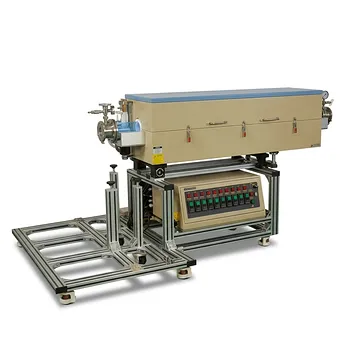
Ten Zone Multi Orientation Laboratory Tube Furnace for 1200C High Temperature Gradient Thermal Processing

High Temperature 1700C Benchtop Tube Furnace with 5 Inch Heating Zone High Purity Alumina Tube and Vacuum Sealing Flanges
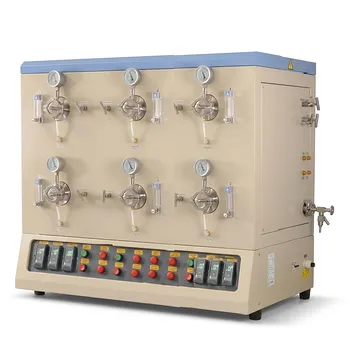
1200C High Throughput Multi Channel Tube Furnace with 50mm Quartz Tubes for Annealing and Material Phase Diagram Research

High Temperature Automated 5 Inch Tube Furnace for Autonomous Material Research and Advanced Laboratory R&D
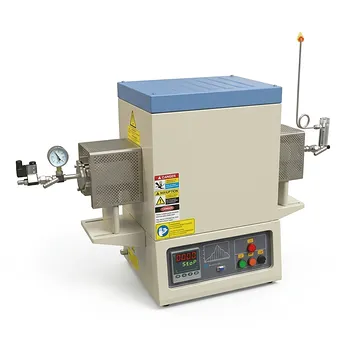
1700C Hydrogen Gas Tube Furnace with 60mm Alumina Process Tube and Integrated Hydrogen Safety Detector