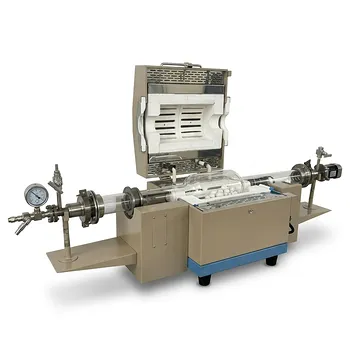
How does an industrial-grade tube furnace contribute to the pyrolysis and activation of SACs? Optimize Atomic Synthesis
Updated 3 months ago
The industrial-grade tube furnace is the critical reactor for Single Atom Catalyst (SAC) synthesis. It provides the high-temperature thermal energy and precise atmospheric conditions necessary to decompose precursors and anchor individual metal atoms onto a stable support structure, typically within a nitrogen-doped carbon lattice.
Core Takeaway: Industrial-grade tube furnaces provide the uniform temperature fields and strictly controlled atmospheres (inert or reducing) required to transform metal-organic frameworks and polymers into catalytically active $M–N_x–C$ structures. This precision ensures that metal atoms remain isolated and dispersed rather than sintering into inactive bulk particles.
Facilitating the Thermal Transformation of Precursors
Transformation of MOF Structures
The tube furnace drives the pyrolysis of Metal-Organic Frameworks (MOFs) at high temperatures, often between 800 °C and 1000 °C. This thermal treatment collapses the MOF structure and facilitates the reaction between metal species (like Nickel) and nitrogen species to form active $M–N_x–C$ sites.
Regulating Coordination Chemistry
A uniform temperature field inside the furnace is a critical physical condition for regulating the coordination number of the metal atoms. By maintaining thermal stability, the furnace allows for the precise adjustment of the proportion of pyrrolic nitrogen, which directly influences the catalyst's final electronic properties.
Synthesis of Specialized Supports
Beyond the metal atoms themselves, tube furnaces are used to synthesize the structural foundations, such as carbon nitride (PCN) or nitrogen-doped carbon (NC). By maintaining a high-purity argon flow at temperatures around 600 °C, the furnace ensures that precursors like melamine or guanine undergo thermal polycondensation without oxidation.
Precision Control of the Chemical Environment
Atmospheric Protection and Activation
Industrial-grade furnaces offer superior sealing, allowing for a precisely controlled inert atmosphere (typically Argon). This is essential to prevent the oxidation of the carbon support and metal sites at high temperatures, ensuring the generation of high-purity single-atom active centers.
In-Situ Reduction Processes
The furnace can also act as a reduction chamber by introducing a constant flow of hydrogen gas. For example, heating to 500 °C in a reducing environment can transform supported nickel oxides into highly dispersed metallic active sites, a process vital for hydrodehalogenation reactions.
Overcoming Activation Energy Barriers
The high-temperature energy provided by the furnace allows metal atoms to overcome activation energy barriers. This enables them to migrate and stabilize at nitrogen-doped defect sites within the carbon lattice, firmly anchoring them against future leaching or migration.
Managing Morphology and Dispersion
Preventing Atomic Sintering
One of the primary challenges in SAC synthesis is sintering, where individual atoms clump together into nanoparticles. The tube furnace’s ability to maintain a stable temperature and a controlled heating rate (e.g., 5 °C/min to 10 °C/min) helps stabilize the coordination environment and prevents the loss of surface area.
Ligand Removal and Surface Integrity
Thermal treatment between 300 °C and 450 °C is often used to remove precursor ligands. The precise atmosphere control of the furnace prevents the deformation of morphology-controlled supports, such as titanium dioxide ($TiO_2$), ensuring that the specific surface structures required for catalysis remain intact.
Understanding the Trade-offs and Pitfalls
Temperature Gradients vs. Material Consistency
In lower-quality furnaces, internal temperature gradients can lead to inconsistent metal loading. If one part of the tube is hotter than another, you may find single atoms in one zone and inactive metal clusters in another, ruining the batch's catalytic selectivity.
Atmosphere Purity and Oxidation Risks
Even a minor leak in the furnace sealing can introduce trace oxygen. At high pyrolysis temperatures, this leads to the combustion of the carbon support or the oxidation of metal sites, which can completely deactivate the catalyst before it is ever used.
Heating Rate Sensitivity
Increasing the heating rate too quickly to save time can lead to incomplete carbonization or the trapping of volatile gasses within the support. This results in a catalyst with poor conductivity and buried active sites that are inaccessible to reactants.
How to Apply This to Your Project
When utilizing a tube furnace for SAC synthesis, your choice of parameters should align with your specific material goals:
- If your primary focus is maximizing active site density: Prioritize a furnace with a long, stable uniform temperature zone and a slow heating rate (5 °C/min) to ensure maximum anchoring at nitrogen defects.
- If your primary focus is catalyst durability and stability: Ensure the furnace is capable of maintaining a high-purity reducing atmosphere ($H_2/Ar$ mix) to fully stabilize the metal-support coordination.
- If your primary focus is synthesizing specialized carbon supports: Focus on a furnace with high-precision flow meters to maintain a rigorous inert environment during the polycondensation of nitrogen-rich precursors.
The successful synthesis of Single Atom Catalysts depends entirely on the furnace's ability to turn a chaotic thermal process into a controlled atomic-scale assembly.
Summary Table:
| Feature | Technical Impact | Catalyst Benefit |
|---|---|---|
| High-Temp Pyrolysis | 800°C – 1000°C range | Facilitates $M–N_x–C$ active site formation |
| Atmosphere Control | Precise Argon/Hydrogen flow | Prevents oxidation and enables in-situ reduction |
| Uniform Temp Field | Eliminates thermal gradients | Prevents atomic sintering and ensures batch consistency |
| Heating Rate Precision | 5°C/min to 10°C/min control | Stabilizes coordination and maintains morphology |
Elevate Your Material Research with THERMUNITS Precision
At THERMUNITS, we understand that synthesizing Single Atom Catalysts (SACs) requires absolute control over the thermal environment. As a leading manufacturer of high-temperature laboratory equipment, we provide the specialized solutions needed for advanced material science and industrial R&D.
Our comprehensive range of thermal processing equipment includes:
- Precision Furnaces: Tube, Vacuum, Atmosphere, Muffle, and Rotary furnaces.
- Advanced Systems: CVD/PECVD systems, Vacuum Induction Melting (VIM), and Hot Press furnaces.
- Specialized Tools: Dental furnaces, electric rotary kilns, and high-quality thermal elements.
Whether you are focusing on maximizing active site density or ensuring long-term catalyst stability, our industrial-grade furnaces deliver the uniform temperature fields and atmosphere purity your project demands.
Ready to optimize your heat treatment process?
Contact our technical experts today to find the ideal furnace solution for your laboratory.
References
- Jin Wook Lim, Jong‐Lam Lee. A MOF-derived pyrrolic N-stabilized Ni single atom catalyst for selective electrochemical reduction of CO<sub>2</sub> to CO at high current density. DOI: 10.1039/d3ta06399b
Mentioned Products
- 900°C Max Rotary Tube Furnace with 8 Inch 310S Alloy Tube and Optional Multi Zone Heating for Industrial Material Calcination
- Continuous Feeding Rotary Tube Furnace for Industrial Powder Heat Treatment and Material Research
- 1100C Tube Furnace with Vacuum Flange and Programmable Temperature Controller for Material Science and Industrial Heat Treatment
- Laboratory Tilting Rotary Tubular Furnaces for Material Science and Industrial Heat Treatment
- Compact High Temperature 1600C Tube Furnace with 50mm Alumina Tube and Vacuum Flanges for Material Sintering
People Also Ask
- How does a rotary tube furnace improve the processing of granular materials? Enhance Uniformity and Reaction Kinetics
- Why use a rotary tube furnace for FACS carbonization? Ensure uniform morphology and prevent sphere agglomeration.
- Why is the precise optimization of residence time essential in the catalyst calcination process? Maximize Your Yields.
- In what ways do rotary tube furnaces enhance chemical and specialty mineral processing? Drive Precision and Uniformity.
- What parameters must operators control to maintain product quality in a rotary furnace? Master Your Heat Treatment.

Tech Team · ThermUnits
Last updated on Jun 02, 2026
Related Products
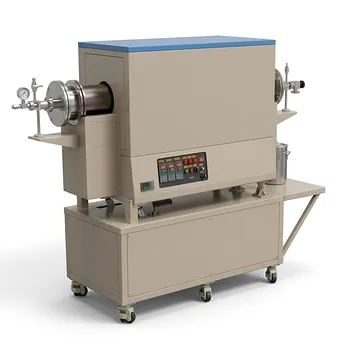
900°C Max Rotary Tube Furnace with 8 Inch 310S Alloy Tube and Optional Multi Zone Heating for Industrial Material Calcination
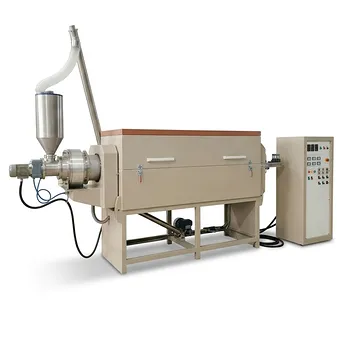
Continuous Feeding Rotary Tube Furnace for Industrial Powder Heat Treatment and Material Research
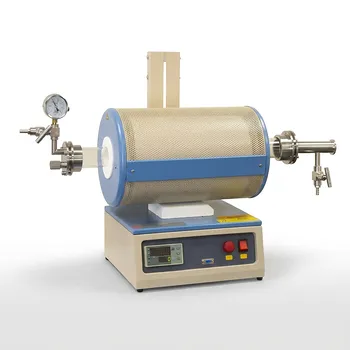
1100C Tube Furnace with Vacuum Flange and Programmable Temperature Controller for Material Science and Industrial Heat Treatment
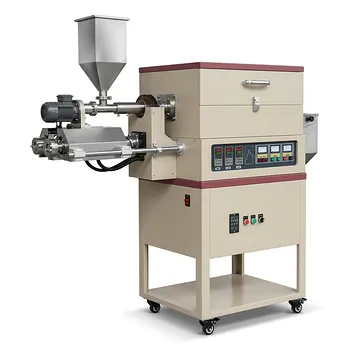
Laboratory Tilting Rotary Tubular Furnaces for Material Science and Industrial Heat Treatment

Compact High Temperature 1600C Tube Furnace with 50mm Alumina Tube and Vacuum Flanges for Material Sintering

High Temperature 1700C Tube Furnace with High Vacuum Turbomolecular Pump System and Multi Channel Mass Flow Controller Gas Mixer

Vertical 1700C Vacuum and Atmosphere Tube Furnace with 80mm Alumina Tube

High Temperature 1700C Vertical Tube Furnace for Powder Spherification and Material Sintering
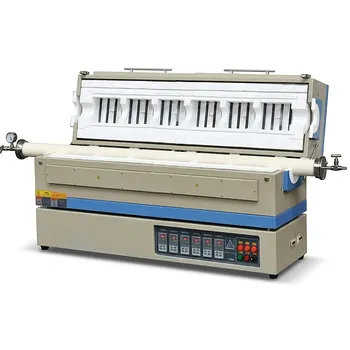
High Temperature 1700C Six Zone Split Tube Furnace with Alumina Tube and Water Cooled Flanges

1800C High Temperature Compact Vacuum Tube Furnace with 60mm OD Alumina Tube and Kanthal MoSi2 Heating Elements
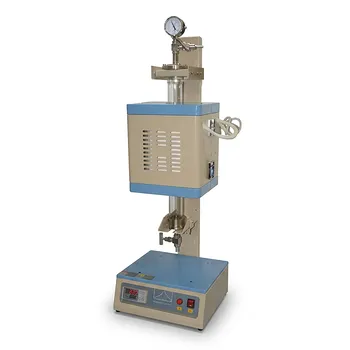
Compact Vertical Split Quartz Tube Furnace with Stainless Steel Vacuum Flanges for Rapid Thermal Quenching and Controlled Atmosphere Material Processing
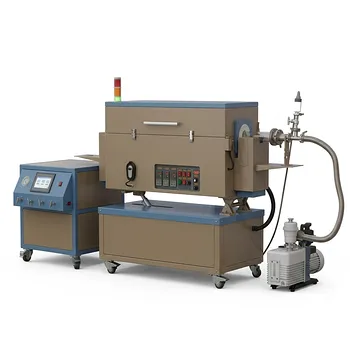
5 Inch Three Zone Rotary Tube Furnace with Integrated Gas Delivery System and 1200C Capability for Advanced Material CVD Processing
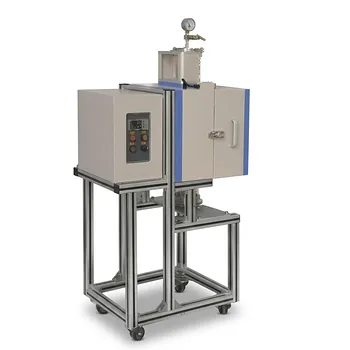
1200°C 5 Inch Vertical Quartz Tube Furnace with Stainless Steel Vacuum Flanges

High Temperature 1700C Benchtop Tube Furnace with 5 Inch Heating Zone High Purity Alumina Tube and Vacuum Sealing Flanges

High Temperature Automated 5 Inch Tube Furnace for Autonomous Material Research and Advanced Laboratory R&D
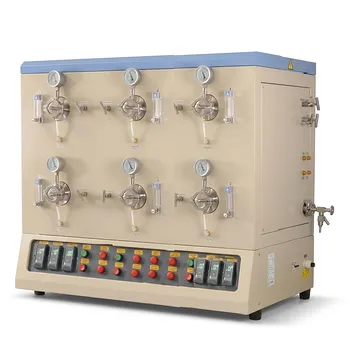
1200C High Throughput Multi Channel Tube Furnace with 50mm Quartz Tubes for Annealing and Material Phase Diagram Research
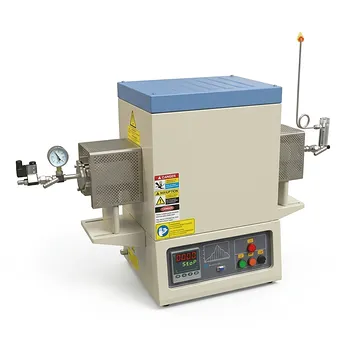
1700C Hydrogen Gas Tube Furnace with 60mm Alumina Process Tube and Integrated Hydrogen Safety Detector
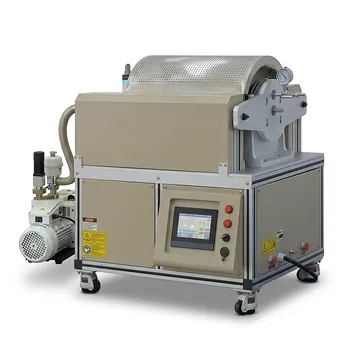
Automated 1200 C Tube Furnace for AI Material Research with 6 Inch OD and Sliding Flange
High Temperature 1700C Tube Furnace with 4 Inch OD Alumina Tube and Vacuum Sealing Flanges