How does high-temp equipment help grow MoSe2 on molten glass? Achieve Millimeter-Scale Single Crystals
Updated 3 months ago
High-temperature heating equipment facilitates the growth of MoSe2 by transforming a rigid glass substrate into a perfectly smooth, molten "quasi-liquid" interface. By heating the glass to temperatures exceeding 1050 °C in an atmospheric tube furnace, the material undergoes melting and reconstruction. This process eliminates atomic-scale roughness and high-energy trap sites, creating a pristine environment that allows for the low-density nucleation required to achieve millimeter-scale single-crystal domains.
The Core Takeaway: High-temperature processing leverages the phase transition of glass to create a frictionless, defect-free growth surface. This "quasi-liquid" state minimizes nucleation density, allowing individual crystals to grow to significantly larger scales than is possible on standard solid substrates.
Engineering the Ideal Growth Surface
The Role of Glass Reconstruction at 1050 °C
Standard substrates often possess atomic-scale "steps" and roughness that trigger unwanted crystal nucleation. By utilizing high-temperature heating equipment to reach temperatures above 1050 °C, the glass substrate reaches a molten state. This thermal energy allows the glass to reconstruct its surface, effectively "self-healing" physical imperfections.
Eliminating High-Energy Trap Sites
In its solid state, glass contains various high-energy sites that capture precursors and force the growth of many small, disconnected crystals. The melting process eliminates these trap sites, resulting in an extremely flat and clean interface. This lack of "anchors" ensures that the precursors can diffuse freely across the surface until they meet a controlled nucleation point.
Achieving Low-Density Nucleation
The primary prerequisite for growing large, millimeter-scale single crystals is maintaining a low nucleation density. Because the molten glass surface is so uniform, only a few initial crystals form. These sparse individual domains have the space to expand into massive single crystals without colliding with neighboring grains.
The Technical Infrastructure of CVD Growth
Precision Thermal Management in Tube Furnaces
Atmospheric tube furnaces provide the stable thermal environment necessary to maintain the glass in its molten state during the Chemical Vapor Deposition (APCVD) process. These furnaces must offer high temperature uniformity to ensure consistent diffusion energy across the entire substrate. Without precise control, the material may suffer from non-uniform growth or multi-layer "islands" rather than a clean single layer.
Reaction Chamber Purity and Geometry
The choice of quartz tubes and boats within the furnace is critical for preventing contamination. At the high temperatures required for molten glass (1050 °C+), high-purity quartz is essential to prevent the release of impurity ions that could degrade the MoSe2 crystal quality. Additionally, the diameter and configuration of the quartz tube dictate the gas flow field, which directly impacts the uniformity of the deposition.
Managing Precursor Vaporization
While the substrate is kept at extreme temperatures, the heating equipment also regulates the evaporation of precursors like Molybdenum Trioxide (MoO3) and Selenium. The placement of these materials within the furnace's temperature zones determines their evaporation rate. This synergy between substrate temperature and precursor delivery is what enables the synthesis of high-quality monolayer films.
Understanding the Trade-offs
Thermal Limits of Substrates
Heating equipment must be calibrated carefully to the specific substrate; for instance, while glass is melted at 1050 °C, other conductive substrates like Tantalum Nitride (TaN) would become volatile or reactive at those levels. Using temperatures that are too high for certain substrates can cause side reactions, such as the formation of unwanted sulfides or selenides, which compromise the device's electrical performance.
Crystalline Quality vs. Processing Time
While high-temperature melting produces superior single crystals, the process requires significantly more energy and longer cooling cycles to prevent the glass from cracking or crystallizing (devitrification). Rapidly retrieving or cooling the material, a feature found in lift-type furnaces, may be necessary in some industrial glass processes to "freeze" the ideal state, but for MoSe2, slow, controlled cooling is often preferred to maintain film integrity.
Strategic Implementation for Material Synthesis
How to Apply This to Your Project
- If your primary focus is Millimeter-Scale Single Crystals: Utilize temperatures above 1050 °C to melt the glass substrate, ensuring a quasi-liquid interface that minimizes nucleation density.
- If your primary focus is High-Throughput Production: Implement a lift-mechanism furnace to allow for rapid placement and retrieval of crucibles, though you must balance speed against the risk of thermal shock to the glass.
- If your primary focus is Device Electrical Performance: Follow the growth process with a lower-temperature annealing step (approx. 200 °C) in an Argon/Hydrogen atmosphere to remove residues and reduce contact resistance.
By mastering the transition of the substrate from a solid to a quasi-liquid state, researchers can bypass the physical limitations of traditional growth surfaces to create superior two-dimensional materials.
Summary Table:
| Feature | Role in MoSe2 Growth | Technical Requirement |
|---|---|---|
| Temperature (>1050°C) | Creates molten "quasi-liquid" interface | Precise PID control & high uniformity |
| Surface State | Eliminates atomic roughness & trap sites | Stable thermal soaking in Tube Furnace |
| Nucleation Control | Enables low-density, millimeter-scale growth | Clean CVD environment & pure precursors |
| Equipment Type | Facilitates APCVD and precursor delivery | High-purity quartz tubes & multi-zone heating |
Elevate Your Material Synthesis with THERMUNITS Precision Furnaces
Achieving millimeter-scale MoSe2 single crystals requires the highest level of thermal precision and atmospheric control. THERMUNITS is a leading manufacturer of high-temperature laboratory equipment dedicated to supporting breakthroughs in material science and industrial R&D.
Our advanced thermal processing solutions are engineered to handle the rigorous demands of CVD and quasi-liquid substrate reconstruction. We offer a comprehensive range of equipment, including:
- Tube & Atmosphere Furnaces: Ideal for precise APCVD/MoSe2 growth.
- CVD/PECVD Systems: For controlled thin-film deposition.
- Muffle, Vacuum, & Rotary Furnaces: For versatile heat treatments.
- Advanced Solutions: Vacuum Induction Melting (VIM), Hot Press, and high-quality Thermal Elements.
Ready to optimize your lab’s efficiency and crystal quality? Contact THERMUNITS today to discover how our high-performance furnaces can empower your research!
References
- Jitendra Singh, Hung‐Wei Yen. Growth of Wafer‐Scale Single‐Crystal 2D Semiconducting Transition Metal Dichalcogenide Monolayers. DOI: 10.1002/advs.202307839
Mentioned Products
- 1100C High Pressure Rocking Tube Furnace with 2 Inch Super Alloy Processing Tube for Material Synthesis
- Hybrid High Temperature Tube and Box Furnace 1700C with 2 Inch Alumina Tube for Material Research
- High Temperature 1700C Vertical Tube Furnace for Powder Spherification and Material Sintering
- 1500C Max Dual Zone Rotary Tube Furnace with 60 mm OD Alumina Tube for High Temperature Material Synthesis
- High Temperature Bench Top Muffle Furnace 1700C with Integrated Evaporating Particle Collection and 8x8x8 Alumina Fiber Chamber
People Also Ask
- Why is a high-pressure tube furnace required for the nitriding process of Fe-Cr-N alloys? Enhance Phase Stability
- What is the function of a high-temperature tube furnace in the synthesis of graphene oxide? Mastering LPCVD Processes
- Pt2CoM synthesis: High-temp tube furnace conditions (1000°C & 5% H2/Ar) for L10 intermetallic catalysts.
- What core conditions does a high-temperature tube furnace provide for rGO aerogels? Mastering Precision Synthesis.
- Why is it necessary to introduce steam into a high-temperature tube furnace during ACNN activation? Enhance Porosity.

Tech Team · ThermUnits
Last updated on Jun 03, 2026
Related Products
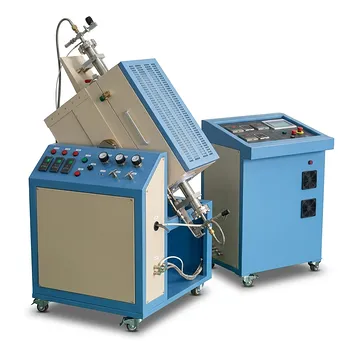
1100C High Pressure Rocking Tube Furnace with 2 Inch Super Alloy Processing Tube for Material Synthesis
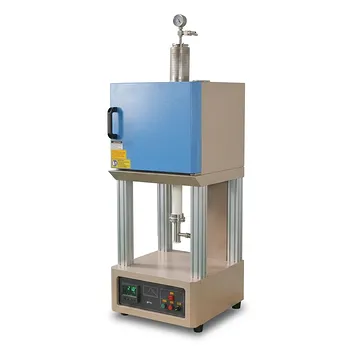
Hybrid High Temperature Tube and Box Furnace 1700C with 2 Inch Alumina Tube for Material Research

High Temperature 1700C Vertical Tube Furnace for Powder Spherification and Material Sintering
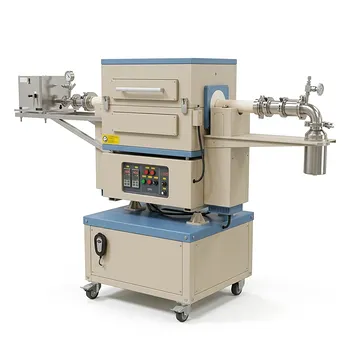
1500C Max Dual Zone Rotary Tube Furnace with 60 mm OD Alumina Tube for High Temperature Material Synthesis
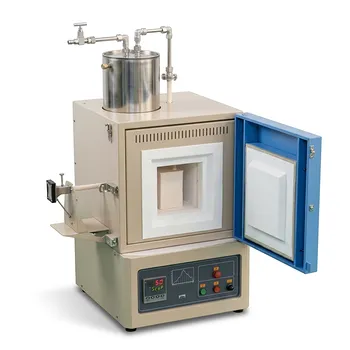
High Temperature Bench Top Muffle Furnace 1700C with Integrated Evaporating Particle Collection and 8x8x8 Alumina Fiber Chamber
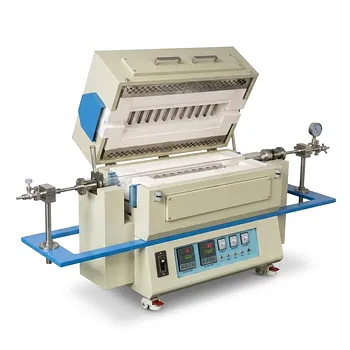
High Temperature Dual Zone Rotating Tube Furnace 1500C Silicon Carbide Heating for Advanced Material Synthesis
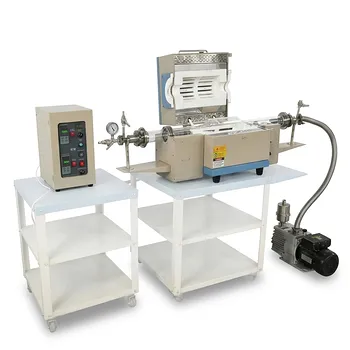
Two Zone Rotary Tube Furnace for Powder CVD Coating and Core Shell Material Synthesis 1100C
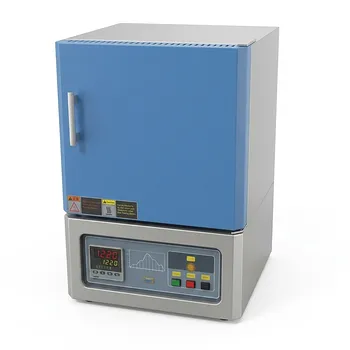
High Temperature Benchtop Muffle Furnace 1700C 10L Chamber Alumina Fiber Insulation MoSi2 Heating Elements
High Temperature Muffle Furnace with Dual Controllers and 36L Large Chamber 1700C Max
Compact Hybrid Muffle and Tube Furnace for 1000C Controlled Atmosphere Laboratory Material Sintering
High Temperature 1200C Automatic Sliding Dual Zone Tube Furnace for 2D Transition Metal Dichalcogenides Growth and Material Sublimation Research
1100C Eight Zone High Pressure Super Alloy Tube Furnace with Integrated High Pressure Gas Control System

High Temperature Tube Furnace 1500C with Sliding Flanges and 50mm OD for Rapid Thermal Processing Fast Heating and Cooling

1100C Tube Furnace with Vacuum Flange and Programmable Temperature Controller for Material Science and Industrial Heat Treatment

High Temperature Automated 5 Inch Tube Furnace for Autonomous Material Research and Advanced Laboratory R&D
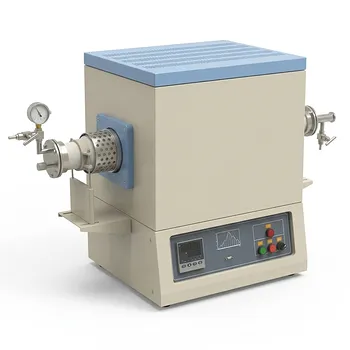
1750°C High Temperature Benchtop Vacuum Atmosphere Tube Furnace with Kanthal Super 1800 Heating Elements and 60mm Alumina Processing Tube
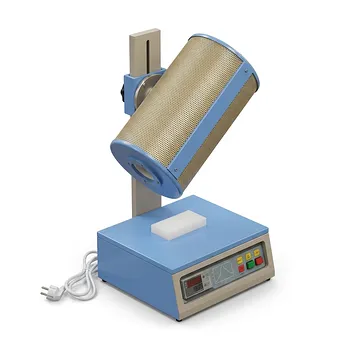
1100°C Vertical Laboratory Furnace for DIY Tubular Reactors with PID Temperature Controller

1700C Hydrogen Gas Tube Furnace with 60mm Alumina Process Tube and Integrated Hydrogen Safety Detector

High Temperature 1700C Benchtop Tube Furnace with 5 Inch Heating Zone High Purity Alumina Tube and Vacuum Sealing Flanges