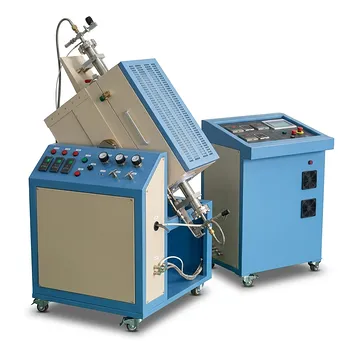
Pt2CoM synthesis: High-temp tube furnace conditions (1000°C & 5% H2/Ar) for L10 intermetallic catalysts.
Updated 3 months ago
The synthesis of $Pt_2CoM$ ($M=Cu, Ni$) intermetallic catalysts requires a high-temperature tube furnace to provide a precise thermal environment of 1000°C under a controlled reducing atmosphere, typically 5% $H_2/Ar$. This specific combination of extreme heat and chemical reduction allows the metal atoms to overcome energy barriers, facilitating the transition from a disordered state to a highly ordered $L1_0$ crystalline structure.
Core Takeaway: A high-temperature tube furnace is essential for $Pt_2CoM$ synthesis because it provides the 1000°C thermal energy and reducing atmosphere necessary to drive atomic-scale diffusion and structural ordering, which directly determines the catalyst's final stability and activity.
Thermal Requirements for Atomic Ordering
Overcoming the Energy Barrier for Diffusion
At the atomic level, metal atoms must physically move to transition from a random alloy to a structured intermetallic compound. The furnace provides a sustained 1000°C environment that delivers the kinetic energy required for these atoms to migrate within the lattice.
Facilitating the $L1_0$ Phase Transformation
The primary goal of this high-temperature treatment is to achieve the $L1_0$ structure, a specific ordered arrangement of atoms. This phase is critical because it significantly enhances the intrinsic activity and long-term durability of the $Pt_2CoM$ catalyst compared to disordered versions.
Precise Programmed Heating
Modern tube furnaces utilize programmable temperature control to manage the heating curve. This ensures that the transition to 1000°C is consistent, preventing thermal shock and ensuring uniform structural rearrangement across the entire catalyst batch.
Atmospheric Control and Chemical Reduction
The Role of the Reducing Atmosphere
The furnace maintains a constant flow of a reducing gas mixture, specifically 5% $H_2/Ar$. This environment prevents the oxidation of metallic components and facilitates the reduction of any existing metal oxides back to their zero-valent states.
Support and Carbonization Interactions
In many catalyst preparations, the tube furnace also handles the carbonization of organic ligands. This process creates a conductive carbon framework that can lock metal atoms in place, often forming nitrogen-doped layers or protective coatings that prevent the particles from migrating.
Maintaining Inert Environments
Beyond reduction, the furnace uses flowing argon (Ar) to provide an oxygen-deficient, inert environment. This is vital for protecting the delicate crystalline structures from atmospheric contamination during the high-temperature phase.
Understanding the Trade-offs
Sintering vs. Atomic Ordering
While 1000°C is necessary for ordering, high temperatures naturally increase the risk of sintering and agglomeration. If not carefully managed, the catalyst particles may fuse together, reducing the available surface area and overall catalytic efficiency.
Energy Consumption and Cooling Rates
Operating at 1000°C requires significant energy and specialized equipment capable of withstanding prolonged thermal stress. Additionally, the cooling rate after the synthesis is just as critical as the heating rate; cooling too quickly can "freeze" defects into the crystal lattice, while cooling too slowly might allow unwanted phase changes.
How to Apply This to Your Project
Making the Right Choice for Your Goal
To achieve the best results with a high-temperature tube furnace, tailor your process conditions to your specific material requirements:
- If your primary focus is maximizing $L1_0$ ordering: Prioritize a stable 1000°C soak time and a precise 5% $H_2$ concentration to ensure complete atomic rearrangement.
- If your primary focus is preventing particle growth: Implement an ultra-thin carbon-coating strategy within the furnace to physically isolate particles during the high-temperature phase.
- If your primary focus is catalyst activation: Use a lower temperature range, such as 600°C, to focus on oxygen vacancy generation and oxide reduction without inducing full phase changes.
A high-temperature tube furnace is not merely a heat source, but a precision instrument that dictates the atomic architecture and operational lifespan of advanced intermetallic catalysts.
Summary Table:
| Key Parameter | Process condition | Core Scientific Benefit |
|---|---|---|
| Temperature | 1000°C | Provides kinetic energy for atomic diffusion and $L1_0$ ordering. |
| Atmosphere | 5% $H_2/Ar$ | Ensures a reducing environment to prevent oxidation of metallic sites. |
| Heating Control | Programmable Curves | Prevents thermal shock and ensures uniform structural rearrangement. |
| Process Goal | Phase Transformation | Transitions disordered alloys into stable, high-activity intermetallics. |
Unlock Precision Thermal Processing with THERMUNITS
Are you looking to master the synthesis of advanced intermetallic catalysts? THERMUNITS is a leading manufacturer of high-performance laboratory equipment tailored for material science and industrial R&D. We offer a comprehensive range of solutions, including Tube, Vacuum, Atmosphere, and Rotary furnaces, as well as specialized CVD/PECVD systems and Vacuum Induction Melting (VIM) units.
Our equipment provides the precise 1000°C+ thermal control and atmospheric integrity required for critical $L1_0$ crystalline structure formation and atomic-scale diffusion.
Ready to enhance your lab's research capabilities? Contact THERMUNITS today to receive a professional consultation and discover how our thermal processing solutions can drive your next breakthrough.
References
- Peng Yin, Hai‐Wei Liang. Machine-learning-accelerated design of high-performance platinum intermetallic nanoparticle fuel cell catalysts. DOI: 10.1038/s41467-023-44674-1
Mentioned Products
- High Temperature Tube Furnace 1500C with Sliding Flanges and 50mm OD for Rapid Thermal Processing Fast Heating and Cooling
- High Temperature 1700C Tube Furnace with High Vacuum Turbomolecular Pump System and Multi Channel Mass Flow Controller Gas Mixer
- 1750°C High Temperature Benchtop Vacuum Atmosphere Tube Furnace with Kanthal Super 1800 Heating Elements and 60mm Alumina Processing Tube
- High Temperature 1700C Benchtop Tube Furnace with 5 Inch Heating Zone High Purity Alumina Tube and Vacuum Sealing Flanges
- 1700C High Temperature Alumina Tube Furnace with 18 Inch Heated Zone and Vacuum Sealing Flanges
People Also Ask
- How are high-temperature tube furnaces utilized to repair etching damage? Precision Lattice Restoration Solutions
- What core conditions does a high-temperature tube furnace provide for rGO aerogels? Mastering Precision Synthesis.
- What role does a high-temperature tube furnace play in CVD synthesis of silicon nanowires? Master VLS Growth Precision.
- How does precision tube furnace control influence CoFe nanoparticle formation? Master Your Bimetallic Synthesis.
- What role does a high-temperature tube furnace play in the sulfidation heat treatment of CoS@C/MXene nanocomposites? Guide

Tech Team · ThermUnits
Last updated on Jun 02, 2026
Related Products
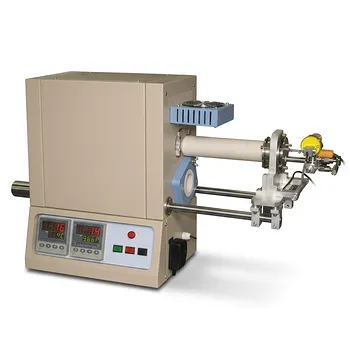
High Temperature Tube Furnace 1500C with Sliding Flanges and 50mm OD for Rapid Thermal Processing Fast Heating and Cooling

High Temperature 1700C Tube Furnace with High Vacuum Turbomolecular Pump System and Multi Channel Mass Flow Controller Gas Mixer

1750°C High Temperature Benchtop Vacuum Atmosphere Tube Furnace with Kanthal Super 1800 Heating Elements and 60mm Alumina Processing Tube

High Temperature 1700C Benchtop Tube Furnace with 5 Inch Heating Zone High Purity Alumina Tube and Vacuum Sealing Flanges
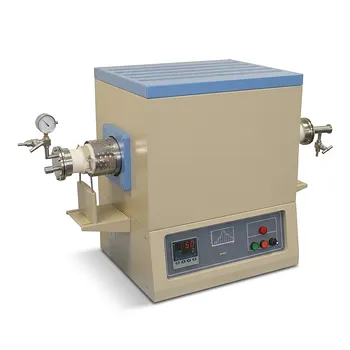
1700C High Temperature Alumina Tube Furnace with 18 Inch Heated Zone and Vacuum Sealing Flanges
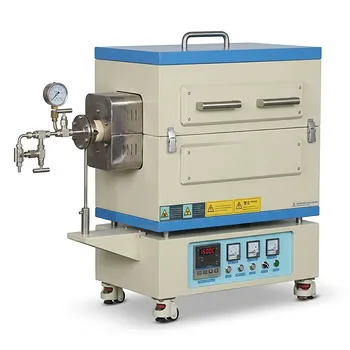
High Temperature Split Tube Furnace 1500C for Material Research Vacuum and Atmosphere Thermal Processing

1800C High Temperature Compact Vacuum Tube Furnace with 60mm OD Alumina Tube and Kanthal MoSi2 Heating Elements

Compact High Temperature 1600C Tube Furnace with 50mm Alumina Tube and Vacuum Flanges for Material Sintering
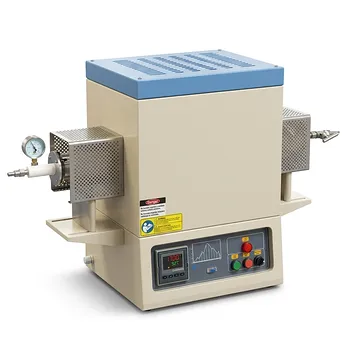
High Temperature Three Zone Tube Furnace 1700C with Alumina Tube and Water Cooled Flanges
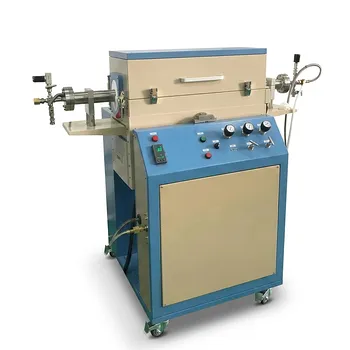
High Temperature Rocking Tube Furnace 1700°C Alumina Processing Tube with Precision Oscillation for Material Synthesis
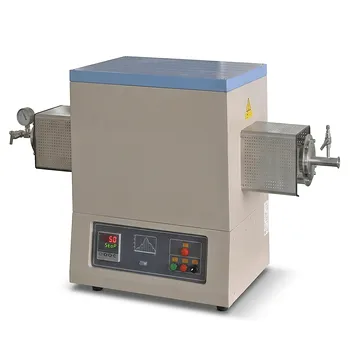
High Temperature 1700C Tube Furnace with 4 Inch OD Alumina Tube and Vacuum Sealing Flanges

High Temperature 1700C Vertical Tube Furnace for Powder Spherification and Material Sintering
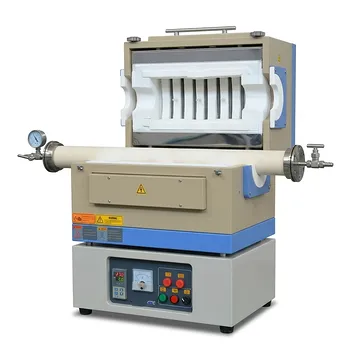
High Temperature 1600C Split Tube Furnace Vacuum Flanges Valves Optional 60mm 80mm Alumina Tube

High Temperature Automated 5 Inch Tube Furnace for Autonomous Material Research and Advanced Laboratory R&D

High Temperature 1700C Six Zone Split Tube Furnace with Alumina Tube and Water Cooled Flanges
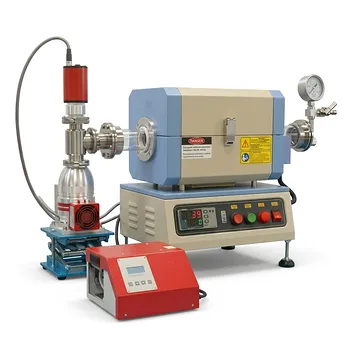
High Vacuum Compact Tube Furnace 1200C with Integrated Turbo Pump System and 8 Inch Heating Zone
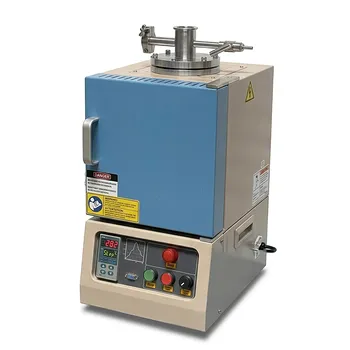
High Temperature Hybrid Muffle and Tube Furnace with Vacuum Capability and PID Control
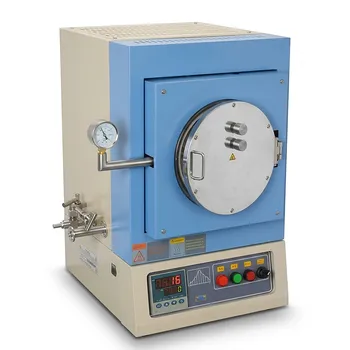
1100°C High Temperature Quartz Chamber Furnace 8 Inch OD with 7.6 Liter Capacity and Vacuum Atmosphere Capability
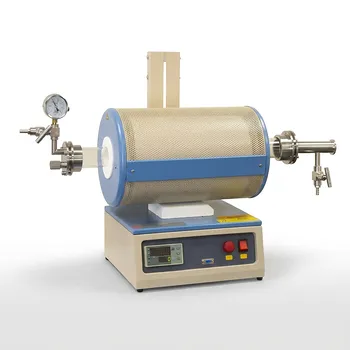
1100C Tube Furnace with Vacuum Flange and Programmable Temperature Controller for Material Science and Industrial Heat Treatment