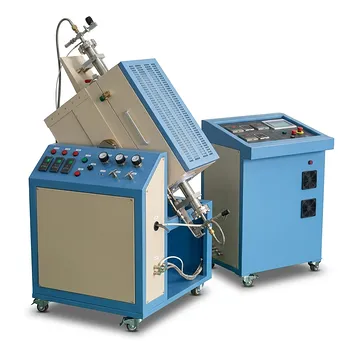
What core conditions does a high-temperature tube furnace provide for rGO aerogels? Mastering Precision Synthesis.
Updated 3 months ago
A high-temperature tube furnace provides the critical environment necessary to transform insulating Graphene Oxide (GO) into a conductive, functionalized aerogel. By delivering a strictly controlled inert atmosphere and precise thermal gradients, the furnace facilitates the desorption of oxygen-containing functional groups and the restoration of the sp2 carbon lattice. This process, often occurring between 800°C and 1050°C, is essential for establishing an efficient electron transport network within the aerogel’s porous architecture.
The core takeaway is that a high-temperature tube furnace serves as a multi-functional reactor that manages the balance between thermal energy and atmospheric purity. It enables the simultaneous chemical reduction, physical exfoliation, and structural stabilization of graphene-based materials.
The Role of Controlled Atmospheric Environments
Prevention of Oxidative Combustion
A tube furnace allows for the introduction of inert gases, such as Argon or Nitrogen, which isolate the material from oxygen. This is vital because, at high temperatures, the carbon framework of an aerogel would undergo oxidative combustion if exposed to air. By maintaining an oxygen-deficient environment, the furnace ensures the graphene structure remains intact while removing unwanted functional groups.
Facilitating Chemical Reduction
Beyond inert protection, tube furnaces can support reducing atmospheres, such as a hydrogen flow. At temperatures around 350°C, hydrogen reacts with oxygen-rich precursors to facilitate the conversion of metal oxides or GO into their reduced metallic or carbonized states. This gas-path design is critical for regulating interfacial carrier injection and ensuring synchronized component conversion in hybrid aerogels.
Managing Pressure and Exfoliation
In a sealed or vacuum-capable tube furnace, the environment can be manipulated to handle the rapid release of gases like CO and CO2. During "thermal shock" treatments (e.g., 1050°C for 45 seconds), the rapid decomposition of epoxy and carboxyl groups generates instantaneous internal pressure. This pressure overcomes van der Waals forces, leading to the physical exfoliation of layers and a higher specific surface area.
Precision Thermal Management
Defined Temperature Gradients for Annealing
The furnace provides a precise temperature gradient necessary for the thermal annealing of aerogels. This controlled heat application allows for the steady removal of hydroxyl and carboxyl groups without destroying the delicate 3D pore structure. Precise control ensures that the resulting reduced Graphene Oxide (rGO) achieves consistent material modification across the entire batch.
Multi-Stage Programmable Heating
Modern tube furnaces offer multi-stage programmable cycles, which are essential for complex aerogel composites. For example, a process might hold at 100, 200, and 300°C to allow for the simultaneous thermal imidization of polymers and the gradual reduction of GO. This tiered approach prevents structural collapse and endows the material with specific properties like hydrophobicity and mechanical strength.
High-Temperature Carbonization
At temperatures near 800°C to 950°C, the furnace facilitates the carbonization of secondary components like Cellulose Nanofibers or Carbon Nanotubes. This step is what ultimately restores electrical conductivity to the aerogel. By constructing a robust electron transport network, the furnace significantly enhances the material's dielectric loss and electromagnetic wave dissipation capabilities.
Understanding the Trade-offs and Pitfalls
Structural Integrity vs. Reduction Degree
While higher temperatures (above 1000°C) yield the best electrical conductivity by removing more oxygen, they also increase the risk of aerogel shrinkage. The rapid escape of gases during thermal shock can cause the pore walls to rupture or collapse if not carefully managed. Achieving the "perfect" aerogel requires a delicate balance between the reduction degree and the preservation of the three-dimensional framework.
Heating Uniformity and Scale
Tube furnaces are excellent for laboratory-scale precision, but maintaining a uniform thermal zone becomes difficult as the tube diameter increases. Temperature variances within the tube can lead to inconsistent reduction levels, where the center of the aerogel sample may have more residual oxygen than the exterior. This lack of uniformity can compromise the overall chemical stability and performance of the final product.
Applying Furnace Conditions to Your Synthesis Goal
The choice of furnace parameters should be dictated by the intended application of your rGO aerogel.
- If your primary focus is Electrical Conductivity: Prioritize high-temperature annealing (800°C–1050°C) in an Argon atmosphere to maximize the restoration of the carbon lattice.
- If your primary focus is Structural Porosity/Surface Area: Utilize a rapid thermal shock profile to trigger physical exfoliation via instantaneous gas expansion.
- If your primary focus is Hybrid Composites (e.g., Polymer/rGO): Use a multi-stage programmable heating cycle to allow for polymer imidization or cross-linking at lower temperatures before final reduction.
- If your primary focus is Chemical Doping (e.g., Boron or Nitrogen): Maintain a strictly controlled Nitrogen or precursor-rich atmosphere at moderate temperatures (500°C) to facilitate lattice replacement without burning the graphene structure.
Mastering the interplay between gas flow, ramp rates, and peak temperatures allows for the precise engineering of rGO aerogels tailored to specific technical challenges.
Summary Table:
| Furnace Parameter | Role in rGO Aerogel Synthesis | Key Process Conditions |
|---|---|---|
| Inert Atmosphere | Prevents oxidative combustion | Argon or Nitrogen flow |
| Reducing Atmosphere | Facilitates oxygen removal | Hydrogen gas injection |
| Temperature Range | Restores electrical conductivity | 800°C – 1050°C |
| Heating Profile | Prevents structural collapse | Multi-stage programmable cycles |
| Thermal Shock | Promotes physical exfoliation | Rapid heating (e.g., 1050°C) |
Elevate Your Material Research with THERMUNITS
Achieving the perfect balance between conductivity and porosity in rGO aerogels requires uncompromising precision. THERMUNITS is a leading manufacturer of high-temperature laboratory equipment specifically designed for the demands of material science and industrial R&D.
From high-precision Tube Furnaces and Atmosphere Systems to advanced CVD/PECVD and Vacuum Induction Melting (VIM) units, our comprehensive range of thermal processing solutions empowers you to control every variable of your synthesis. Whether you need Muffle, Rotary, or Hot Press furnaces, we provide the stability and uniformity your research deserves.
Ready to optimize your thermal processes? Contact us today to discuss your project requirements!
References
- Seyyed Alireza Hashemi, Mohammad Arjmand. Liquid-templated graphene aerogel electromagnetic traps. DOI: 10.1039/d3nr06478f
Mentioned Products
- High Temperature Tube Furnace 1500C with Sliding Flanges and 50mm OD for Rapid Thermal Processing Fast Heating and Cooling
- High Temperature 1700C Tube Furnace with High Vacuum Turbomolecular Pump System and Multi Channel Mass Flow Controller Gas Mixer
- 1750°C High Temperature Benchtop Vacuum Atmosphere Tube Furnace with Kanthal Super 1800 Heating Elements and 60mm Alumina Processing Tube
- High Temperature 1700C Benchtop Tube Furnace with 5 Inch Heating Zone High Purity Alumina Tube and Vacuum Sealing Flanges
- High Temperature Split Tube Furnace 1500C for Material Research Vacuum and Atmosphere Thermal Processing
People Also Ask
- How are high-temperature tube furnaces utilized to repair etching damage? Precision Lattice Restoration Solutions
- What role does a high-temperature tube furnace play in CVD synthesis of silicon nanowires? Master VLS Growth Precision.
- How does precision tube furnace control influence CoFe nanoparticle formation? Master Your Bimetallic Synthesis.
- What role does a high-temperature tube furnace play in the sulfidation heat treatment of CoS@C/MXene nanocomposites? Guide
- What is the function of a high-temperature tube furnace in zirconia catalyst prep? Optimize phase and performance.

Tech Team · ThermUnits
Last updated on Jun 02, 2026
Related Products

High Temperature Tube Furnace 1500C with Sliding Flanges and 50mm OD for Rapid Thermal Processing Fast Heating and Cooling

High Temperature 1700C Tube Furnace with High Vacuum Turbomolecular Pump System and Multi Channel Mass Flow Controller Gas Mixer

1750°C High Temperature Benchtop Vacuum Atmosphere Tube Furnace with Kanthal Super 1800 Heating Elements and 60mm Alumina Processing Tube

High Temperature 1700C Benchtop Tube Furnace with 5 Inch Heating Zone High Purity Alumina Tube and Vacuum Sealing Flanges
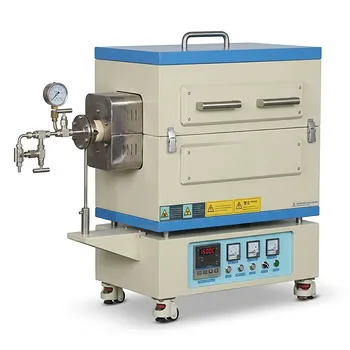
High Temperature Split Tube Furnace 1500C for Material Research Vacuum and Atmosphere Thermal Processing
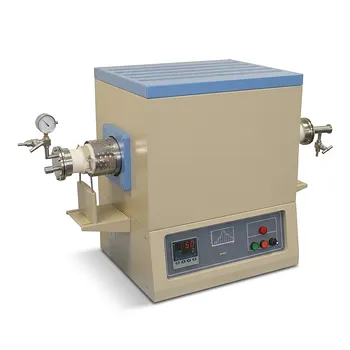
1700C High Temperature Alumina Tube Furnace with 18 Inch Heated Zone and Vacuum Sealing Flanges

1800C High Temperature Compact Vacuum Tube Furnace with 60mm OD Alumina Tube and Kanthal MoSi2 Heating Elements

Compact High Temperature 1600C Tube Furnace with 50mm Alumina Tube and Vacuum Flanges for Material Sintering
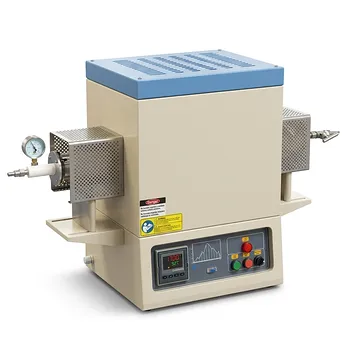
High Temperature Three Zone Tube Furnace 1700C with Alumina Tube and Water Cooled Flanges
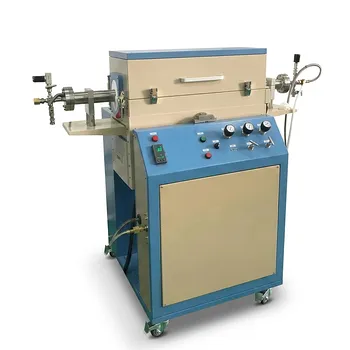
High Temperature Rocking Tube Furnace 1700°C Alumina Processing Tube with Precision Oscillation for Material Synthesis
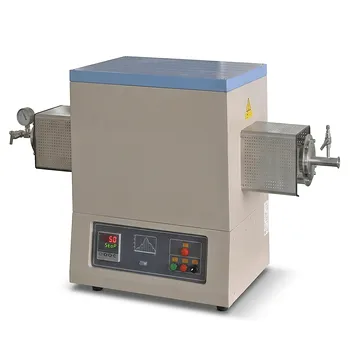
High Temperature 1700C Tube Furnace with 4 Inch OD Alumina Tube and Vacuum Sealing Flanges

High Temperature 1700C Vertical Tube Furnace for Powder Spherification and Material Sintering
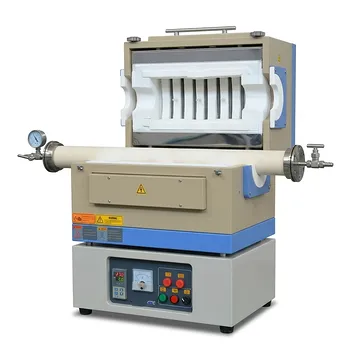
High Temperature 1600C Split Tube Furnace Vacuum Flanges Valves Optional 60mm 80mm Alumina Tube

High Temperature Automated 5 Inch Tube Furnace for Autonomous Material Research and Advanced Laboratory R&D

High Temperature 1700C Six Zone Split Tube Furnace with Alumina Tube and Water Cooled Flanges

High Vacuum Compact Tube Furnace 1200C with Integrated Turbo Pump System and 8 Inch Heating Zone
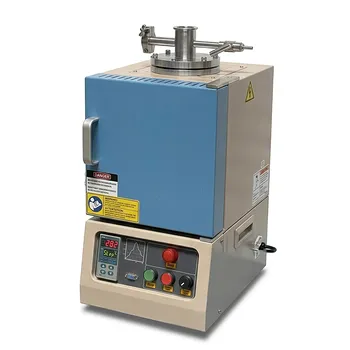
High Temperature Hybrid Muffle and Tube Furnace with Vacuum Capability and PID Control

1100°C High Temperature Quartz Chamber Furnace 8 Inch OD with 7.6 Liter Capacity and Vacuum Atmosphere Capability

1100C Tube Furnace with Vacuum Flange and Programmable Temperature Controller for Material Science and Industrial Heat Treatment