How does the arrangement of selenium powder and Ni-N-C inside a tube furnace affect the selenization process? Key Insights
Updated 3 months ago
The spatial arrangement of precursors is the primary driver of reaction kinetics in a tube furnace. Placing selenium powder upstream of the Ni-N-C precursor enables the carrier gas to transport selenium vapor directly into the reaction zone. This specific configuration ensures maximum contact between the vapor and the solid precursor, facilitating the uniform in-situ growth of highly active NiSe2 nanoparticles.
Core Takeaway: The upstream/downstream setup transforms a tube furnace into a precision gas-phase reactor. By leveraging gas flow and internal temperature gradients, researchers can control the delivery rate and uniformity of selenium to ensure high-quality, small-sized nanoparticle growth within carbon structures.
The Mechanics of Gas-Phase Transport
Directional Vapor Delivery
In a tube furnace, the Argon (Ar) carrier gas acts as a vehicle for the selenium. By placing the selenium powder upstream, the gas picks up the evaporated selenium vapor as it sublimes and carries it toward the Ni-N-C precursor.
Facilitating In-Situ Growth
This arrangement allows the selenium vapor to penetrate the nitrogen-doped carbon layers of the precursor effectively. The result is the growth of small-sized NiSe2 nanoparticles that are physically constrained and stabilized by the carbon matrix.
Maximizing Surface Contact
Because the selenium is in a vapor phase when it reaches the Ni-N-C, it can interact with the entire surface area of the solid precursor. This ensures that the conversion from the metallic or oxide precursor to the selenide is deep and thorough.
Leveraging the Thermal Gradient
Managing Sublimation and Reaction
Selenium sublimes at a relatively low temperature compared to the temperatures required for NiSe2 crystal formation. Placing selenium in a cooler upstream section while the Ni-N-C occupies the hotter central zone allows both processes to occur at their ideal rates simultaneously.
Ensuring Uniformity
The stable gas flow path provided by the tube furnace creates a consistent concentration of selenium vapor over the precursor. This prevents localized "hot spots" of reaction, leading to structurally stable nanocrystals rather than irregular clusters.
Controlling the Crystal Phase
Precise positioning within the temperature gradient allows for the control of the crystal phase of the resulting material. By adjusting the distance between the two boats, you can influence the density of the selenium vapor and the speed of the selenization reaction.
Understanding the Trade-offs
Distance and Deposition Risks
If the selenium source is placed too far upstream, the vapor may cool and deposit on the inner walls of the quartz tube before reaching the precursor. This results in an incomplete reaction and wastes material.
Concentration vs. Particle Size
A very short distance between the source and the precursor can lead to a high vapor concentration. While this speeds up the reaction, it can also cause the nanoparticles to grow too large or sinter, reducing the overall electrochemical activity.
Flow Rate Sensitivity
The speed of the carrier gas is just as critical as the physical arrangement. If the flow rate is too high, the selenium vapor may pass over the Ni-N-C too quickly to react; if it is too low, the vapor may not reach the precursor uniformly.
How to Apply This to Your Project
When setting up your selenization process, your spatial strategy should align with your specific material requirements:
- If your primary focus is small nanoparticle size: Position the precursor in the center of the heating zone and use a moderate flow rate to ensure selenium is delivered steadily without overwhelming the growth sites.
- If your primary focus is high crystallinity: Ensure the selenium source is placed in a zone that maintains a constant sublimation rate for the duration of the heating program to provide a saturated atmosphere.
- If your primary focus is structural stability: Prioritize a uniform thermal field by placing the Ni-N-C precursor in the flattest part of the furnace's temperature profile to prevent uneven expansion or phase changes.
Mastering the spatial relationship between your source and your target is the key to transitioning from simple material heating to advanced, controlled chemical vapor deposition.
Summary Table:
| Parameter | Ideal Arrangement | Impact on Selenization |
|---|---|---|
| Selenium Position | Upstream (Cooler zone) | Ensures steady vapor transport via carrier gas |
| Ni-N-C Position | Downstream (Hot central zone) | Facilitates deep in-situ growth of nanoparticles |
| Gas Flow (Ar) | Moderate flow rate | Controls vapor density and reaction uniformity |
| Spatial Distance | Optimized gradient gap | Prevents wall deposition and limits particle sintering |
| Thermal Gradient | Targeted temperature zones | Dictates crystal phase and structural stability |
Elevate Your Material Research with THERMUNITS
Achieving precision in selenization and CVD processes requires world-class thermal control. THERMUNITS is a leading manufacturer of high-temperature laboratory equipment for material science and industrial R&D. We offer a comprehensive range of thermal processing solutions, including:
- Advanced Furnaces: Tube, Vacuum, Atmosphere, Muffle, Rotary, and Hot Press furnaces.
- Specialized Systems: CVD/PECVD systems, Dental Furnaces, and Vacuum Induction Melting (VIM) furnaces.
- Components: High-quality Thermal Elements and electric rotary kilns.
Whether you are synthesizing NiSe2 nanoparticles or developing next-generation carbon structures, our equipment ensures the uniform thermal gradients and stable gas flow necessary for high-quality results.
Ready to optimize your lab's efficiency? Contact our technical experts today to find the perfect heat treatment solution for your research.
References
- Qiaoting Cheng, Hua Wang. Modification of NiSe2 Nanoparticles by ZIF-8-Derived NC for Boosting H2O2 Production from Electrochemical Oxygen Reduction in Acidic Media. DOI: 10.3390/catal14060364
Mentioned Products
- High Temperature 1700C Vertical Tube Furnace for Powder Spherification and Material Sintering
- Compact High Temperature 1600C Tube Furnace with 50mm Alumina Tube and Vacuum Flanges for Material Sintering
- 900°C Max Rotary Tube Furnace with 8 Inch 310S Alloy Tube and Optional Multi Zone Heating for Industrial Material Calcination
- Compact Vertical Split Quartz Tube Furnace with Stainless Steel Vacuum Flanges for Rapid Thermal Quenching and Controlled Atmosphere Material Processing
- 1250C Split Tube Furnace with 3 Inch Mullite Tube and Vacuum Sealing Flanges for Precision Thermal Processing
People Also Ask
- What role does a high-temperature vertical tube furnace play in simulating high-carbon ferromanganese slag formation?
- What functions does a vertical high-temperature tube furnace perform? Master Industrial Sintering & R&D Simulation
- What is the primary function of a high-temperature tube furnace in Cu1-N-C synthesis? Precision Thermal Control.
- High-Temp Tube Furnace Role in Converting Microbial Proteins to Iron Single-Atom Sites: Expert Synthesis Guide
- What impact does the heating rate of a tube furnace have on biochar microstructure? Optimize Your Material R&D.

Tech Team · ThermUnits
Last updated on Jun 02, 2026
Related Products

High Temperature 1700C Vertical Tube Furnace for Powder Spherification and Material Sintering

Compact High Temperature 1600C Tube Furnace with 50mm Alumina Tube and Vacuum Flanges for Material Sintering
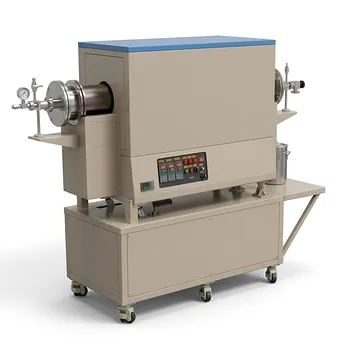
900°C Max Rotary Tube Furnace with 8 Inch 310S Alloy Tube and Optional Multi Zone Heating for Industrial Material Calcination

Compact Vertical Split Quartz Tube Furnace with Stainless Steel Vacuum Flanges for Rapid Thermal Quenching and Controlled Atmosphere Material Processing
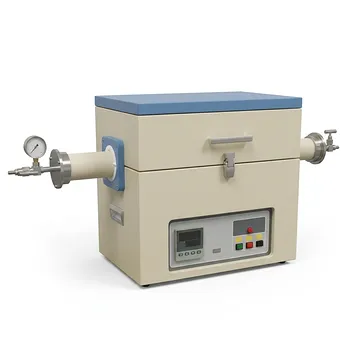
1250C Split Tube Furnace with 3 Inch Mullite Tube and Vacuum Sealing Flanges for Precision Thermal Processing
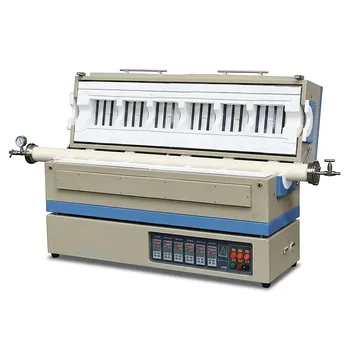
Six Zone Split Tube Furnace with Alumina Tube and Vacuum Flanges for 1500C High Temperature Thermal Processing and CVD

High Temperature 1700C Six Zone Split Tube Furnace with Alumina Tube and Water Cooled Flanges
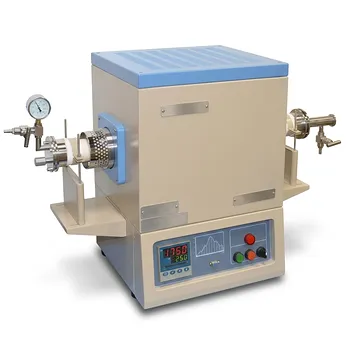
High Temperature Compact Vacuum Tube Furnace 1750C Max 60mm OD Alumina Tube
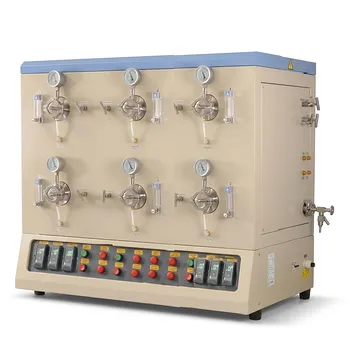
1200C High Throughput Multi Channel Tube Furnace with 50mm Quartz Tubes for Annealing and Material Phase Diagram Research
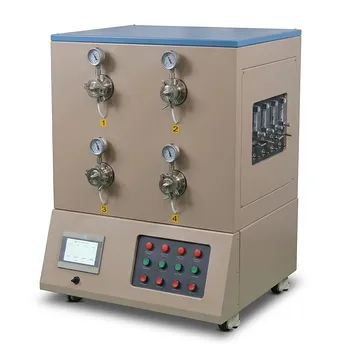
High Throughput 1200C Four Channel Tube Furnace with 3 Inch Quartz Tubes for Multi Zone Annealing and Material Research

Vertical 1700C Vacuum and Atmosphere Tube Furnace with 80mm Alumina Tube
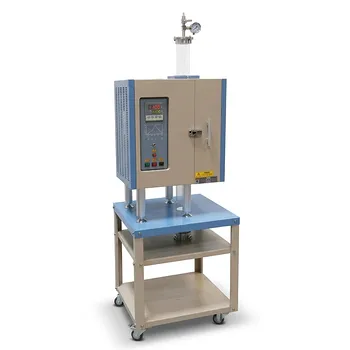
1100°C Split Vertical Tube Furnace with 80mm Quartz Tube and Stainless Steel Vacuum Flanges

High Temperature 1700C Tube Furnace with 4 Inch OD Alumina Tube and Vacuum Sealing Flanges

1800C High Temperature Compact Vacuum Tube Furnace with 60mm OD Alumina Tube and Kanthal MoSi2 Heating Elements

High Temperature 1700C Benchtop Tube Furnace with 5 Inch Heating Zone High Purity Alumina Tube and Vacuum Sealing Flanges
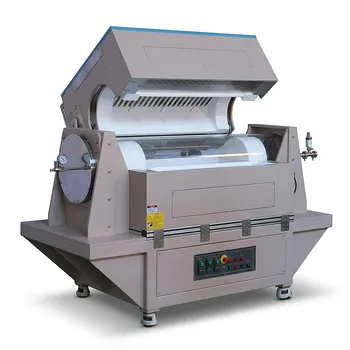
Three Zone Tube Furnace with 11 Inch or 15 Inch Quartz Tube and Hinged Flanges for Vacuum Atmosphere Heat Treatment
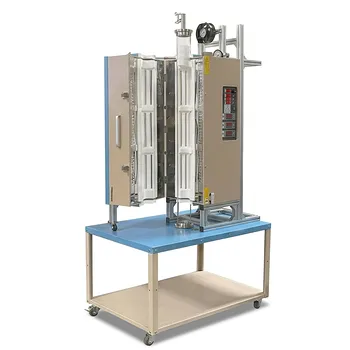
1200C Three Zone Split Vertical Tube Furnace 4 Inch Quartz Tube Stainless Steel Vacuum Flanges
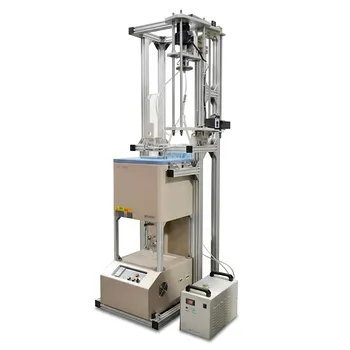
500C Vacuum Vertical Tube Furnace 84mm OD Sample Rotation Lifting System
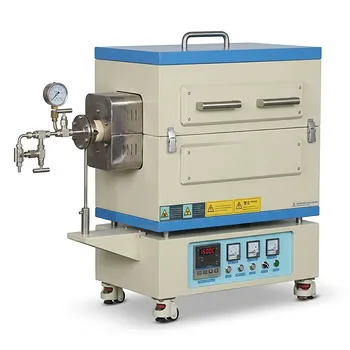
High Temperature Split Tube Furnace 1500C for Material Research Vacuum and Atmosphere Thermal Processing