How does the carrier gas control system influence the morphology of WSe2 nanosheets? Precision Control in CVD Growth
Updated 6 months ago
The carrier gas control system acts as the primary mechanical lever for engineering the morphology of Tungsten Diselenide ($WSe_2$) nanosheets. By modulating the flow rates of Argon (Ar) and Hydrogen ($H_2$) via mass flow meters, the system dictates the concentration and transport velocity of selenium vapor within the furnace. This precise regulation enables the transition between distinct structural forms, such as moving from hexagonal monolayers to triangular bilayers, by altering the chemical environment during deposition.
Core Takeaway: The carrier gas system influences $WSe_2$ morphology by controlling precursor transport kinetics and the chemical reactivity of the furnace atmosphere. By adjusting the Ar/$H_2$ ratio, the system manages the critical balance between selenium deposition and edge etching, enabling thickness-controllable growth.
Regulating Vapor Transport and Concentration
The Function of Mass Flow Precision
Mass flow meters provide the high-precision control necessary to regulate the delivery of Argon and Hydrogen into the reaction chamber. These meters ensure that the volume of gas remains consistent, which is vital for maintaining a stable selenium vapor concentration throughout the growth cycle.
Kinetic Control of Precursor Delivery
The flow rate of the carrier gas directly determines the transport rate of selenium atoms from the source to the substrate. By increasing or decreasing this rate, the system controls the frequency of contact between the selenium vapor and the tungsten precursor, which dictates whether the film grows in a uniform layer or forms localized clusters.
Spatial Distribution and Uniformity
The carrier gas dynamics interact with the geometry of the furnace—including quartz or alumina boats—to influence local airflow disturbances. These disturbances can be fine-tuned to ensure a consistent precursor vapor distribution across the substrate surface, which is essential for achieving morphological consistency over large surface areas.
The Role of the Reducing Atmosphere
Hydrogen as a Morphology Regulator
Hydrogen ($H_2$) serves a dual purpose as both a reducing agent and a structural sculptor. It manages the balance between growth and etching; an optimized $H_2$ flow rate can etch away unstable edges, facilitating the formation of regular, highly ordered single-crystal domains.
Adjusting Component Ratios
The ratio between selenium and tungsten is sensitive to the Ar/$H_2$ flow balance, which effectively determines the "reducing power" of the furnace atmosphere. This balance is what allows for thickness-controllable growth, enabling researchers to favor the development of specific geometric shapes, such as hexagonal monolayers.
Prevention of Oxidation
High-purity Argon acts as an inert shield, displacing ambient air within the furnace to prevent the oxidation of the metallic precursors. Maintaining this oxygen-free environment is critical for ensuring that the resulting $WSe_2$ nanosheets retain their intended electronic properties and morphological integrity.
Understanding the Trade-offs and Limitations
Growth Speed vs. Crystal Quality
While higher carrier gas flow rates can accelerate the vapor transport rate and speed up production, they often come at the cost of crystallinity. Rapid deposition can lead to disordered structures or high defect densities, as atoms lack the time to settle into their lowest-energy lattice positions.
The Risk of Excessive Etching
While Hydrogen is necessary for refining the shape of the nanosheets, an excessive $H_2$ concentration can become counterproductive. If the etching rate exceeds the growth rate, the system may fail to form a continuous film, or it may result in perforated nanosheets with degraded structural stability.
Temperature and Flow Interdependency
The effectiveness of gas control is highly dependent on the tube furnace temperature. For example, even with perfect gas flow, if the temperature is too high (e.g., above 1000°C), the material may transition from horizontal growth to vertical growth, overriding the morphological controls established by the carrier gas.
How to Apply This to Your Project
Recommendations for Material Design
- If your primary focus is thickness precision: Prioritize the Ar/$H_2$ ratio to maintain a stable selenium-to-tungsten component ratio, which favors monolayer hexagonal growth.
- If your primary focus is large-area uniformity: Optimize the carrier gas flow rate to manage gas-phase transport kinetics and ensure even precursor distribution across the substrate.
- If your primary focus is high crystal quality: Implement a controlled hydrogen flow to dynamically manage the etching of unstable edges during the growth process.
By mastering the dynamics of the carrier gas control system, you can move beyond simple material synthesis to true morphological engineering of $WSe_2$ nanosheets.
Summary Table:
| Parameter | System Component | Influence on WSe2 Morphology |
|---|---|---|
| Vapor Concentration | Mass Flow Meters | Ensures stable selenium delivery for consistent thickness. |
| Transport Kinetics | Argon (Ar) Flow | Controls precursor delivery speed and nucleation density. |
| Edge Refinement | Hydrogen (H2) Ratio | Acts as a structural sculptor through controlled edge etching. |
| Reducing Power | Ar/H2 Balance | Determines component ratios favoring monolayers vs. bilayers. |
| Environment Purity | Inert Shielding | Prevents oxidation to maintain crystal lattice integrity. |
Achieve Unrivaled Precision in 2D Material Synthesis with THERMUNITS
At THERMUNITS, we understand that morphological engineering of materials like $WSe_2$ requires absolute control over thermal and gas environments. As a leading manufacturer of high-temperature laboratory equipment for material science, we offer a comprehensive range of solutions including CVD/PECVD systems, Tube furnaces, and Atmosphere furnaces specifically designed for high-precision R&D.
Our equipment features integrated mass flow controllers and advanced thermal management to help you master precursor transport and vapor distribution. Whether you are focusing on monolayer growth or large-scale industrial R&D, we provide the tools to elevate your heat treatment processes.
Ready to optimize your synthesis results? Contact us today to explore our thermal processing solutions!
References
- Siyuan Wang, Hai Li. Controllable Growth of Monolayer and Bilayer WSe2 by Liquid-Phase Precursor via Chemical Vapor Deposition for Photodetection. DOI: 10.3390/nano14242021
Mentioned Products
- Radio Frequency Plasma Enhanced Chemical Vapor Deposition RF PECVD System for Laboratory and Industrial Thin Film Growth
- Cylindrical Resonator MPCVD Machine System for Microwave Plasma Chemical Vapor Deposition and Lab Diamond Growth
- Inclined Rotary Plasma Enhanced Chemical Vapor Deposition PECVD System for Thin Film Deposition and Nanomaterial Synthesis
- HFCVD Machine System for Nano Diamond Coating on Drawing Dies and Industrial Tools
- High Temperature 1200C Automatic Sliding Dual Zone Tube Furnace for 2D Transition Metal Dichalcogenides Growth and Material Sublimation Research
People Also Ask
- What are the advantages of PECVD systems for nano flame retardant films? Protect Heat-Sensitive Polymers with Precision
- How does PECVD differ from conventional thermal CVD? Key Advantages of Low-Temperature Deposition for R&D
- What is the role of CVD/PECVD systems in the research of optoelectronic materials and functional coatings? Expert Guide
- What are the benefits of using PECVD for optical and photonic coatings? Achieve High-Precision Thin-Film Deposition
- How do RF frequency and power settings influence the characteristics of a PECVD process? Master Quality & Efficiency

Tech Team · ThermUnits
Last updated on Apr 14, 2026
Related Products
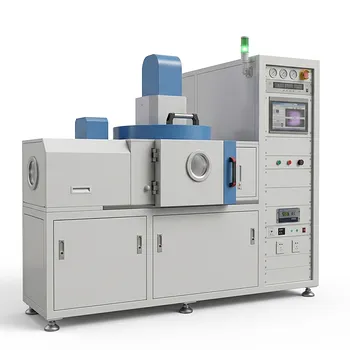
Radio Frequency Plasma Enhanced Chemical Vapor Deposition RF PECVD System for Laboratory and Industrial Thin Film Growth
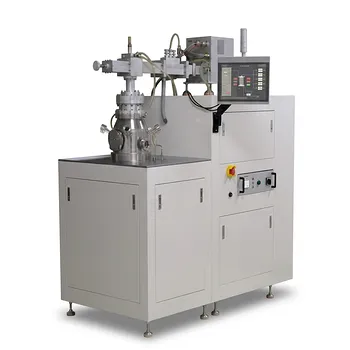
Cylindrical Resonator MPCVD Machine System for Microwave Plasma Chemical Vapor Deposition and Lab Diamond Growth
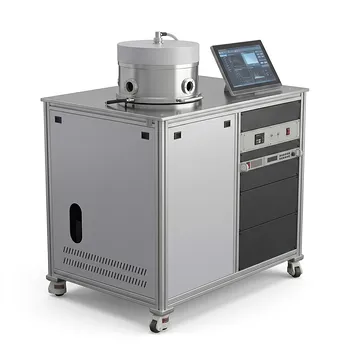
Inclined Rotary Plasma Enhanced Chemical Vapor Deposition PECVD System for Thin Film Deposition and Nanomaterial Synthesis
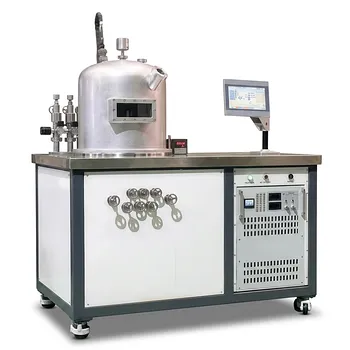
HFCVD Machine System for Nano Diamond Coating on Drawing Dies and Industrial Tools
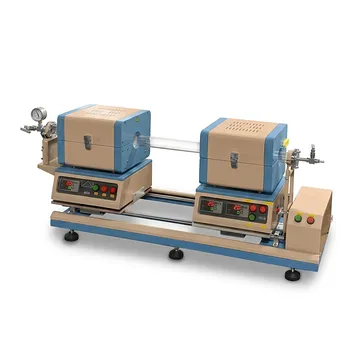
High Temperature 1200C Automatic Sliding Dual Zone Tube Furnace for 2D Transition Metal Dichalcogenides Growth and Material Sublimation Research
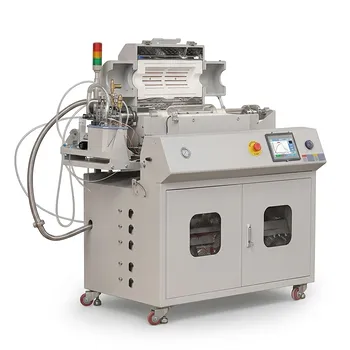
Versatile Chemical Vapor Deposition Tube Furnace System for Advanced Material Research and Industrial Coating Processes
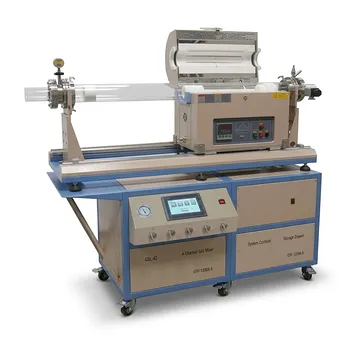
Dual Tube 100mm 80mm CVD Sliding Furnace with 4 Channel Gas Mixing and Vacuum System
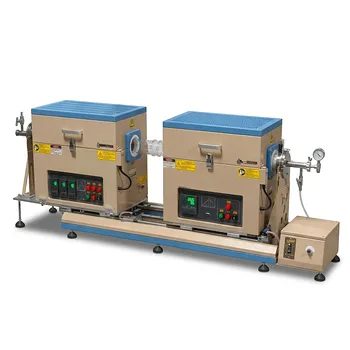
1200C Dual Temperature Zone Slidable Tube Furnace for 2D Material Growth and TCVD Synthesis
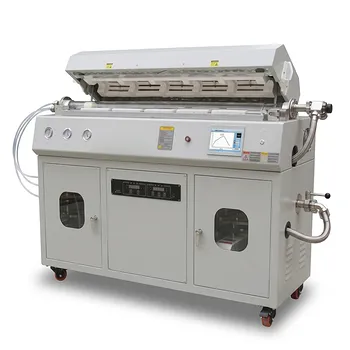
Multi Heating Zones CVD Tube Furnace System for Precision Chemical Vapor Deposition and Advanced Material Synthesis
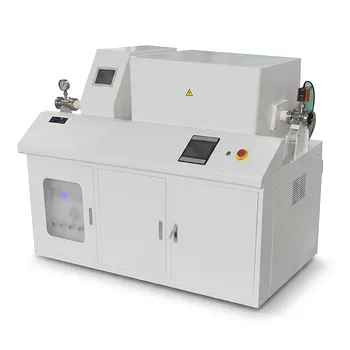
Chemical Vapor Deposition CVD System Slide PECVD Tube Furnace with Liquid Gasifier PECVD Machine
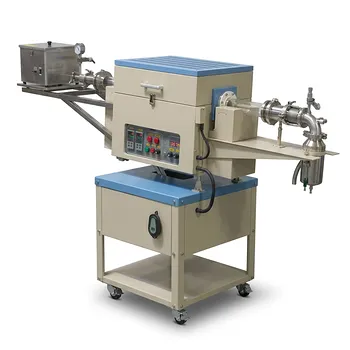
Two Zone Rotary CVD Furnace with Automatic Feeding and Receiving System for Powder Processing
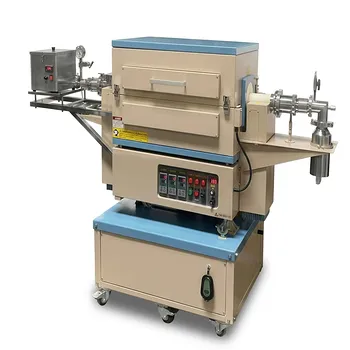
1500C 3-Zone Rotary Tube Furnace 60mm with Automatic Powder Feeding and Receiving System for Continuous Material Synthesis