How does the heating rate control of a tube furnace affect the microstructure of FeP@NPC/NF? Achieve Catalyst Precision
Updated 3 months ago
Precise heating rate control is the decisive factor in transforming metal-organic framework (MOF) precursors into high-performance FeP@NPC/NF catalysts. By maintaining a slow, steady rate—typically 2°C/min—the tube furnace ensures uniform thermal decomposition and phosphidation. This controlled environment prevents the aggregation of iron phosphide (FeP) nanoparticles and facilitates the orderly carbonization of ligands into a high-surface-area, nitrogen and phosphorus co-doped carbon (NPC) matrix.
The heating rate dictates the balance between the kinetics of gas release and the thermodynamics of crystal growth. A low heating rate is essential to maintain structural integrity, maximize active site density, and prevent the physical collapse of the catalyst's porous framework.
The Role of Kinetics in Phase Transformation
Uniform Thermal Decomposition
Precise control over the heating program ensures that MOF precursors on the nickel foam (NF) substrate reach thermal equilibrium gradually. This uniformity is critical during phosphidation, where the chemical transition from metal ions to iron phosphide must occur synchronously across the material to ensure phase purity.
Steady Carbonization of Organic Ligands
A slow heating rate facilitates the steady conversion of organic ligands into a stable aromatized carbon structure. This orderly transition allows for the successful integration of nitrogen and phosphorus atoms into the carbon lattice, creating the essential co-doped matrix that supports the FeP nanoparticles.
Management of Volatile Release
During thermal treatment, organic components decompose into volatile gases. By limiting the heating rate, these volatiles are discharged gradually, preventing the violent eruption of internal gases that could cause micro-cracks or the total collapse of the inorganic framework.
Microstructural Evolution and Active Sites
Prevention of Nanoparticle Aggregation
The nucleation of FeP nanoparticles is highly sensitive to temperature gradients. A low heating rate (e.g., 2°C/min) provides a controlled environment that inhibits excessive aggregation, resulting in smaller, more finely dispersed nanoparticles with a higher density of exposed active sites.
Maintenance of High Specific Surface Area
By preventing the collapse of pore walls and the sintering of particles, precise heating control preserves a hierarchical porous structure. This architecture is vital for ensuring efficient mass transport and providing a large surface area for electrochemical reactions.
Stabilization of the NPC Matrix
Controlled heating allows for the stable reorganization of the carbon framework. This prevents the loss of critical defect sites and maintains the structural integrity of the nitrogen and phosphorus co-doped carbon, which is essential for long-term catalyst stability.
Understanding the Trade-offs
The Risk of Rapid Heating
While faster heating rates might shorten processing times, they often lead to inhomogeneous impregnation profiles. Rapid temperature increases can cause solutes to migrate excessively toward the outer surface of the support, resulting in an uneven distribution of the active FeP component and reduced catalytic efficiency.
Impact of Gas Flow Dynamics
At higher heating rates, the increased velocity of pyrolysis gases can interfere with the stable attachment of carbon structures. This "strong gas flow" effect may prevent the catalyst from distributing uniformly within the matrix pores, ultimately weakening the reinforcement effect of the carbon structure.
Energy vs. Precision
Extremely low heating rates (under 1°C/min) provide maximum structural control but significantly increase energy consumption and production time. The challenge for the engineer is to find the "sweet spot"—often between 2°C/min and 5°C/min—that balances microstructural excellence with process efficiency.
How to Apply This to Your Project
When configuring your tube furnace for the synthesis of FeP@NPC/NF or similar catalysts, consider your primary performance metric:
- If your primary focus is Maximum Catalytic Activity: Use a low heating rate of 2°C/min to ensure the highest density of active sites and prevent FeP nanoparticle clumping.
- If your primary focus is Structural Integrity and Porosity: Maintain a rate between 1°C/min and 3°C/min to allow for the gradual release of volatiles and prevent the collapse of the mesoporous framework.
- If your primary focus is Controlling Active Component Distribution: Adjust the heating program to manage solute migration, using faster rates only if you specifically need to inhibit deep penetration into the support.
Mastering the heating rate allows you to transition from simple material carbonization to the precise engineering of a high-performance catalytic microstructure.
Summary Table:
| Heating Rate Control | Impact on Microstructure | Catalytic Outcome |
|---|---|---|
| Slow Rate (2°C/min) | Uniform decomposition & steady carbonization | High active site density; stable NPC matrix |
| Rapid Heating | Nanoparticle aggregation & framework collapse | Poor impregnation; reduced catalytic efficiency |
| Gas Management | Gradual release of volatiles | Prevents micro-cracks and structural failure |
| Porosity Control | Preserved hierarchical porous structure | Enhanced mass transport & electrochemical surface area |
Optimize Your Research with THERMUNITS Thermal Solutions
Precise temperature control is the difference between a failed precursor and a breakthrough catalyst. THERMUNITS is a leading manufacturer of high-temperature laboratory equipment for material science and industrial R&D. We empower your research with a comprehensive range of thermal processing solutions, including:
- Tube Furnaces & CVD/PECVD Systems for precise catalyst synthesis.
- Muffle, Vacuum, and Atmosphere Furnaces for diverse heat treatments.
- Rotary Kilns & Hot Press Furnaces for advanced material processing.
- Vacuum Induction Melting (VIM) & Dental Furnaces.
Whether you are engineering FeP@NPC/NF microstructures or developing next-generation industrial materials, THERMUNITS provides the reliability and precision your lab demands.
Contact our experts today to find the perfect furnace for your application!
References
- Jianguo Zhong, Yuxin Wang. Nickel Foam-Supported FeP Encapsulated in N, P Co-Doped Carbon Matrix for Efficient Electrocatalytic Hydrogen Evolution. DOI: 10.3390/inorganics12110291
Mentioned Products
- Compact Vertical Split Quartz Tube Furnace with Stainless Steel Vacuum Flanges for Rapid Thermal Quenching and Controlled Atmosphere Material Processing
- High Temperature 1700C Vertical Tube Furnace for Powder Spherification and Material Sintering
- High Temperature Compact Vacuum Tube Furnace 1750C Max 60mm OD Alumina Tube
- 1200C High Throughput Multi Channel Tube Furnace with 50mm Quartz Tubes for Annealing and Material Phase Diagram Research
- Compact Hybrid Muffle and Tube Furnace for 1000C Controlled Atmosphere Laboratory Material Sintering
People Also Ask
- Why integrate a vertical split tube furnace with hydraulic loading for HSECC? Essential for In-Situ Fire Simulation.
- What is the role of a split vertical tube furnace during flash sintering of 8YSZ and 20SDC? Master Ultra-Fast R&D
- What is the primary engineering purpose for using a customized ventilation hood when operating a split tube furnace? RCF Safety
- Why is a quartz tube furnace necessary for phosphorus-doped MoS2/GO preparation? Ensure Purity & Precise Synthesis
- What is the primary function of a Quartz Tube Furnace in ZnO VLS growth? Master High-Precision Nanowire Synthesis

Tech Team · ThermUnits
Last updated on Jun 03, 2026
Related Products

Compact Vertical Split Quartz Tube Furnace with Stainless Steel Vacuum Flanges for Rapid Thermal Quenching and Controlled Atmosphere Material Processing

High Temperature 1700C Vertical Tube Furnace for Powder Spherification and Material Sintering
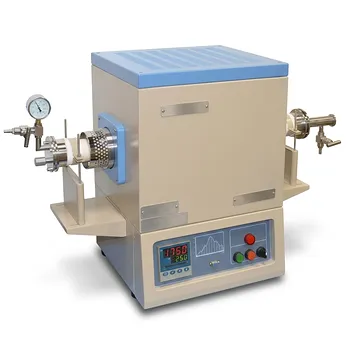
High Temperature Compact Vacuum Tube Furnace 1750C Max 60mm OD Alumina Tube
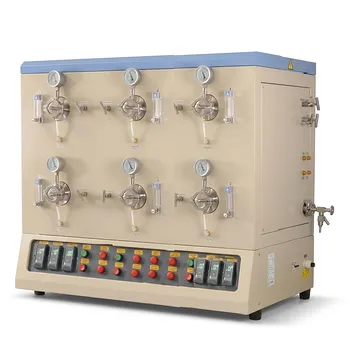
1200C High Throughput Multi Channel Tube Furnace with 50mm Quartz Tubes for Annealing and Material Phase Diagram Research
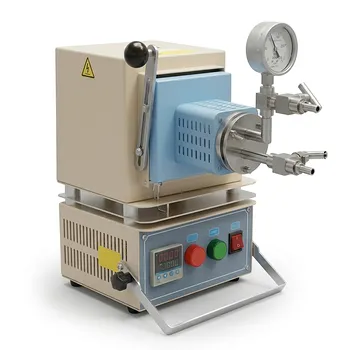
Compact Hybrid Muffle and Tube Furnace for 1000C Controlled Atmosphere Laboratory Material Sintering
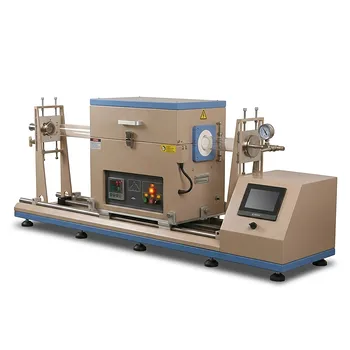
1200C Sliding Tube Furnace for Rapid Thermal Processing and CVD Graphene Growth with 100mm OD Capacity

1800C High Temperature Compact Vacuum Tube Furnace with 60mm OD Alumina Tube and Kanthal MoSi2 Heating Elements
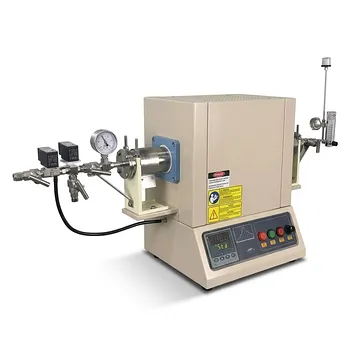
1500C Compact Hydrogen Gas Tube Furnace with 2 Inch Alumina Tube and Hydrogen Detector

1200°C 5 Inch Vertical Quartz Tube Furnace with Stainless Steel Vacuum Flanges
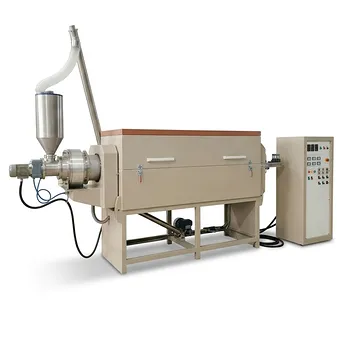
Continuous Feeding Rotary Tube Furnace for Industrial Powder Heat Treatment and Material Research

Compact High Temperature 1600C Tube Furnace with 50mm Alumina Tube and Vacuum Flanges for Material Sintering

Vertical 1700C Vacuum and Atmosphere Tube Furnace with 80mm Alumina Tube
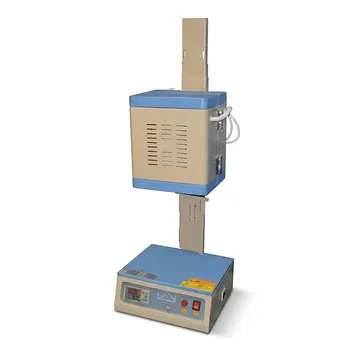
High Temperature Vertical Split Tube Furnace with PID Temperature Controller for 1 and 2 Inch Processing Tubes
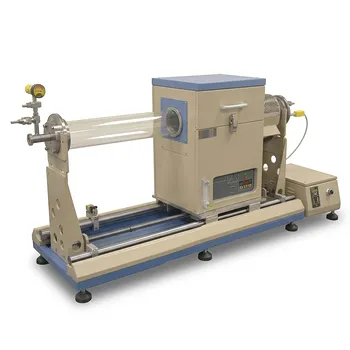
Rapid Thermal Processing Sliding Tube Furnace with 4 Inch OD Quartz Tube and 900C IR Heating

High Temperature 1700C Tube Furnace with High Vacuum Turbomolecular Pump System and Multi Channel Mass Flow Controller Gas Mixer
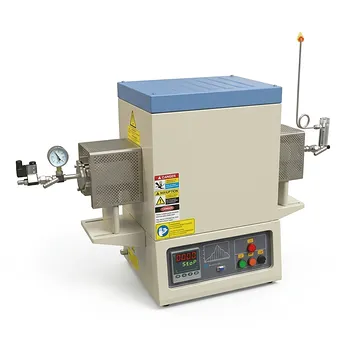
1700C Hydrogen Gas Tube Furnace with 60mm Alumina Process Tube and Integrated Hydrogen Safety Detector

High Temperature Automated 5 Inch Tube Furnace for Autonomous Material Research and Advanced Laboratory R&D
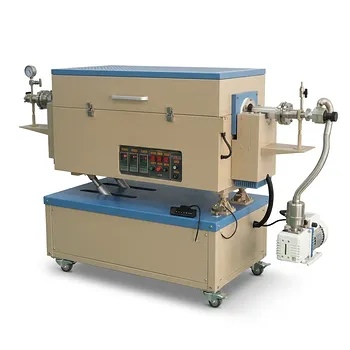
Three Zone Rotary Tube Furnace for High Temperature Powder Processing and Material Research

1100C Tube Furnace with Vacuum Flange and Programmable Temperature Controller for Material Science and Industrial Heat Treatment