How does the programmable temperature control of a tube furnace influence Fe-Co catalysts? Master Atomic Precision
Updated 3 months ago
Programmable temperature control in a tube furnace is the decisive factor in determining the atomic distribution, structural integrity, and electrochemical activity of Fe-Co co-doped carbon catalysts. By precisely managing multi-stage heating protocols—typically involving a low-temperature stabilization phase at 240°C followed by high-temperature carbonization between 800°C and 1000°C—researchers can dictate the degree of metal leaching (such as zinc volatilization), the level of carbon graphitization, and the density of catalytic defect sites. This level of control directly optimizes the material for critical reactions like the Oxygen Reduction Reaction (ORR) and Oxygen Evolution Reaction (OER).
The core takeaway is that programmable temperature control transforms raw precursors into functional catalysts by balancing the creation of active FeN4 and CoN4 sites with the structural conductivity and porosity of the carbon matrix. Precise heating rates and dwell times prevent nanoparticle aggregation while ensuring deep carbonization.
The Role of Multi-Stage Thermal Processing
Low-Temperature Structural Stabilization
The initial stage of a programmed heating cycle, often set around 240°C, serves to stabilize the precursor's organic framework. This slow preheating prevents the sudden collapse of the molecular structure as volatile components begin to escape.
High-Temperature Deep Carbonization
Transitions to temperatures between 800°C and 1000°C are essential for converting organic ligands into a conductive carbon lattice. This stage facilitates the deep carbonization required to embed iron and cobalt atoms firmly into the nitrogen-doped matrix.
Control of Zinc Volatilization
In many Fe-Co catalysts derived from metal-organic frameworks (MOFs), high temperature triggers the volatilization of sacrificial templates like zinc. Programmable control ensures this occurs at a rate that creates a high concentration of defect sites rather than causing structural failure.
Regulating Microstructure and Active Sites
Anchoring FeN4 and CoN4 Units
Precise dwell times at peak temperatures ensure that FeN4 and CoN4 catalytic units are securely anchored within the carbon backbone. This optimization of the second coordination shell is vital for the electrochemical stability of the catalyst during long-term operation.
Managing Heating Rates for Site Density
Using specific heating rates, such as 2°C/min to 5°C/min, ensures that precursors decompose uniformly. This prevents the excessive aggregation of metal species into inactive bulk particles, maintaining a high density of dispersed active sites.
Enhancing Electrical Conductivity
The degree of graphitization—the transformation of amorphous carbon into ordered, conductive layers—is a direct function of the maximum temperature and dwell time. A tube furnace provides the stable environment needed to maximize conductivity without over-sintering the metal centers.
Preservation of Porosity and Surface Area
Preventing Pore Wall Collapse
A stable temperature gradient prevents the rapid release of gases that can rupture the internal architecture of the catalyst. By managing the release rate of volatiles, the tube furnace enables the formation of a hierarchical porous structure.
Template Removal and Structural Integrity
When using hard templates like PMMA, slow heating rates (e.g., 1°C per minute) ensure that templates decompose gradually. This prevents local temperature spikes or micro-cracks, safeguarding the high specific surface area required for efficient ion transport.
Controlled Atmosphere Interaction
Programmable furnaces allow these thermal transitions to occur under strictly controlled atmospheres, such as 5% H2/Ar mixtures. This environment manages the valence distribution of the metal centers (e.g., Co0 vs. Co2+), ensuring the surface chemistry is optimized for catalysis.
Understanding the Trade-offs
Activity vs. Stability
Higher carbonization temperatures (above 1000°C) significantly improve graphitization and conductivity, which aids electron transfer. However, excessive heat can cause the thermal growth (sintering) of Fe and Co particles, reducing the total number of available active sites and lowering overall mass activity.
Porosity vs. Density
Rapid heating can increase defect density and macroporosity due to faster gas evolution, potentially improving gas diffusion. Conversely, this often leads to lower structural density and mechanical fragility, which can cause the catalyst layer to degrade during electrochemical cycling.
How to Apply Temperature Control to Catalyst Design
- If your primary focus is Maximum Active Site Density: Utilize slower heating rates (under 2°C/min) and moderate peak temperatures (800°C) to prevent metal aggregation and ensure uniform site distribution.
- If your primary focus is High Electrical Conductivity: Aim for higher peak temperatures (near 1000°C) with longer dwell times to promote the formation of highly graphitic carbon layers.
- If your primary focus is Mass Transport and Porosity: Implement a multi-stage ramp with specific "hold" periods at the decomposition temperatures of your templates to ensure a hierarchical pore structure without framework collapse.
Mastering the programmable heating curve allows a researcher to move beyond trial-and-error, enabling the intentional "tuning" of the catalyst’s atomic and morphological architecture.
Summary Table:
| Heating Stage | Temperature Range | Primary Impact on Catalyst |
|---|---|---|
| Structural Stabilization | ~240°C | Prevents framework collapse; regulates volatile escape. |
| Deep Carbonization | 800°C – 1000°C | Facilitates graphitization and anchors FeN4/CoN4 active sites. |
| Template Volatilization | Variable (High) | Controls zinc removal to create high-density catalytic defect sites. |
| Controlled Cooling/Ramp | 1°C – 5°C/min | Prevents metal aggregation and preserves hierarchical porosity. |
Elevate Your Material Research with THERMUNITS Precision Thermal Solutions
Optimizing Fe-Co catalysts requires a level of thermal precision that only high-performance equipment can provide. THERMUNITS is a leading manufacturer specializing in high-temperature laboratory equipment for material science and industrial R&D. We offer a comprehensive suite of thermal processing solutions, including Tube, Muffle, Vacuum, and Atmosphere furnaces, as well as specialized Rotary kilns, CVD/PECVD systems, and Vacuum Induction Melting (VIM) furnaces.
Our programmable systems are engineered to give you total control over multi-stage heating rates and atmospheres, ensuring you achieve the exact graphitization and active site density your research demands.
Ready to refine your synthesis process? Contact our engineering team today to find the ideal thermal treatment solution for your laboratory needs and see how our advanced furnaces can enhance your R&D outcomes.
References
- Ziwei Deng, Jianbo Jia. Fe-Co Co-Doped 1D@2D Carbon-Based Composite as an Efficient Catalyst for Zn–Air Batteries. DOI: 10.3390/molecules29102349
Mentioned Products
- Vertical 1700C Vacuum and Atmosphere Tube Furnace with 80mm Alumina Tube
- Compact High Temperature 1600C Tube Furnace with 50mm Alumina Tube and Vacuum Flanges for Material Sintering
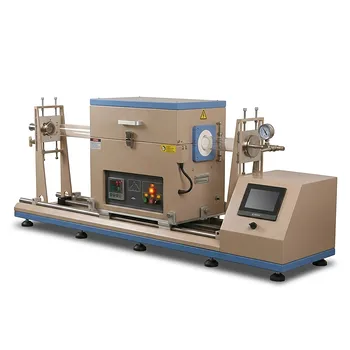
- 900°C Max Rotary Tube Furnace with 8 Inch 310S Alloy Tube and Optional Multi Zone Heating for Industrial Material Calcination
- Split Vertical Tube Furnace with 1200C Quartz Tube and Stainless Steel Vacuum Flanges for Rapid Thermal Processing
- High Temperature 1700C Tube Furnace with High Vacuum Turbomolecular Pump System and Multi Channel Mass Flow Controller Gas Mixer
People Also Ask
- How is an industrial-grade vertical tube furnace utilized in smelting leaching residues? Enhance Metal Recovery Efficiency
- What is the function of a laboratory-grade vertical tube furnace in fast pyrolysis? Optimize Composite Research.
- How does a vertical tube furnace facilitate thermoelectric alloy melting? Precision synthesis for material homogeneity.
- Why is a thermocouple sensor indispensable for monitoring the vertical tube furnace during gallium oxide nanowire production? Optimize VLS Growth
- What are the advantages of using a vertical tube furnace for crucible experiments simulating steel-slag interactions?

Tech Team · ThermUnits
Last updated on Jun 02, 2026
Related Products

Vertical 1700C Vacuum and Atmosphere Tube Furnace with 80mm Alumina Tube

Compact High Temperature 1600C Tube Furnace with 50mm Alumina Tube and Vacuum Flanges for Material Sintering
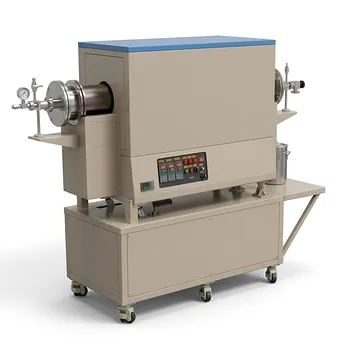
900°C Max Rotary Tube Furnace with 8 Inch 310S Alloy Tube and Optional Multi Zone Heating for Industrial Material Calcination
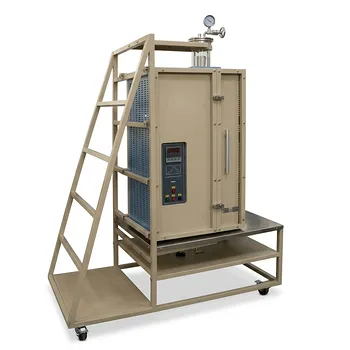
Split Vertical Tube Furnace with 1200C Quartz Tube and Stainless Steel Vacuum Flanges for Rapid Thermal Processing

High Temperature 1700C Tube Furnace with High Vacuum Turbomolecular Pump System and Multi Channel Mass Flow Controller Gas Mixer

1100C Tube Furnace with Vacuum Flange and Programmable Temperature Controller for Material Science and Industrial Heat Treatment
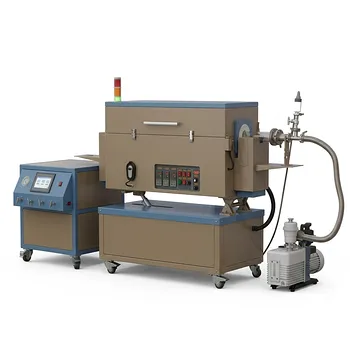
5 Inch Three Zone Rotary Tube Furnace with Integrated Gas Delivery System and 1200C Capability for Advanced Material CVD Processing

1200°C 5 Inch Vertical Quartz Tube Furnace with Stainless Steel Vacuum Flanges

High Temperature 1700C Six Zone Split Tube Furnace with Alumina Tube and Water Cooled Flanges
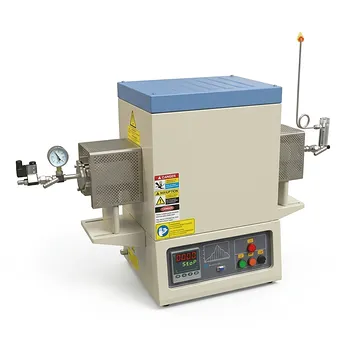
1700C Hydrogen Gas Tube Furnace with 60mm Alumina Process Tube and Integrated Hydrogen Safety Detector

Compact Vertical Split Quartz Tube Furnace with Stainless Steel Vacuum Flanges for Rapid Thermal Quenching and Controlled Atmosphere Material Processing

High Temperature 1700C Benchtop Tube Furnace with 5 Inch Heating Zone High Purity Alumina Tube and Vacuum Sealing Flanges
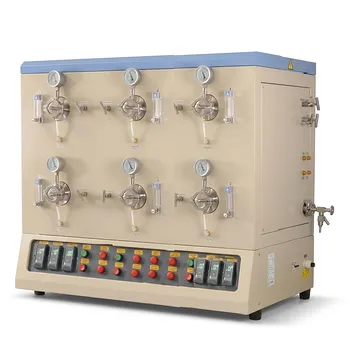
1200C High Throughput Multi Channel Tube Furnace with 50mm Quartz Tubes for Annealing and Material Phase Diagram Research

1800C High Temperature Compact Vacuum Tube Furnace with 60mm OD Alumina Tube and Kanthal MoSi2 Heating Elements

Three Zone Tube Furnace with 11 Inch or 15 Inch Quartz Tube and Hinged Flanges for Vacuum Atmosphere Heat Treatment

High Temperature 1700C Vertical Tube Furnace for Powder Spherification and Material Sintering
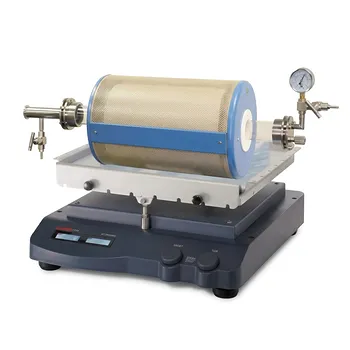
High Temperature Rocking Tube Furnace with Quartz Tube and Vacuum Flange for Materials Synthesis

High Temperature Automated 5 Inch Tube Furnace for Autonomous Material Research and Advanced Laboratory R&D
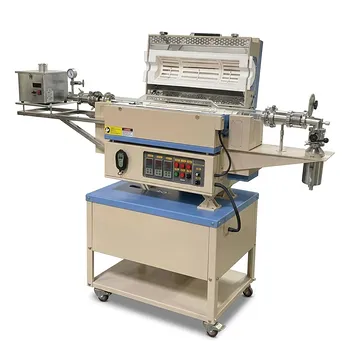
5 Inch Rotary Tube Furnace with Automatic Feeding and Receiving System 1200C Three Zone CVD Powder Processing