How does the selection of a high-purity quartz boat ensure material purity during Te crystal synthesis? Essential CVD Purity
Updated 3 months ago
The selection of a high-purity quartz boat is the primary safeguard against extrinsic contamination during the synthesis of tellurium single crystals. By acting as a chemically inert and thermally stable vessel, it prevents the release of foreign elements or oxides into the growth environment at elevated temperatures. This ensures that the resulting alpha-Te nanosheets and beta-Te nanorods maintain their intrinsic semiconductor properties, allowing for the precise measurement of their electrical characteristics.
High-purity quartz boats provide a non-reactive environment that survives high-temperature CVD processes without leaching impurities or outgassing. This chemical and thermal stability is the foundation for producing defect-free crystals with high crystalline quality and electrochemical purity.
The Role of Chemical Inertness in Preventing Contamination
Eliminating Reactivity with Tellurium Vapor
Tellurium is highly volatile during the chemical vapor deposition (CVD) process, often reaching temperatures around 600°C to 650°C. High-purity quartz is uniquely suited for this environment because it does not chemically react with tellurium vapor or the solid raw materials. This lack of reactivity ensures that no secondary compounds are formed that could integrate into the crystal lattice.
Avoiding the Leaching of Metallic Impurities
Standard containers may contain trace amounts of metals or metal oxides that can migrate into the sample at high heat. High-purity quartz is processed to remove these contaminants, ensuring that no metallic elements interfere with the tellurization process. This is critical for maintaining the high intrinsic purity required for sensitive electronic applications.
Resistance to Corrosive Environments
Synthesis often involves aggressive atmospheres, such as those containing chloride vapors or sulfurizing gases. High-purity quartz boats remain stable in these corrosive conditions, preventing secondary contamination that would otherwise degrade the final product. Their ability to resist chemical attack ensures that the vapor source remains the only material influencing the crystal growth.
Thermal Integrity and Structural Stability
Resistance to Thermal Shock
CVD processes often require rapid heating and cooling cycles to control crystal growth and morphology. High-purity quartz possesses superior thermal shock resistance, allowing it to undergo these cycles without cracking or fracturing. This structural integrity prevents the introduction of microscopic boat fragments into the synthesized tellurium.
Preventing Vessel Deformation and Outgassing
At temperatures reaching up to 1000°C, many materials begin to soften, deform, or outgas trapped impurities. Quartz maintains its shape and structural stability at these extremes, ensuring it does not release volatile contaminants. This stability is essential for the production of high-conductivity powders and high-quality nanorods.
Ensuring Accurate Electrical Measurements
The ultimate goal of using high-purity quartz is to ensure the intrinsic purity of the synthesized Te. By preventing the introduction of dopants or defects from the container, researchers can accurately measure the material's natural electrical properties. Without this purity, the data gathered would reflect the impurities of the container rather than the characteristics of the tellurium itself.
Understanding the Trade-offs
Limitations of Quartz at Extreme Temperatures
While quartz is stable at 1000°C, prolonged exposure to temperatures above its devitrification point can cause it to become brittle over time. This process can lead to surface flaking, which might eventually introduce particles into the growth chamber if the boat is not regularly inspected.
Fragility and Handling Constraints
Quartz is inherently brittle compared to metallic containers, making it susceptible to physical damage during loading or cleaning. It also requires specific cleaning protocols, as it is highly sensitive to hydrofluoric acid and certain alkaline solutions which can etch the surface and increase its surface area for potential contamination.
How to Apply This to Your Project
Making the Right Choice for Your Goal
- If your primary focus is high-precision electronic characterization: Use high-purity quartz to ensure that any measured electrical anomalies are intrinsic to the tellurium and not caused by leached metallic impurities.
- If your primary focus is rapid-cycle synthesis: Prioritize high-purity quartz for its thermal shock resistance, allowing for fast ramp rates without risking container failure or sample contamination.
- If your primary focus is synthesis in corrosive atmospheres: Select quartz specifically for its inertness against halides or sulfides, ensuring the boat does not react with the carrier gases or precursors.
By leveraging the chemical and thermal stability of high-purity quartz, you provide the pristine environment necessary for the growth of high-performance tellurium single crystals.
Summary Table:
| Feature | Key Benefit | Impact on Te Synthesis |
|---|---|---|
| Chemical Inertness | No reaction with Te vapor | Prevents secondary compound formation and lattice defects. |
| High Purity | Zero metallic leaching | Maintains intrinsic electronic properties and high conductivity. |
| Thermal Stability | High shock resistance | Allows rapid temperature cycles without vessel deformation or outgassing. |
| Corrosion Resistance | Stable in halide/sulfide atmospheres | Ensures vapor source remains uncontaminated in aggressive CVD environments. |
Elevate Your Material Research with THERMUNITS
As a leading manufacturer of high-temperature laboratory equipment, THERMUNITS understands that every detail—from the furnace to the crucible—impacts your results. We offer a comprehensive range of thermal processing solutions tailored for material science and industrial R&D, including CVD/PECVD systems, Tube furnaces, Vacuum furnaces, and high-purity thermal elements.
Whether you are synthesizing tellurium nanosheets or developing advanced semiconductors, our equipment ensures the precision and purity your project demands. Contact us today to discover how our expertise in Muffle, Atmosphere, and Hot Press furnaces can optimize your laboratory’s heat treatment workflows!
References
- Jun Zhou, Junpeng Lü. Phase-engineered synthesis of atomically thin te single crystals with high on-state currents. DOI: 10.1038/s41467-024-45940-6
Mentioned Products
- 1100°C High Temperature Quartz Chamber Furnace 8 Inch OD with 7.6 Liter Capacity and Vacuum Atmosphere Capability
- High Temperature Vertical Atmosphere Controlled Furnace with Automatic Bottom Loading and 1700°C Capacity for Advanced Material Research
- 1100C High Temperature Vacuum Crucible Furnace with Quartz Chamber for Thermal Processing and Sintering
- Vertical Vacuum Furnace 1100C High Temperature 8 Inch Quartz Chamber Water Cold Flange System
- 1200°C 5 Inch Vertical Quartz Tube Furnace with Stainless Steel Vacuum Flanges
People Also Ask
- Why is a quartz tube furnace necessary for phosphorus-doped MoS2/GO preparation? Ensure Purity & Precise Synthesis
- Benefits of high-vacuum quartz tube furnaces with N2 for Co3O4 nanosheets: Purity and Structural Integrity.
- What conditions does a quartz tube furnace provide for AlxCoCrFeNi steam corrosion tests? Achieve Precise R&D Control.
- Why is high-temperature annealing in a quartz tube furnace done after HfO2 deposition? Unlock peak film performance.
- Why is a high-purity quartz tube used for SP-Fe3O4-C? Ensure Chemical Purity & Catalytic Stability

Tech Team · ThermUnits
Last updated on Jun 02, 2026
Related Products
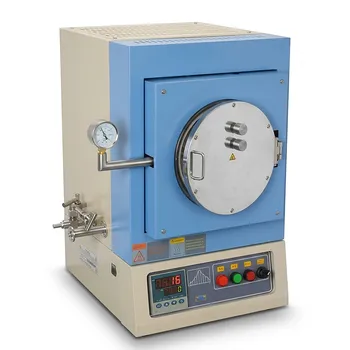
1100°C High Temperature Quartz Chamber Furnace 8 Inch OD with 7.6 Liter Capacity and Vacuum Atmosphere Capability
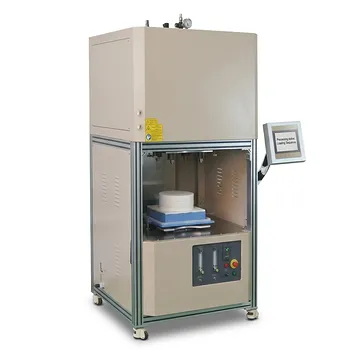
High Temperature Vertical Atmosphere Controlled Furnace with Automatic Bottom Loading and 1700°C Capacity for Advanced Material Research
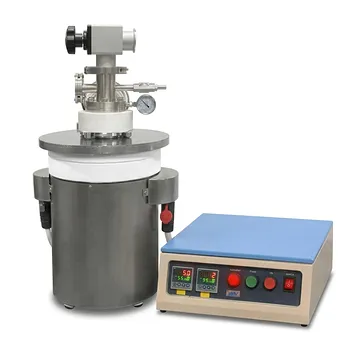
1100C High Temperature Vacuum Crucible Furnace with Quartz Chamber for Thermal Processing and Sintering
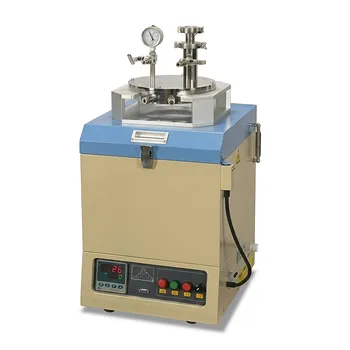
Vertical Vacuum Furnace 1100C High Temperature 8 Inch Quartz Chamber Water Cold Flange System
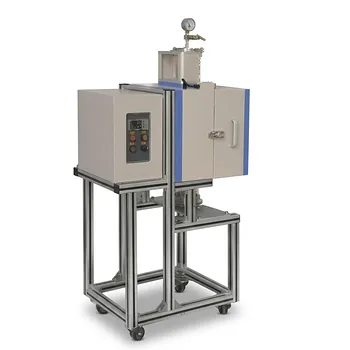
1200°C 5 Inch Vertical Quartz Tube Furnace with Stainless Steel Vacuum Flanges
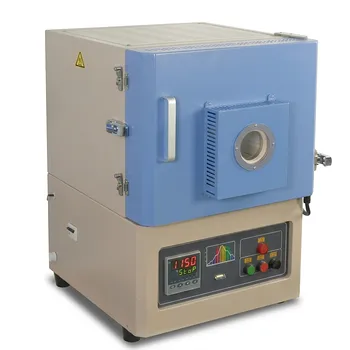
High Temperature Benchtop Muffle Furnace with Quartz Observation Window for Thermal Imaging and Material Analysis
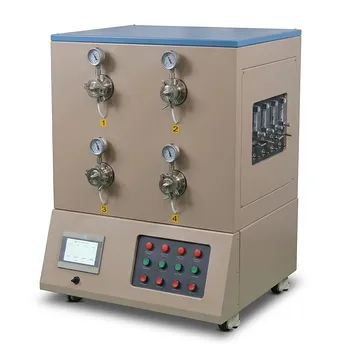
High Throughput 1200C Four Channel Tube Furnace with 3 Inch Quartz Tubes for Multi Zone Annealing and Material Research