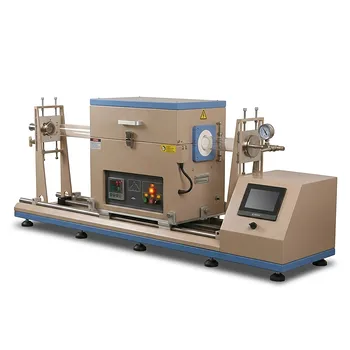
How does the use of a tube furnace enhance chemical synthesis and catalysis studies? Optimize Kinetics & Material Purity
Updated 5 months ago
Tube furnaces act as specialized thermal reactors that provide the precision necessary for advanced chemical transformations. By serving as sealed-tube flow reactors, they allow researchers to control residence times and atmosphere composition with surgical accuracy. This environment is essential for conducting kinetic studies, preventing contamination from combustion by-products, and achieving the precise crystalline structures required for modern catalysis.
The primary advantage of a tube furnace lies in its ability to isolate a reaction within a stable, uniform, and programmable thermal zone. This isolation ensures that chemical precursors transform under exact physical conditions, resulting in high-purity materials with reproducible morphologies.
Precision Control of Reaction Kinetics
Sealed-Tube Flow Dynamics
A tube furnace functions as a sealed-tube flow reactor, which is critical for modern chemical synthesis. This configuration allows for continuous operation, enabling researchers to move beyond the limitations of batch processing.
Dynamic Residence Time
By controlling the flow rate of reactants through the heated zone, scientists can achieve precise residence-time control. This is a fundamental requirement for kinetic studies, as it allows for the observation of how time and temperature interact during a chemical reaction.
Maintaining Stoichiometry
The sealed nature of the tube prevents the loss of volatile components and protects the reaction from atmospheric moisture or oxygen. This is vital for maintaining precise stoichiometry in complex oxides and high-temperature superconductors.
Atmospheric Flexibility and Catalyst Optimization
In-Situ Activation and Regeneration
The ability to introduce oxidizing, reducing, or inert atmospheres allows for the in-situ activation of catalysts. Researchers can reduce a catalyst precursor under a hydrogen atmosphere and immediately begin a reaction without exposing the material to air.
Synthesis of Nanocatalysts
Tube furnaces are foundational for Chemical Vapor Deposition (CVD) and precursor pyrolysis. These processes are essential for controlling the particle size and distribution of active sites in nanocatalysts, which directly dictates their efficiency.
High-Purity Environments
Because tube furnaces utilize electric heating, they lack the combustion by-products found in gas-fired systems. This prevents carbon or sulfur contamination, which is a critical requirement for sensitive organometallic syntheses.
Advanced Thermal Uniformity and Material Processing
Consistent Temperature Profiles
A high-precision tube furnace provides a stable, long temperature zone that ensures all reactants undergo even transformation. This uniformity is necessary for solid-state reactions where raw materials must diffuse completely to form a pure phase.
Rotary Technology for Powders
For processing powders or granules, rotary tube furnaces use internal lifters to provide dynamic movement. This prevents the formation of hotspots and ensures consistent reaction kinetics throughout the entire material bed.
Crystallinity and Morphology
By precisely adjusting heating curves and holding times, researchers can dictate the final crystal structure of a material. This level of control is necessary for producing functional nanomaterials and layered structures with specific electronic properties.
Understanding the Trade-offs
Scale and Throughput Limitations
While tube furnaces offer unparalleled control, they are often limited by the physical dimensions of the tube. Scaling a laboratory-scale synthesis to industrial volumes can be challenging due to heat transfer gradients in larger diameter tubes.
Material Compatibility
The choice of tube material (quartz, alumina, or metallic alloys) creates specific operational boundaries. Some materials may react with the tube wall at ultra-high temperatures, or the tube may be susceptible to thermal shock if cooled too rapidly.
Atmosphere Management Risks
Using reactive gases like hydrogen or ammonia requires sophisticated gas handling and safety systems. Failure to maintain a perfect seal can result in atmospheric contamination of the sample or safety hazards in the laboratory.
How to Apply This to Your Project
When integrating a tube furnace into your workflow, your choice of equipment should be dictated by your specific research output.
- If your primary focus is kinetic research: Prioritize a system with high-precision flow controllers and a long uniform heating zone to maximize residence-time accuracy.
- If your primary focus is catalyst development: Select an atmosphere-controlled furnace capable of handling reducing gases to allow for in-situ activation and regeneration.
- If your primary focus is powder processing: Invest in a rotary tube furnace to ensure heat uniformity and prevent material agglomeration during calcination.
- If your primary focus is high-purity synthesis: Ensure the system uses high-grade ceramic or quartz tubes to eliminate the risk of metallic contamination during high-temperature cycles.
The strategic use of a tube furnace transforms chemical synthesis from a process of trial and error into a disciplined, reproducible science.
Summary Table:
| Enhancement Category | Key Mechanism | Research & R&D Benefit |
|---|---|---|
| Reaction Kinetics | Residence-time control | Precise observation of time/temp interactions |
| Atmosphere Control | In-situ gas management | Air-free catalyst activation & regeneration |
| Material Purity | Sealed electric heating | Zero contamination from combustion by-products |
| Morphology Control | Uniform thermal zones | Consistent crystallinity and nanoparticle size |
| Powder Processing | Rotary internal lifters | Dynamic heating without material hotspots |
Accelerate Your Breakthroughs with THERMUNITS Precision Thermal Solutions
In the demanding fields of material science and industrial R&D, the precision of your thermal reactor dictates the quality of your results. THERMUNITS is a leading manufacturer specializing in high-performance laboratory equipment designed to transform complex chemical synthesis into a reproducible science.
Whether you are conducting delicate kinetic studies or scaling up catalyst production, our comprehensive range of equipment offers the reliability you need:
- Specialized Furnaces: Tube, Rotary, Muffle, Vacuum, Atmosphere, and Hot Press furnaces.
- Advanced Systems: CVD/PECVD systems, Vacuum Induction Melting (VIM) furnaces, and Electric Rotary Kilns.
- Specialty Equipment: Dental Furnaces and high-grade Thermal Elements.
Ready to enhance your lab's efficiency and material purity? Contact our experts today to find the perfect thermal processing solution tailored to your research goals.
Mentioned Products
- Vertical 1700C Vacuum and Atmosphere Tube Furnace with 80mm Alumina Tube
- Compact High Temperature 1600C Tube Furnace with 50mm Alumina Tube and Vacuum Flanges for Material Sintering
- 900°C Max Rotary Tube Furnace with 8 Inch 310S Alloy Tube and Optional Multi Zone Heating for Industrial Material Calcination
- Split Vertical Tube Furnace with 1200C Quartz Tube and Stainless Steel Vacuum Flanges for Rapid Thermal Processing
- High Temperature 1700C Tube Furnace with High Vacuum Turbomolecular Pump System and Multi Channel Mass Flow Controller Gas Mixer
People Also Ask
- How is an industrial-grade vertical tube furnace utilized in smelting leaching residues? Enhance Metal Recovery Efficiency
- What is the function of a laboratory-grade vertical tube furnace in fast pyrolysis? Optimize Composite Research.
- How does a vertical tube furnace facilitate thermoelectric alloy melting? Precision synthesis for material homogeneity.
- Why is a thermocouple sensor indispensable for monitoring the vertical tube furnace during gallium oxide nanowire production? Optimize VLS Growth
- What are the advantages of using a vertical tube furnace for crucible experiments simulating steel-slag interactions?

Tech Team · ThermUnits
Last updated on Apr 14, 2026
Related Products

Vertical 1700C Vacuum and Atmosphere Tube Furnace with 80mm Alumina Tube

Compact High Temperature 1600C Tube Furnace with 50mm Alumina Tube and Vacuum Flanges for Material Sintering
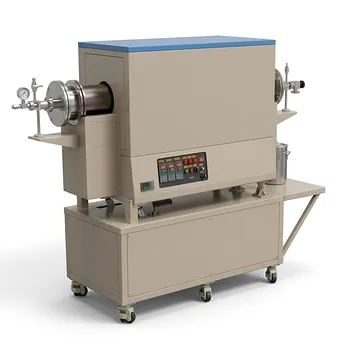
900°C Max Rotary Tube Furnace with 8 Inch 310S Alloy Tube and Optional Multi Zone Heating for Industrial Material Calcination
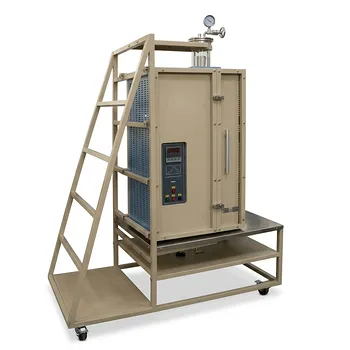
Split Vertical Tube Furnace with 1200C Quartz Tube and Stainless Steel Vacuum Flanges for Rapid Thermal Processing

High Temperature 1700C Tube Furnace with High Vacuum Turbomolecular Pump System and Multi Channel Mass Flow Controller Gas Mixer

1100C Tube Furnace with Vacuum Flange and Programmable Temperature Controller for Material Science and Industrial Heat Treatment
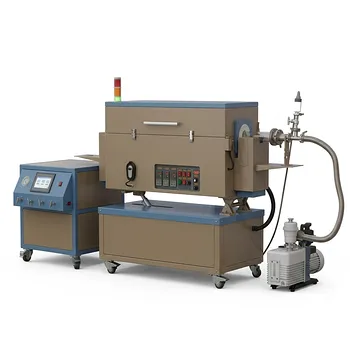
5 Inch Three Zone Rotary Tube Furnace with Integrated Gas Delivery System and 1200C Capability for Advanced Material CVD Processing
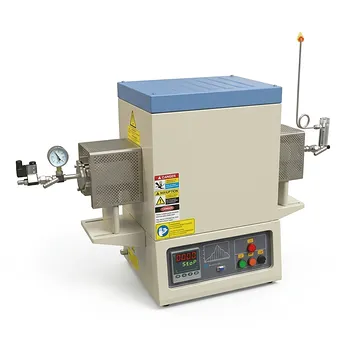
1700C Hydrogen Gas Tube Furnace with 60mm Alumina Process Tube and Integrated Hydrogen Safety Detector
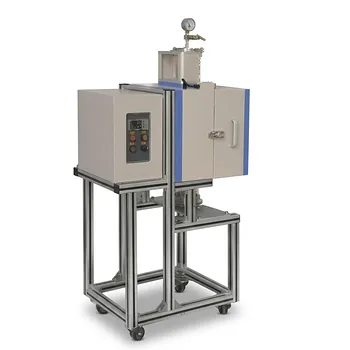
1200°C 5 Inch Vertical Quartz Tube Furnace with Stainless Steel Vacuum Flanges

High Temperature 1700C Six Zone Split Tube Furnace with Alumina Tube and Water Cooled Flanges

Compact Vertical Split Quartz Tube Furnace with Stainless Steel Vacuum Flanges for Rapid Thermal Quenching and Controlled Atmosphere Material Processing

High Temperature 1700C Benchtop Tube Furnace with 5 Inch Heating Zone High Purity Alumina Tube and Vacuum Sealing Flanges
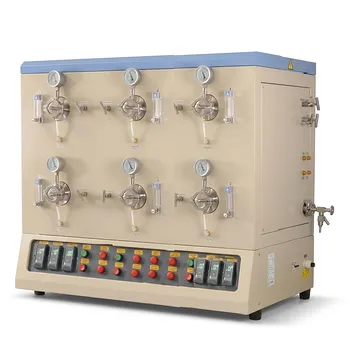
1200C High Throughput Multi Channel Tube Furnace with 50mm Quartz Tubes for Annealing and Material Phase Diagram Research
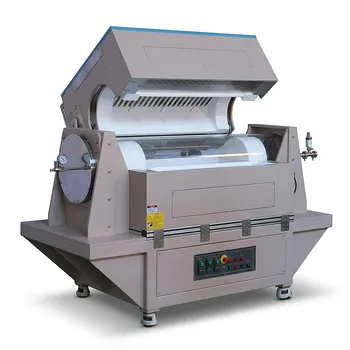
Three Zone Tube Furnace with 11 Inch or 15 Inch Quartz Tube and Hinged Flanges for Vacuum Atmosphere Heat Treatment

1800C High Temperature Compact Vacuum Tube Furnace with 60mm OD Alumina Tube and Kanthal MoSi2 Heating Elements

High Temperature 1700C Vertical Tube Furnace for Powder Spherification and Material Sintering
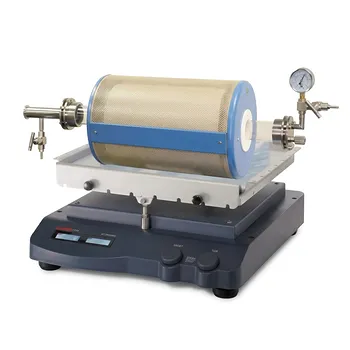
High Temperature Rocking Tube Furnace with Quartz Tube and Vacuum Flange for Materials Synthesis

High Temperature Automated 5 Inch Tube Furnace for Autonomous Material Research and Advanced Laboratory R&D
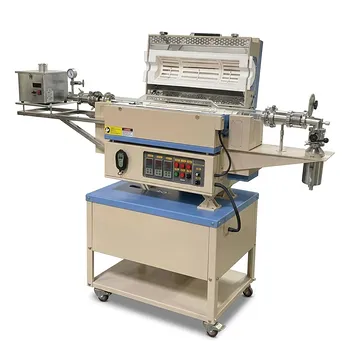
5 Inch Rotary Tube Furnace with Automatic Feeding and Receiving System 1200C Three Zone CVD Powder Processing