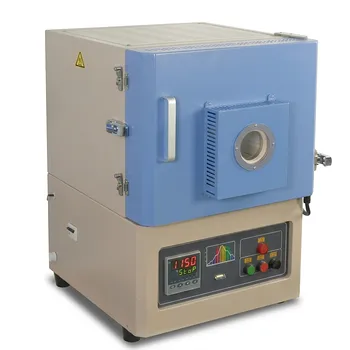
How is a laboratory annealing furnace used to study MXene spectra? Eliminate interlayer water for precise FTIR results.
Updated 3 months ago
Laboratory annealing furnaces are essential tools for isolating the intrinsic chemical signatures of MXene materials by systematically removing trapped interlayer water. By subjecting vacuum-filtered MXene samples to controlled thermal treatment—typically 150°C for two hours—researchers can eliminate moisture that would otherwise obscure Fourier-Transform Infrared (FTIR) spectroscopy results. This process allows for a precise comparison of spectra before and after heating to differentiate between external O-H vibrations and the material's actual functional groups.
The primary role of an annealing furnace in MXene research is to strip away interlayer water, enabling researchers to distinguish between water-based O-H bond signals and the material's fundamental chemical structure. This controlled dehydration is critical for accurate spectral interpretation and material characterization.
The Challenge of Interlayer Water in MXene Analysis
The Problem of Spectral Overlap
MXene samples produced via vacuum filtration often retain significant amounts of water between their atomic layers. This trapped water generates strong O-H bond vibrations that can mask or mimic the signals of the MXene’s own surface functional groups.
Why Clean Data Matters
Without removing this water, researchers cannot definitively identify the oxygen-containing or hydroxyl groups inherent to the MXene's structure. Precise identification is necessary to understand the material's reactivity and potential applications in energy storage or electronics.
The Annealing Process as a Research Solution
Controlled Thermal Treatment Parameters
The annealing furnace allows for the application of specific temperatures, such as 150°C, maintained over a set period like two hours. These parameters are chosen to be high enough to evaporate interlayer water but low enough to avoid damaging the MXene flake structure.
Comparative FTIR Analysis
By performing FTIR spectroscopy on the sample both before and after the furnace treatment, scientists can observe which spectral peaks disappear. The peaks that vanish are attributed to the removed water, while the remaining peaks represent the true chemical composition of the MXene.
Understanding the Trade-offs and Pitfalls
Risk of Thermal Degradation
Applying excessive heat in the annealing furnace can lead to the oxidation of the MXene or the loss of critical surface functional groups. This "over-annealing" can fundamentally change the material properties, leading to inaccurate conclusions about its natural state.
Rehydration Concerns
Once a sample is removed from the annealing furnace, it can quickly reabsorb moisture from the ambient air. If the FTIR measurements are not conducted immediately or in a controlled environment, the influence of water may reappear in the spectra, nullifying the treatment.
How to Apply This to Your Research
To effectively use an annealing furnace for MXene spectral studies, consider your specific analytical objectives.
- If your primary focus is functional group identification: Use a moderate annealing temperature of 150°C to strip water without altering the underlying chemical bonds.
- If your primary focus is thermal stability testing: Utilize the furnace to observe how the MXene structure and its corresponding spectra respond to varying heat levels and durations.
Mastering the interaction between thermal treatment and spectral output is the key to unlocking the true chemical identity of MXene materials.
Summary Table:
| Process Parameter | Standard Specification | Research Objective |
|---|---|---|
| Target Temperature | 150°C | Evaporate trapped interlayer moisture |
| Heating Duration | ~2 Hours | Ensure complete dehydration without degradation |
| Analysis Method | FTIR Spectroscopy | Differentiate O-H vibrations from functional groups |
| Key Outcome | Pure Spectral Signatures | Accurate identification of chemical properties |
| Critical Risk | Oxidation/Over-heating | Avoid damaging the MXene flake structure |
Unlock Precise Material Insights with THERMUNITS
For researchers in material science and industrial R&D, achieving consistent, high-purity results is paramount. THERMUNITS is a leading manufacturer of high-temperature laboratory equipment, providing the precision control needed to isolate intrinsic chemical signatures in advanced materials like MXenes.
Our comprehensive range of thermal processing solutions is designed to meet the rigorous demands of modern laboratories, including:
- Muffle, Vacuum, and Atmosphere Furnaces for highly controlled environments.
- Tube and Rotary Furnaces for versatile material heat treatments.
- CVD/PECVD Systems for advanced synthesis and thin-film research.
- Hot Press, Dental Furnaces, and Vacuum Induction Melting (VIM) Furnaces for specialized industrial applications.
Ready to elevate your lab's analytical accuracy and efficiency?
Contact our technical experts today to find the perfect furnace solution for your specific research and development goals!
References
- Tetiana Parker, Yury Gogotsi. Fourier-Transform Infrared Spectral Library of MXenes. DOI: 10.1021/acs.chemmater.4c01536
Mentioned Products
- High Temperature 1500C Benchtop Muffle Furnace 3.6L Alumina Fiber Chamber Programmable Controller Sintering Annealing Carbonization Thermal Processing System
- High Temperature 1000C Vacuum Furnace with 8 Inch ID Chamber for Material Sintering and Research Annealing
- Large Bench Top 1700C High Temperature Muffle Furnace with 19L Chamber for Advanced Material Sintering and Annealing
- 1200C Five Side Heating Muffle Furnace with Sliding Door 125L Volume High Temperature Heat Treatment System for Large Scale Sintering and Annealing
- Five Side Heating Muffle Furnace High Purity Alumina Fiber 27L Chamber 1200C High Temperature Thermal Processing System for Sintering Annealing and Materials Research
People Also Ask
- Why is annealing in a high-temperature muffle furnace necessary for SiO2/Si substrate pretreatment before monolayer WS2 synthesis?
- What is the purpose of using muffle or tube furnaces in glass synthesis? Achieve Precise Melt-Quenching & Homogeneity
- What is the role of a high-temperature muffle furnace in the synthesis of graphitic carbon nitride (g-C3N4)? - Guide
- What is the necessity of 950 °C muffle furnace for aluminate spinel supports? Achieve Phase Purity & Lattice Integration
- What is the function of a high-temp muffle furnace in Ni-V oxide synthesis? Optimize your material's performance.

Tech Team · ThermUnits
Last updated on Jun 03, 2026
Related Products
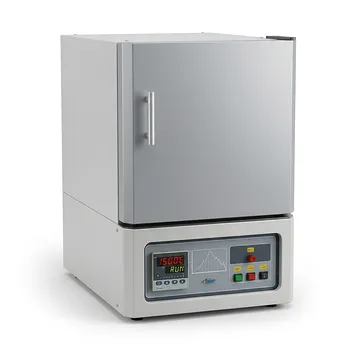
High Temperature 1500C Benchtop Muffle Furnace 3.6L Alumina Fiber Chamber Programmable Controller Sintering Annealing Carbonization Thermal Processing System
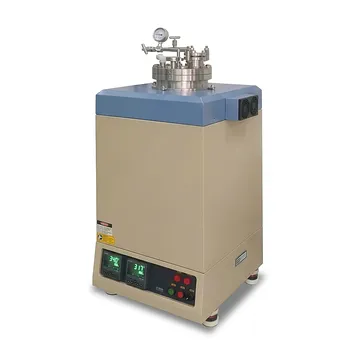
High Temperature 1000C Vacuum Furnace with 8 Inch ID Chamber for Material Sintering and Research Annealing
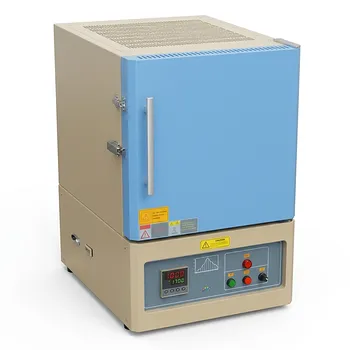
Large Bench Top 1700C High Temperature Muffle Furnace with 19L Chamber for Advanced Material Sintering and Annealing
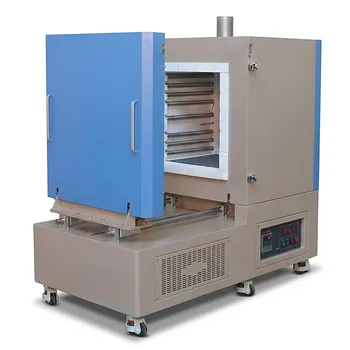
1200C Five Side Heating Muffle Furnace with Sliding Door 125L Volume High Temperature Heat Treatment System for Large Scale Sintering and Annealing
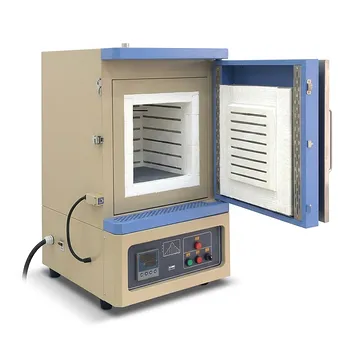
Five Side Heating Muffle Furnace High Purity Alumina Fiber 27L Chamber 1200C High Temperature Thermal Processing System for Sintering Annealing and Materials Research
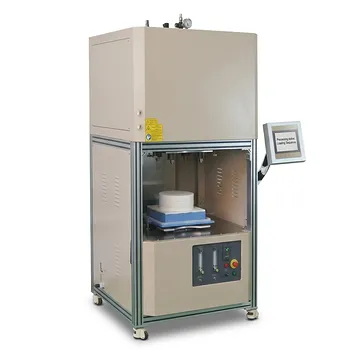
High Temperature Vertical Atmosphere Controlled Furnace with Automatic Bottom Loading and 1700°C Capacity for Advanced Material Research
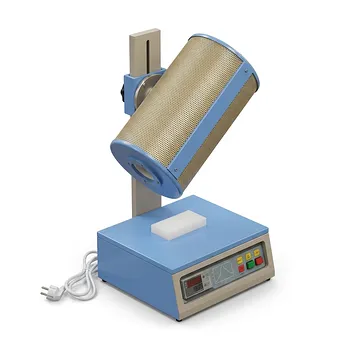
1100°C Vertical Laboratory Furnace for DIY Tubular Reactors with PID Temperature Controller
Compact Atmosphere Controlled Rapid Thermal Processing RTP Furnace with 4 Inch ID Quartz Tube 1100C
950C Rapid Thermal Processing Furnace for 12 Inch Wafer CSS Coating with Rotating Substrate Holder
1200°C Five Side Heating Atmosphere Controlled Muffle Furnace 64 Liter High Uniformity Box Furnace for Material Synthesis
High Temperature Compact Muffle Furnace 1700 C with 30 Segment Programmable Controller and 1.7L Cubic Chamber
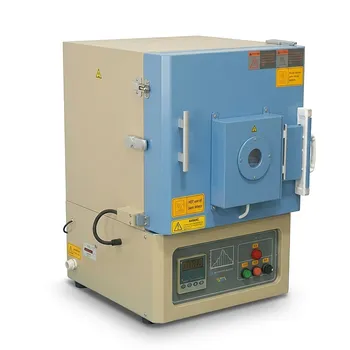
High Temperature Benchtop Muffle Furnace 1500C with 3.6L Chamber and Quartz Observation Window
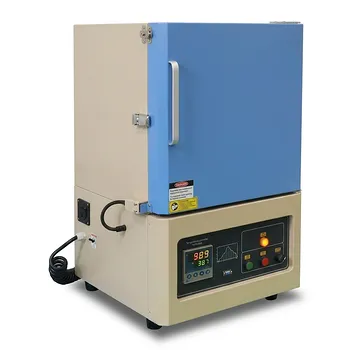
1200°C High Temperature Muffle Furnace 19L Chamber with 50 Segment Programmable Controller
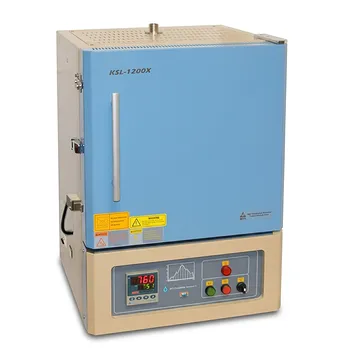
High Temperature 1200C Muffle Furnace 27L Volume 12x12x12 Chamber with Programmable PID Controller for Laboratory Material Science
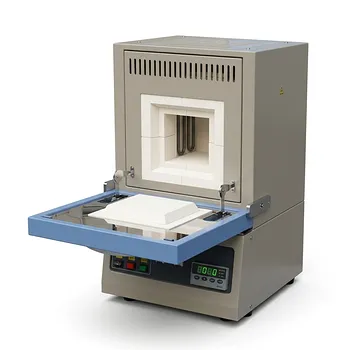
Five Sided Heating Muffle Furnace High Uniformity 1200C Lab Box Furnace 27L Alumina Fiber Chamber
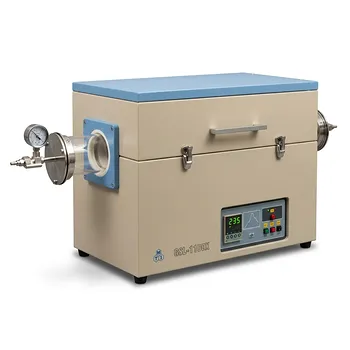
Single Zone Tube Furnace 5 Inch Quartz Tube 36 Inch Heating Zone Vacuum Flanges
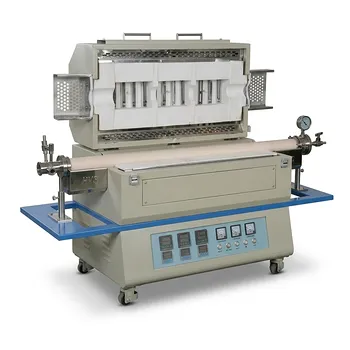
Three Temperature Zone Fast Heating Furnace 1500C Laboratory High Precision Thermal Processing System
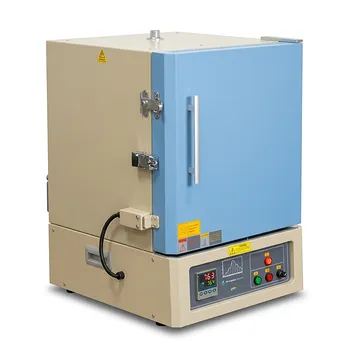
Large Capacity 1200C Muffle Furnace 64 Liter Chamber with Digital PID Controller and Built In Venting Port
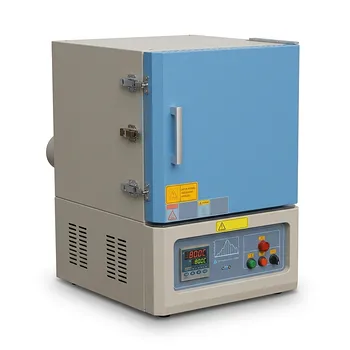
1800C Bench Top Muffle Furnace 18 Liters with Kanthal Super 1900 Heating Elements for High Purity Ceramic Sintering and Material Research