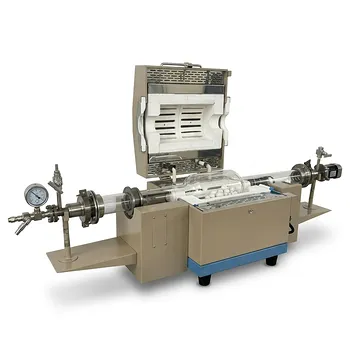
How is an industrial-grade tube furnace utilized to evaluate the thermal stability of thin films under extreme conditions?
Updated 3 months ago
Industrial-grade tube furnaces are the primary instruments for stress-testing thin films by providing precise, repeatable, and extreme thermal environments. These furnaces evaluate thermal stability by cycling films between room temperature and high-performance thresholds—often ranging from 400°C to 1400°C—to simulate real-world thermal shock. This process identifies critical failure points such as depolarization, phase instability, or chemical degradation, ensuring the film's reliability in demanding applications like MEMS packaging and high-temperature sensors.
The industrial tube furnace acts as a controlled pressure cooker for thin films, simulating years of thermal stress through accelerated cyclic fatigue and isothermal aging. By manipulating temperature profiles and atmospheric chemistry, researchers can verify a film's phase purity, structural densification, and resilience against environmental degradation.
Simulating Industrial Duty Cycles through Thermal Fatigue
Cyclic Thermal Shock Testing
To evaluate durability, tube furnaces subject thin film samples to hundreds of thermal cycles, moving between ambient temperatures and high-stress peaks (e.g., 400°C). This process mimics the thermal fatigue encountered in micro-electromechanical systems (MEMS) and industrial power electronics.
Verifying Functional Thresholds
These tests are critical for verifying whether engineered films maintain their piezoelectric performance or electrical conductivity. By testing below known depolarization thresholds, engineers can confirm that the material will remain functional throughout its intended service life.
Precision Control and Repeatability
Modern furnaces utilize closed-loop feedback systems with Type K, S, or B thermocouples and PID-based controllers. This ensures temperature stability within ±1 °C, allowing for exact replication of heating ramp rates and soaking times across different test batches.
Achieving Chemical Stability and Phase Purity
Pyrolysis and Removal of Residual Ligands
During the evaluation of deposited films, such as Thorium Dioxide, the furnace is used to heat the material to high temperatures (e.g., 800°C) for several hours. This calcination process facilitates the oxidation and volatilization of trapped organic fragments like carbon and nitrogen.
Thermal Densification
Prolonged high-temperature exposure promotes structural densification, which eliminates pores and increases the coating's structural strength. This step is vital for ensuring the film does not crack or delaminate when subjected to physical stress in its final application.
In-Situ Phase Generation
Furnaces provide the controlled atmosphere—such as wet oxygen or nitrogen—required for the pyrolysis of precursors. This environment can induce the partial oxidation of specific components to create protective glass phases that encapsulate and stabilize conductive elements.
Long-Term Durability and Microstructural Evolution
Sintering Resistance and Catalyst Aging
For films used in catalysis, the tube furnace simulates long-term operation by maintaining a constant thermal stress for extended periods (e.g., 170 hours at 500°C). This evaluates whether the film support can inhibit the sintering of active components and maintain its structural flexibility.
Refractory Behavior in Vacuum
When evaluating materials like Titanium Nitride near their melting limits, high-temperature vacuum furnaces (up to 1400°C) are used. The extremely low oxygen partial pressure allows researchers to observe internal grain growth and interface evolution without the interference of environmental oxidation.
Detecting Graphitization and Softening
Isothermal exposure in a controlled oxidative environment can reveal if specialized coatings, such as Diamond-Like Carbon (DLC), undergo graphitization. This helps predict the long-term protective capability of coatings used on high-frequency industrial stamping tools.
Understanding the Trade-offs and Pitfalls
Thermal Lag and Gradient Discrepancies
A common challenge is the discrepancy between the temperature measured by the furnace thermocouple and the actual surface temperature of the thin film. Because films have very low thermal mass compared to their substrates, they may experience different heating rates than the bulk environment.
CTE Mismatch Failures
While the furnace evaluates the film's thermal stability, failures often occur at the interface between the film and the substrate. If the Coefficient of Thermal Expansion (CTE) is not matched, the furnace test may cause delamination that is a result of substrate incompatibility rather than a failure of the film material itself.
Atmospheric Interference
Unless using a high-vacuum or inert gas setup, residual moisture or oxygen in the tube can lead to unintended oxidation. This can mask the true thermal stability of the material by introducing chemical degradation that would not occur in a perfectly controlled environment.
How to Apply This to Your Project
Making the Right Choice for Your Goal
To effectively utilize a tube furnace for thin film evaluation, your testing protocol should align with the specific environmental stressors the film will face.
- If your primary focus is mechanical reliability in electronics: Utilize rapid cyclic thermal fatigue testing between room temperature and 400°C to identify potential delamination or depolarization.
- If your primary focus is chemical purity and crystallinity: Conduct long-term calcination at or above 800°C in an oxidative atmosphere to ensure the removal of residual ligands.
- If your primary focus is high-temperature refractory performance: Use a vacuum furnace capable of 1400°C to study grain growth and internal structural changes without oxidative interference.
- If your primary focus is industrial tool longevity: Perform isothermal aging at the tool's maximum operating temperature to check for substrate softening or coating graphitization.
By precisely controlling the thermal and atmospheric variables within a tube furnace, you transform a simple heating element into a definitive diagnostic tool for material integrity.
Summary Table:
| Evaluation Method | Key Objective | Temperature Range | Application Focus |
|---|---|---|---|
| Cyclic Thermal Shock | Assess fatigue & delamination | Ambient to 400°C | MEMS & Power Electronics |
| Calcination | Ligand removal & densification | 800°C+ | Catalyst Films & Oxides |
| Vacuum Sintering | Refractory behavior & grain growth | Up to 1400°C | High-Temp Sensors & Nitrides |
| Isothermal Aging | Detect graphitization & softening | Operating Peak | Industrial Tooling Coatings |
Maximize Your Material Reliability with THERMUNITS
As a premier manufacturer of high-temperature laboratory equipment, THERMUNITS specializes in empowering material science and industrial R&D with precision-engineered thermal solutions. From Tube and Vacuum Furnaces to advanced CVD/PECVD systems and Hot Press units, our equipment provides the ±1 °C stability required to evaluate thin films under extreme stress.
Don't let sub-optimal thermal processing hinder your innovation. Contact the THERMUNITS team today to find the ideal furnace for your specific R&D or industrial heat treatment needs.
References
- Lisha Liu, Yaojin Wang. High piezoelectric property with exceptional stability in self-poled ferroelectric films. DOI: 10.1038/s41467-024-54707-y
Mentioned Products
- 900°C Max Rotary Tube Furnace with 8 Inch 310S Alloy Tube and Optional Multi Zone Heating for Industrial Material Calcination
- Continuous Feeding Rotary Tube Furnace for Industrial Powder Heat Treatment and Material Research
- 1100C Tube Furnace with Vacuum Flange and Programmable Temperature Controller for Material Science and Industrial Heat Treatment
- Laboratory Tilting Rotary Tubular Furnaces for Material Science and Industrial Heat Treatment
- Compact High Temperature 1600C Tube Furnace with 50mm Alumina Tube and Vacuum Flanges for Material Sintering
People Also Ask
- How does a rotary tube furnace improve the processing of granular materials? Enhance Uniformity and Reaction Kinetics
- Why use a rotary tube furnace for FACS carbonization? Ensure uniform morphology and prevent sphere agglomeration.
- Why is the precise optimization of residence time essential in the catalyst calcination process? Maximize Your Yields.
- In what ways do rotary tube furnaces enhance chemical and specialty mineral processing? Drive Precision and Uniformity.
- What parameters must operators control to maintain product quality in a rotary furnace? Master Your Heat Treatment.

Tech Team · ThermUnits
Last updated on Jun 03, 2026
Related Products
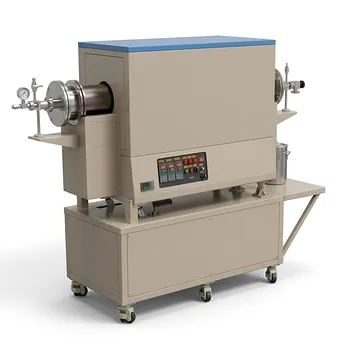
900°C Max Rotary Tube Furnace with 8 Inch 310S Alloy Tube and Optional Multi Zone Heating for Industrial Material Calcination
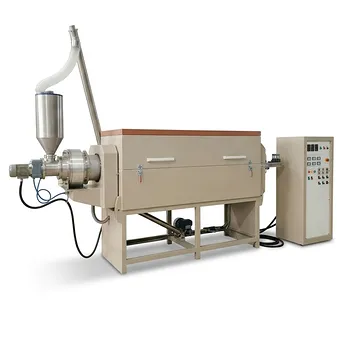
Continuous Feeding Rotary Tube Furnace for Industrial Powder Heat Treatment and Material Research

1100C Tube Furnace with Vacuum Flange and Programmable Temperature Controller for Material Science and Industrial Heat Treatment
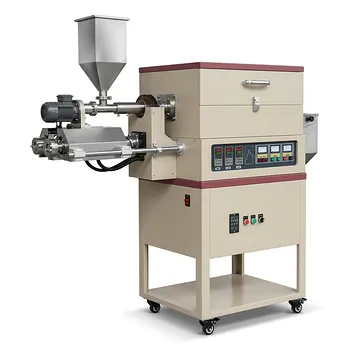
Laboratory Tilting Rotary Tubular Furnaces for Material Science and Industrial Heat Treatment

Compact High Temperature 1600C Tube Furnace with 50mm Alumina Tube and Vacuum Flanges for Material Sintering

High Temperature 1700C Tube Furnace with High Vacuum Turbomolecular Pump System and Multi Channel Mass Flow Controller Gas Mixer

Vertical 1700C Vacuum and Atmosphere Tube Furnace with 80mm Alumina Tube

High Temperature 1700C Vertical Tube Furnace for Powder Spherification and Material Sintering

High Temperature 1700C Six Zone Split Tube Furnace with Alumina Tube and Water Cooled Flanges

1800C High Temperature Compact Vacuum Tube Furnace with 60mm OD Alumina Tube and Kanthal MoSi2 Heating Elements

Compact Vertical Split Quartz Tube Furnace with Stainless Steel Vacuum Flanges for Rapid Thermal Quenching and Controlled Atmosphere Material Processing
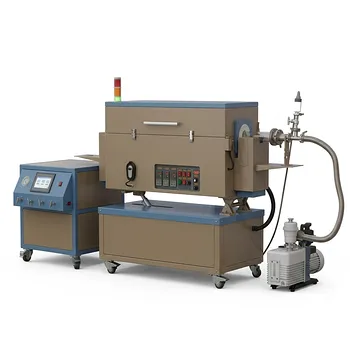
5 Inch Three Zone Rotary Tube Furnace with Integrated Gas Delivery System and 1200C Capability for Advanced Material CVD Processing

1200°C 5 Inch Vertical Quartz Tube Furnace with Stainless Steel Vacuum Flanges

High Temperature 1700C Benchtop Tube Furnace with 5 Inch Heating Zone High Purity Alumina Tube and Vacuum Sealing Flanges

High Temperature Automated 5 Inch Tube Furnace for Autonomous Material Research and Advanced Laboratory R&D

1700C Hydrogen Gas Tube Furnace with 60mm Alumina Process Tube and Integrated Hydrogen Safety Detector

1200C High Throughput Multi Channel Tube Furnace with 50mm Quartz Tubes for Annealing and Material Phase Diagram Research
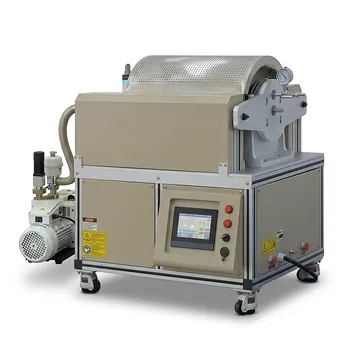
Automated 1200 C Tube Furnace for AI Material Research with 6 Inch OD and Sliding Flange
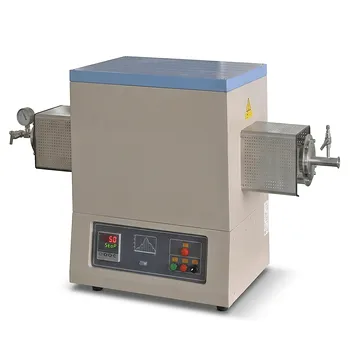
High Temperature 1700C Tube Furnace with 4 Inch OD Alumina Tube and Vacuum Sealing Flanges