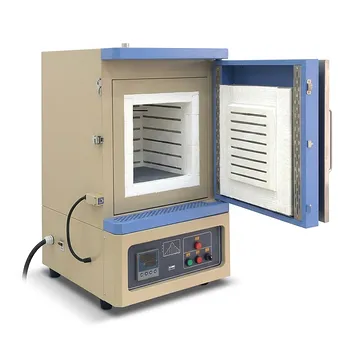
What advantages does a hot press furnace offer over standard sintering? Achieve Maximum Density and Superior Strength
Updated 3 months ago
Hot pressing transforms material fabrication by combining thermal energy with uniaxial mechanical pressure. This dual-action process significantly lowers the sintering activation energy, allowing high-performance ceramics and composites to achieve full densification at much lower temperatures than standard sintering. By accelerating particle rearrangement and closing internal pores, hot press furnaces produce materials that approach their theoretical density with superior microstructures.
A hot press furnace acts as a precision instrument that uses simultaneous heat and force to overcome the physical barriers of standard sintering. The core advantage lies in achieving near-theoretical density while maintaining a fine-grained structure, which is the foundation of high mechanical performance.
The Mechanics of Temperature-Pressure Coupling
Reducing Sintering Activation Energy
In standard sintering, densification depends almost entirely on thermal energy to drive atomic diffusion. Hot pressing introduces a secondary mechanical driving force, which lowers the energy threshold required for particles to bond. This synergy allows for rapid densification without needing the extreme temperatures typically required in conventional furnaces.
Accelerated Particle Rearrangement
The application of uniaxial mechanical pressure via a hydraulic system physically forces powder particles into closer contact. This directional pressure accelerates the rearrangement of particles and the filling of voids that would otherwise remain as structural weaknesses. Consequently, the material reaches a stable, dense state in a significantly shorter timeframe.
Precision Control Through Hydraulics
Unlike standard sintering, which is primarily a thermodynamic process, hot pressing is a thermal-mechanical process. Modern hot press furnaces utilize precision hydraulic systems to apply consistent axial pressure throughout the heating cycle. This control ensures that the material responds predictably to the thermal field, resulting in high repeatable quality.
Achieving Superior Material Microstructure
Elimination of Internal Porosity
One of the greatest challenges in standard sintering is the presence of internal closed pores that limit material strength. Hot pressing effectively eliminates these pores by applying external force that collapses voids during the plastic deformation phase. This results in a bulk material that achieves near-theoretical density, making it virtually free of internal defects.
Inhibition of Abnormal Grain Growth
High temperatures in standard sintering often lead to "grain growth," where larger crystals consume smaller ones, weakening the material. Because hot pressing operates at lower temperatures and shorter durations, it inhibits this growth. The resulting fine-grained microstructure is essential for achieving high hardness and fracture toughness.
Enhanced Mechanical Properties
The combination of high density and fine grain size leads to a measurable improvement in mechanical strength and toughness. Ceramics produced this way are better equipped to handle structural stress and wear. This makes the hot press furnace indispensable for manufacturing advanced aerospace components or high-wear industrial tools.
Understanding the Trade-offs
Geometry and Design Limitations
The primary limitation of hot pressing is its reliance on uniaxial (one-directional) pressure. This generally restricts the production to relatively simple shapes, such as discs, plates, or cylinders. Unlike standard sintering, which can handle complex geometries in a furnace, hot pressing requires specific molds and tooling for every run.
Tooling and Operational Costs
The molds (often made of graphite) used in hot pressing are subject to high stress and temperature, leading to gradual wear and replacement costs. Additionally, the equipment itself—incorporating both a high-temperature chamber and a precision hydraulic press—represents a higher capital investment than a standard atmospheric furnace.
How to Apply Decisive Sintering Strategically
When choosing between hot pressing and standard sintering, your decision should be driven by the required performance specifications of the final material.
- If your primary focus is reaching theoretical density: Use hot pressing to eliminate internal porosity that standard sintering cannot resolve.
- If your primary focus is maintaining a fine-grained microstructure: Opt for hot pressing to utilize lower sintering temperatures and prevent grain coarsening.
- If your primary focus is maximum fracture toughness: Choose hot pressing to benefit from the superior mechanical bonding created by the temperature-pressure coupling.
- If your primary focus is complex 3D geometry: Stick to standard sintering or pressureless sintering, as hot pressing is limited by its uniaxial mold requirements.
The hot press furnace is the definitive tool for engineers who cannot compromise on material density or grain-refined mechanical strength.
Summary Table:
| Feature | Hot Pressing | Standard Sintering |
|---|---|---|
| Driving Force | Thermal + Mechanical Pressure | Thermal Energy Only |
| Final Density | Near-Theoretical (High) | Lower (Residual Porosity) |
| Microstructure | Fine-Grained | Risk of Grain Growth |
| Geometry | Simple Shapes (Discs, Plates) | Complex 3D Geometries |
| Process Temp | Lower (due to pressure) | Higher (thermal only) |
Elevate Your Material Research with THERMUNITS
As a leading manufacturer of high-temperature laboratory equipment, THERMUNITS provides the precision thermal processing solutions required for cutting-edge material science and industrial R&D. Our high-performance Hot Press furnaces are specifically engineered to help you achieve near-theoretical density and superior mechanical toughness in advanced ceramics and composites.
Beyond hot pressing, we offer a comprehensive range of equipment including Muffle, Vacuum, Atmosphere, and Tube furnaces, CVD/PECVD systems, and Vacuum Induction Melting (VIM) furnaces. Partner with us to enhance your laboratory's efficiency and ensure the highest repeatable quality for your structural materials.
Contact our expert team today to find the perfect heat treatment solution for your application.
References
- Yulian He, Zhiyong Han. Preparation of the Amorphous NiCoP Nanosheet Array on Carbon Cloth for High‐Performance Solid‐State Hybrid Supercapacitor. DOI: 10.1002/slct.202304554
Mentioned Products
- High Pressure 600T Vacuum Induction Hot Press Furnace for Advanced Material Heat Treatment and Sintering
- High Temperature Ultrafast Heating Pressing Furnace 2900C Max 100kgf Rapid Thermal Processing System
- 1100C High Pressure Rocking Tube Furnace with 2 Inch Super Alloy Processing Tube for Material Synthesis
- High Temperature 1700C Tube Furnace with High Vacuum Turbomolecular Pump System and Multi Channel Mass Flow Controller Gas Mixer
- High Temperature Tube Furnace 1500C with Sliding Flanges and 50mm OD for Rapid Thermal Processing Fast Heating and Cooling
People Also Ask
- What is a Vacuum Hot Press Furnace and what are its primary industrial applications? Achieve Maximum Material Density
- What are the structural features of the furnace body and chamber in a Vacuum Hot Press Furnace? Master Material Density
- What types of heating systems and insulation are used in Vacuum Hot Press Furnaces? Optimize Your Thermal Processing
- Why is graphite the preferred material for dies and heating elements in Vacuum Hot Press Furnaces? High-Temp Solutions
- What are the primary operational components and mechanisms of a vacuum hot press furnace? A Technical Breakdown

Tech Team · ThermUnits
Last updated on Jun 02, 2026
Related Products
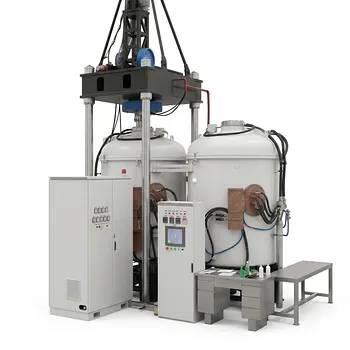
High Pressure 600T Vacuum Induction Hot Press Furnace for Advanced Material Heat Treatment and Sintering
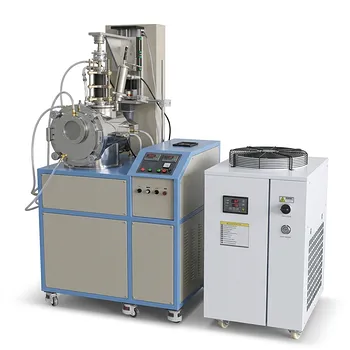
High Temperature Ultrafast Heating Pressing Furnace 2900C Max 100kgf Rapid Thermal Processing System
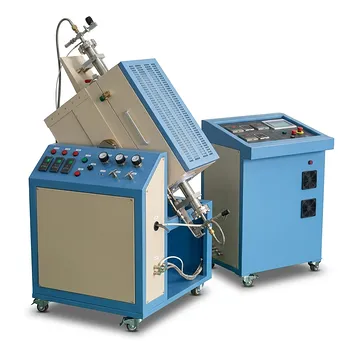
1100C High Pressure Rocking Tube Furnace with 2 Inch Super Alloy Processing Tube for Material Synthesis

High Temperature 1700C Tube Furnace with High Vacuum Turbomolecular Pump System and Multi Channel Mass Flow Controller Gas Mixer

High Temperature Tube Furnace 1500C with Sliding Flanges and 50mm OD for Rapid Thermal Processing Fast Heating and Cooling
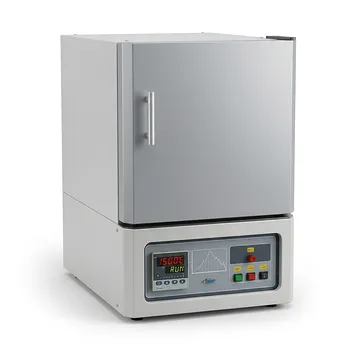
High Temperature 1500C Benchtop Muffle Furnace 3.6L Alumina Fiber Chamber Programmable Controller Sintering Annealing Carbonization Thermal Processing System
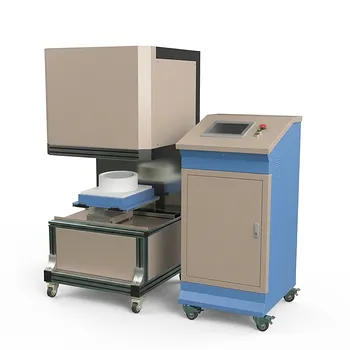
High Temperature Bottom Loading Box Furnace for Rapid Thermal Processing 1700C 40L Capacity
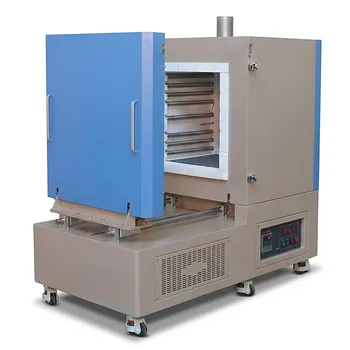
1200C Five Side Heating Muffle Furnace with Sliding Door 125L Volume High Temperature Heat Treatment System for Large Scale Sintering and Annealing
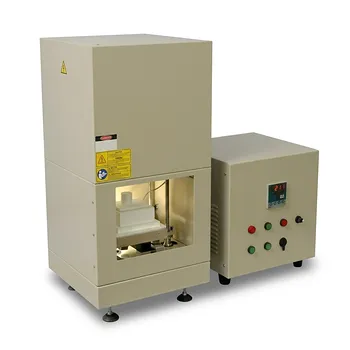
High Temperature Compact Automatic Bottom Loading Furnace with Rapid Cooling for Autonomous Material Research
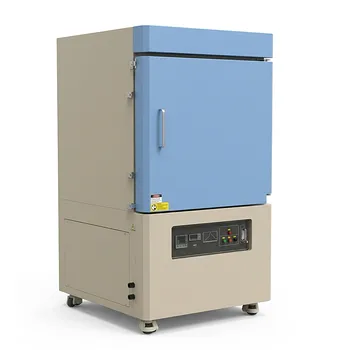
Industrial Large Box Furnace 1700C 216L High Temp Muffle Sintering System
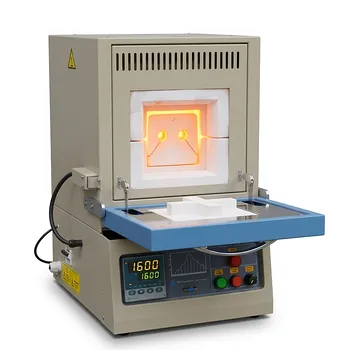
High Temperature Compact Muffle Furnace 1700 C with 30 Segment Programmable Controller and 1.7L Cubic Chamber
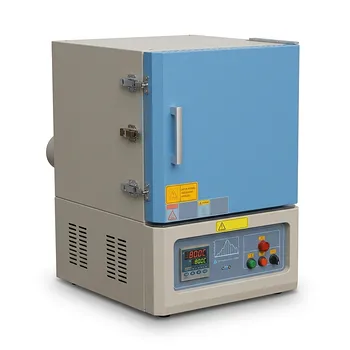
1800C Bench Top Muffle Furnace 18 Liters with Kanthal Super 1900 Heating Elements for High Purity Ceramic Sintering and Material Research
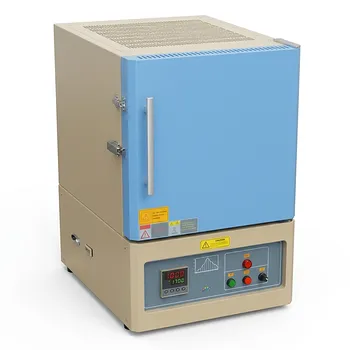
Large Bench Top 1700C High Temperature Muffle Furnace with 19L Chamber for Advanced Material Sintering and Annealing
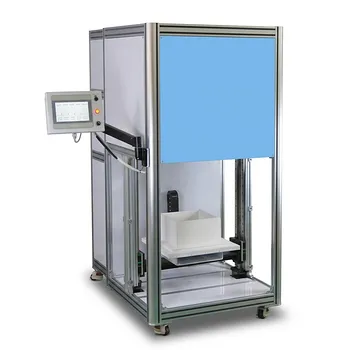
High Temperature 1600°C Three Zone Heated Bottom Loading Box Furnace with Rapid Thermal Processing Chamber 72L Volume
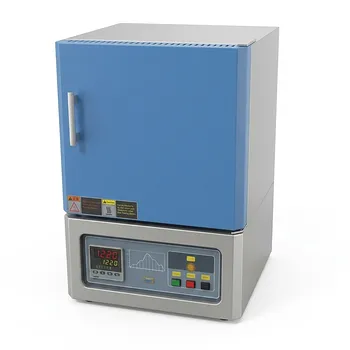
High Temperature Benchtop Muffle Furnace 1700C 10L Chamber Alumina Fiber Insulation MoSi2 Heating Elements
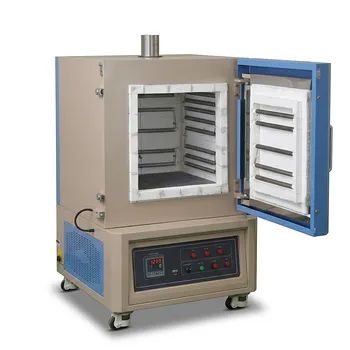
1200C High Temperature 125L Muffle Furnace 5 Side Heating for Large Batch Sintering with Optional Alloy Debinding Chamber

High Temperature 1700C Benchtop Tube Furnace with 5 Inch Heating Zone High Purity Alumina Tube and Vacuum Sealing Flanges
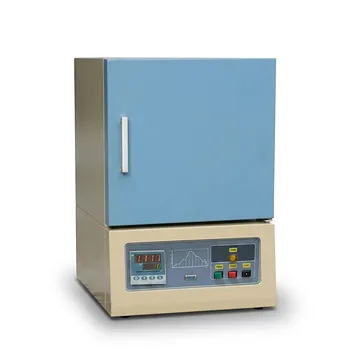
Ultra High Temperature Bench Top Muffle Furnace 1750C Sintering System with Kanthal Super Heating Elements and Precision Digital Control
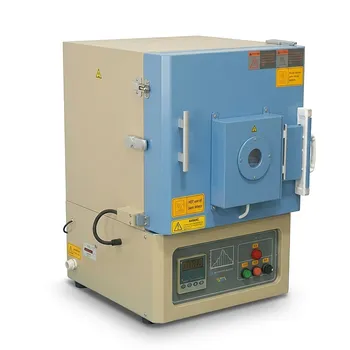
High Temperature Benchtop Muffle Furnace 1500C with 3.6L Chamber and Quartz Observation Window