What are the advantages of high-purity quartz boats for cobalt telluride? Ensure chemical purity and thermal stability.
Updated 3 months ago
High-purity quartz boats provide the critical foundation for synthesizing cobalt telluride composites by ensuring total chemical isolation and extreme thermal stability. During the essential 600 °C tellurization process, these carriers remain completely non-reactive with tellurium vapor and solid raw materials, effectively eliminating the risk of impurity infiltration. This chemical inertness is vital for preserving the electrochemical purity and intrinsic performance of the resulting active materials.
Core Takeaway: High-purity quartz boats function as chemically "invisible" platforms that withstand high-temperature tellurization without leaching contaminants, thereby ensuring the synthesized cobalt telluride maintains the precise crystalline quality and electrochemical integrity required for advanced applications.
Ensuring Chemical Integrity and Purity
Prevention of Impurity Infiltration
During the synthesis of cobalt telluride, the presence of tellurium vapor at high temperatures creates a highly reactive environment. High-purity quartz does not react with these vapors or the solid precursors, ensuring that no foreign elements are introduced into the composite structure. This level of purity is necessary to prevent the degradation of the material’s natural electrical and chemical properties.
Maintaining Electrochemical Performance
For materials intended for electrochemical use, even trace amounts of contaminants can significantly alter performance data. By using a quartz boat, researchers ensure that the electrochemical purity of the cobalt telluride is maintained. This allows for an accurate assessment of the material’s performance without interference from metallic or non-metallic impurities.
Stability Against Corrosive Precursors
High-purity quartz exhibits exceptional resistance to a wide range of chemical agents, including transition metal precursors and chalcogenide vapors. This chemical inertness ensures that the boat remains a stable platform throughout the entire duration of the chemical vapor deposition (CVD) or tellurization process. It prevents cross-contamination between the carrier and the reaction materials, even under aggressive heating conditions.
Thermal Resilience and Reaction Dynamics
High-Temperature Structural Stability
Cobalt telluride synthesis often requires sustained temperatures around 600 °C, and quartz boats are capable of withstanding much higher temperatures, often exceeding 900 °C. This thermal overhead ensures the boat will not deform or release volatile components during the reaction. The material provides a clean and stable platform that supports the consistent growth of the composite.
Superior Thermal Shock Resistance
Quartz is renowned for its ability to handle rapid temperature fluctuations without fracturing. This thermal shock resistance is critical for processes that require rapid cooling after synthesis to "freeze" a specific crystalline phase. It allows for faster cycle times in the laboratory while protecting the integrity of both the sample and the container.
Promoting Uniform Phase Reactions
The flat and open structural design of the quartz boat ensures that samples are heated uniformly within the furnace chamber. This geometry facilitates maximum contact between the tellurium vapor and the cobalt substrate. The result is a more consistent gas-solid phase reaction across the entire surface of the material, which is essential for large-scale synthesis.
Understanding the Trade-offs
Mechanical Fragility
While quartz is thermally robust, it is physically brittle compared to metallic carriers. It requires careful handling to prevent chipping or cracking, especially when cleaning or loading heavy precursors. Dropping or applying uneven mechanical pressure can lead to immediate failure of the boat.
Chemical Sensitivities
Although quartz is inert to most acids and vapors used in cobalt telluride synthesis, it is highly susceptible to hydrofluoric acid (HF) and strong alkaline environments at extreme temperatures. If the synthesis involves specific fluxing agents or cleaning protocols using these chemicals, the quartz will etch and eventually lose its structural integrity.
Cost and Maintenance
High-purity quartz is more expensive than standard ceramic or alumina alternatives. Additionally, to maintain its "high-purity" status, the boat must be rigorously cleaned between uses to remove residual tellurium or cobalt. Over time, repeated heating cycles can lead to devitrification, where the quartz becomes cloudy and more prone to breakage.
How to Apply This to Your Project
Recommendations Based on Your Goals
- If your primary focus is electrochemical precision: Utilize high-purity quartz exclusively to ensure that your performance metrics reflect the material itself, rather than underlying contaminants.
- If your primary focus is structural uniformity: Leverage the flat, open-boat design to maximize vapor exposure and ensure a consistent cobalt telluride phase across your entire substrate.
- If your primary focus is high-throughput testing: Prioritize quartz for its thermal shock resistance, allowing for faster cooling stages and quicker transition between experimental runs.
By prioritizing the chemical isolation provided by high-purity quartz, you secure the most reliable path toward high-performance, contaminant-free cobalt telluride composites.
Summary Table:
| Feature | Benefit for Cobalt Telluride Synthesis | Technical Detail |
|---|---|---|
| Chemical Inertness | Prevents impurity infiltration & maintains purity | Non-reactive with Te vapor & solid precursors |
| Thermal Stability | Reliable performance at high temps | Withstands >900°C (Process requires ~600°C) |
| Thermal Shock Resistance | Allows for rapid cooling/quenching | Prevents fracturing during fast temperature cycles |
| Structural Geometry | Promotes uniform phase reactions | Flat, open design maximizes gas-solid contact |
| Surface Quality | Minimizes cross-contamination | Easy to clean and maintain high-purity standards |
Elevate Your Material Synthesis with THERMUNITS
Precision is the backbone of advanced material science. As a leading manufacturer of high-temperature laboratory equipment, THERMUNITS provides the critical thermal processing solutions required for synthesizing high-performance composites like cobalt telluride.
Whether you are conducting basic research or industrial R&D, our comprehensive range of equipment ensures your processes are clean, stable, and repeatable:
- Specialized Furnaces: Muffle, Vacuum, Atmosphere, Tube, Rotary, and Hot Press Furnaces.
- Advanced Systems: CVD/PECVD systems, Dental Furnaces, and Electric Rotary Kilns.
- Industrial Solutions: Vacuum Induction Melting (VIM) furnaces and high-purity Thermal Elements.
Ready to optimize your heat treatment workflow? Contact our technical experts today to discuss your specific requirements and discover how our high-purity solutions can enhance your laboratory's efficiency and results.
References
- Qinghua Li, Shaoming Huang. Efficient Polytelluride Anchoring for Ultralong-Life Potassium Storage: Combined Physical Barrier and Chemisorption in Nanogrid-in-Nanofiber. DOI: 10.1007/s40820-023-01318-9
Mentioned Products
- 1100°C High Temperature Quartz Chamber Furnace 8 Inch OD with 7.6 Liter Capacity and Vacuum Atmosphere Capability
- High Temperature Vertical Atmosphere Controlled Furnace with Automatic Bottom Loading and 1700°C Capacity for Advanced Material Research
- 1100C High Temperature Vacuum Crucible Furnace with Quartz Chamber for Thermal Processing and Sintering
- Vertical Vacuum Furnace 1100C High Temperature 8 Inch Quartz Chamber Water Cold Flange System
- High Temperature Benchtop Muffle Furnace with Quartz Observation Window for Thermal Imaging and Material Analysis
People Also Ask
- Why is a quartz tube furnace necessary for phosphorus-doped MoS2/GO preparation? Ensure Purity & Precise Synthesis
- Benefits of high-vacuum quartz tube furnaces with N2 for Co3O4 nanosheets: Purity and Structural Integrity.
- What conditions does a quartz tube furnace provide for AlxCoCrFeNi steam corrosion tests? Achieve Precise R&D Control.
- Why is high-temperature annealing in a quartz tube furnace done after HfO2 deposition? Unlock peak film performance.
- Why is a high-purity quartz tube used for SP-Fe3O4-C? Ensure Chemical Purity & Catalytic Stability

Tech Team · ThermUnits
Last updated on Jun 03, 2026
Related Products
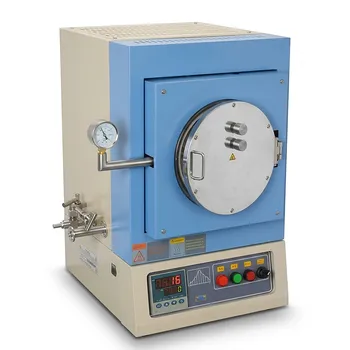
1100°C High Temperature Quartz Chamber Furnace 8 Inch OD with 7.6 Liter Capacity and Vacuum Atmosphere Capability
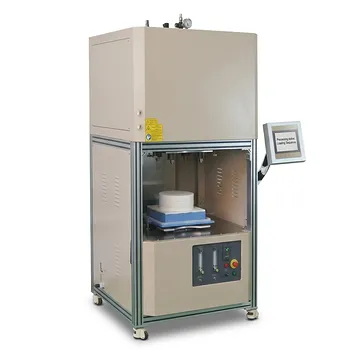
High Temperature Vertical Atmosphere Controlled Furnace with Automatic Bottom Loading and 1700°C Capacity for Advanced Material Research
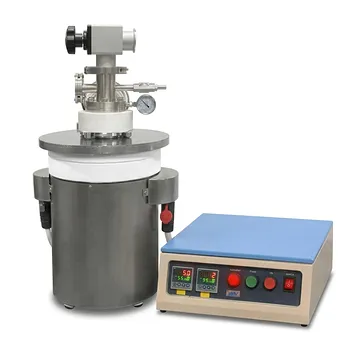
1100C High Temperature Vacuum Crucible Furnace with Quartz Chamber for Thermal Processing and Sintering
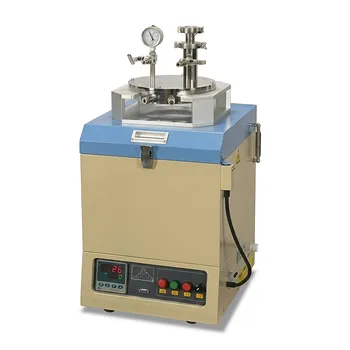
Vertical Vacuum Furnace 1100C High Temperature 8 Inch Quartz Chamber Water Cold Flange System
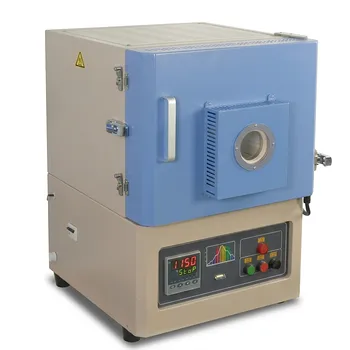
High Temperature Benchtop Muffle Furnace with Quartz Observation Window for Thermal Imaging and Material Analysis
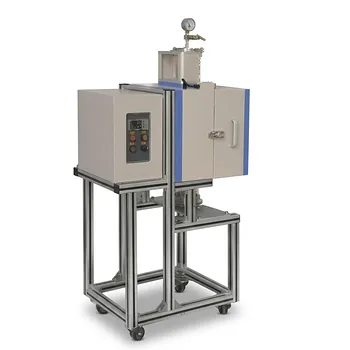
1200°C 5 Inch Vertical Quartz Tube Furnace with Stainless Steel Vacuum Flanges
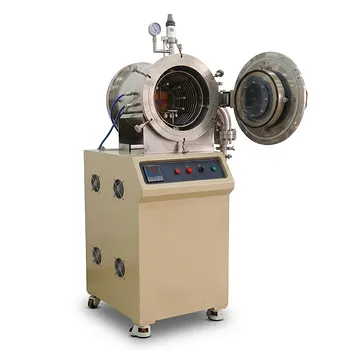
High Temperature Cold Wall High Vacuum Chamber Furnace 1400C for Advanced Material Processing