What are the advantages of high-purity alumina boats for HEA oxidation? Ensure Sample Purity & Precise Results
Updated 3 months ago
High-purity alumina boats are the industry standard for high-temperature oxidation experiments because they provide a chemically neutral and thermally resilient environment. These carriers ensure that any observed changes in mass or chemical composition are strictly the result of the alloy's interaction with the atmosphere, rather than a reaction with the container itself.
High-purity alumina acts as an invisible stage for high-entropy alloys (HEAs), offering the thermal stability and chemical inertness required to isolate oxidation kinetics and maintain the integrity of complex material analyses.
Ensuring Chemical Purity and Sample Integrity
Elimination of Solid-State Reactions
High-purity alumina exhibits exceptional chemical inertness at temperatures exceeding 1000°C. This prevents the boat from participating in solid-state reactions with the HEA specimen or its resulting oxide scales.
By remaining non-reactive, the carrier ensures that the precise stoichiometric composition of the alloy is maintained. This is critical for HEAs, where even minor changes in elemental ratios can significantly alter the material's properties.
Prevention of Impurity Contamination
In experiments involving sensitive alloys, such as those with ferromagnetic or shape-memory properties, avoiding external impurities is vital. Alumina prevents the migration of unwanted elements from the container into the alloy.
This level of purity is necessary to ensure that the resulting oxide films remain single-phase or follow the intended chemical pathways. It allows researchers to perform accurate energy-dispersive X-ray spectroscopy (EDS) without interference from container-leached elements.
Precision in Oxidation Kinetics Data
Accuracy of Mass Gain Measurements
A primary goal of oxidation testing is measuring the oxidation mass gain over time. High-purity alumina does not exhibit significant mass fluctuations or air-reactivity at extreme temperatures.
Because the boat itself does not gain or lose weight, every microgram of change recorded by the balance can be attributed to the specimen's oxidation. This leads to the generation of highly reliable oxidation kinetic curves.
Collection of Spalled Oxide Particles
High-temperature oxidation often causes oxide scales to crack and peel off, a process known as spallation. Alumina boats act as a stable reservoir to catch these flakes as they separate from the alloy.
The ability to collect and analyze spalled particles is essential for understanding the thermal stress and mechanical stability of the oxide layer. Without a stable carrier, these critical data points would be lost to the furnace floor.
Structural Stability Under Thermal Stress
Resistance to Thermal Deformation
Unlike many metal or lower-grade ceramic carriers, high-purity alumina does not undergo softening or deformation at temperatures like 800°C or 1000°C. It maintains its shape and structural integrity throughout long-term heating cycles.
This stability ensures that the specimen remains in the intended orientation and contact area. It also allows for clean cross-sectional data collection for scanning electron microscopy (SEM) analysis.
Thermal Shock and Exothermic Resilience
Alumina boats possess high thermal shock resistance, allowing them to withstand rapid temperature changes without cracking. This is particularly important when removing samples from a hot furnace for cooling.
The material can also endure the intense exothermic impacts that occur during certain oxidation reactions. This durability prevents container failure and ensures the stability of the entire thermal process.
Understanding the Trade-offs
Limits of Chemical Inertness
While highly stable, alumina is not universally inert to every substance; for example, it may react with certain strong molten fluxes or specific halides at extremely high temperatures. Researchers must verify that the specific HEA components do not include elements that act as aggressive fluxes for alumina.
Physical Constraints and Cleaning
High-purity alumina is brittle and can be susceptible to mechanical breakage if handled roughly or dropped. Additionally, because it is porous to a microscopic degree, reusing boats requires stringent cleaning protocols to prevent cross-contamination between different alloy batches.
How to Apply This to Your Research
Selecting the Right Approach for Your Goal
- If your primary focus is oxidation kinetics: Use high-purity alumina to ensure that mass gain data is 100% representative of the alloy's reaction with oxygen.
- If your primary focus is oxide scale morphology: Rely on alumina’s stability to provide a flat, non-reactive surface that preserves the layered structure of the oxide for SEM and EDS analysis.
- If your primary focus is high-temperature durability: Leverage alumina's thermal shock resistance to perform repeated heating and cooling cycles without risking container failure.
By utilizing high-purity alumina boats, researchers can confidently isolate the behavior of high-entropy alloys, ensuring that their findings are a result of the material's inherent properties rather than experimental artifacts.
Summary Table:
| Key Advantage | Impact on HEA Research |
|---|---|
| Chemical Inertness | Prevents solid-state reactions and maintains alloy stoichiometry. |
| High Purity | Eliminates impurity migration, ensuring accurate EDS and composition analysis. |
| Mass Stability | Provides a neutral baseline for highly precise oxidation kinetic measurements. |
| Thermal Resilience | Resists deformation and thermal shock at temperatures exceeding 1000°C. |
| Spallation Collection | Acts as a stable reservoir to capture oxide flakes for mechanical analysis. |
Elevate Your Research Precision with THERMUNITS
Maximize the accuracy of your high-entropy alloy studies with industry-leading thermal solutions. THERMUNITS is a premier manufacturer of high-temperature laboratory equipment specifically designed for material science and industrial R&D. We offer a comprehensive suite of high-performance tools, including:
- Advanced Furnaces: Muffle, Vacuum, Atmosphere, Tube, Rotary, and Hot Press furnaces.
- Specialized Systems: CVD/PECVD, Dental Furnaces, and Vacuum Induction Melting (VIM) furnaces.
- Critical Components: High-quality Thermal Elements and laboratory heat treatment accessories.
Our equipment provides the thermal stability and precise control required for rigorous oxidation experiments and complex material synthesis. Contact our technical experts today to discuss your specific requirements and discover how our thermal processing solutions can drive your next breakthrough!
References
- Fadhli Muhammad, Eddy Agus Basuki. Microstructural Stability and High-Temperature Oxidation Behavior of Al0.25CoCrCuFeNi High Entropy Alloy. DOI: 10.55981/metalurgi.2024.745
Mentioned Products
- High Temperature Induction Melting System with Integrated Ultra High Purity Glove Box for Metallic Alloy Processing
- Vertical Hybrid High Temperature Furnace 1500C Alumina Tube SOFC Fuel Cell Testing Laboratory Heat Treatment Research Equipment
- High Temperature Vertical Hybrid Furnace with Alumina Tube and SiC Heating for SOFC Coin Cell Testing and Atmosphere Processing
- High Temperature 1700C 4 Channel Tube Furnace 1 Inch Alumina Tube for Hi-Throughput Annealing
- High Temperature Compact Vacuum Tube Furnace 1750C Max 60mm OD Alumina Tube
People Also Ask
- What are the key structural components that make up a Vacuum Induction Melting (VIM) furnace system? Full Guide
- How does the skin effect influence VIM frequency selection? Optimize Heat Penetration & Stirring Efficiency
- What technical advantages does Vacuum Induction Melting offer regarding alloy homogeneity and purity? Enhance Performance
- Why is a VIM furnace utilized for high-performance metals? Achieve Superior Material Purity and Integrity
- Explain the physical principle behind heat generation in a Vacuum Induction Melting (VIM) furnace: A Technical Guide

Tech Team · ThermUnits
Last updated on Jun 02, 2026
Related Products
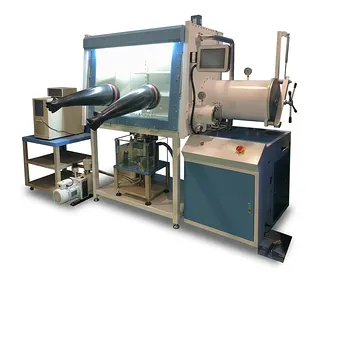
High Temperature Induction Melting System with Integrated Ultra High Purity Glove Box for Metallic Alloy Processing
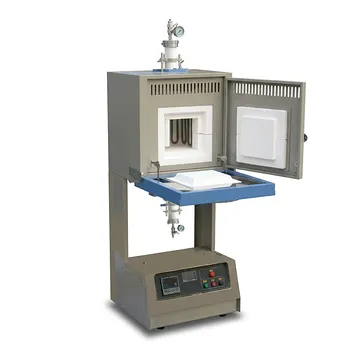
Vertical Hybrid High Temperature Furnace 1500C Alumina Tube SOFC Fuel Cell Testing Laboratory Heat Treatment Research Equipment
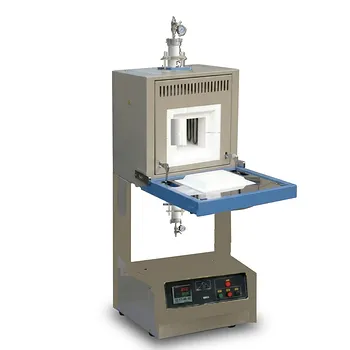
High Temperature Vertical Hybrid Furnace with Alumina Tube and SiC Heating for SOFC Coin Cell Testing and Atmosphere Processing
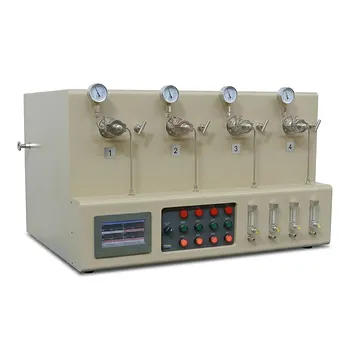
High Temperature 1700C 4 Channel Tube Furnace 1 Inch Alumina Tube for Hi-Throughput Annealing
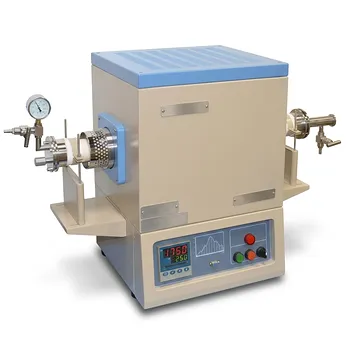
High Temperature Compact Vacuum Tube Furnace 1750C Max 60mm OD Alumina Tube

1800C High Temperature Compact Vacuum Tube Furnace with 60mm OD Alumina Tube and Kanthal MoSi2 Heating Elements
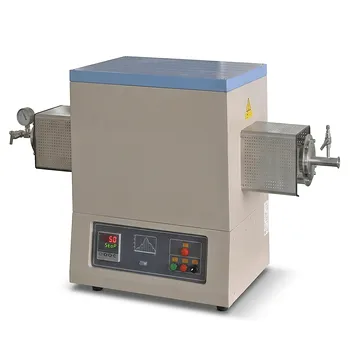
High Temperature 1700C Tube Furnace with 4 Inch OD Alumina Tube and Vacuum Sealing Flanges
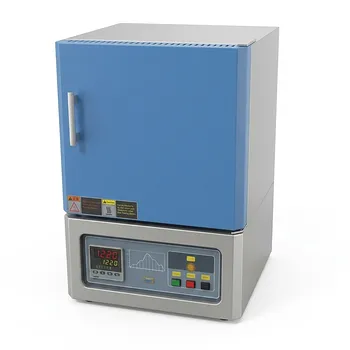
High Temperature Benchtop Muffle Furnace 1700C 10L Chamber Alumina Fiber Insulation MoSi2 Heating Elements

1750°C High Temperature Benchtop Vacuum Atmosphere Tube Furnace with Kanthal Super 1800 Heating Elements and 60mm Alumina Processing Tube
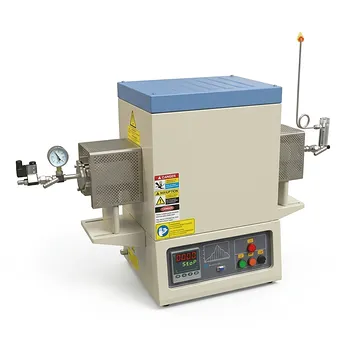
1700C Hydrogen Gas Tube Furnace with 60mm Alumina Process Tube and Integrated Hydrogen Safety Detector
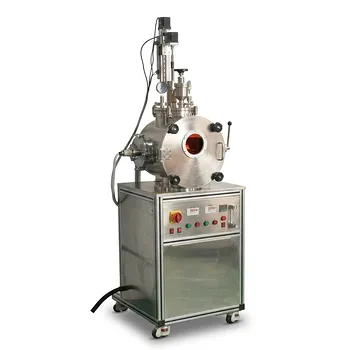
High Vacuum Melting Casting Furnace with Mechanical Stirring and Secondary Charge for Metallic Alloy Research
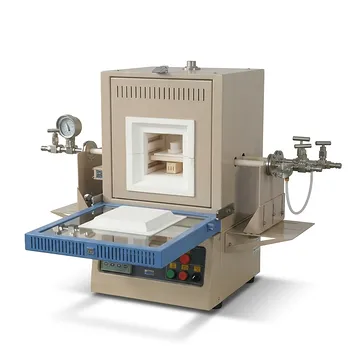
1700C Compact Hybrid Furnace with Dual Layer Box Sintering and Controlled Atmosphere Alumina Tubes
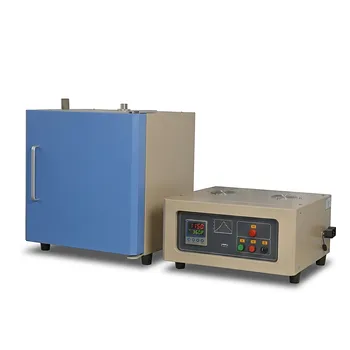
High Temperature Muffle Furnace with Alloy Chamber for Debinding and Sintering Applications
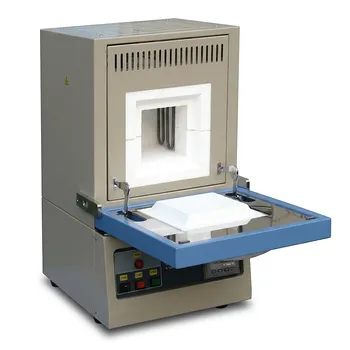
High Temperature 1800C Compact Muffle Furnace with Kanthal Super 1900 Heating Elements and 1.7L Alumina Chamber