What are the advantages of using high-purity alumina crucibles for alloy testing? Ensure Precise R&D Data at 1000°C.
Updated 3 months ago
High-purity alumina crucibles are the industry standard for 1000°C oxidation testing because they provide exceptional chemical inertness and thermal stability. These properties ensure that the crucible does not react with the alloy specimen or its oxide scale, allowing for the precise measurement of oxidation kinetics and the reliable collection of spalled oxide particles.
Core Takeaway: High-purity alumina crucibles act as a neutral "stage" for high-temperature experiments, ensuring that all recorded mass changes and chemical analyses result solely from the alloy's behavior rather than interference from the testing container.
Preserving the Integrity of Kinetic Data
Eliminating Chemical Side Reactions
At temperatures of 1000°C, many materials become reactive, but high-purity alumina remains chemically inert. It does not react with complex alloys—such as high-entropy alloys (Al10CoCrFeNi30) or ductile iron—nor does it bond with the resulting oxide scales.
Ensuring Precise Mass Gain Measurements
The primary goal of oxidation testing is often to measure mass gain as oxygen incorporates into the metal. Because alumina exhibits no significant mass fluctuations in air at high temperatures, researchers can be certain that recorded weight changes are derived entirely from the alloy’s oxidation.
Preventing Sample Contamination
Using high-purity Al2O3 prevents cross-contamination between the specimen and the container. This is vital for subsequent analysis of the oxide film’s composition, as any leaching from a lower-quality crucible would invalidate the metallurgical results.
Structural Reliability at Extreme Temperatures
Resistance to Thermal Deformation
High-purity alumina is a refractory material that maintains its structural integrity and shape at 1000°C and beyond. This resistance to thermal deformation ensures the specimen remains properly positioned throughout the duration of long-term tests.
Collection of Spalled Oxides
During cooling, thermal stress often causes oxide scales to "spall" or flake off the alloy surface. The crucible acts as a reliable collection vessel, allowing researchers to weigh and analyze these particles, which is essential for calculating the total oxidation rate.
Compatibility with Aggressive Environments
Alumina remains stable even when exposed to corrosive agents like deposited salts (e.g., KCl) or reducing atmospheres. Its versatility allows for consistent performance across various experimental conditions, from simple air oxidation to complex hot corrosion studies.
Understanding the Trade-offs
Sensitivity to Thermal Shock
While alumina is stable at high heat, it is relatively sensitive to rapid temperature changes. Cooling the crucibles too quickly after a 1000°C test can lead to cracking or catastrophic failure of the ceramic material.
Cost and Material Purity
The advantages of these crucibles depend entirely on their purity levels. Lower-grade alumina may contain impurities that become reactive at 1000°C, potentially bonding to the sample and ruining the experimental data.
Porosity and Cleaning Challenges
Repeated use of alumina crucibles requires rigorous cleaning to prevent residual oxides from previous tests from affecting new samples. Because the material can be slightly porous, microscopic contaminants can sometimes be difficult to fully extract.
How to Apply This to Your Project
Selecting the right container setup is critical for achieving reproducible and defensible high-temperature data.
- If your primary focus is oxidation kinetics: Use high-purity alumina crucibles to ensure every milligram of mass change is attributed to the alloy's interaction with oxygen.
- If your primary focus is spallation analysis: Ensure the crucible has high walls or a matching lid to prevent the loss of flaked-off oxide particles during handling or cooling.
- If your primary focus is preventing volatile loss: Utilize a corundum (alumina) crucible with a tight-fitting lid to simulate a closed environment and retain volatile alloying elements.
By leveraging the chemical neutrality of high-purity alumina, researchers can isolate the complex behavior of advanced alloys with absolute precision.
Summary Table:
| Key Advantage | Impact on Testing Results | Why It Matters at 1000°C |
|---|---|---|
| Chemical Inertness | Prevents sample/crucible reactions | Isolates alloy oxidation behavior |
| Thermal Stability | Maintains shape & integrity | Prevents specimen displacement |
| Mass Precision | Accurate kinetic measurements | Ensures weight gain is oxygen-only |
| Oxide Collection | Captures spalled particles | Calculates total oxidation rate |
Elevate Your Material Research with THERMUNITS
Achieving precise high-temperature data requires a reliable thermal environment designed for precision. THERMUNITS is a leading manufacturer of high-temperature laboratory equipment, providing the essential tools for material science and industrial R&D.
Our comprehensive range of thermal processing solutions includes:
- Advanced Furnaces: Muffle, Vacuum, Atmosphere, Tube, Rotary, and Hot Press systems.
- Specialized Systems: CVD/PECVD systems, Dental Furnaces, Electric Rotary Kilns, and Vacuum Induction Melting (VIM) furnaces.
- Crucial Components: High-purity Thermal Elements and professional heat treatment equipment.
We empower researchers to achieve reproducible, defensible results through superior temperature control and structural reliability. Contact us today to optimize your lab setup and let our experts help you select the ideal furnace and accessories for your oxidation testing needs.
References
- Anne Bastin, Richard Kearsey. Long‐Term High‐Temperature Oxidation of Al <sub>10</sub> CoCrFeNi <sub>30</sub> High‐Entropy Alloy. DOI: 10.1002/adem.202400650
Mentioned Products
- High Temperature 1700C Benchtop Tube Furnace with 5 Inch Heating Zone High Purity Alumina Tube and Vacuum Sealing Flanges
- 600°C Vertical Crucible Furnace with SS316 Alloy Reactor and 6 Port Vacuum Flange
- 1100C High Temperature Vacuum Crucible Furnace with Quartz Chamber for Thermal Processing and Sintering
- High Temperature Vertical Crucible Furnace with 22L Heating Chamber and 1200C Maximum Temperature
- Vertical Crucible Furnace 1000C High Temperature Laboratory Equipment 4.7 Inch Diameter Chamber SS316 Anti Corrosive Enclosure
People Also Ask
- How are high-temperature tube furnaces utilized to repair etching damage? Precision Lattice Restoration Solutions
- What is the function of a high-temperature tube furnace in the synthesis of g-C3N4? Optimize Thermal Polycondensation
- What impact does the heating rate of a tube furnace have on biochar microstructure? Optimize Your Material R&D.
- What is the role of a high-temperature tube furnace in the calcination process of ZnO/In2O3 nanocomposites?
- Conditions for nZVI Synthesis in Tube Furnaces? Learn to Optimize Thermal and Atmospheric Control for High Purity.

Tech Team · ThermUnits
Last updated on Jun 03, 2026
Related Products

High Temperature 1700C Benchtop Tube Furnace with 5 Inch Heating Zone High Purity Alumina Tube and Vacuum Sealing Flanges
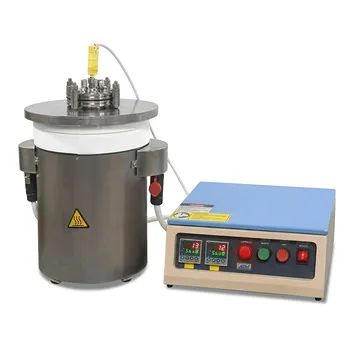
600°C Vertical Crucible Furnace with SS316 Alloy Reactor and 6 Port Vacuum Flange
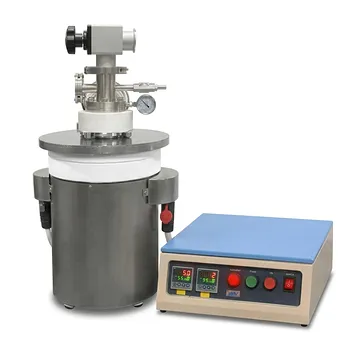
1100C High Temperature Vacuum Crucible Furnace with Quartz Chamber for Thermal Processing and Sintering
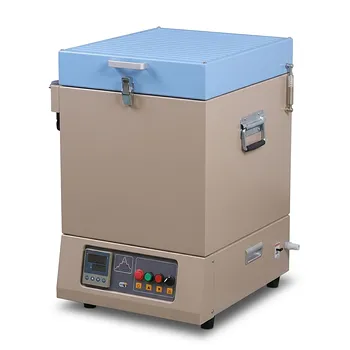
High Temperature Vertical Crucible Furnace with 22L Heating Chamber and 1200C Maximum Temperature
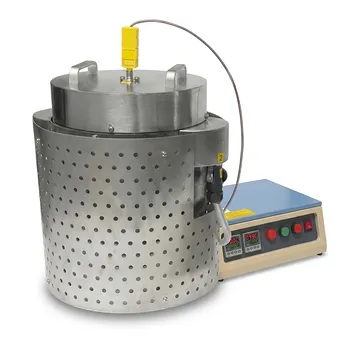
Vertical Crucible Furnace 1000C High Temperature Laboratory Equipment 4.7 Inch Diameter Chamber SS316 Anti Corrosive Enclosure
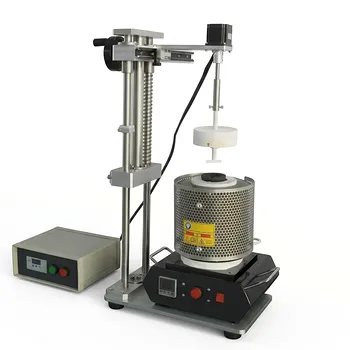
1100C Crucible Melting Furnace with Stirring Function for Glovebox and Air Sensitive Alloy Research
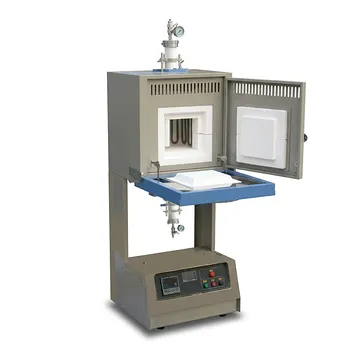
Vertical Hybrid High Temperature Furnace 1500C Alumina Tube SOFC Fuel Cell Testing Laboratory Heat Treatment Research Equipment
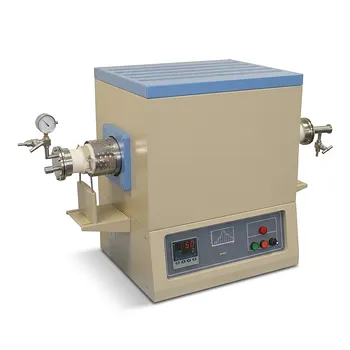
1700C High Temperature Alumina Tube Furnace with 18 Inch Heated Zone and Vacuum Sealing Flanges
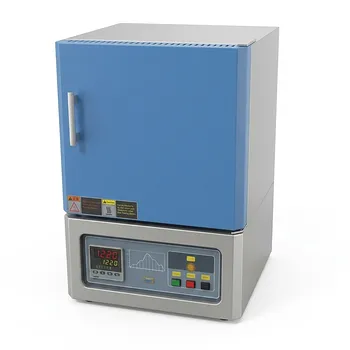
High Temperature Benchtop Muffle Furnace 1700C 10L Chamber Alumina Fiber Insulation MoSi2 Heating Elements
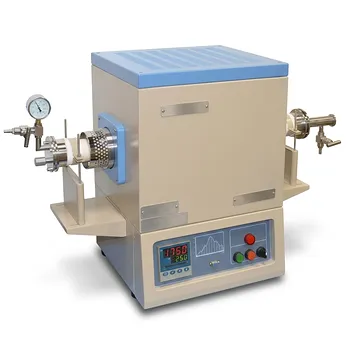
High Temperature Compact Vacuum Tube Furnace 1750C Max 60mm OD Alumina Tube
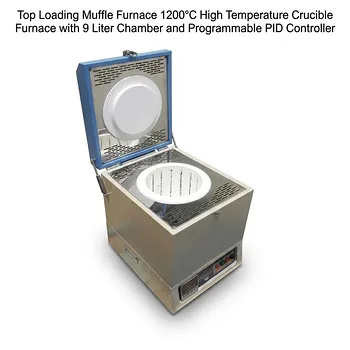
Top Loading Muffle Furnace 1200°C High Temperature Crucible Furnace with 9 Liter Chamber and Programmable PID Controller
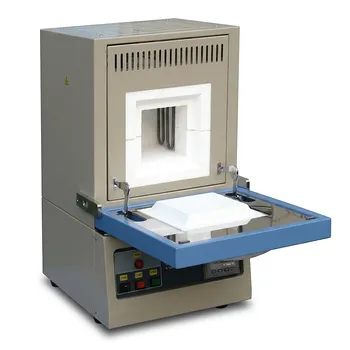
High Temperature 1800C Compact Muffle Furnace with Kanthal Super 1900 Heating Elements and 1.7L Alumina Chamber

Compact High Temperature 1600C Tube Furnace with 50mm Alumina Tube and Vacuum Flanges for Material Sintering

1800C High Temperature Compact Vacuum Tube Furnace with 60mm OD Alumina Tube and Kanthal MoSi2 Heating Elements
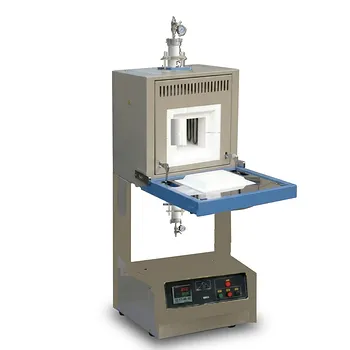
High Temperature Vertical Hybrid Furnace with Alumina Tube and SiC Heating for SOFC Coin Cell Testing and Atmosphere Processing
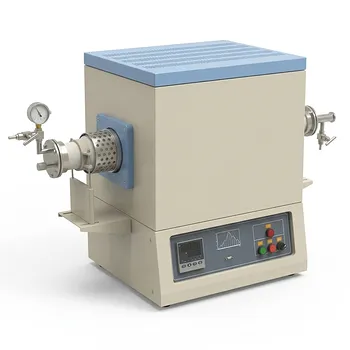
1750°C High Temperature Benchtop Vacuum Atmosphere Tube Furnace with Kanthal Super 1800 Heating Elements and 60mm Alumina Processing Tube
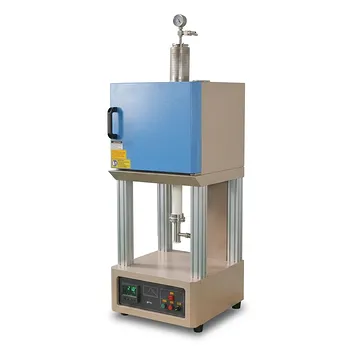
Hybrid High Temperature Tube and Box Furnace 1700C with 2 Inch Alumina Tube for Material Research
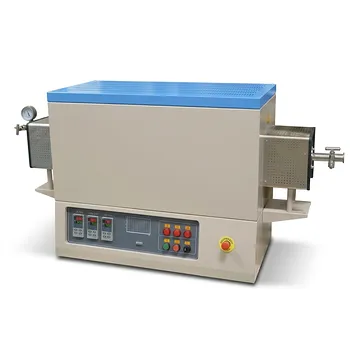
Three Zone Alumina Tube Furnace with Vacuum Flanges High Temperature 1700C Thermal Gradient CVD System
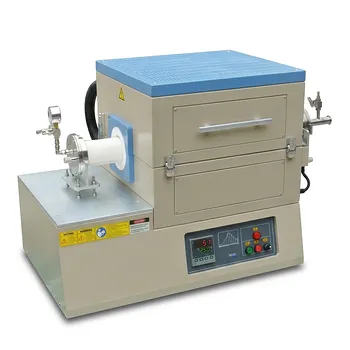
High Temperature 1700C Split Tube Furnace with Vacuum Flanges Valves and 60mm Alumina Tube