What are the core advantages of using a Hot Press furnace vs. conventional sintering? Achieve Near-Theoretical Density
Updated 3 months ago
Hot pressing revolutionizes ceramic manufacturing by integrating mechanical force directly into the thermal cycle. By applying unidirectional pressure while heating, hot press furnaces allow materials to reach near-theoretical density at significantly lower temperatures than conventional sintering. This dual-action process effectively suppresses grain growth, resulting in superior microstructures and enhanced mechanical performance.
The fundamental advantage of a hot press furnace lies in the thermal-mechanical coupling of heat and directional pressure. This synergy reduces the activation energy for densification, enabling the production of fine-grained, fully dense materials that outperform those produced via standard pressureless methods.
The Mechanics of Thermal-Mechanical Coupling
Reducing Sintering Activation Energy
The simultaneous application of high-temperature thermal energy and uniaxial mechanical pressure significantly lowers the activation energy required for material densification. In a conventional furnace, densification relies solely on thermal diffusion, which often requires extreme temperatures.
Hot pressing uses a precision hydraulic system to provide a secondary driving force. This allows powder particles to rearrange and bond at much lower temperatures than would otherwise be possible.
Accelerating Particle Rearrangement
The vertical mechanical pressure accelerates the diffusion and rearrangement of powder particles within the mold. This force pushes particles into closer contact, facilitating faster mass transport across grain boundaries.
As a result, the time required to achieve a dense state is drastically reduced. This shorter processing window limits the opportunity for undesirable chemical reactions or phase changes.
Precision Microstructure Control
Inhibiting Abnormal Grain Growth
One of the greatest challenges in conventional sintering is abnormal grain growth, which occurs when materials are held at high temperatures for extended periods. Large grains typically weaken the final product and reduce its toughness.
Because hot press furnaces achieve densification at lower temperatures, they effectively "freeze" the microstructure in a fine-grained state. This results in a more uniform and refined internal structure.
Eliminating Internal Porosity
Hot pressing is exceptionally effective at eliminating residual internal pores that conventional sintering often leaves behind. The unidirectional axial pressure physically collapses closed pores and forces air out of the material matrix.
By removing these microscopic voids, the material can approach its near-theoretical density. This lack of porosity is the primary reason hot-pressed ceramics exhibit such high levels of hardness and fracture toughness.
Understanding the Trade-offs
Geometric and Shape Limitations
The most significant limitation of hot pressing is that it is primarily restricted to simple geometric shapes. Because the pressure is applied uniaxially within a rigid die, it is difficult to produce complex, near-net-shape components.
In contrast, conventional sintering allows for the processing of intricate parts created through injection molding or 3D printing. Hot pressing is usually reserved for plates, discs, or simple cylinders that may require subsequent machining.
Cost and Tooling Considerations
The requirement for high-strength, heat-resistant dies—typically made of high-purity graphite—adds significant cost to the process. These dies are considered consumables and have a limited lifespan due to the extreme pressures and temperatures involved.
Additionally, hot pressing is often a batch process with lower throughput than continuous conventional kilns. This makes the per-unit cost higher, justifying its use only for high-performance applications where material integrity is paramount.
How to Apply This to Your Project
Making the Right Choice for Your Goal
To determine if a Hot Press furnace is the correct solution for your application, consider your primary performance requirements.
- If your primary focus is Maximum Mechanical Strength: Utilize hot pressing to achieve near-theoretical density and a fine-grained structure that resists fracture.
- If your primary focus is Complex Part Geometry: Stick with conventional sintering or explore Spark Plasma Sintering (SPS) if pressure is still required for densification.
- If your primary focus is Reducing Processing Time: Choose hot pressing, as the mechanical-thermal synergy completes densification much faster than thermal-only methods.
- If your primary focus is Minimizing Production Cost: Conventional sintering remains the most economical choice for large-scale production of non-critical ceramic components.
By leveraging the synergistic effects of heat and pressure, you can produce advanced materials with properties that are simply unattainable through traditional sintering methods.
Summary Table:
| Feature | Hot Press Furnace | Conventional Sintering |
|---|---|---|
| Densification | Near-theoretical (minimal porosity) | Lower (residual internal pores) |
| Microstructure | Fine-grained (suppresses growth) | Risk of abnormal grain growth |
| Temperature | Lower (due to mechanical driving force) | Higher (requires extreme heat) |
| Processing Speed | Faster particle rearrangement | Slower thermal diffusion only |
| Part Geometry | Simple shapes (plates, discs) | Complex/intricate shapes |
| Cost Profile | Higher (specialized graphite dies) | Lower (economical for large scale) |
Elevate Your Material Synthesis with THERMUNITS
Achieving near-theoretical density and precise microstructure control is essential for high-performance material R&D. THERMUNITS is a leading manufacturer of high-temperature laboratory equipment, providing the precision and reliability required for advanced material science and industrial applications.
Our comprehensive range of thermal processing solutions includes:
- Specialized Systems: Hot Press Furnaces, Vacuum Induction Melting (VIM), and CVD/PECVD systems.
- Laboratory Essentials: Muffle, Vacuum, Atmosphere, and Tube furnaces.
- Industrial & R&D Tools: Rotary kilns, Dental furnaces, and high-quality Thermal Elements.
Ready to enhance your lab's efficiency and material integrity? Our technical experts are here to help you find the perfect heat treatment solution tailored to your specific needs.
Contact THERMUNITS Today for a Consultation
References
- Jianqing Li, Fei Du. Engineering Detrimental Functional Groups in Conductive Additives Toward High‐Performance All‐Solid‐State Batteries. DOI: 10.1002/chem.202400074
Mentioned Products
- High Temperature Ultrafast Heating Pressing Furnace 2900C Max 100kgf Rapid Thermal Processing System
- 1100C High Pressure Rocking Tube Furnace with 2 Inch Super Alloy Processing Tube for Material Synthesis
- High Temperature Tube Furnace 1500C with Sliding Flanges and 50mm OD for Rapid Thermal Processing Fast Heating and Cooling
- High Temperature 1700C Tube Furnace with High Vacuum Turbomolecular Pump System and Multi Channel Mass Flow Controller Gas Mixer
- High Temperature Bottom Loading Box Furnace for Rapid Thermal Processing 1700C 40L Capacity
People Also Ask
- What are the unique advantages of using an ultrafast high-temperature furnace (UFTF) for modified graphite?
- What is the necessity of using a high-temperature hot press furnace for the preparation of dense non-oxide ceramics?
- What role does a SiC-coated graphite susceptor play in H2Se selenization? Boost RTP Thermal Uniformity & Film Purity.
- What technical advantages does a Hot Press furnace offer? Achieve full densification and superior material strength.
- What advantages does a hot press furnace offer over standard sintering? Achieve Maximum Density and Superior Strength

Tech Team · ThermUnits
Last updated on Jun 02, 2026
Related Products
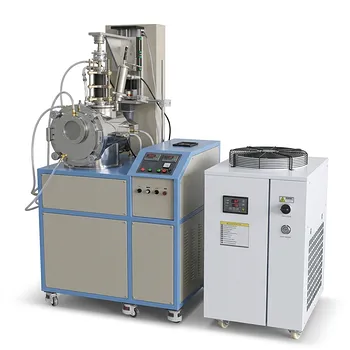
High Temperature Ultrafast Heating Pressing Furnace 2900C Max 100kgf Rapid Thermal Processing System
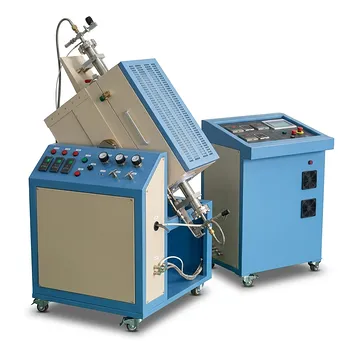
1100C High Pressure Rocking Tube Furnace with 2 Inch Super Alloy Processing Tube for Material Synthesis
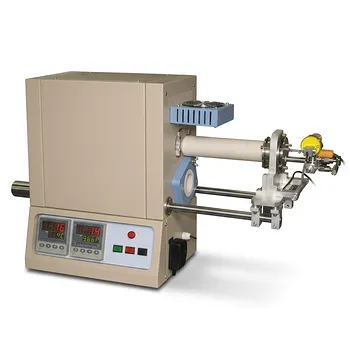
High Temperature Tube Furnace 1500C with Sliding Flanges and 50mm OD for Rapid Thermal Processing Fast Heating and Cooling

High Temperature 1700C Tube Furnace with High Vacuum Turbomolecular Pump System and Multi Channel Mass Flow Controller Gas Mixer
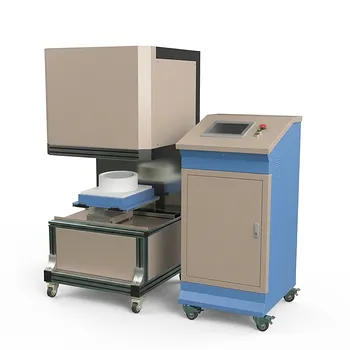
High Temperature Bottom Loading Box Furnace for Rapid Thermal Processing 1700C 40L Capacity
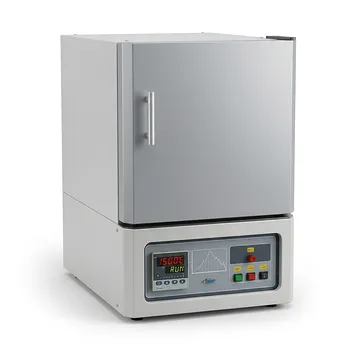
High Temperature 1500C Benchtop Muffle Furnace 3.6L Alumina Fiber Chamber Programmable Controller Sintering Annealing Carbonization Thermal Processing System
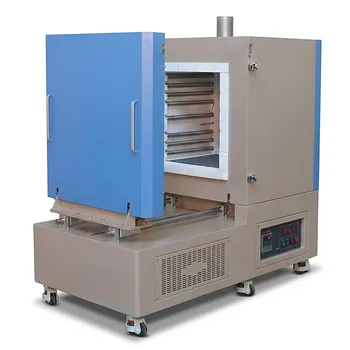
1200C Five Side Heating Muffle Furnace with Sliding Door 125L Volume High Temperature Heat Treatment System for Large Scale Sintering and Annealing
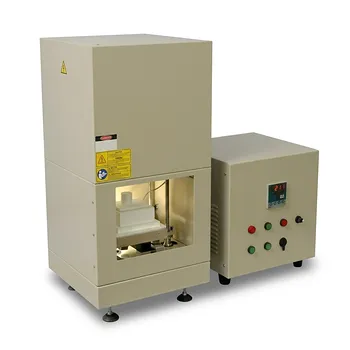
High Temperature Compact Automatic Bottom Loading Furnace with Rapid Cooling for Autonomous Material Research
High Temperature 1600°C Three Zone Heated Bottom Loading Box Furnace with Rapid Thermal Processing Chamber 72L Volume
1800C Bench Top Muffle Furnace 18 Liters with Kanthal Super 1900 Heating Elements for High Purity Ceramic Sintering and Material Research
Large Bench Top 1700C High Temperature Muffle Furnace with 19L Chamber for Advanced Material Sintering and Annealing
Industrial Large Box Furnace 1700C 216L High Temp Muffle Sintering System
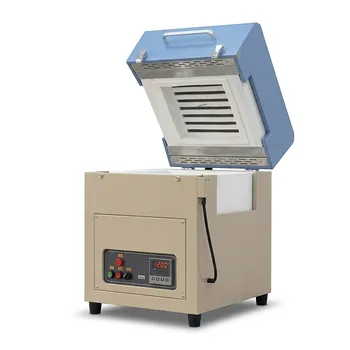
1200 C Maximum Three Sided Heating Top Loading Furnace with 12 x 12 x 8 Inch Chamber for Solid Oxide Fuel Cell Testing and High Temperature RD
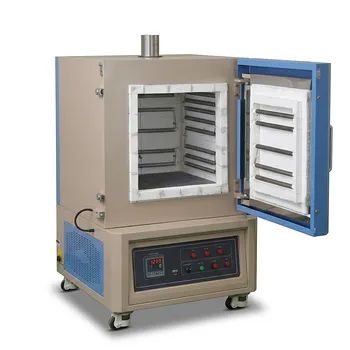
1200C High Temperature 125L Muffle Furnace 5 Side Heating for Large Batch Sintering with Optional Alloy Debinding Chamber
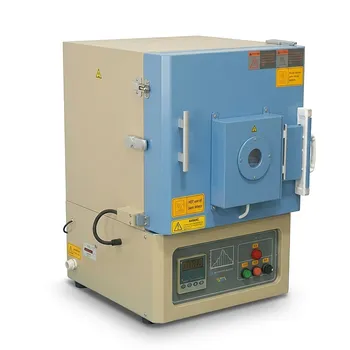
High Temperature Benchtop Muffle Furnace 1500C with 3.6L Chamber and Quartz Observation Window

High Temperature 1700C Benchtop Tube Furnace with 5 Inch Heating Zone High Purity Alumina Tube and Vacuum Sealing Flanges
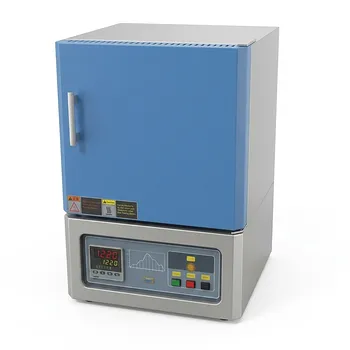
High Temperature Benchtop Muffle Furnace 1700C 10L Chamber Alumina Fiber Insulation MoSi2 Heating Elements
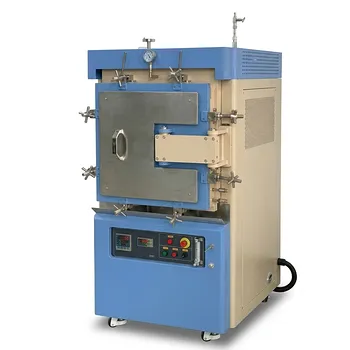
High Temperature Economic Hydrogen Gas Box Furnace 1600C Atmosphere Controlled Thermal Processing System 65L Capacity
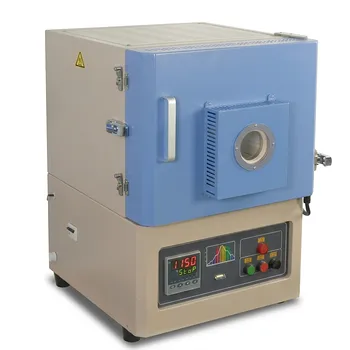
High Temperature Benchtop Muffle Furnace with Quartz Observation Window for Thermal Imaging and Material Analysis