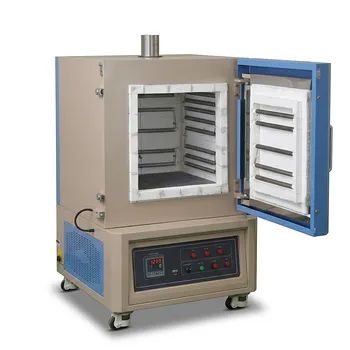
What are the unique advantages of using an ultrafast high-temperature furnace (UFTF) for modified graphite?
Updated 3 months ago
The adoption of Ultrafast High-Temperature Furnaces (UFTF) represents a paradigm shift in graphite modification, moving from slow equilibrium heating to rapid kinetic "shock" processing.
This technology leverages extremely high heating rates to achieve in approximately 30 to 60 seconds what traditional tube furnaces require hours to complete. By triggering an explosive expansion of intercalation compounds, UFTFs create a significantly richer porous structure and a higher density of functional defects, which drastically improves the material’s adsorption capacity and electrochemical performance.
Core Takeaway: Unlike traditional heat treatment that emphasizes slow structural stabilization, UFTF technology uses rapid thermal stress to "flash-engineer" graphite, creating high-performance, defect-rich structures for advanced filtration and battery applications in a fraction of the time.
Superior Structural Engineering through "Explosive" Expansion
Rapid Volatilization and Layer Opening
The primary advantage of UFTF is its ability to induce a violent decomposition of intercalation compounds within the graphite layers. Because the heat is applied almost instantaneously, gasification happens so quickly that it forces the graphite layers apart in an explosive expansion effect.
Creation of Richer Porous Networks
Traditional heating methods lack the kinetic energy to "shock" the structure open, often resulting in more compact materials. In contrast, the UFTF process generates a vastly richer porous structure, which provides a significantly larger surface area for dye molecule adsorption and chemical interaction.
Preservation of the Layered Framework
Despite the violent expansion, UFTF maintains the essential layered structure of the graphite. This balance is critical because it preserves the material's structural integrity while maximizing the available surface area for functional modification.
Defect Engineering for Enhanced Performance
Introducing Kinetic Dislocations
Using an argon atmosphere and rapid thermal cycling, UFTFs introduce significant dislocations and defects into the graphite lattice. These defects are not "failures" in the material but are intentionally engineered to serve as active sites for chemical reactions or ion storage.
Enhancing Lithium-Ion Diffusion
In battery applications, these engineered defects transform spent graphite into Defect-Rich Graphite (DRG). This structure facilitates faster kinetic diffusion of lithium ions, allowing for quicker charging and higher power densities than those treated with traditional, low-defect methods.
Surface State Regulation
While specialized atmosphere furnaces can add oxygen-based functional groups, UFTF provides a unique environment where extreme thermal stress dictates the chemical state. This allows for the optimization of the Solid Electrolyte Interphase (SEI) film in lithium-ion batteries, which is vital for long-term cycling stability.
Efficiency and Scalability in Processing
Dramatic Reduction in Processing Time
Traditional tube furnaces are a bottleneck in production, often requiring several hours per batch. UFTF equipment can complete the recycling of specialized materials like spent graphite anodes in roughly one minute, representing a 100-fold increase in temporal efficiency.
Energy and Resource Conservation
By reducing the treatment time from hours to seconds, UFTFs significantly lower the total energy consumption per kilogram of processed material. This makes the technology particularly attractive for large-scale recycling operations where operational costs are a primary concern.
Consistency in Thermal Fields
Advanced UFTFs often utilize graphite heating elements that offer exceptional thermal radiation uniformity even at temperatures exceeding 2000°C. This ensures that even in "ultrafast" modes, the material experiences consistent heating, leading to predictable performance across large batches.
Understanding the Trade-offs
Defect Density vs. Structural Order
The very defects that make UFTF graphite superior for ion diffusion may be a disadvantage for applications requiring high electrical conductivity. Traditional graphitization furnaces (reaching 2800°C) prioritize structural reorganization and long-range order, which UFTF sacrifices for kinetic activity.
Mechanical Stress and Material Fragility
The "explosive" nature of UFTF expansion can sometimes lead to reduced mechanical toughness in the resulting composite. While it creates high porosity, it may not reach the high density achieved by hot press furnaces, which use mechanical pressure to inhibit abnormal grain growth and increase hardness.
Equipment Complexity and Control
Managing a thermal "shock" requires sophisticated control systems to ensure the rapid cycle doesn't damage the furnace itself. While UFTF is fast, it requires precise gas and temperature management to prevent unintended oxidation or structural collapse during the 30-second window.
Applying UFTF Technology to Your Project
Recommendations for Material Goals
- If your primary focus is Water Purification/Adsorption: Utilize UFTF to maximize porosity and "open" the graphite layers for superior dye molecule capture.
- If your primary focus is Battery Recycling/Anode Performance: Choose UFTF to introduce the dislocations and defects necessary to enhance lithium-ion kinetics and revive spent graphite.
- If your primary focus is High-Density Structural Engineering: Opt for traditional hot press furnaces instead, as UFTF’s porosity-focused expansion works against material densification.
- If your primary focus is Maximum Conductivity/Graphitization: Use an ultra-high temperature graphitization furnace to prioritize atomic rearrangement over defect engineering.
By understanding the kinetic power of ultrafast heating, you can move beyond simple thermal stabilization to create high-performance, tailored graphite structures.
Summary Table:
| Feature | Ultrafast Furnace (UFTF) | Traditional Heat Treatment |
|---|---|---|
| Processing Time | 30 - 60 Seconds | Several Hours |
| Mechanism | Kinetic "Shock" Expansion | Slow Thermal Equilibrium |
| Material Structure | High Porosity & Defect-Rich | Compact & Highly Ordered |
| Energy Efficiency | Extremely High | Low (Prolonged Heating) |
| Primary Application | Battery Anodes & Water Filtration | High-Density Structural Parts |
Elevate Your Material Research with THERMUNITS
As a leading manufacturer of high-temperature laboratory equipment, THERMUNITS provides the cutting-edge thermal processing solutions required for material science and industrial R&D. From the rapid kinetic engineering of Ultrafast High-Temperature Furnaces to the precision of Muffle, Vacuum, and Atmosphere furnaces, we offer a comprehensive range tailored to your needs:
- Advanced Systems: CVD/PECVD Systems, Vacuum Induction Melting (VIM), and Hot Press Furnaces.
- Specialized Kilns: Rotary Furnaces, Electric Rotary Kilns, and Dental Furnaces.
- Precision Tools: Tube Furnaces and high-quality Thermal Elements.
Whether you are developing defect-rich graphite for next-gen batteries or seeking high-density structural ceramics, our equipment empowers you to achieve superior results with unmatched efficiency. Contact our technical experts today to find the perfect solution for your lab!
References
- Xin Yi, Yanbin Yao. Adsorption Performance of Modified Graphite from Synthetic Dyes Solutions. DOI: 10.3390/ma17174349
Mentioned Products
- High Temperature Ultrafast Heating Pressing Furnace 2900C Max 100kgf Rapid Thermal Processing System
- Ultrafast Thermal Pressing Furnace 2900C Max Temperature 200K per Second Heating Rate Vacuum Atmosphere Rapid Processing System
- High Temperature Tube Furnace 1500C with Sliding Flanges and 50mm OD for Rapid Thermal Processing Fast Heating and Cooling
- Ultra High Temperature Bench Top Muffle Furnace 1750C Sintering System with Kanthal Super Heating Elements and Precision Digital Control
- 1800°C Bench Top Ultra High Temperature Muffle Furnace with Sapphire Observation Window and Top Feeding Port for Materials Research and Thermal Processing
People Also Ask
- What is the necessity of using a high-temperature hot press furnace for the preparation of dense non-oxide ceramics?
- What role does a SiC-coated graphite susceptor play in H2Se selenization? Boost RTP Thermal Uniformity & Film Purity.
- What are the core advantages of using a Hot Press furnace vs. conventional sintering? Achieve Near-Theoretical Density
- What technical advantages does a Hot Press furnace offer? Achieve full densification and superior material strength.
- What advantages does a hot press furnace offer over standard sintering? Achieve Maximum Density and Superior Strength

Tech Team · ThermUnits
Last updated on Jun 03, 2026
Related Products
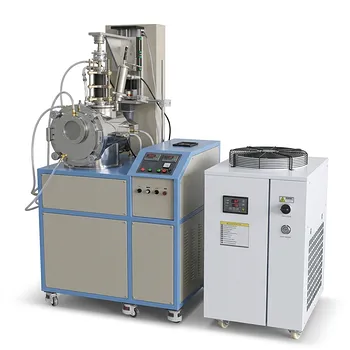
High Temperature Ultrafast Heating Pressing Furnace 2900C Max 100kgf Rapid Thermal Processing System
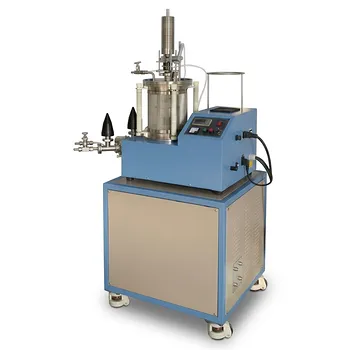
Ultrafast Thermal Pressing Furnace 2900C Max Temperature 200K per Second Heating Rate Vacuum Atmosphere Rapid Processing System

High Temperature Tube Furnace 1500C with Sliding Flanges and 50mm OD for Rapid Thermal Processing Fast Heating and Cooling
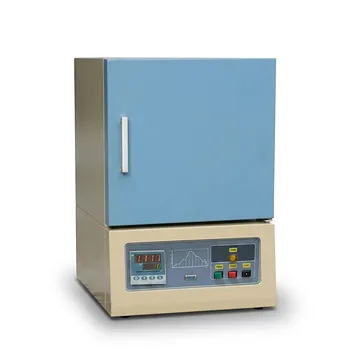
Ultra High Temperature Bench Top Muffle Furnace 1750C Sintering System with Kanthal Super Heating Elements and Precision Digital Control
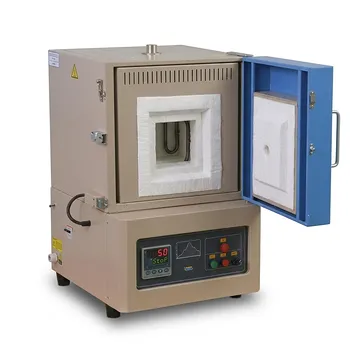
1800°C Bench Top Ultra High Temperature Muffle Furnace with Sapphire Observation Window and Top Feeding Port for Materials Research and Thermal Processing
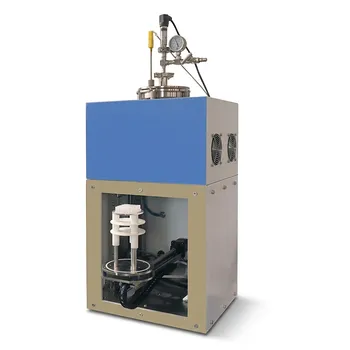
Rapid Thermal Processing RTP Atmosphere Controlled Bottom Loading Furnace 1100C High Throughput 50C per Second Heating Rate
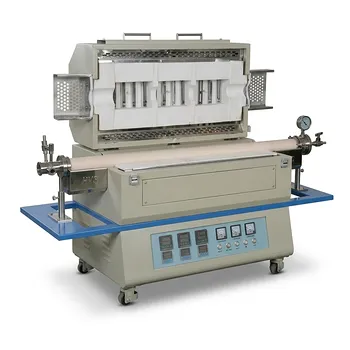
Three Temperature Zone Fast Heating Furnace 1500C Laboratory High Precision Thermal Processing System
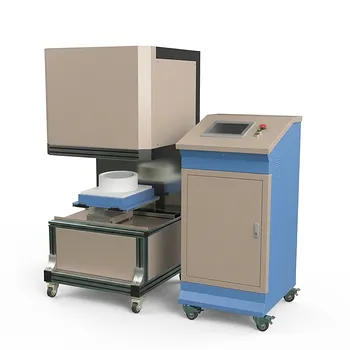
High Temperature Bottom Loading Box Furnace for Rapid Thermal Processing 1700C 40L Capacity
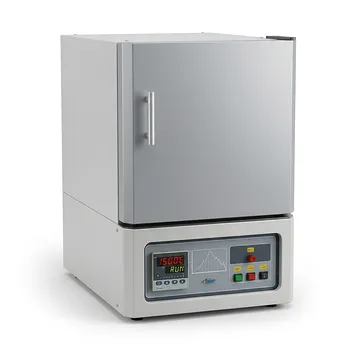
High Temperature 1500C Benchtop Muffle Furnace 3.6L Alumina Fiber Chamber Programmable Controller Sintering Annealing Carbonization Thermal Processing System

High Temperature 1700C Tube Furnace with High Vacuum Turbomolecular Pump System and Multi Channel Mass Flow Controller Gas Mixer
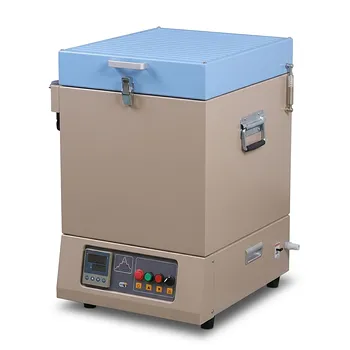
High Temperature Vertical Crucible Furnace with 22L Heating Chamber and 1200C Maximum Temperature
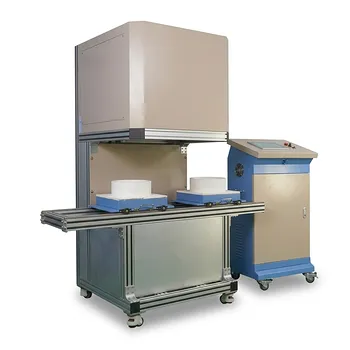
High Temperature Bottom Loading Vertical Furnace 1700C Dual Stage Sample Processing System 18L Large Capacity Thermal Treatment Equipment
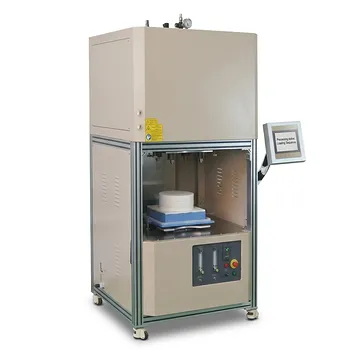
High Temperature Vertical Atmosphere Controlled Furnace with Automatic Bottom Loading and 1700°C Capacity for Advanced Material Research
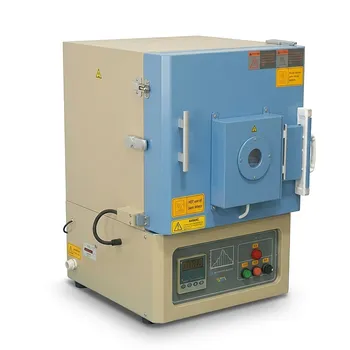
High Temperature Benchtop Muffle Furnace 1500C with 3.6L Chamber and Quartz Observation Window
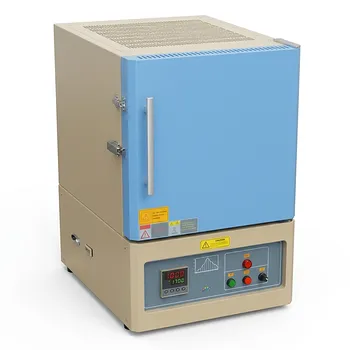
Large Bench Top 1700C High Temperature Muffle Furnace with 19L Chamber for Advanced Material Sintering and Annealing
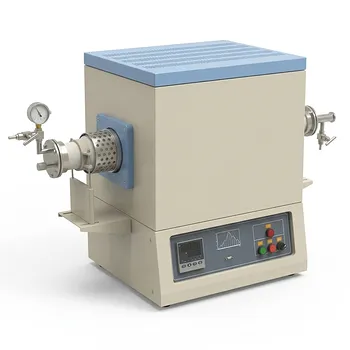
1750°C High Temperature Benchtop Vacuum Atmosphere Tube Furnace with Kanthal Super 1800 Heating Elements and 60mm Alumina Processing Tube
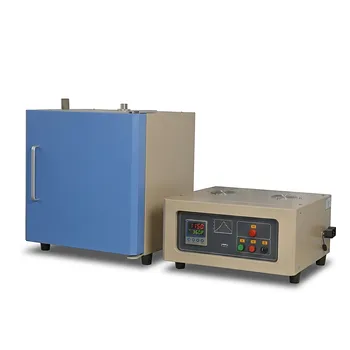
High Temperature Muffle Furnace with Alloy Chamber for Debinding and Sintering Applications
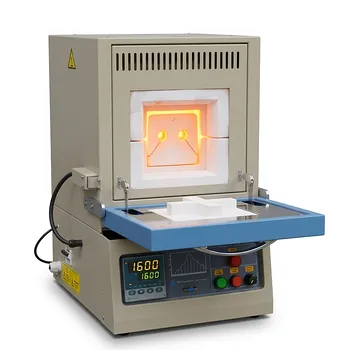
High Temperature Compact Muffle Furnace 1700 C with 30 Segment Programmable Controller and 1.7L Cubic Chamber
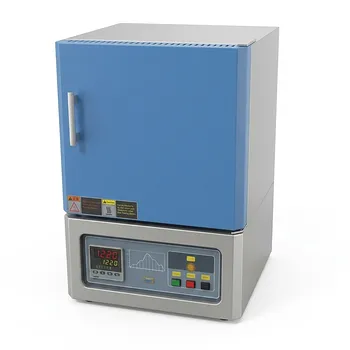
High Temperature Benchtop Muffle Furnace 1700C 10L Chamber Alumina Fiber Insulation MoSi2 Heating Elements