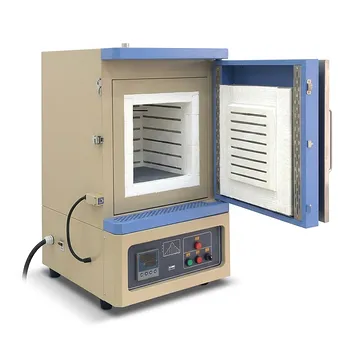
What technical advantages does a Hot Press furnace offer? Achieve full densification and superior material strength.
Updated 3 months ago
Hot Press furnaces achieve superior densification by simultaneously applying high temperature and unidirectional mechanical pressure. This thermal-mechanical coupling significantly lowers the activation energy required for atomic diffusion, allowing materials to reach near-theoretical density at lower temperatures than conventional sintering. By eliminating internal closed pores while inhibiting grain growth, this technology produces structural materials with exceptional hardness and fracture toughness.
The primary technical advantage of a Hot Press furnace is the synergy of pressure and temperature, which enables full densification at lower thermal budgets. This process results in fine-grained microstructures that are significantly stronger and tougher than those produced by pressureless sintering.
The Mechanics of Thermal-Mechanical Coupling
Lowering Activation Energy
Mechanical pressure serves as a secondary driving force for atomic diffusion alongside thermal energy. This reduces the total activation energy required to move atoms and fill gaps between particles, allowing the sintering process to initiate much earlier.
Accelerating Pore Elimination
In conventional sintering, pores are removed slowly through surface and volume diffusion. A Hot Press furnace uses uniaxial pressure to physically force particles together and collapse internal closed pores, achieving near-theoretical density in a fraction of the time.
Precision Control of Rearrangement
The application of pressure via a precision hydraulic system enhances the rearrangement of powder particles within the mold. This ensures a more uniform distribution of material before the final bonding stages occur.
Microstructural Control and Enhancement
Inhibiting Abnormal Grain Growth
High temperatures in conventional sintering often lead to "abnormal grain growth," where large grains consume smaller ones, weakening the material. Because Hot Pressing works at lower temperatures, it effectively halts this process, preserving a fine-grained structure.
Enhancing Hardness and Toughness
The resulting fine-grained microstructure is the key to superior mechanical performance. Materials produced this way exhibit significantly higher fracture toughness and hardness compared to their pressureless-sintered counterparts.
Shortening Processing Windows
By combining forces, the Hot Press furnace achieves densification in a relatively short period. This reduced dwell time at high temperatures further protects the microstructure from thermal degradation.
Understanding Technical Trade-offs and Limitations
Geometric Constraints
The use of a mold and unidirectional axial pressure limits the Hot Press furnace to simple geometries, such as discs, plates, or cylinders. It is not an ideal method for producing complex, near-net-shape components.
Operational and Tooling Costs
The requirement for high-strength graphite or ceramic molds increases the cost per part. Additionally, the complexity of managing a high-precision hydraulic system within a high-temperature vacuum or inert environment adds to the technical overhead.
Scalability and Throughput
Hot Pressing is often a batch process that requires careful heating and cooling cycles within the press itself. This can lead to lower throughput compared to continuous conventional sintering furnaces.
Selecting the Right Densification Strategy
To determine if a Hot Press furnace is appropriate for your application, consider your primary performance requirements.
- If your primary focus is maximizing mechanical strength: Use Hot Pressing to achieve the fine-grained, high-density structure essential for high-performance structural ceramics.
- If your primary focus is complex geometry or high-volume production: Conventional pressureless sintering is likely more cost-effective, provided your material can achieve density without the aid of external pressure.
- If your primary focus is minimizing thermal degradation: Choose Hot Pressing to reach full densification at lower temperatures, which is critical for preserving sensitive phases in composite materials.
The Hot Press furnace remains the definitive tool for engineers seeking to push the physical limits of structural materials through precision-controlled densification.
Summary Table:
| Feature | Hot Press Furnace | Conventional Sintering |
|---|---|---|
| Driving Force | Temperature + Uniaxial Pressure | Thermal Energy Only |
| Material Density | Near-theoretical (maximized) | Often contains residual porosity |
| Microstructure | Fine-grained (higher toughness) | Coarser grains due to high heat |
| Operating Temp | Lower (thermal-mechanical coupling) | Higher (thermal diffusion only) |
| Geometry | Simple shapes (discs, plates) | Complex near-net shapes |
Elevate Your Material Research with THERMUNITS Precision Solutions
Are you looking to push the physical limits of high-performance structural materials? THERMUNITS is a leading manufacturer of high-temperature laboratory equipment specifically designed for material science and industrial R&D. We provide the technical expertise and high-precision machinery required to achieve superior densification and mechanical properties.
Our comprehensive range of thermal processing solutions includes:
- Specialized Furnaces: Hot Press, Vacuum, Atmosphere, Muffle, Tube, Rotary, and Dental Furnaces.
- Advanced Systems: CVD/PECVD systems, Electric Rotary Kilns, and Vacuum Induction Melting (VIM) furnaces.
- Support & Components: High-quality Thermal Elements and custom heat treatment equipment.
Ready to optimize your sintering process? Our engineers are here to help you select the right configuration for your specific material requirements.
Contact THERMUNITS Today to Request a Quote
References
- Yan Li, Chunmei Li. Fabrication of Hierarchically Porous “Fish Cage”‐like Carbonaceous Nanomaterials via Soft Template‐assisted Strategy for Cr Removal: Accelerated Stepped Adsorption and Enhanced Coordination Effect. DOI: 10.1002/ejic.202400328
Mentioned Products
- High Temperature Ultrafast Heating Pressing Furnace 2900C Max 100kgf Rapid Thermal Processing System
- 1100C High Pressure Rocking Tube Furnace with 2 Inch Super Alloy Processing Tube for Material Synthesis
- High Temperature Tube Furnace 1500C with Sliding Flanges and 50mm OD for Rapid Thermal Processing Fast Heating and Cooling
- High Temperature 1700C Tube Furnace with High Vacuum Turbomolecular Pump System and Multi Channel Mass Flow Controller Gas Mixer
- High Temperature Bottom Loading Box Furnace for Rapid Thermal Processing 1700C 40L Capacity
People Also Ask
- What are the unique advantages of using an ultrafast high-temperature furnace (UFTF) for modified graphite?
- What is the necessity of using a high-temperature hot press furnace for the preparation of dense non-oxide ceramics?
- What role does a SiC-coated graphite susceptor play in H2Se selenization? Boost RTP Thermal Uniformity & Film Purity.
- What are the core advantages of using a Hot Press furnace vs. conventional sintering? Achieve Near-Theoretical Density
- What advantages does a hot press furnace offer over standard sintering? Achieve Maximum Density and Superior Strength

Tech Team · ThermUnits
Last updated on Jun 02, 2026
Related Products
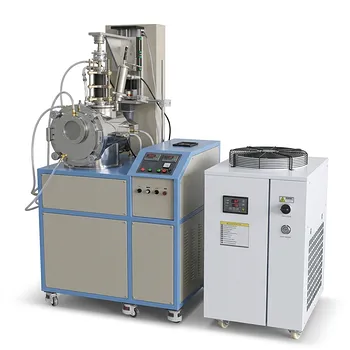
High Temperature Ultrafast Heating Pressing Furnace 2900C Max 100kgf Rapid Thermal Processing System
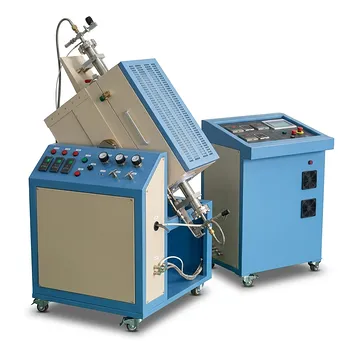
1100C High Pressure Rocking Tube Furnace with 2 Inch Super Alloy Processing Tube for Material Synthesis
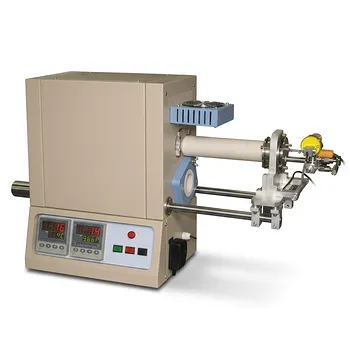
High Temperature Tube Furnace 1500C with Sliding Flanges and 50mm OD for Rapid Thermal Processing Fast Heating and Cooling

High Temperature 1700C Tube Furnace with High Vacuum Turbomolecular Pump System and Multi Channel Mass Flow Controller Gas Mixer
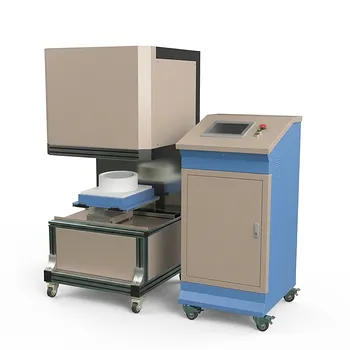
High Temperature Bottom Loading Box Furnace for Rapid Thermal Processing 1700C 40L Capacity
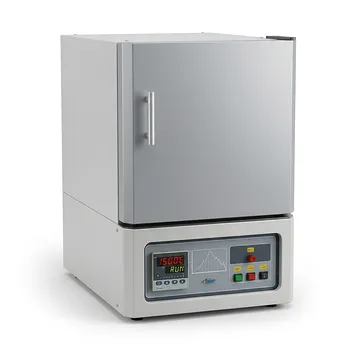
High Temperature 1500C Benchtop Muffle Furnace 3.6L Alumina Fiber Chamber Programmable Controller Sintering Annealing Carbonization Thermal Processing System
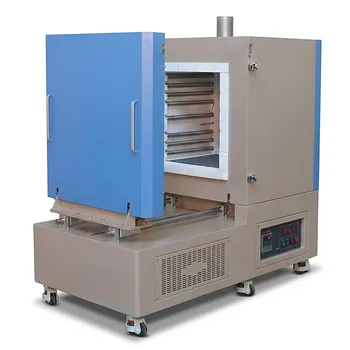
1200C Five Side Heating Muffle Furnace with Sliding Door 125L Volume High Temperature Heat Treatment System for Large Scale Sintering and Annealing
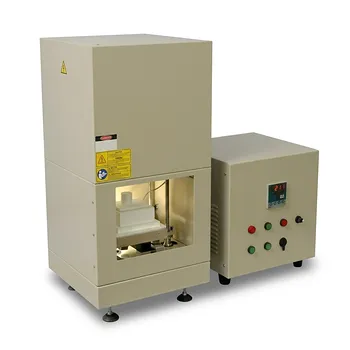
High Temperature Compact Automatic Bottom Loading Furnace with Rapid Cooling for Autonomous Material Research
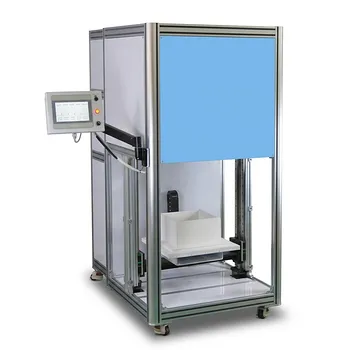
High Temperature 1600°C Three Zone Heated Bottom Loading Box Furnace with Rapid Thermal Processing Chamber 72L Volume
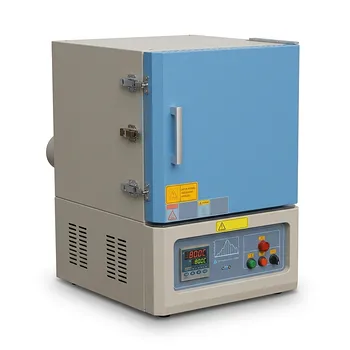
1800C Bench Top Muffle Furnace 18 Liters with Kanthal Super 1900 Heating Elements for High Purity Ceramic Sintering and Material Research
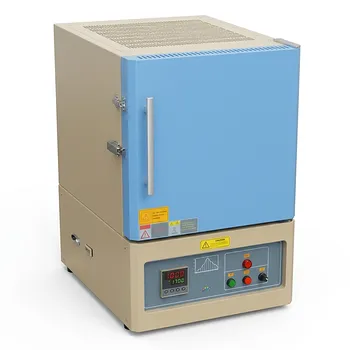
Large Bench Top 1700C High Temperature Muffle Furnace with 19L Chamber for Advanced Material Sintering and Annealing
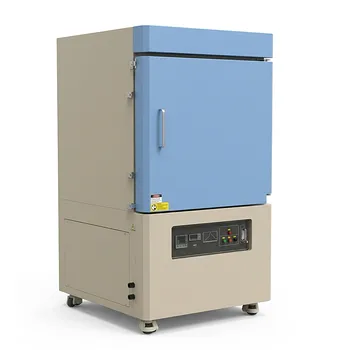
Industrial Large Box Furnace 1700C 216L High Temp Muffle Sintering System
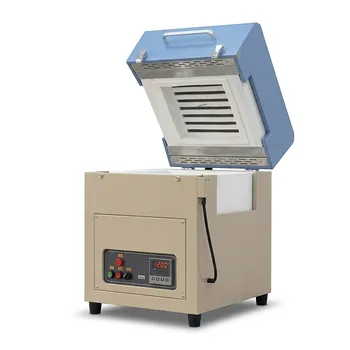
1200 C Maximum Three Sided Heating Top Loading Furnace with 12 x 12 x 8 Inch Chamber for Solid Oxide Fuel Cell Testing and High Temperature RD

High Temperature 1700C Benchtop Tube Furnace with 5 Inch Heating Zone High Purity Alumina Tube and Vacuum Sealing Flanges
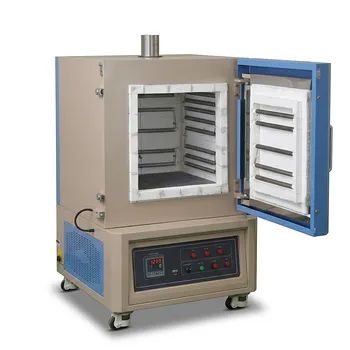
1200C High Temperature 125L Muffle Furnace 5 Side Heating for Large Batch Sintering with Optional Alloy Debinding Chamber
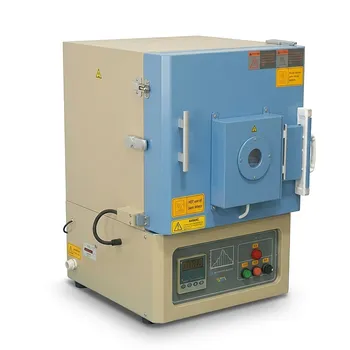
High Temperature Benchtop Muffle Furnace 1500C with 3.6L Chamber and Quartz Observation Window
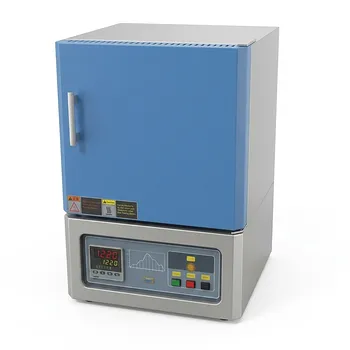
High Temperature Benchtop Muffle Furnace 1700C 10L Chamber Alumina Fiber Insulation MoSi2 Heating Elements
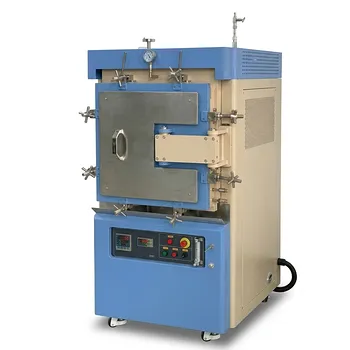
High Temperature Economic Hydrogen Gas Box Furnace 1600C Atmosphere Controlled Thermal Processing System 65L Capacity
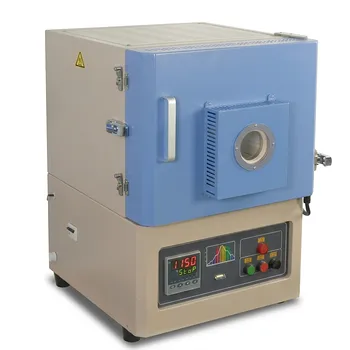
High Temperature Benchtop Muffle Furnace with Quartz Observation Window for Thermal Imaging and Material Analysis