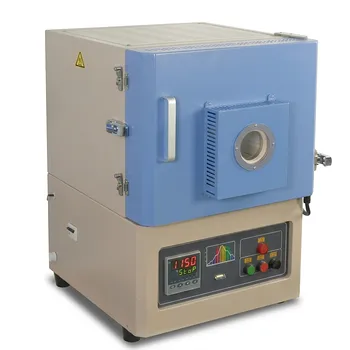
What is the necessity of using a high-temperature hot press furnace for the preparation of dense non-oxide ceramics?
Updated 3 months ago
High-temperature hot press furnaces are essential for non-oxide ceramics because these materials possess strong covalent bonds that inherently resist densification through traditional atmospheric sintering. By applying simultaneous axial pressure and intense heat, this equipment overcomes material diffusion resistance to achieve near-theoretical density at lower temperatures than conventional methods.
Core Takeaway: Hot press furnaces utilize "thermo-mechanical coupling" to force densification in high-performance ceramics, producing fine-grained, high-strength materials that are otherwise impossible to manufacture at scale.
The Challenge of Covalent Bonding in Non-Oxides
Resistance to Conventional Sintering
Non-oxide ceramics, such as silicon carbide or boron carbide, are defined by strong covalent bonds. These bonds make the material incredibly hard and stable but also create high resistance to the atomic diffusion required for particles to fuse together.
The Failure of Atmospheric Pressure
Under standard pressureless sintering, these materials require extremely high temperatures to move atoms. Often, these temperatures are so high that the material begins to decompose or undergo abnormal grain growth before it ever reaches full density.
Mechanisms of Hot Press Densification
Thermo-Mechanical Synergy
The hot press furnace solves the diffusion problem by applying uniaxial mechanical pressure directly to the powder while it is at high temperature. This combination reduces the total activation energy required for atoms to move and particles to bond.
Promoting Plastic Flow and Sliding
The axial pressure forces grain boundary sliding and plastic deformation. This mechanical energy effectively "pushes" the particles into the voids (micropores), eliminating internal gaps that would remain trapped under heat alone.
Controlling the Microstructure
Because the added pressure allows densification to occur at lower temperatures and over shorter durations, the grains do not have time to grow excessively. This results in a fine-grained, uniform microstructure that is critical for the material’s final strength.
Impact on Material Performance
Reaching Near-Theoretical Density
The primary goal of hot pressing is to eliminate internal micropores. By reaching near-theoretical density, the ceramic achieves its maximum potential for hardness, thermal conductivity, and wear resistance.
Enhanced Mechanical Properties
Materials produced via hot pressing exhibit superior toughness and strength compared to their pressureless counterparts. The fine-grained structure prevents the easy propagation of cracks, making the ceramic suitable for extreme industrial environments.
Understanding the Trade-offs
Geometry Limitations
The most significant limitation of hot pressing is that it typically applies unidirectional pressure. This restricts the furnace to producing relatively simple shapes, such as plates, discs, or cylinders, rather than complex, near-net-shape components.
Throughput and Cost
Hot pressing is generally a batch process with longer cycle times compared to continuous sintering furnaces. The requirement for high-strength graphite tooling and the energy-intensive nature of the process result in higher production costs per unit.
How to Apply This to Your Project
Making the Right Choice for Your Goal
Choosing whether to use a hot press furnace depends on the specific performance requirements of your end-product.
- If your primary focus is Maximum Strength and Hardness: Hot pressing is mandatory to eliminate pores and maintain the fine grain structure necessary for high-performance armor or cutting tools.
- If your primary focus is Complex Geometry: You may need to explore Spark Plasma Sintering (SPS) or Hot Isostatic Pressing (HIP) to achieve density in shapes that uniaxial pressing cannot accommodate.
- If your primary focus is High-Volume Cost Efficiency: Pressureless sintering should be prioritized if the material's covalent bonding can be managed through chemical additives (sintering aids) at the expense of some purity.
By leveraging the dual action of heat and pressure, the hot press furnace remains the definitive tool for transforming stubborn non-oxide powders into world-class industrial ceramics.
Summary Table:
| Feature | How it Works | Impact on Non-Oxide Ceramics |
|---|---|---|
| Uniaxial Pressure | Mechanically forces particles into voids | Eliminates micropores for maximum density |
| Lower Temperatures | Reduces required sintering activation energy | Prevents abnormal grain growth and decomposition |
| Thermo-Mechanical Synergy | Combines heat and physical force | Achieves high strength and hardness |
| Microstructure Control | Shortens densification cycle | Produces a uniform, fine-grained structure |
Maximize Your Material Strength with THERMUNITS
Are you looking to achieve near-theoretical density in your high-performance ceramics? THERMUNITS is a leading manufacturer of high-temperature laboratory equipment specifically designed for material science and industrial R&D. We offer a comprehensive range of thermal processing solutions, including specialized Hot Press furnaces, Vacuum, Atmosphere, Muffle, Tube, and Rotary furnaces.
From CVD/PECVD systems and Vacuum Induction Melting furnaces (VIM) to Dental Furnaces and Thermal Elements, our equipment ensures precision, durability, and superior microstructural control for your most challenging projects.
Contact our experts today to discover how our advanced heat treatment solutions can enhance your laboratory's efficiency and product performance!
References
- Dawei Yi, H. J. Lü. Nano‐LaMnO<sub>3</sub> Modified Separator for Enhanced Redox Reaction Kinetics and Electrochemical Performance of Lithium‐Sulfur Batteries. DOI: 10.1002/cnma.202300633
Mentioned Products
- High Temperature Ultrafast Heating Pressing Furnace 2900C Max 100kgf Rapid Thermal Processing System
- Ultrafast Thermal Pressing Furnace 2900C Max Temperature 200K per Second Heating Rate Vacuum Atmosphere Rapid Processing System
- 1100C High Pressure Rocking Tube Furnace with 2 Inch Super Alloy Processing Tube for Material Synthesis
- High Pressure 600T Vacuum Induction Hot Press Furnace for Advanced Material Heat Treatment and Sintering
- High Temperature Tube Furnace 1500C with Sliding Flanges and 50mm OD for Rapid Thermal Processing Fast Heating and Cooling
People Also Ask
- What are the unique advantages of using an ultrafast high-temperature furnace (UFTF) for modified graphite?
- What role does a SiC-coated graphite susceptor play in H2Se selenization? Boost RTP Thermal Uniformity & Film Purity.
- What are the core advantages of using a Hot Press furnace vs. conventional sintering? Achieve Near-Theoretical Density
- What technical advantages does a Hot Press furnace offer? Achieve full densification and superior material strength.
- What advantages does a hot press furnace offer over standard sintering? Achieve Maximum Density and Superior Strength

Tech Team · ThermUnits
Last updated on Jun 02, 2026
Related Products
High Temperature Ultrafast Heating Pressing Furnace 2900C Max 100kgf Rapid Thermal Processing System
Ultrafast Thermal Pressing Furnace 2900C Max Temperature 200K per Second Heating Rate Vacuum Atmosphere Rapid Processing System
1100C High Pressure Rocking Tube Furnace with 2 Inch Super Alloy Processing Tube for Material Synthesis
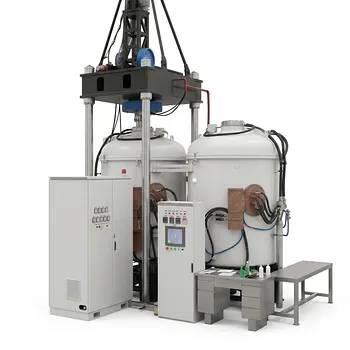
High Pressure 600T Vacuum Induction Hot Press Furnace for Advanced Material Heat Treatment and Sintering

High Temperature Tube Furnace 1500C with Sliding Flanges and 50mm OD for Rapid Thermal Processing Fast Heating and Cooling

High Temperature 1700C Tube Furnace with High Vacuum Turbomolecular Pump System and Multi Channel Mass Flow Controller Gas Mixer

High Temperature 1500C Benchtop Muffle Furnace 3.6L Alumina Fiber Chamber Programmable Controller Sintering Annealing Carbonization Thermal Processing System
High Temperature 1600°C Three Zone Heated Bottom Loading Box Furnace with Rapid Thermal Processing Chamber 72L Volume
High Temperature 1700C Bench Top Muffle Furnace with Alumina Fiber Insulation and 3.6L Chamber Capacity for Precision Sintering and Heat Treatment
Large Bench Top 1700C High Temperature Muffle Furnace with 19L Chamber for Advanced Material Sintering and Annealing
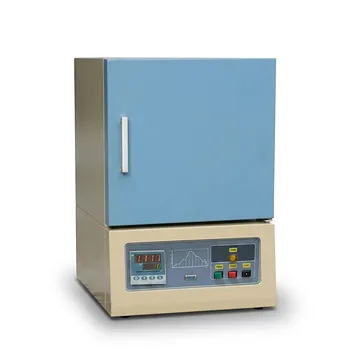
Ultra High Temperature Bench Top Muffle Furnace 1750C Sintering System with Kanthal Super Heating Elements and Precision Digital Control
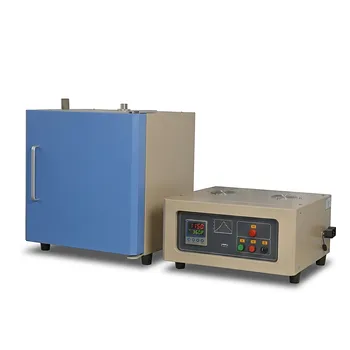
High Temperature Muffle Furnace with Alloy Chamber for Debinding and Sintering Applications
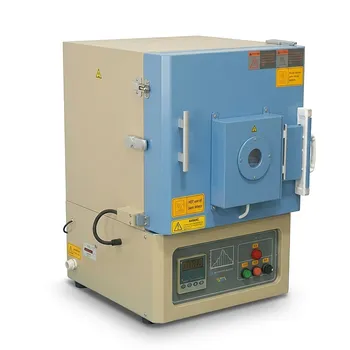
High Temperature Benchtop Muffle Furnace 1500C with 3.6L Chamber and Quartz Observation Window
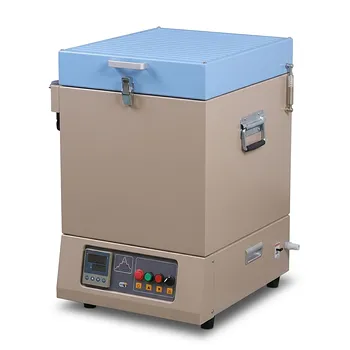
High Temperature Vertical Crucible Furnace with 22L Heating Chamber and 1200C Maximum Temperature
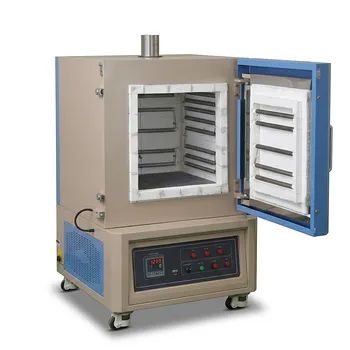
1200C High Temperature 125L Muffle Furnace 5 Side Heating for Large Batch Sintering with Optional Alloy Debinding Chamber
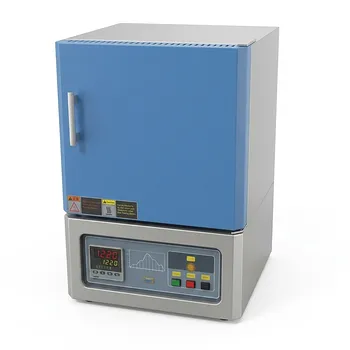
High Temperature Benchtop Muffle Furnace 1700C 10L Chamber Alumina Fiber Insulation MoSi2 Heating Elements
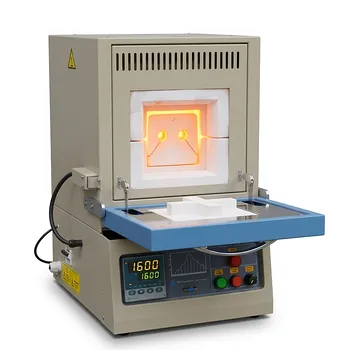
High Temperature Compact Muffle Furnace 1700 C with 30 Segment Programmable Controller and 1.7L Cubic Chamber

1750°C High Temperature Benchtop Vacuum Atmosphere Tube Furnace with Kanthal Super 1800 Heating Elements and 60mm Alumina Processing Tube
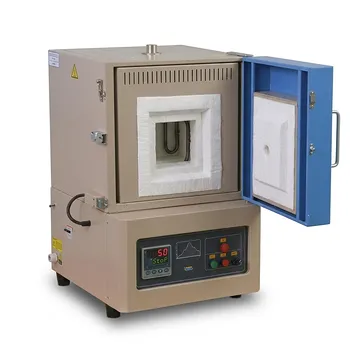
1800°C Bench Top Ultra High Temperature Muffle Furnace with Sapphire Observation Window and Top Feeding Port for Materials Research and Thermal Processing