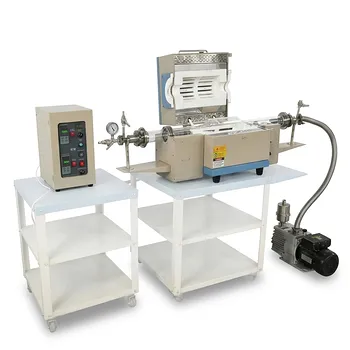
What are the core functions of a horizontal atmosphere tube furnace in the biomass torrefaction process? Expert Guide
Updated 3 months ago
A horizontal atmosphere tube furnace serves as the foundational reactor for biomass torrefaction by providing a sealed, oxygen-free thermal environment. It facilitates the thermochemical conversion of raw biomass into biochar by precisely regulating temperatures—typically between 200°C and 350°C—and maintaining a strict inert atmosphere. This controlled degradation removes moisture and volatile impurities, significantly increasing the material's energy density and hydrophobic properties.
The core function of a horizontal atmosphere tube furnace is to provide a precise, anaerobic "thermal kitchen" that triggers dehydration and decarboxylation reactions. By eliminating oxygen and controlling heating rates, the furnace transforms biomass into a stable, high-carbon solid fuel without allowing combustion to occur.
Precise Thermal Environment Management
Regulating Isothermal Residence Times
The furnace allows operators to maintain biomass at specific temperatures for an exact duration, often referred to as the residence time. This precision ensures that the biomass reaches the necessary internal temperature to trigger chemical changes without over-processing the material into ash.
Controlling Heating Rates
Modern tube furnaces enable the programming of specific ramp rates, such as 3°C to 6°C per minute. Controlling the speed at which the biomass heats up is critical for managing the release of volatiles and ensuring a uniform degradation of the cellular structure across the entire sample.
Ensuring Temperature Field Uniformity
The horizontal design of the heating elements and the tube itself provides a stable and uniform temperature field. This prevents localized "hot spots" that could lead to uneven torrefaction or the unwanted pyrolysis of specific sections of the biomass batch.
Atmospheric Integrity and Gas Control
Creating Anaerobic Conditions
The primary atmospheric function is the injection of high-purity nitrogen to displace all oxygen within the quartz or ceramic tube. This creates an anaerobic environment, which is essential to prevent the biomass from catching fire or oxidizing during the high-temperature treatment.
Facilitating Specific Gas Environments
Beyond simple inert protection, these furnaces can introduce specific gas mixtures to simulate industrial environments. This allows researchers to study how different volatile matter ratios and gas concentrations affect the final quality and chemical stability of the biochar.
Efficient Removal of Volatiles
As the biomass degrades, it releases gases and moisture that must be moved away from the sample. The continuous flow of inert gas through the horizontal tube acts as a carrier, sweeping away decarboxylation by-products and preventing them from re-condensing on the treated material.
Facilitating Thermochemical Transformation
Driving Hemicellulose Degradation
At the temperatures provided by the furnace, hemicellulose—the most thermally unstable component of biomass—undergoes significant degradation. This chemical breakdown is the key driver behind the increased grindability and energy density of the resulting biochar.
Enhancing Hydrophobicity and Stability
The furnace environment triggers the removal of carboxyl and hydroxyl groups, which are responsible for water absorption in raw biomass. By eliminating these groups, the furnace converts the biomass into a hydrophobic material that is resistant to biological decay and moisture re-absorption.
Increasing Fixed Carbon Content
By removing non-carbon components and volatile impurities, the furnace increases the elemental carbon concentration. This sets the foundation for the material's use as a high-efficiency solid fuel or as a precursor for advanced applications like activated carbon.
Understanding the Trade-offs
Batch Processing Limitations
Most laboratory-grade horizontal tube furnaces operate as batch reactors, meaning they can only process a limited amount of material at one time. While this offers extreme precision for research, it lacks the throughput required for industrial-scale biomass conversion.
Gas Consumption and Sealing Risks
Maintaining a strict inert atmosphere requires a constant supply of high-purity gas and impeccable mechanical sealing at the tube ends. Any failure in the seals or a drop in gas pressure can introduce oxygen, leading to sample combustion and potential damage to the furnace internals.
Material Loading Challenges
In a horizontal configuration, biomass must be placed in "boats" or crucibles and slid into the center of the tube. This manual process can lead to sample disturbance or inconsistent placement if not handled carefully, potentially affecting the uniformity of the thermal treatment.
How to Apply This to Your Project
Making the Right Choice for Your Goal
- If your primary focus is improving solid fuel quality: Focus on precisely controlling the temperature between 220°C and 300°C and optimizing the residence time to maximize heating value.
- If your primary focus is creating activated carbon precursors: Use the furnace to achieve high-temperature carbonization (above 500°C) after the initial torrefaction to develop a preliminary microporous structure.
- If your primary focus is chemical research and doping: Utilize the atmosphere control functions to introduce nitrogen or ammonia gas mixtures for functionalizing the biomass carbon skeleton.
By mastering the balance between thermal precision and atmospheric purity, you can effectively transform raw biomass into a high-value, energy-dense carbon resource.
Summary Table:
| Core Function | Key Mechanism | Benefit to Torrefaction |
|---|---|---|
| Thermal Management | Precise Ramp & Residence Times | Ensures uniform degradation and prevents ash formation. |
| Atmosphere Control | Inert Gas (N2) Injection | Creates anaerobic conditions to prevent combustion. |
| Volatile Removal | Continuous Gas Flow | Prevents re-condensation of by-products on the biochar. |
| Chemical Driving | Hemicellulose Degradation | Enhances hydrophobicity and increases fixed carbon content. |
Elevate Your Biomass Research with THERMUNITS Precision Engineering
Take your material science and industrial R&D to the next level with THERMUNITS, a leading manufacturer of high-performance thermal processing solutions. We specialize in providing the precise, controlled environments necessary for advanced biomass torrefaction and carbonization.
Our extensive product range is designed to meet the most rigorous laboratory standards, including:
- Tube & Atmosphere Furnaces: Perfect for anaerobic torrefaction and gas-environment studies.
- Muffle, Vacuum, Rotary, and Hot Press Furnaces: Capable of handling diverse heat treatment needs.
- CVD/PECVD Systems: For advanced chemical vapor deposition applications.
- Specialized Equipment: Including Vacuum Induction Melting (VIM) furnaces, Dental Furnaces, and high-quality Thermal Elements.
Why choose THERMUNITS? We provide the thermal uniformity and atmospheric integrity required to transform raw materials into high-value resources.
Ready to optimize your heat treatment process? Contact our technical team today to discuss your specific requirements and receive a tailored solution for your laboratory.
References
- Putri Ayu Nuramalia, Ade Andini. Biomass Fuel Quality Improvement Using Hydrogen Peroxide and Demineralized Water Pre-treatment and Torrefaction. DOI: 10.5109/7326936
Mentioned Products
- Vertical 1700C Vacuum and Atmosphere Tube Furnace with 80mm Alumina Tube
- 1200°C 10-Zone Split Tube Furnace with Horizontal and Vertical Mounting for Multi-Zone Thermal Gradients and Large Diameter Material Processing
- Multi Position Tube Furnace 1100C for Laboratory Material Research and Advanced Industrial Thermal Processing
- Compact Vertical Split Quartz Tube Furnace with Stainless Steel Vacuum Flanges for Rapid Thermal Quenching and Controlled Atmosphere Material Processing
- Three Temperature Zone Rotating Tube Furnace for Material Sintering and Controlled Atmospheric Heat Treatment
People Also Ask
- How is an industrial-grade vertical tube furnace utilized in smelting leaching residues? Enhance Metal Recovery Efficiency
- What is the function of a laboratory-grade vertical tube furnace in fast pyrolysis? Optimize Composite Research.
- How does a vertical tube furnace facilitate thermoelectric alloy melting? Precision synthesis for material homogeneity.
- Why is a thermocouple sensor indispensable for monitoring the vertical tube furnace during gallium oxide nanowire production? Optimize VLS Growth
- What are the advantages of a Vertical Tube Furnace for iron coke testing? | Achieve High-Precision CRI Analysis

Tech Team · ThermUnits
Last updated on Jun 03, 2026
Related Products

Vertical 1700C Vacuum and Atmosphere Tube Furnace with 80mm Alumina Tube
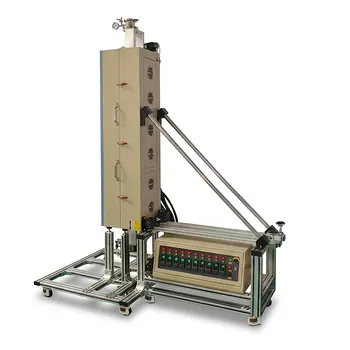
1200°C 10-Zone Split Tube Furnace with Horizontal and Vertical Mounting for Multi-Zone Thermal Gradients and Large Diameter Material Processing
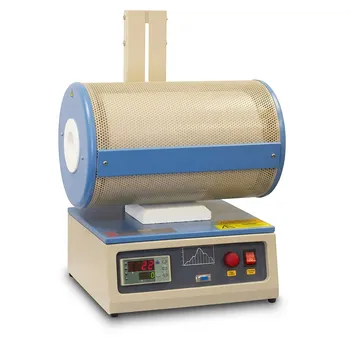
Multi Position Tube Furnace 1100C for Laboratory Material Research and Advanced Industrial Thermal Processing

Compact Vertical Split Quartz Tube Furnace with Stainless Steel Vacuum Flanges for Rapid Thermal Quenching and Controlled Atmosphere Material Processing
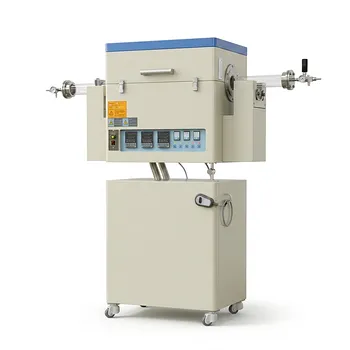
Three Temperature Zone Rotating Tube Furnace for Material Sintering and Controlled Atmospheric Heat Treatment

High Temperature 1700C Vertical Tube Furnace for Powder Spherification and Material Sintering
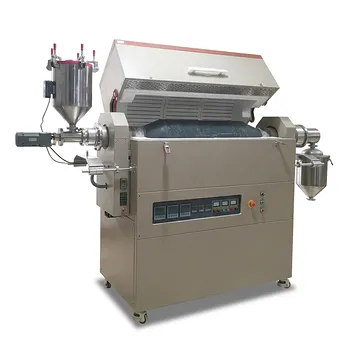
High Temperature Tilting Rotary Tubular Furnace for Continuous Powder Thermal Processing and Controlled Atmosphere Sintering
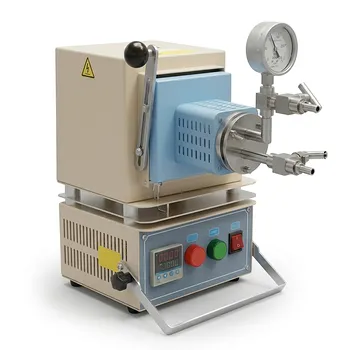
Compact Hybrid Muffle and Tube Furnace for 1000C Controlled Atmosphere Laboratory Material Sintering
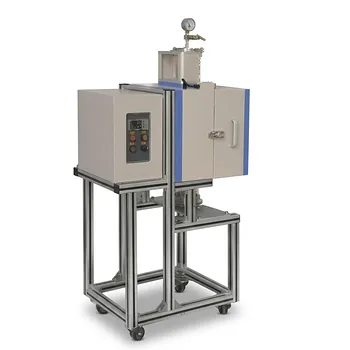
1200°C 5 Inch Vertical Quartz Tube Furnace with Stainless Steel Vacuum Flanges
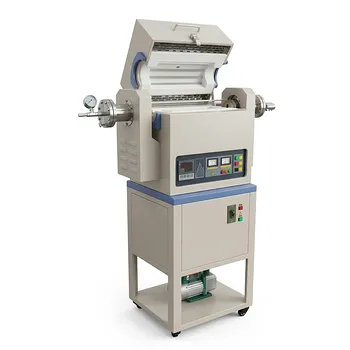
High Temperature Rotary Tilt Tubular Furnaces for Advanced Powder Sintering and Material Processing
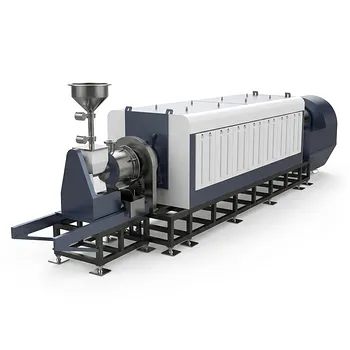
Electric Rotary Kiln Small Rotary Furnace Biomass Pyrolysis Plant
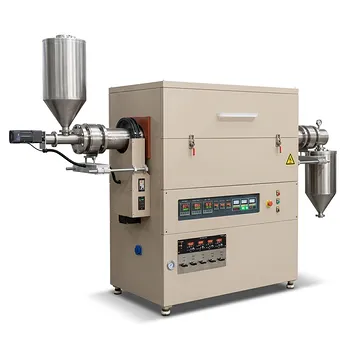
High Temperature Tilting Rotary Tube Furnace with Integrated Mass Flow Control and Multi Zone Heating
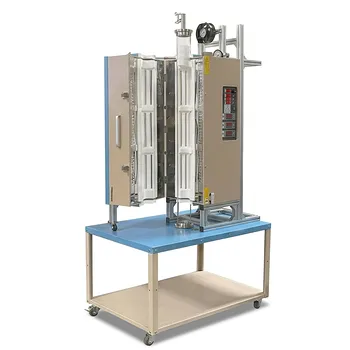
1200C Three Zone Split Vertical Tube Furnace 4 Inch Quartz Tube Stainless Steel Vacuum Flanges
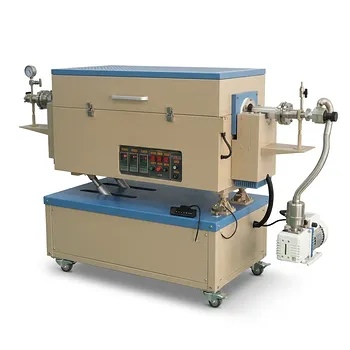
Three Zone Rotary Tube Furnace for High Temperature Powder Processing and Material Research
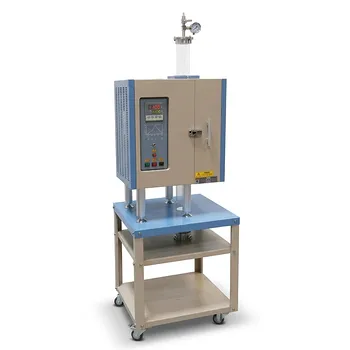
1100°C Split Vertical Tube Furnace with 80mm Quartz Tube and Stainless Steel Vacuum Flanges
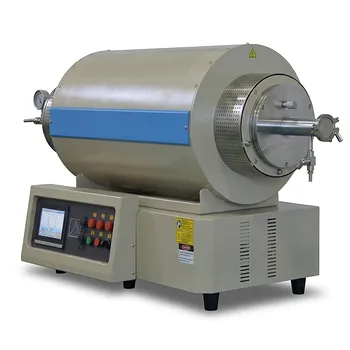
1200C Max Three Zone Tube Furnace 6 Inch OD Max with Tube and Flange
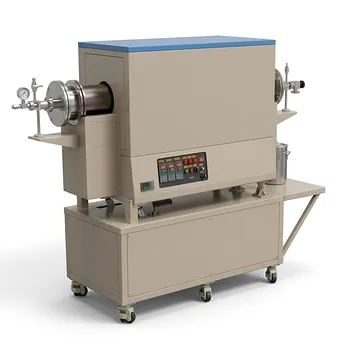
900°C Max Rotary Tube Furnace with 8 Inch 310S Alloy Tube and Optional Multi Zone Heating for Industrial Material Calcination
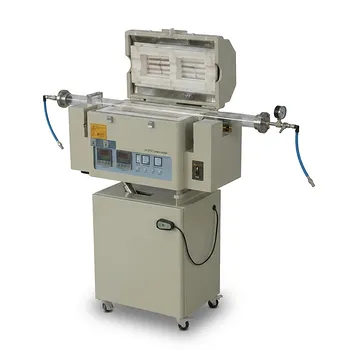
Double Temperature Revolving Tube Furnace with Precision Rotation and Adjustable Inclination for Advanced Material Research
High Temperature Rotary Tube Furnace with Integrated Ball Milling and Gas Flow Function for Powder Nitriding