What are the roles of Type B and Type C thermocouples in smelting furnaces? Master High-Precision Thermal Control
Updated 3 months ago
Type B and Type C thermocouples serve as the dual sensory pillars of a high-temperature smelting furnace. In this configuration, the Type B thermocouple acts as the primary feedback loop for the furnace controller to maintain overall thermal stability, while the Type C thermocouple is positioned at the crucible center to provide direct, real-time monitoring of the reaction sample. This specific distribution allows for an error margin as low as ±0.5%, which is essential for measuring sensitive physical properties like viscosity and liquidus temperatures.
To achieve the precision required for high-temperature smelting, systems utilize a specialized "control and monitor" strategy. Type B thermocouples stabilize the broad heating environment, while Type C thermocouples capture the sample's actual thermal state to ensure the integrity of thermodynamic calculations.
The Role of Type B Thermocouples: Environmental Stability
Primary Furnace Control and Feedback
The Type B thermocouple is generally installed within the heating zone of the furnace. Its primary role is to provide continuous temperature feedback to the programmable controller, ensuring the overall thermal environment remains consistent.
Material Integrity at Extreme Temperatures
Composed of Platinum-Rhodium (30% Rh / 6% Rh), Type B sensors are preferred for their excellent thermoelectric stability. They are designed to operate reliably in environments exceeding 1600°C (1873 K), resisting both corrosion and oxidation over long durations.
Maintaining Closed-Loop Precision
By providing real-time data to a controller, Type B thermocouples enable closed-loop feedback. This allows the system to maintain a constant experimental temperature or execute precise cooling rates, such as 10°C/min, which is vital for studying solidification kinetics.
The Role of Type C Thermocouples: Sample-Level Accuracy
Direct Reaction Monitoring
The Type C thermocouple is positioned closer to the center of the crucible or the reaction sample. This proximity allows it to monitor the actual temperature of the melt in real-time, rather than just the ambient temperature of the furnace hot zone.
Capturing Local Thermal Fluctuations
Because it is placed at the heart of the reaction, the Type C sensor provides faster and more direct monitoring. This is critical for detecting local temperature shifts that the primary furnace control sensor might miss.
Impact on Thermodynamic Calculations
The high-precision data from Type C sensors is a prerequisite for calculating temperature-sensitive parameters. These include slag viscosity, diffusion coefficients, and the activity coefficients of specific chemical components like TiO2.
Understanding the Trade-offs and Challenges
Accuracy vs. Sensor Longevity
While the dual-sensor approach maximizes precision, Type C thermocouples are often placed in harsher proximity to the chemical reaction. This can lead to faster degradation compared to the Type B sensors located in the protected heating zones.
Spatial Temperature Gradients
Even with two high-precision sensors, a temperature field distribution exists within the furnace. Relying on a single point of measurement can lead to errors if the gap between the furnace wall (Type B) and the crucible center (Type C) is not correctly calibrated.
Cost and Material Constraints
Type B thermocouples utilize noble metals (Platinum), making them significantly more expensive than base-metal alternatives. However, the stability they provide in environments above 1500°C is necessary for simulating complex industrial processes like the HIsmelt simulation.
How to Apply This to Your Smelting System
Recommendations for Implementation
- If your primary focus is long-term furnace durability: Utilize Type B thermocouples for the main control system to leverage their superior resistance to oxidation and corrosion at high temperatures.
- If your primary focus is measuring physical properties like viscosity: Prioritize the placement of a Type C thermocouple at the sample center to capture the exact thermal state required for sensitive kinetic calculations.
- If your primary focus is maximizing chemical reaction yields: Use both sensors in a dual-monitoring configuration to keep temperature control errors within ±0.5%, which is proven to support desulfurization rates exceeding 98%.
The integration of Type B for environmental control and Type C for sample monitoring creates the rigorous thermal foundation necessary for high-precision metallurgical research.
Summary Table:
| Feature | Type B Thermocouple | Type C Thermocouple |
|---|---|---|
| Primary Role | Environment & Furnace Control | Direct Sample Reaction Monitoring |
| Typical Position | Inside the Heating Zone | Center of the Crucible/Sample |
| Material | Platinum-Rhodium (30% Rh / 6% Rh) | Tungsten-Rhenium (High Temperature) |
| Key Advantage | High stability above 1600°C | Rapid capture of local fluctuations |
| Main Application | Continuous feedback & cooling rates | Calculating viscosity & liquidus temp |
Elevate Your Research with THERMUNITS Thermal Precision
Precise temperature monitoring is the difference between a successful experiment and a failed calculation. THERMUNITS is a leading manufacturer of high-temperature laboratory equipment for material science and industrial R&D. We offer a comprehensive range of thermal processing solutions tailored to your specific needs, including:
- Advanced Furnaces: Muffle, Vacuum, Atmosphere, Tube, Rotary, and Hot Press furnaces.
- Specialized Systems: CVD/PECVD systems, Dental Furnaces, and Electric Rotary Kilns.
- High-Melting Solutions: Vacuum Induction Melting Furnaces (VIM) and high-quality Thermal Elements.
Whether you are refining slag viscosity calculations or optimizing desulfurization rates, our expert team provides the equipment and sensor integration to ensure your system maintains the highest accuracy.
Ready to optimize your smelting system? Contact THERMUNITS today for a professional consultation!
References
- Erdenebold Urtnasan, Jei‐Pil Wang. Artificial Slags with Modulated Properties for Controlled Nickel Dissolution in Smelting Process. DOI: 10.1007/s12666-024-03304-0
Mentioned Products
- Compact High Temperature 1600C Tube Furnace with 50mm Alumina Tube and Vacuum Flanges for Material Sintering
- High Temperature Three Zone Tube Furnace 1700C with Alumina Tube and Water Cooled Flanges
- Induction Heating System with Temperature Control for High Temperature Vacuum Sintering and Melting
- High Temperature 1500C Benchtop Muffle Furnace 3.6L Alumina Fiber Chamber Programmable Controller Sintering Annealing Carbonization Thermal Processing System
- High Temperature 1700C Benchtop Tube Furnace with 5 Inch Heating Zone High Purity Alumina Tube and Vacuum Sealing Flanges
People Also Ask
- What is the role of a high-temperature tube furnace in the calcination process of ZnO/In2O3 nanocomposites?
- Why is a high-temperature tube furnace required for CuAlO2 heat treatment? Master Phase Transformation Today
- Function of tube furnaces in cellulose aerogel carbonization? Achieve High-Performance Materials
- What role does a high-temperature tube furnace play in the carbonization? Mastering Precision Carbon Synthesis
- What role does a high-temperature tube furnace play in executing nitrogen absorption kinetic experiments? Expert Insights

Tech Team · ThermUnits
Last updated on Jun 03, 2026
Related Products

Compact High Temperature 1600C Tube Furnace with 50mm Alumina Tube and Vacuum Flanges for Material Sintering
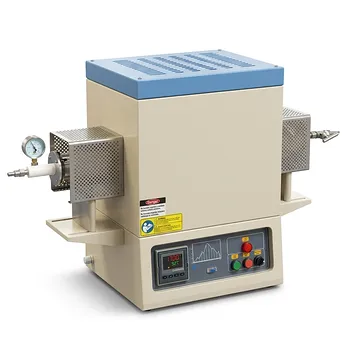
High Temperature Three Zone Tube Furnace 1700C with Alumina Tube and Water Cooled Flanges
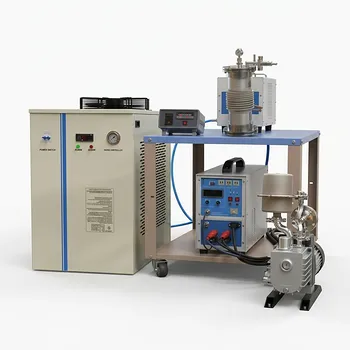
Induction Heating System with Temperature Control for High Temperature Vacuum Sintering and Melting
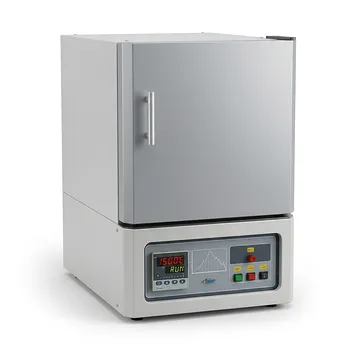
High Temperature 1500C Benchtop Muffle Furnace 3.6L Alumina Fiber Chamber Programmable Controller Sintering Annealing Carbonization Thermal Processing System

High Temperature 1700C Benchtop Tube Furnace with 5 Inch Heating Zone High Purity Alumina Tube and Vacuum Sealing Flanges
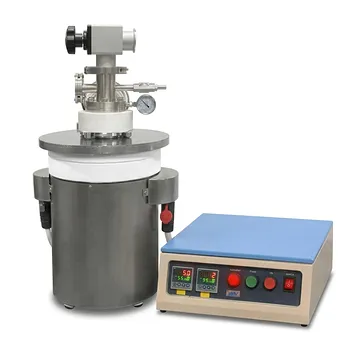
1100C High Temperature Vacuum Crucible Furnace with Quartz Chamber for Thermal Processing and Sintering
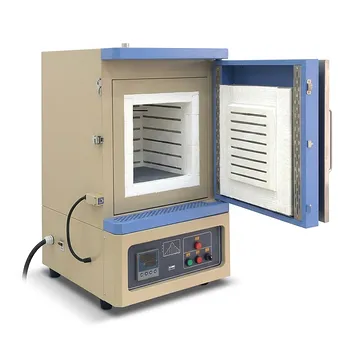
Five Side Heating Muffle Furnace High Purity Alumina Fiber 27L Chamber 1200C High Temperature Thermal Processing System for Sintering Annealing and Materials Research
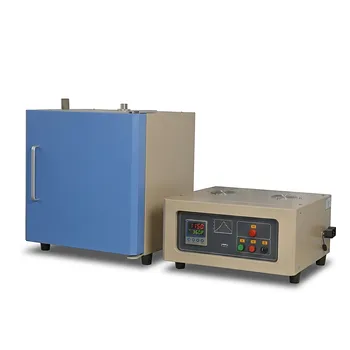
High Temperature Muffle Furnace with Alloy Chamber for Debinding and Sintering Applications
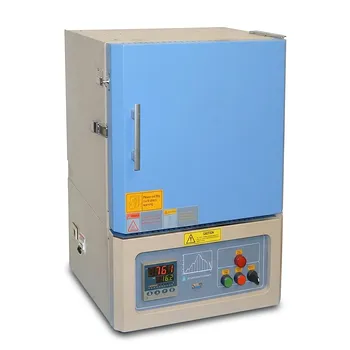
High Temperature 1700C Bench Top Muffle Furnace with Alumina Fiber Insulation and 3.6L Chamber Capacity for Precision Sintering and Heat Treatment

High Temperature Tube Furnace 1500C with Sliding Flanges and 50mm OD for Rapid Thermal Processing Fast Heating and Cooling
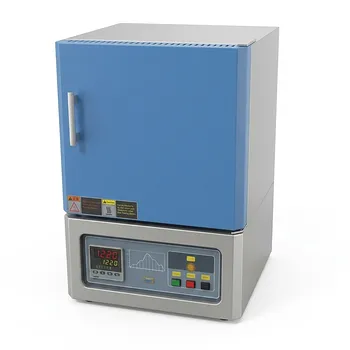
High Temperature Benchtop Muffle Furnace 1700C 10L Chamber Alumina Fiber Insulation MoSi2 Heating Elements
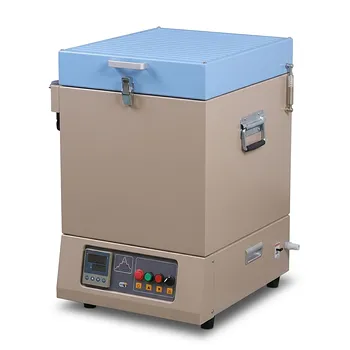
High Temperature Vertical Crucible Furnace with 22L Heating Chamber and 1200C Maximum Temperature
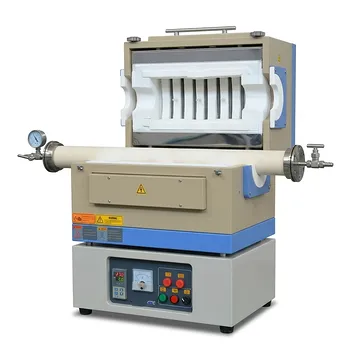
High Temperature 1600C Split Tube Furnace Vacuum Flanges Valves Optional 60mm 80mm Alumina Tube
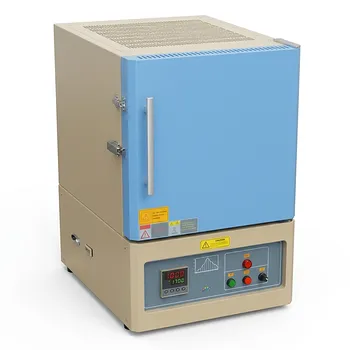
Large Bench Top 1700C High Temperature Muffle Furnace with 19L Chamber for Advanced Material Sintering and Annealing

High Temperature 1700C Tube Furnace with High Vacuum Turbomolecular Pump System and Multi Channel Mass Flow Controller Gas Mixer
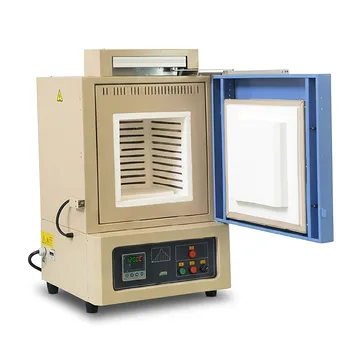
1200C High Temperature Muffle Furnace with Motorized Door and Automated PC Control for Industrial Sintering and Material Processing 27 Liter
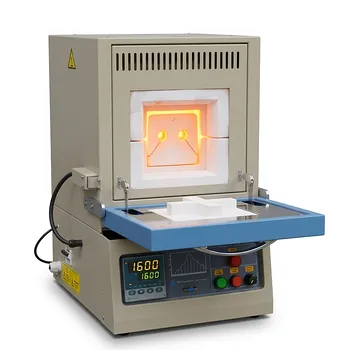
High Temperature Compact Muffle Furnace 1700 C with 30 Segment Programmable Controller and 1.7L Cubic Chamber
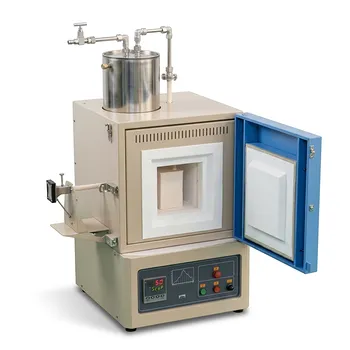
High Temperature Bench Top Muffle Furnace 1700C with Integrated Evaporating Particle Collection and 8x8x8 Alumina Fiber Chamber
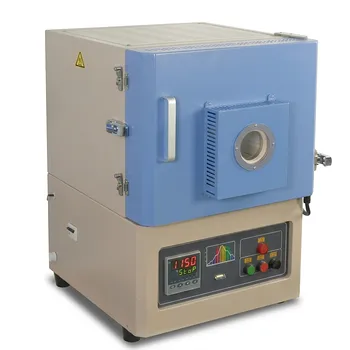
High Temperature Benchtop Muffle Furnace with Quartz Observation Window for Thermal Imaging and Material Analysis