What are the technical advantages of using high-purity quartz boats as carriers in the synthesis of 2D Sb2Te3? Maximize Purity
Updated 3 months ago
High-purity quartz boats are the primary choice for $Sb_2Te_3$ synthesis due to their exceptional chemical passivity. At the typical synthesis temperature of approximately 650°C, these carriers remain completely inert, ensuring that the $Sb_2Te_3$ vapor source is not contaminated by reactions with the container. This preservation of precursor purity is vital for achieving the precise stoichiometry required for high-quality 2D crystals.
Core Takeaway: High-purity quartz boats provide a chemically stable and thermally resilient environment that prevents the introduction of impurity atoms into the $Sb_2Te_3$ lattice. Their ability to withstand rapid thermal cycling without releasing contaminants makes them indispensable for producing high-performance 2D semiconductors.
Ensuring Chemical and Vapor Purity
Prevention of Unwanted Chemical Reactions
High-purity quartz does not react with $Sb_2Te_3$ powder or tellurium vapor during the synthesis process. This chemical inertness prevents the formation of secondary phases or the introduction of foreign elements into the vapor stream.
Mitigation of Lattice Defects
By acting as a clean physical support, quartz ensures that no impurity metal ions are introduced into the reaction system. This is critical for maintaining the electrical performance of $Sb_2Te_3$, as even trace contaminants can disrupt the semiconductor lattice and degrade carrier mobility.
Stability in Harsh Environments
Quartz materials remain stable even when exposed to various precursors and high-temperature tellurization processes. Their resistance to chemical interference ensures that the electrochemical purity of the active materials remains uncompromised throughout the growth phase.
Superior Thermal Management
Resistance to High-Temperature Deformation
While $Sb_2Te_3$ synthesis often occurs around 650°C, high-purity quartz boats can maintain structural integrity at temperatures reaching up to 900°C. This high-temperature resistance provides a significant safety margin and ensures the boat does not sag or warp during prolonged heating cycles.
Superior Thermal Shock Resistance
Quartz has a very low coefficient of thermal expansion, which allows it to withstand rapid heating and cooling cycles. This thermal shock resistance supports rapid cooling after synthesis, a process that helps prevent impurity infiltration or damage to the carrier during the transition back to room temperature.
Uniform Heating and Sample Consistency
The flat structural design typical of quartz boats facilitates uniform heat distribution across the sample. Consistent heating within the furnace chamber is essential for maintaining a steady reaction rate and ensuring the uniform growth of 2D flakes across the substrate.
Optimized Reaction Kinetics
Open Structure for Gas-Phase Contact
The typical open architecture of a quartz boat allows for maximum contact between the vaporized precursors and the growth substrate. This facilitates efficient gas-solid phase reactions, which are necessary for the large-scale synthesis of 2D materials under both atmospheric and low-pressure conditions.
Support for Precise Catalytic Growth
In specialized growth processes, the high purity of the quartz carrier ensures the selectivity of the catalytic growth. By providing a clean environment, the quartz boat allows researchers to accurately study the effects of specific dopants without the "noise" of unintended contamination from the carrier itself.
Understanding the Trade-offs
Limits of Thermal Ceiling
While quartz is stable at 900°C, it can begin to soften or undergo devitrification (transitioning from an amorphous to a crystalline state) if held at extremely high temperatures for extended periods. For processes exceeding 1100°C, alternative materials like alumina or graphite might be required despite their different impurity profiles.
Mechanical Fragility
Despite their thermal resilience, quartz boats are physically brittle and susceptible to mechanical failure if handled improperly. They require careful maintenance and cleaning to prevent the buildup of residues that could eventually cause stress fractures during thermal cycling.
Etching Sensitivity
Quartz is highly susceptible to etching by certain chemicals, such as hydrofluoric acid or strong alkaline activators like KOH at extreme temperatures. If the synthesis involves these specific reagents, the lifespan of the boat may be significantly reduced.
Applying This to Your Synthesis Goals
How to Choose Your Carrier Strategy
- If your primary focus is maximum electronic mobility: Use high-purity quartz to eliminate metallic ion contamination that creates deep-level defects in the $Sb_2Te_3$ lattice.
- If your primary focus is rapid experimental turnover: Leverage the thermal shock resistance of quartz to perform faster cooling cycles without risking container breakage.
- If your primary focus is large-scale uniformity: Select flat-bottomed quartz boats to ensure consistent thermal contact and gas flow across multiple substrates.
The technical advantages of high-purity quartz boats ultimately center on their ability to remain a "silent partner" in the synthesis process, providing structural support without interfering with the delicate chemistry of 2D material growth.
Summary Table:
| Feature | Technical Advantage | Impact on 2D Sb2Te3 Synthesis |
|---|---|---|
| Chemical Passivity | Inert at ~650°C | Prevents contamination and ensures precise stoichiometry. |
| Thermal Stability | Resists deformation up to 900°C | Maintains structural integrity during prolonged heating. |
| Thermal Shock Resistance | Low expansion coefficient | Allows for rapid cooling cycles without carrier failure. |
| Open Architecture | Optimized gas-phase contact | Facilitates efficient gas-solid reactions for uniform flakes. |
| Purity Profile | No metallic ion leaching | Maintains high carrier mobility and reduces lattice defects. |
Elevate Your 2D Material Research with THERMUNITS
Achieving high-performance semiconductors like 2D Sb2Te3 requires precise thermal control and a contamination-free environment. THERMUNITS is a leading manufacturer of high-temperature laboratory equipment specifically designed for material science and industrial R&D.
Our comprehensive range of thermal processing solutions—including Tube furnaces, CVD/PECVD systems, Vacuum furnaces, and Muffle furnaces—provides the stability and purity needed for advanced heat treatments. Whether you are working on thin-film deposition or complex crystal growth, our equipment is engineered to deliver consistent results for the most demanding laboratory applications.
Ready to optimize your synthesis process? Contact our technical team today to discuss how our furnace solutions can enhance your lab's R&D capabilities!
References
- Baojun Pan, Sui‐Dong Wang. Direct Selective Epitaxy of 2D Sb2Te3 onto Monolayer WS2 for Vertical p–n Heterojunction Photodetectors. DOI: 10.3390/nano14100884
Mentioned Products
- 1100°C High Temperature Quartz Chamber Furnace 8 Inch OD with 7.6 Liter Capacity and Vacuum Atmosphere Capability
- High Temperature Vertical Atmosphere Controlled Furnace with Automatic Bottom Loading and 1700°C Capacity for Advanced Material Research
- High Temperature Cold Wall High Vacuum Chamber Furnace 1400C for Advanced Material Processing
- 1100C High Temperature Vacuum Crucible Furnace with Quartz Chamber for Thermal Processing and Sintering
- High Throughput 1200C Four Channel Tube Furnace with 3 Inch Quartz Tubes for Multi Zone Annealing and Material Research
People Also Ask
- Why is a quartz tube furnace necessary for phosphorus-doped MoS2/GO preparation? Ensure Purity & Precise Synthesis
- Benefits of high-vacuum quartz tube furnaces with N2 for Co3O4 nanosheets: Purity and Structural Integrity.
- What conditions does a quartz tube furnace provide for AlxCoCrFeNi steam corrosion tests? Achieve Precise R&D Control.
- Why is high-temperature annealing in a quartz tube furnace done after HfO2 deposition? Unlock peak film performance.
- Why is a high-purity quartz tube used for SP-Fe3O4-C? Ensure Chemical Purity & Catalytic Stability

Tech Team · ThermUnits
Last updated on Jun 03, 2026
Related Products
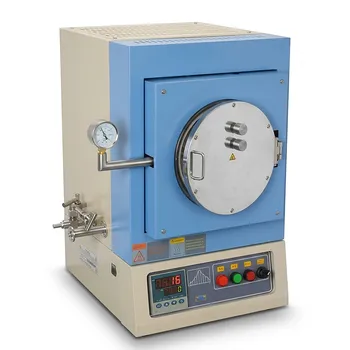
1100°C High Temperature Quartz Chamber Furnace 8 Inch OD with 7.6 Liter Capacity and Vacuum Atmosphere Capability
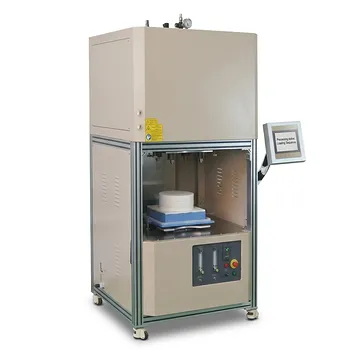
High Temperature Vertical Atmosphere Controlled Furnace with Automatic Bottom Loading and 1700°C Capacity for Advanced Material Research
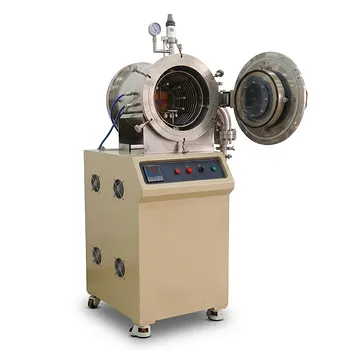
High Temperature Cold Wall High Vacuum Chamber Furnace 1400C for Advanced Material Processing
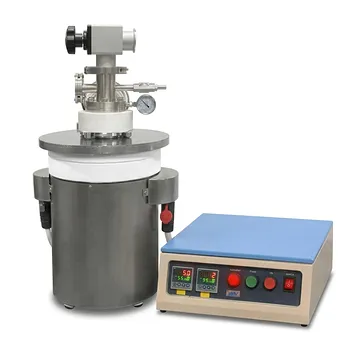
1100C High Temperature Vacuum Crucible Furnace with Quartz Chamber for Thermal Processing and Sintering
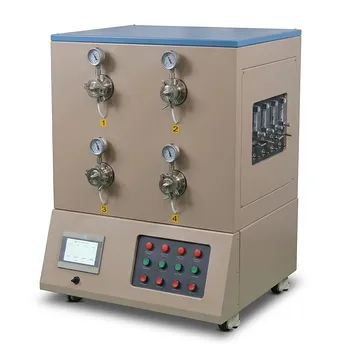
High Throughput 1200C Four Channel Tube Furnace with 3 Inch Quartz Tubes for Multi Zone Annealing and Material Research
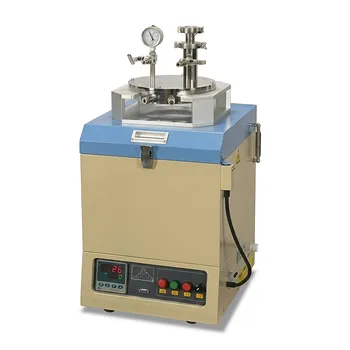
Vertical Vacuum Furnace 1100C High Temperature 8 Inch Quartz Chamber Water Cold Flange System
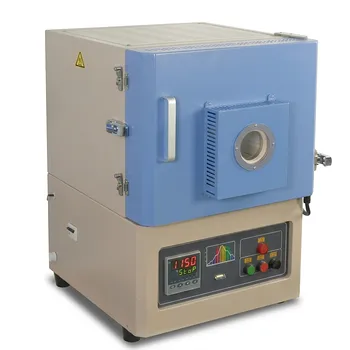
High Temperature Benchtop Muffle Furnace with Quartz Observation Window for Thermal Imaging and Material Analysis

High Temperature Automated 5 Inch Tube Furnace for Autonomous Material Research and Advanced Laboratory R&D
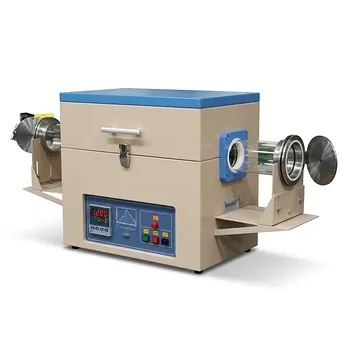
High Temperature 1200C Split Tube Furnace with Hinged Vacuum Flanges and 4 Inch Quartz Tube for Laboratory Research

1200°C 5 Inch Vertical Quartz Tube Furnace with Stainless Steel Vacuum Flanges