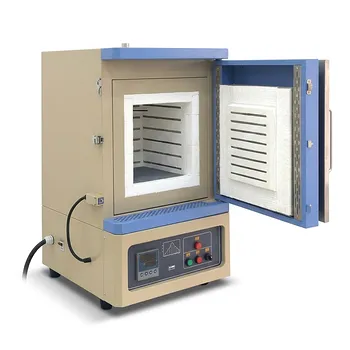
Sintering Silver Sensitive Layers in Box Furnaces: Core Principles for High-Performance RTD Fabrication
Updated 6 months ago
The sintering of silver sensitive layers in a high-temperature box furnace is governed by three technical principles: the removal of organic binders, the formation of a metallic conductive network through nanoparticle migration, and the activation of glass-phase bonding for substrate adhesion. By precisely controlling the thermal environment, the furnace transforms a liquid-based silver paste into a solid, stable thin film that functions as the resistive element in a Temperature Detector (RTD).
Sintering is a critical metallurgical process where heat facilitates the consolidation of silver nanoparticles into a continuous conductive network without melting the bulk material. Successful RTD fabrication depends on balancing the growth of silver grains with the chemical bonding of glass powders to the substrate to ensure long-term thermal stability.
Mechanical and Chemical Transformation
Organic Solvent Evaporation
In the early stages of the heating cycle, the furnace provides the thermal energy necessary to facilitate the complete evaporation of organic solvents. These solvents are essential for maintaining the paste’s viscosity during application but must be entirely removed to prevent voids or "outgassing" in the final film.
Formation of Sintered Necks
As the temperature rises toward 800°C, the furnace promotes the migration of silver nanoparticles. This atomic-level movement causes the particles to fuse at their contact points, forming "sintered necks" that create a continuous conductive network.
Evolution of the Conductive Path
The growth of these necks results in a decrease in electrical resistance as the silver particles coalesce. This process is essential for the RTD's performance, as it ensures the silver layer has the high conductivity and predictable resistance-temperature relationship required for accurate sensing.
Interfacial Bonding and Structural Integrity
The Glass Phase Transition
Silver pastes typically contain glass powder that serves as a bonding agent. At high temperatures, this powder softens to form an amorphous glass phase that distributes itself along the grain boundaries of the silver.
Enhancing Substrate Adhesion
The amorphous glass phase acts as a chemical bridge between the silver film and the substrate, such as quartz or alumina. This glass interdiffusion significantly enhances the bonding strength, preventing the silver layer from peeling during thermal cycling.
Thermal Stability and Grain Boundaries
Beyond adhesion, the distribution of the glass phase at the grain boundaries contributes to the thermal stability of the sensor. By pinning the grain boundaries, the glass phase helps maintain the structural integrity of the silver film even when exposed to high operating temperatures in the field.
Thermal Dynamics and Stress Management
Precise Temperature Control
Industrial box furnaces must provide precise temperature control in an air atmosphere to ensure consistent results. Maintaining a stable thermal environment is necessary to achieve uniform densification and predictable electrical properties across the entire sensor surface.
Managing Thermal Expansion Mismatch
A critical principle is the management of the Thermal Expansion Coefficient (TEC) mismatch between the metallic silver and the ceramic substrate. Because these materials expand and contract at different rates, rapid temperature changes can lead to mechanical failure.
Controlled Cooling Rates
To mitigate this, technical protocols often dictate a slow heating and cooling rate, typically around 2°C per minute. This gradual transition minimizes thermal stress, ensuring the silver particles remain firmly adhered to the substrate without delamination or cracking after the holding period.
Understanding the Trade-offs
Balancing Densification and Porosity
While higher temperatures promote better densification and lower resistance, over-sintering can lead to excessive grain growth. This may result in a loss of surface area or changes in the TCR (Temperature Coefficient of Resistance), which can compromise the sensitivity of the RTD.
Atmosphere and Oxidation
Sintering in a box furnace typically occurs in an air atmosphere to facilitate organic burnout. However, if the atmosphere is not properly regulated, impurities can interfere with the solid-state reactions, potentially leading to "perovskite phase" impurities or other non-conductive inclusions that degrade sensor accuracy.
Holding Time vs. Throughput
There is a direct trade-off between the duration of the "soak" time (e.g., holding at 700°C–800°C for two hours) and industrial throughput. While longer holding times ensure material densification and pore elimination, they increase energy costs and may lead to unwanted silver diffusion into the substrate.
How to Apply This to Your Project
Recommendations for Optimal Sintering
- If your primary focus is maximum electrical conductivity: Ensure the furnace reaches a minimum of 800°C to facilitate robust nanoparticle necking and a dense conductive network.
- If your primary focus is long-term mechanical durability: Prioritize a slow ramp-down rate of 2°C per minute to prevent micro-cracking caused by thermal expansion mismatch.
- If your primary focus is substrate adhesion: Verify that the silver paste's glass-frit transition temperature is reached and held long enough to form the amorphous bonding phase.
- If your primary focus is sensor accuracy (TCR): Maintain a consistent air atmosphere within the box furnace to ensure complete organic burnout and stable grain growth.
Through the disciplined application of controlled thermal cycles and phase-change management, the high-temperature box furnace ensures the silver sensitive layer achieves the precise electrical and mechanical characteristics required for high-performance resistance temperature detectors.
Summary Table:
| Principle | Technical Process | Impact on RTD Quality |
|---|---|---|
| Organic Burnout | Solvent evaporation at early heat stages | Eliminates voids and prevents outgassing |
| Sintering Necks | Nanoparticle migration & fusion at 800°C | Ensures high conductivity and stable TCR |
| Glass Transition | Amorphous phase formation at boundaries | Maximizes substrate adhesion and stability |
| Stress Management | Controlled ramp-down (2°C/min) | Prevents delamination and micro-cracking |
Elevate Your Sensor R&D with THERMUNITS Precision Heating
As a leading manufacturer of high-temperature laboratory equipment, THERMUNITS provides the advanced thermal processing solutions essential for material science and industrial innovation. Our systems are specifically designed to handle the delicate requirements of RTD fabrication, ensuring uniform densification and superior electrical performance.
From Muffle, Vacuum, and Atmosphere furnaces to specialized Tube, Rotary, and Hot Press systems, we offer the control needed for complex sintering cycles. Our comprehensive range also includes CVD/PECVD systems, Dental Furnaces, Vacuum Induction Melting (VIM) units, and high-quality thermal elements tailored for your specific research needs.
Maximize your laboratory efficiency and product accuracy today.
Contact THERMUNITS Experts to Customize Your Solution
References
- Zhenyin Hai, Suying Luo. Printed Thick Film Resistance Temperature Detector for Real-Time Tube Furnace Temperature Monitoring. DOI: 10.3390/s24102999
Mentioned Products
- 1650C High Temperature Atmosphere Controlled Box Furnace with 65L Chamber for Advanced Material Sintering and Industrial Heat Treatment
- Industrial Large Box Furnace 1700C 216L High Temp Muffle Sintering System
- High Temperature 1700C Vertical Tube Furnace for Powder Spherification and Material Sintering
- High Temperature 1600°C Three Zone Heated Bottom Loading Box Furnace with Rapid Thermal Processing Chamber 72L Volume
- High Temperature Muffle Furnace with Alloy Chamber for Debinding and Sintering Applications
People Also Ask
- What role does atmosphere control play in technical ceramics and glass? Master Material Purity and Precision
- What role does a high-temperature atmosphere furnace play in the direct electrochemical reduction of CO2? - Key Insights
- What is the role of a high-temperature box furnace in the solid-state synthesis of Europium-doped M3MgSi2O8 phosphors?
- What is the role of a high-temperature box furnace in Na3MnZr(PO4)3 synthesis? Engineering High-Performance NASICON.
- What is the role of a high-temperature atmosphere furnace in the calcination of Ru-Co3O4 nanocubes? Expert Insights

Tech Team · ThermUnits
Last updated on Apr 14, 2026
Related Products
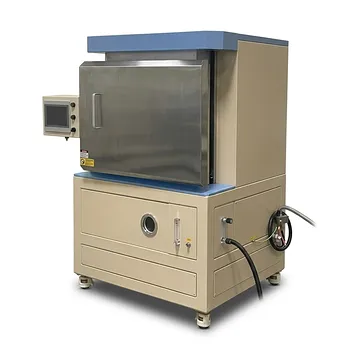
1650C High Temperature Atmosphere Controlled Box Furnace with 65L Chamber for Advanced Material Sintering and Industrial Heat Treatment
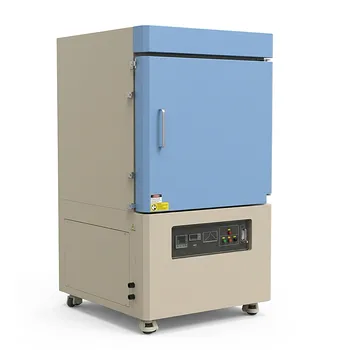
Industrial Large Box Furnace 1700C 216L High Temp Muffle Sintering System
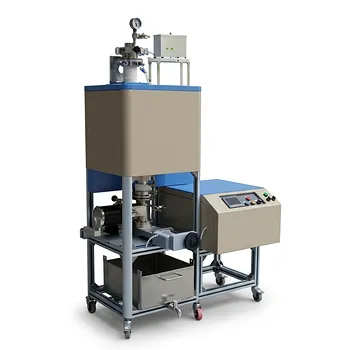
High Temperature 1700C Vertical Tube Furnace for Powder Spherification and Material Sintering
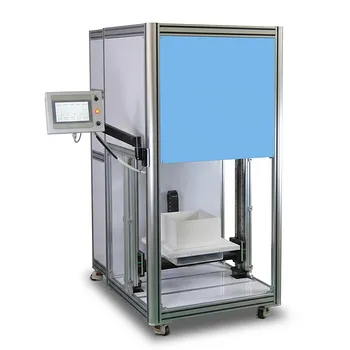
High Temperature 1600°C Three Zone Heated Bottom Loading Box Furnace with Rapid Thermal Processing Chamber 72L Volume
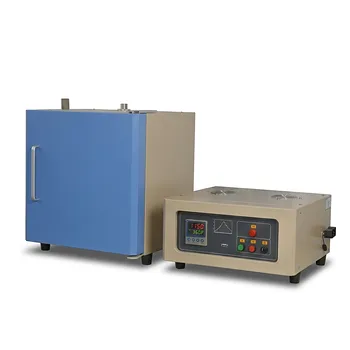
High Temperature Muffle Furnace with Alloy Chamber for Debinding and Sintering Applications
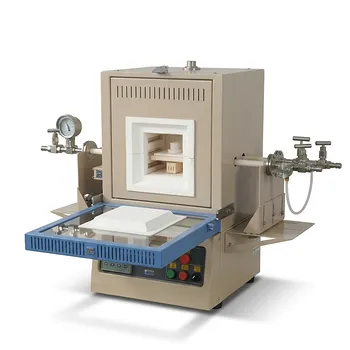
1700C Compact Hybrid Furnace with Dual Layer Box Sintering and Controlled Atmosphere Alumina Tubes
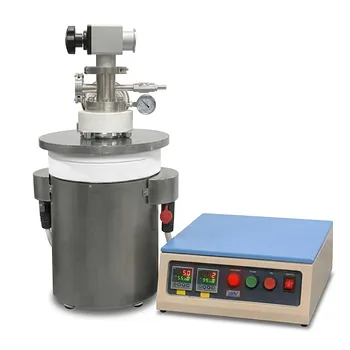
1100C High Temperature Vacuum Crucible Furnace with Quartz Chamber for Thermal Processing and Sintering
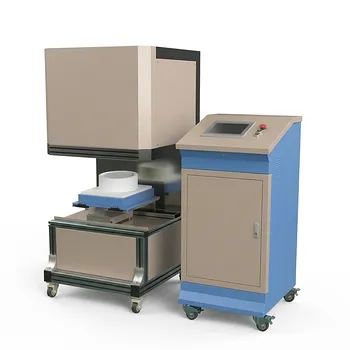
High Temperature Bottom Loading Box Furnace for Rapid Thermal Processing 1700C 40L Capacity
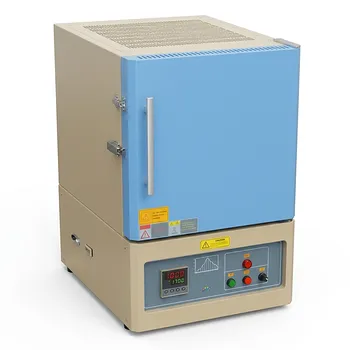
Large Bench Top 1700C High Temperature Muffle Furnace with 19L Chamber for Advanced Material Sintering and Annealing
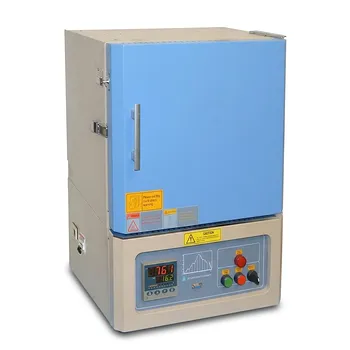
High Temperature 1700C Bench Top Muffle Furnace with Alumina Fiber Insulation and 3.6L Chamber Capacity for Precision Sintering and Heat Treatment
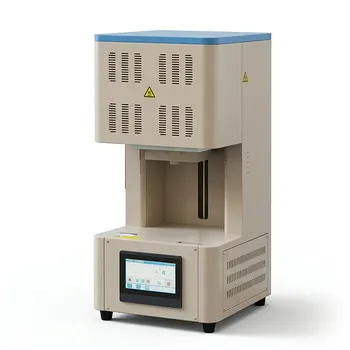
Automated 1700C High Temperature Bottom Loading Box Furnace with PC Software Control and Robotic Integration Capability
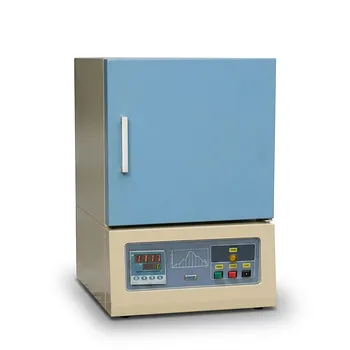
Ultra High Temperature Bench Top Muffle Furnace 1750C Sintering System with Kanthal Super Heating Elements and Precision Digital Control
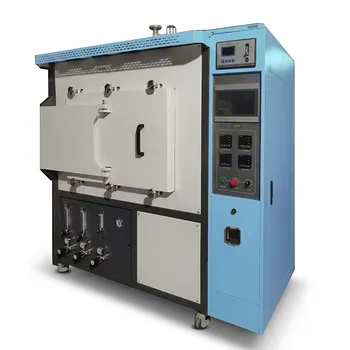
Roller Table Atmosphere Furnace 1500C High Temperature Battery Material Sintering System 112L Capacity
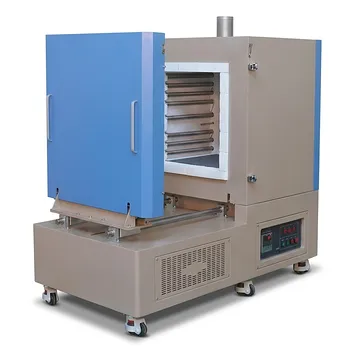
1200C Five Side Heating Muffle Furnace with Sliding Door 125L Volume High Temperature Heat Treatment System for Large Scale Sintering and Annealing
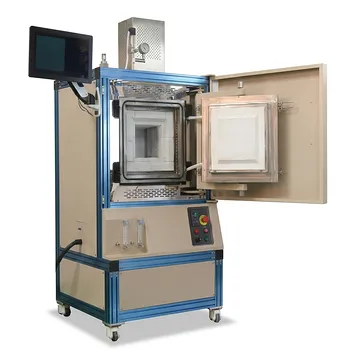
High Temperature Hydrogen Atmosphere Box Furnace 1650C Max Reducing Environment Material Synthesis System 8x8x8 Chamber
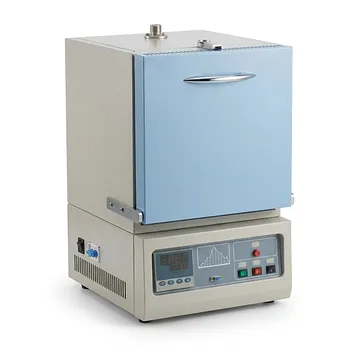
1750C Compact Muffle Furnace 1.7L Ultra High Temperature Laboratory Sintering System for Advanced Ceramics and Material Science Research
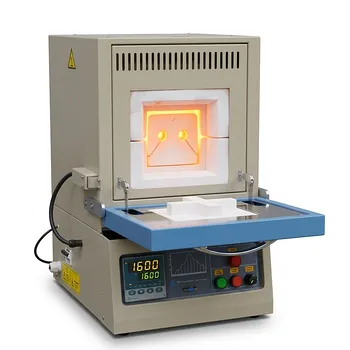
High Temperature Compact Muffle Furnace 1700 C with 30 Segment Programmable Controller and 1.7L Cubic Chamber
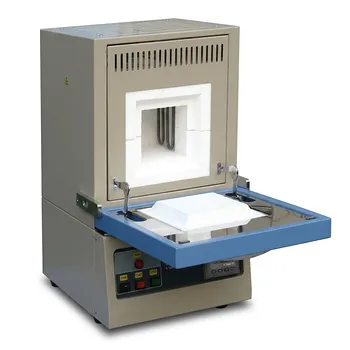
High Temperature 1800C Compact Muffle Furnace with Kanthal Super 1900 Heating Elements and 1.7L Alumina Chamber
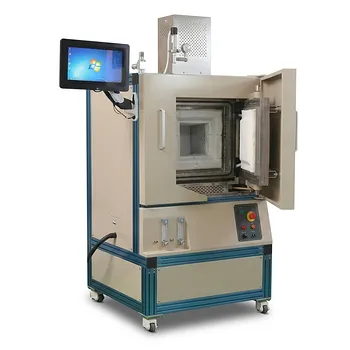
High Temperature Oxygen and Inert Atmosphere Controlled Furnace 8 Liter 1700C Sintering System for Advanced Materials RD