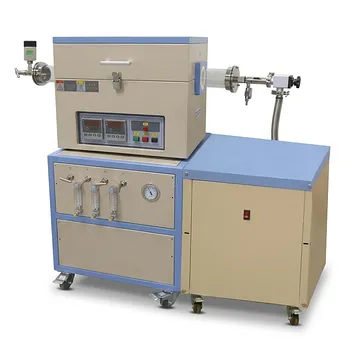
What characteristics of MPCVD diamond make it suitable for medical implants and detectors? Explore the key benefits.
Updated 5 months ago
MPCVD diamond's unique combination of extreme chemical stability and exceptional electronic transport properties makes it a premier candidate for both life sciences and high-energy physics. For medical applications, its biocompatibility and chemical inertness allow for permanent integration into the human body, while its high charge mobility and radiation hardness enable the creation of sensors that remain stable under intense atomic bombardment.
Core Takeaway: MPCVD diamond serves as a dual-purpose "super-material" that is chemically invisible to the human immune system while remaining electronically responsive in the most punishing radiation environments on Earth.
Why MPCVD Diamond is Ideal for Medical Implants
Unmatched Biocompatibility and Safety
As a pure carbon structure, MPCVD diamond is inherently biocompatible, meaning it does not trigger toxic or inflammatory responses when placed in contact with living tissue. This makes it an ideal coating for joint replacements, heart valves, and neural interfaces where the body’s "foreign body response" must be minimized.
Permanent Corrosion Resistance
The human body is a highly corrosive environment for most metals and polymers, but diamond is chemically inert. It does not oxidize or degrade in the presence of saline, proteins, or enzymes, ensuring that implants maintain their structural integrity for decades without leaching harmful ions.
Superior Surface Durability
Beyond its chemistry, the extreme hardness of diamond provides a surface that is virtually immune to wear and tear. This is critical for surgical tools and articulating joint implants where debris from friction could lead to systemic inflammation or implant failure.
High-Performance Sensing in Harsh Environments
Exceptional Radiation Hardness
In high-energy physics and nuclear medicine, detectors are often destroyed by the very radiation they are meant to measure. MPCVD diamond exhibits extreme radiation hardness, allowing it to maintain its crystalline structure and functionality even when exposed to massive doses of ionizing radiation that would disable traditional silicon sensors.
Rapid Signal Response and Charge Mobility
The material features high charge mobility, which allows electrons and holes to move quickly through the lattice when a particle strike occurs. This results in ultra-fast response times, making it possible to detect individual particles in high-frequency environments like particle colliders.
Wide Bandgap and Low Noise
With a wide bandgap of approximately 5.5 eV, diamond acts as a natural insulator at room temperature, which significantly reduces "dark current" or electronic noise. This property, combined with a high breakdown field, allows detectors to operate with high sensitivity and precision in high-voltage and high-temperature conditions.
Understanding the Trade-offs and Limitations
High Production Costs and Scaling
Growing high-quality diamond through Microwave Plasma Chemical Vapor Deposition (MPCVD) is an energy-intensive and expensive process. Achieving the necessary purity and crystallinity for detectors requires slow growth rates, which limits the mass-market affordability of these components.
Surface Functionalization Challenges
While chemical inertness is a benefit for longevity, it can be a hurdle when an implant needs to bond with bone (osseointegration). To make diamond "bio-active" rather than just "bio-inert," engineers must perform complex surface treatments or coatings to encourage cell attachment.
Geometric Constraints
MPCVD growth typically occurs on flat substrates, making it difficult to coat complex 3D geometries uniformly. This can limit the design of certain surgical instruments or custom-shaped implants compared to more malleable materials like titanium or specialized polymers.
Applying MPCVD Diamond to Your Project
Recommendations for Implementation
- If your primary focus is long-term orthopedic or neural implants: Prioritize the material's biocompatibility and chemical inertness to ensure the device avoids rejection and remains stable in the body’s corrosive environment.
- If your primary focus is high-speed particle or radiation detection: Leverage the material’s radiation hardness and high charge mobility to create sensors that offer high temporal resolution without degrading over time.
- If your primary focus is high-voltage power electronics: Utilize the 5.5 eV wide bandgap and high breakdown field to develop components like MOSFETs or Schottky diodes that outperform silicon in extreme thermal and electrical conditions.
By harnessing the extreme physical and electronic limits of diamond, engineers can solve the most demanding durability challenges in both medicine and modern physics.
Summary Table:
| Key Property | Medical Implant Benefit | High-Energy Detector Benefit |
|---|---|---|
| Biocompatibility | Non-toxic; minimizes immune response. | N/A (Secondary) |
| Chemical Inertness | Resists corrosion from bodily fluids. | Chemical stability in harsh environments. |
| Radiation Hardness | Durable during medical imaging/therapy. | Maintains structure under atomic bombardment. |
| Charge Mobility | N/A (Secondary) | Ultra-fast signal response for particle detection. |
| Wide Bandgap | Insulates neural and electrical interfaces. | Low electronic noise and high sensitivity. |
| Extreme Hardness | Eliminates wear debris in joint replacements. | Mechanical durability in extreme conditions. |
Elevate Your Material Research with THERMUNITS
As a leading manufacturer of high-temperature laboratory equipment for material science and industrial R&D, THERMUNITS provides the precision tools necessary for advanced carbon and diamond synthesis. Our comprehensive range of thermal processing solutions—including CVD/PECVD systems, Muffle, Vacuum, Atmosphere, and Tube furnaces—is designed to meet the rigorous demands of modern innovation.
How we add value to your project:
- Precision Control: Achieve the exact thermal environments required for high-purity MPCVD growth.
- Versatile Solutions: From Rotary and Hot Press furnaces to Vacuum Induction Melting (VIM), we cover all heat treatment needs.
- Expert Engineering: High-durability equipment tailored for laboratory and industrial applications.
Ready to enhance your lab's efficiency and material quality? Contact our expert team today to discuss your requirements!
Mentioned Products
- 915MHz MPCVD Diamond Machine Microwave Plasma Chemical Vapor Deposition System Reactor
- Cylindrical Resonator MPCVD Machine System for Microwave Plasma Chemical Vapor Deposition and Lab Diamond Growth
- HFCVD Machine System for Nano Diamond Coating on Drawing Dies and Industrial Tools
- 1100°C Large Diameter Quartz Tube Furnace with 24 Inch Heating Zone and Water Cooled Flanges
- Chemical Vapor Deposition CVD System Slide PECVD Tube Furnace with Liquid Gasifier PECVD Machine
People Also Ask
- What is the fundamental working principle of a Microwave Plasma Chemical Vapor Deposition (MPCVD) machine? Expert Guide
- What are the typical operating pressure ranges and vacuum requirements for MPCVD systems? Optimize Your Material Growth
- What are the technical advantages of the electrodeless plasma design in MPCVD systems? Purity & Precision in Synthesis
- What technical parameters are critical for optimizing the growth of single-crystal diamonds in MPCVD systems? Expert Guide
- How does the versatility of gas compatibility in MPCVD systems compare to filament-based CVD methods? Purity & Doping.

Tech Team · ThermUnits
Last updated on Apr 14, 2026
Related Products
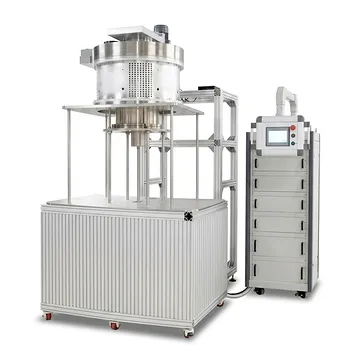
915MHz MPCVD Diamond Machine Microwave Plasma Chemical Vapor Deposition System Reactor
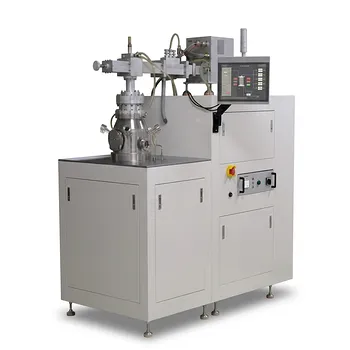
Cylindrical Resonator MPCVD Machine System for Microwave Plasma Chemical Vapor Deposition and Lab Diamond Growth
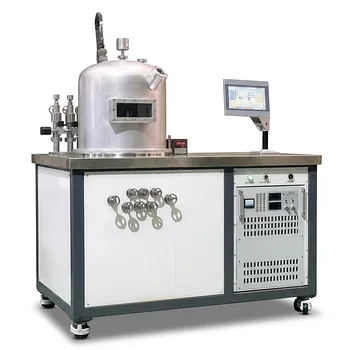
HFCVD Machine System for Nano Diamond Coating on Drawing Dies and Industrial Tools
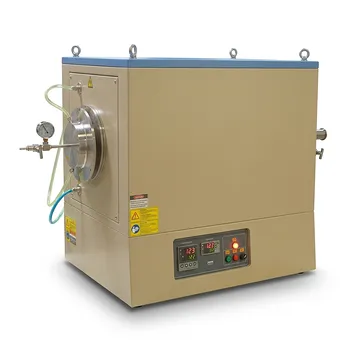
1100°C Large Diameter Quartz Tube Furnace with 24 Inch Heating Zone and Water Cooled Flanges
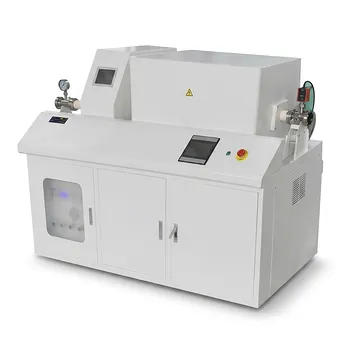
Chemical Vapor Deposition CVD System Slide PECVD Tube Furnace with Liquid Gasifier PECVD Machine
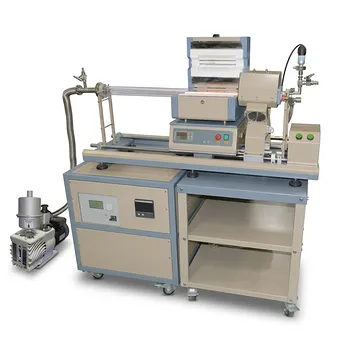
1200C Max Compact Auto-Sliding PECVD Furnace with 2 Inch Tube and Vacuum Pump
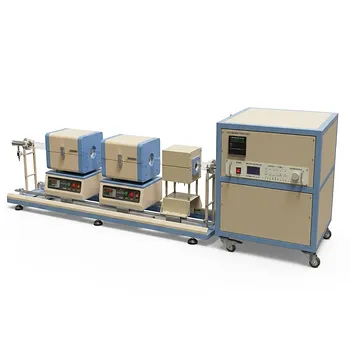
1200C Dual Sliding Tube Furnace with Dual Tubes and Flanges for PECVD Processes