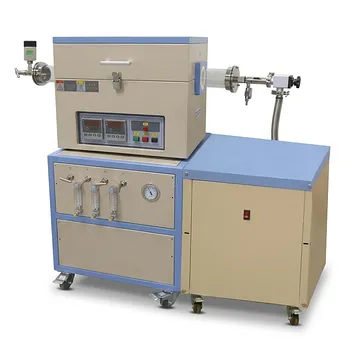
Why are MPCVD diamond films preferred for high-energy optical components and laser windows? Unmatched Thermal Performance
Updated 5 months ago
MPCVD diamond films are the premier choice for high-energy optics because they combine unparalleled thermal conductivity with a vast transparency range. They maintain structural integrity under extreme laser loads by efficiently dissipating heat that would otherwise cause "thermal lensing" or physical cracking. This makes them indispensable for applications like fusion reactor windows and high-power microwave systems.
While many materials offer transparency, only MPCVD (Microwave Plasma Chemical Vapor Deposition) diamond possesses the thermal management capabilities required to survive high-energy density environments. By neutralizing heat-induced distortion, these films ensure the precision and longevity of high-power laser systems.
The Mechanics of Optical Superiority
Broad Spectral Transparency
MPCVD diamond films exhibit an extraordinary transparency range that spans from ultraviolet (UV) to far-infrared (FIR) wavelengths. This makes the material versatile enough to handle different laser types without requiring a change in the substrate material.
Exceptional Thermal Conductivity
Diamond is the most thermally conductive bulk material known, allowing it to move heat away from the point of laser impact instantly. In high-energy applications, this rapid heat dissipation prevents the localized hotspots that typically lead to material failure in glass or quartz.
High Laser Damage Threshold (LDT)
The Laser Damage Threshold of MPCVD diamond is significantly higher than that of traditional optical materials. It can withstand intense energy densities without suffering from surface ablation or internal dielectric breakdown.
Structural Resilience Under Stress
Minimizing Thermal Lensing
When an optical window absorbs a fraction of laser energy, it heats up and expands, changing its refractive index—a phenomenon known as thermal lensing. Because diamond dissipates heat so efficiently, it maintains a stable refractive index and prevents the beam from deforming.
Suitability for Extreme Environments
These films are specifically engineered for high-power microwave transmission and fusion reactor viewports. In these environments, the material must survive not only high energy loads but also significant pressure differentials and radiation.
Mechanical Durability
Beyond its optical properties, MPCVD diamond is chemically inert and physically hard. This protects the optical surface from environmental degradation and physical wear, which is critical for long-term deployments in industrial or research settings.
Understanding the Trade-offs
Synthesis Complexity and Cost
Growing high-quality MPCVD diamond is a resource-intensive process requiring precise control over microwave plasma and gas chemistry. Consequently, the cost of diamond windows is significantly higher than that of zinc selenide or fused silica.
Post-Processing Challenges
Due to its extreme hardness, polishing diamond films to the required optical flatness is a difficult and time-consuming task. Achieving the low surface roughness necessary for high-power lasers requires specialized abrasive techniques.
Polycrystalline Grain Boundaries
Most MPCVD films are polycrystalline, meaning they consist of many tiny crystals. If not grown correctly, the boundaries between these crystals can cause minor scattering or absorption, though high-grade MPCVD growth minimizes these effects.
Implementing MPCVD Diamond in High-Energy Systems
To determine if MPCVD diamond is the correct choice for your application, consider your primary performance bottleneck.
- If your primary focus is Thermal Stability: MPCVD diamond is the only viable solution for preventing beam distortion (thermal lensing) in multi-kilowatt laser systems.
- If your primary focus is Spectral Versatility: Use diamond when your system must operate across multiple wavelengths, such as a combined UV and IR sensor suite.
- If your primary focus is Durability in Harsh Environments: Choose diamond for windows exposed to corrosive gases or high-pressure differentials where other materials would fail.
By leveraging the extreme physical properties of MPCVD diamond, engineers can push the limits of power density in modern optical and microwave systems.
Summary Table:
| Key Property | Advantage for High-Energy Optics | Impact on System Performance |
|---|---|---|
| Thermal Conductivity | Rapid heat dissipation | Prevents thermal lensing and cracking |
| Spectral Range | UV to Far-Infrared transparency | Compatible with diverse laser wavelengths |
| Laser Damage Threshold | Extremely high energy resistance | Enables multi-kilowatt power densities |
| Mechanical Hardness | Chemically inert and physically durable | Survives fusion reactors and harsh environments |
| Refractive Index Stability | Minimal thermal expansion | Maintains beam precision and focus |
Elevate Your Material Research with THERMUNITS
Are you looking to push the boundaries of high-power optical performance? THERMUNITS is a leading manufacturer of high-temperature laboratory equipment specifically designed for material science and industrial R&D.
We provide a comprehensive range of thermal processing solutions, including CVD/PECVD systems essential for diamond synthesis, as well as Muffle, Vacuum, Atmosphere, Tube, Rotary, and Hot Press furnaces. Whether you are developing fusion reactor windows or advanced laser systems, our expertise in high-temperature technology ensures your lab achieves superior results.
Ready to optimize your thermal processing?
Contact our expert team today to discuss how our solutions can enhance your high-energy applications.
Mentioned Products
- 915MHz MPCVD Diamond Machine Microwave Plasma Chemical Vapor Deposition System Reactor
- Cylindrical Resonator MPCVD Machine System for Microwave Plasma Chemical Vapor Deposition and Lab Diamond Growth
- HFCVD Machine System for Nano Diamond Coating on Drawing Dies and Industrial Tools
- 1100°C Large Diameter Quartz Tube Furnace with 24 Inch Heating Zone and Water Cooled Flanges
- Chemical Vapor Deposition CVD System Slide PECVD Tube Furnace with Liquid Gasifier PECVD Machine
People Also Ask
- What is the fundamental working principle of a Microwave Plasma Chemical Vapor Deposition (MPCVD) machine? Expert Guide
- What are the typical operating pressure ranges and vacuum requirements for MPCVD systems? Optimize Your Material Growth
- What are the technical advantages of the electrodeless plasma design in MPCVD systems? Purity & Precision in Synthesis
- What technical parameters are critical for optimizing the growth of single-crystal diamonds in MPCVD systems? Expert Guide
- How does the versatility of gas compatibility in MPCVD systems compare to filament-based CVD methods? Purity & Doping.

Tech Team · ThermUnits
Last updated on Apr 14, 2026
Related Products
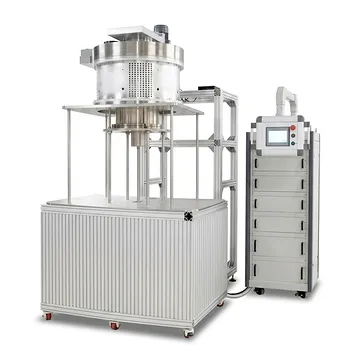
915MHz MPCVD Diamond Machine Microwave Plasma Chemical Vapor Deposition System Reactor
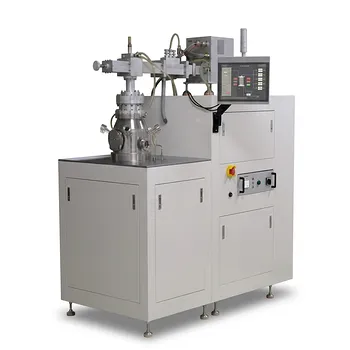
Cylindrical Resonator MPCVD Machine System for Microwave Plasma Chemical Vapor Deposition and Lab Diamond Growth
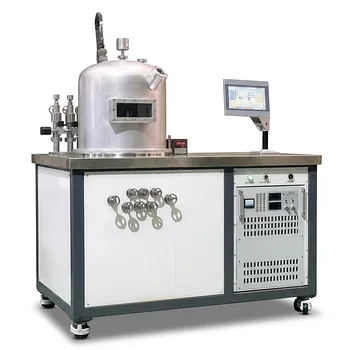
HFCVD Machine System for Nano Diamond Coating on Drawing Dies and Industrial Tools
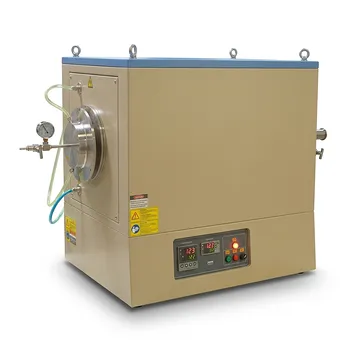
1100°C Large Diameter Quartz Tube Furnace with 24 Inch Heating Zone and Water Cooled Flanges
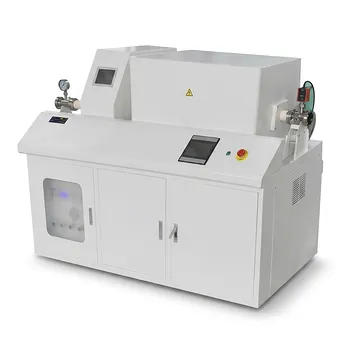
Chemical Vapor Deposition CVD System Slide PECVD Tube Furnace with Liquid Gasifier PECVD Machine
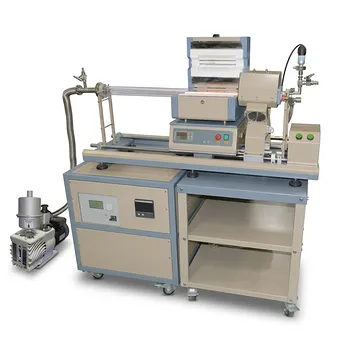
1200C Max Compact Auto-Sliding PECVD Furnace with 2 Inch Tube and Vacuum Pump
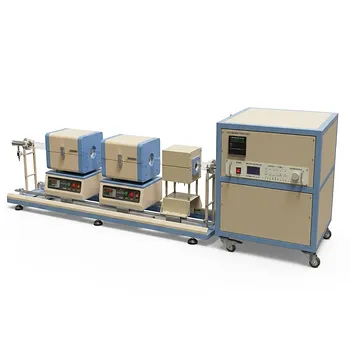
1200C Dual Sliding Tube Furnace with Dual Tubes and Flanges for PECVD Processes