What functional requirements are necessary for a laboratory high-temperature furnace for magnesiothermic reduction?
Updated 3 months ago
For successful magnesiothermic reduction of silicon oxide into one-dimensional structures, the laboratory high-temperature furnace must possess three non-negotiable features: high-integrity sealing for atmosphere control, a stable inert gas environment, and precise temperature compensation mechanisms. These capabilities ensure that the magnesium vapor effectively reduces the silicon dioxide nanotubes while preserving their original morphology and achieving a high conversion rate.
To produce high-quality one-dimensional silicon materials, the furnace must function as a precision reactor that balances aggressive chemical reduction with delicate morphological preservation through rigid atmosphere and thermal management.
The Critical Role of Atmosphere Management
Superior Sealing for Contamination Control
The furnace must feature excellent sealing capabilities to prevent the ingress of oxygen or moisture from the external environment. Any leakage can lead to the formation of unwanted side products or the premature oxidation of the magnesium vapor.
Inert Gas Protection and Vapor Dynamics
Operating under inert gas protection is essential to provide a stable medium for the magnesiothermic reaction. This controlled atmosphere allows the magnesium vapor to interact uniformly with the silicon dioxide nanotubes without interference from atmospheric contaminants.
Maintaining Structural Morphology
The primary goal of the atmosphere control is to enable the redox reaction while maintaining the one-dimensional tubular morphology of the material. A stable, sealed environment ensures that the chemical transformation occurs predictably across the entire batch.
Precision Thermal Field Requirements
Temperature Compensation for Morphology Preservation
Precise temperature compensation control is the most technically demanding requirement for this process. This feature actively manages the heat levels to prevent morphological collapse that can occur if the reaction becomes too exothermic.
Achieving High Conversion Rates
The furnace must provide a uniform thermal field to ensure that all silicon dioxide nanotubes are fully converted into elemental silicon. Consistent heat distribution is critical for achieving a high conversion rate without leaving unreacted oxide cores.
Managing the Redox Reaction
The thermal field must be stable enough to facilitate the redox reaction between magnesium vapor and $SiO_2$. Without fine-tuned control, the rapid energy release from the reduction could destroy the delicate nanostructures you intend to create.
Understanding the Trade-offs and Risks
Thermal Runaway and Structural Collapse
The magnesiothermic reduction is inherently exothermic, meaning it releases heat during the reaction. If the furnace lacks sophisticated compensation control, this internal heat can cause a localized spike, leading to the melting or sintering of the 1D nanostructures.
Sealing Integrity vs. Gas Throughput
While high-integrity sealing is vital, the system must also allow for the precise flow of inert gases. Finding the balance between a perfectly sealed chamber and the necessary gas exchange is a common challenge that requires high-quality valves and monitoring equipment.
How to Apply This to Your Laboratory Setup
When selecting or configuring your high-temperature furnace for silicon material production, consider your specific research output goals.
- If your primary focus is Structural Integrity: Invest in advanced temperature compensation controllers that can rapidly adjust to the exothermic heat spikes of the reduction process.
- If your primary focus is Chemical Purity: Prioritize a furnace with vacuum-tight sealing and high-purity inert gas delivery systems to eliminate oxidation risks.
- If your primary focus is Scalable Yield: Ensure the furnace provides a large, uniform hot zone to maintain consistent magnesium vapor pressure across all samples.
By strictly controlling the interplay between magnesium vapor dynamics and thermal stability, you can reliably transform silicon dioxide into high-performance one-dimensional silicon materials.
Summary Table:
| Key Requirement | Functional Role | Impact on 1D Silicon Materials |
|---|---|---|
| High-Integrity Sealing | Prevents $O_2$ and moisture ingress | Eliminates oxidation and ensures chemical purity |
| Inert Gas Protection | Stabilizes magnesium vapor dynamics | Ensures uniform interaction with silicon dioxide |
| Temp. Compensation | Manages exothermic heat spikes | Prevents morphological collapse and sintering |
| Uniform Thermal Field | Consistent heat distribution | Achieves high conversion rates across the sample |
Optimize Your Material Synthesis with THERMUNITS
Achieving precision in magnesiothermic reduction requires equipment that masters the delicate balance of atmosphere and heat. THERMUNITS is a leading manufacturer of high-performance laboratory equipment, providing the precision needed for material science and industrial R&D.
Our thermal processing solutions, including Vacuum, Atmosphere, Tube, and Rotary Furnaces, are engineered to handle the most demanding chemical reductions. By choosing THERMUNITS, you benefit from:
- Advanced Atmosphere Control: Superior sealing and inert gas systems to eliminate contamination risks.
- Thermal Precision: Specialized temperature compensation mechanisms to protect your 1D nanostructures from exothermic damage.
- Comprehensive Solutions: From CVD/PECVD systems to Vacuum Induction Melting (VIM), we offer tools tailored to your specific research goals.
Ready to elevate your lab's performance? Contact our technical team today to find the ideal furnace for your high-temperature research!
References
- Xinyu Chen, Lin Zeng. Advancing high‐performance one‐dimensional Si/carbon anodes: Current status and challenges. DOI: 10.1002/cnl2.118
Mentioned Products
- High Temperature 1200C Muffle Furnace 27L Volume 12x12x12 Chamber with Programmable PID Controller for Laboratory Material Science
- High Temperature Muffle Furnace with Dual Controllers and 36L Large Chamber 1700C Max
- High Temperature Compact Muffle Furnace 1700 C with 30 Segment Programmable Controller and 1.7L Cubic Chamber
- High Temperature Benchtop Muffle Furnace with Quartz Observation Window for Thermal Imaging and Material Analysis
- High Temperature Benchtop Muffle Furnace 1500C with 3.6L Chamber and Quartz Observation Window
People Also Ask
- Why is annealing in a high-temperature muffle furnace necessary for SiO2/Si substrate pretreatment before monolayer WS2 synthesis?
- What is the purpose of using muffle or tube furnaces in glass synthesis? Achieve Precise Melt-Quenching & Homogeneity
- What role does a high-temperature muffle furnace play in evaluating the mineral composition of rock samples? LOI & XRF Guide
- What role does a high-temperature muffle furnace play in the synthesis of Melem precursors? Precision Polymerization.
- What is the function of a muffle furnace in aluminoborosilicate glass prep? Stabilize Raw Materials for Superior Purity

Tech Team · ThermUnits
Last updated on Jun 02, 2026
Related Products
High Temperature 1200C Muffle Furnace 27L Volume 12x12x12 Chamber with Programmable PID Controller for Laboratory Material Science
High Temperature Muffle Furnace with Dual Controllers and 36L Large Chamber 1700C Max
High Temperature Compact Muffle Furnace 1700 C with 30 Segment Programmable Controller and 1.7L Cubic Chamber
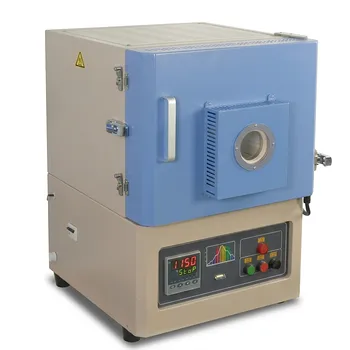
High Temperature Benchtop Muffle Furnace with Quartz Observation Window for Thermal Imaging and Material Analysis
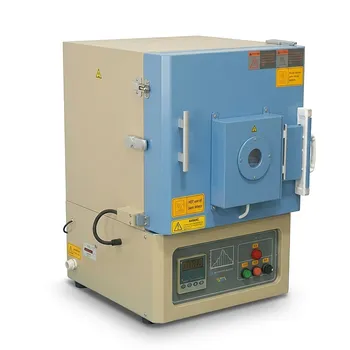
High Temperature Benchtop Muffle Furnace 1500C with 3.6L Chamber and Quartz Observation Window
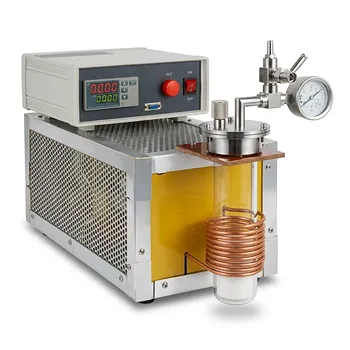
High Temperature Mini Induction Heating Furnace 1600C Laboratory Material Melting System
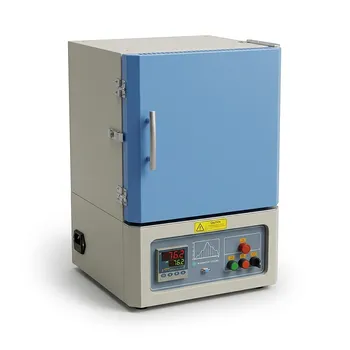
1750C Bench Top Muffle Furnace 3.6L High Grade Molybdenum Disilicide Heating Elements Laboratory Heat Treatment Equipment
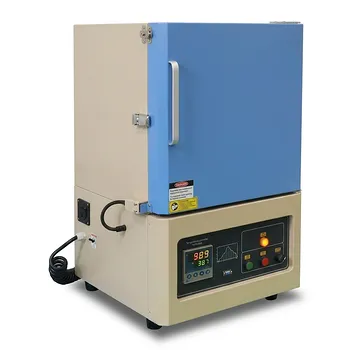
1200°C High Temperature Muffle Furnace 19L Chamber with 50 Segment Programmable Controller
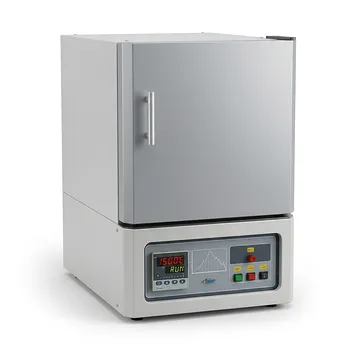
High Temperature 1500C Benchtop Muffle Furnace 3.6L Alumina Fiber Chamber Programmable Controller Sintering Annealing Carbonization Thermal Processing System
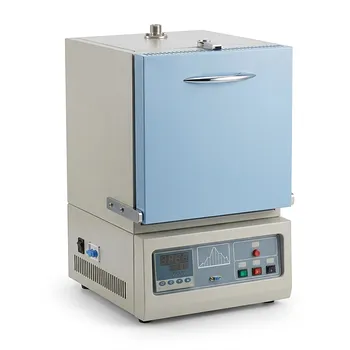
1750C Compact Muffle Furnace 1.7L Ultra High Temperature Laboratory Sintering System for Advanced Ceramics and Material Science Research
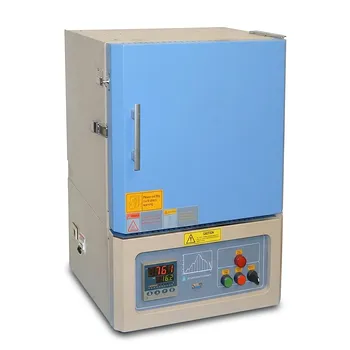
High Temperature 1700C Bench Top Muffle Furnace with Alumina Fiber Insulation and 3.6L Chamber Capacity for Precision Sintering and Heat Treatment
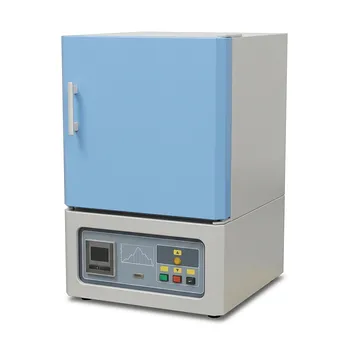
1800C Bench Top Muffle Furnace with Kanthal Super 1900 Heating Elements and 3.6L Alumina Fiber Chamber
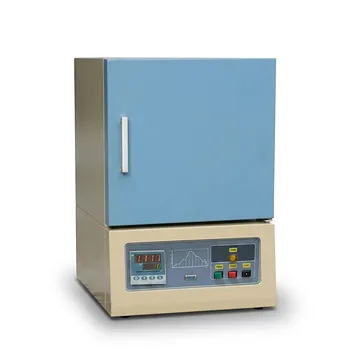
Ultra High Temperature Bench Top Muffle Furnace 1750C Sintering System with Kanthal Super Heating Elements and Precision Digital Control
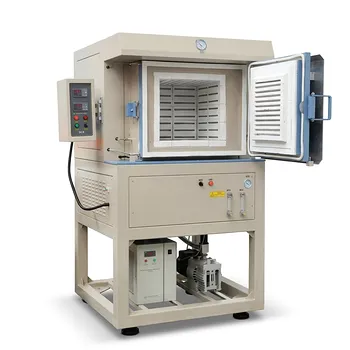
1200°C Five Side Heating Atmosphere Controlled Muffle Furnace 64 Liter High Uniformity Box Furnace for Material Synthesis
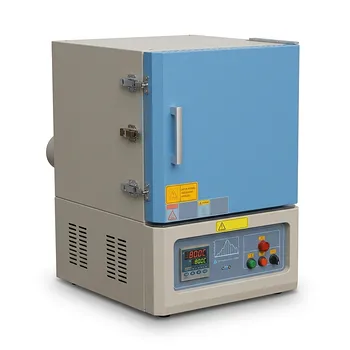
1800C Bench Top Muffle Furnace 18 Liters with Kanthal Super 1900 Heating Elements for High Purity Ceramic Sintering and Material Research
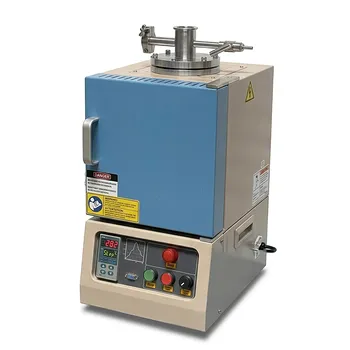
High Temperature Hybrid Muffle and Tube Furnace with Vacuum Capability and PID Control
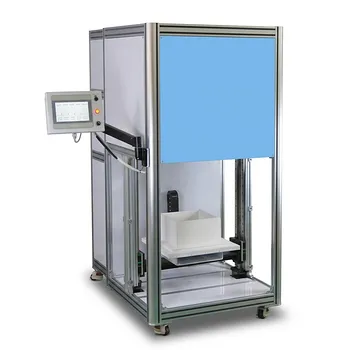
High Temperature 1600°C Three Zone Heated Bottom Loading Box Furnace with Rapid Thermal Processing Chamber 72L Volume
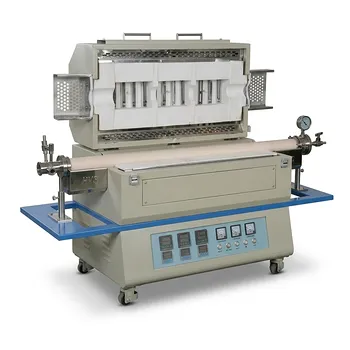
Three Temperature Zone Fast Heating Furnace 1500C Laboratory High Precision Thermal Processing System
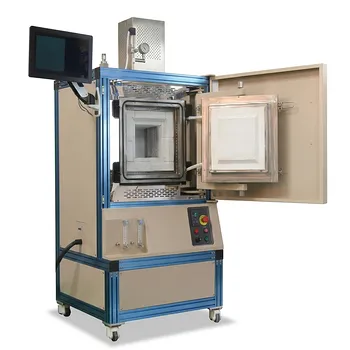
High Temperature Hydrogen Atmosphere Box Furnace 1650C Max Reducing Environment Material Synthesis System 8x8x8 Chamber