What is the function of a high-frequency remelting furnace? Expert Guide to Steel Alloying & Homogeneity
Updated 3 months ago
High-frequency remelting furnaces serve as the primary mechanism for rapid thermal processing and chemical homogenization during the alloying of medium carbon steel. This equipment utilizes electromagnetic induction to generate intense heat directly within the metal, allowing for the swift and precise incorporation of alloying elements into the steel matrix. When integrated with casting systems, it ensures that the solidified samples achieve a highly uniform distribution of their chemical components.
The high-frequency remelting furnace is essential for creating high-homogeneity alloys by combining rapid induction melting with intense physical mixing. It provides the thermal energy and kinetic environment necessary to transform disparate elements into a stabilized, uniform medium carbon steel matrix.
Mechanisms of Rapid Thermal Processing
The Power of Electromagnetic Induction
The furnace operates by passing high-frequency alternating current through a coil, creating a potent electromagnetic field. This field induces eddy currents within the medium carbon steel, generating heat internally and allowing the metal to reach its melting point in a very short time.
Accelerating the Alloying Timeline
Because the heat is generated within the material itself rather than transferred from an external source, melting is nearly instantaneous. This speed is critical for preventing the prolonged exposure of the melt to environmental factors that could alter its chemistry.
Achieving Chemical Consistency
Electromagnetic Stirring Effects
A significant secondary benefit of induction heating is the "stirring" effect caused by the electromagnetic field. This inherent agitation ensures that alloying elements—ranging from high-concentration additions to trace amounts of titanium or chromium—are distributed evenly throughout the liquid melt.
Homogeneity in Multi-Component Systems
For medium carbon steels requiring complex formulations, such as those with manganese or aluminum, this stirring is vital. It eliminates localized concentrations of elements, ensuring that the final solidified sample reflects the intended atomic percentage across its entire volume.
Integration with Centrifugal Casting
When the furnace is integrated with a centrifugal casting machine, the transition from melt to solid is rapid and controlled. This synergy maintains the homogeneity achieved during the melting phase, preventing the segregation of elements that can occur during slower cooling processes.
Understanding the Trade-offs
Oxidation and Decarburization Risks
At the high temperatures required for melting medium carbon steel, the metal is highly susceptible to surface oxidation and the loss of carbon. Without a protective argon atmosphere or a vacuum environment, active alloying elements like manganese and aluminum can be lost to the slag or atmosphere.
Complexity of Temperature Control
While induction heating is rapid, it requires precise calibration to avoid overheating. Excessive temperatures can lead to grain coarsening or the unintended vaporization of volatile alloying components, which can compromise the integrity of the subsequent thermal testing.
How to Apply This to Your Alloying Project
Making the Right Choice for Your Goal
To achieve the best results with high-frequency remelting, your operational strategy should align with your specific metallurgical requirements.
- If your primary focus is maximum chemical uniformity: Utilize the electromagnetic stirring effect of the induction furnace to ensure all trace elements are fully integrated before casting.
- If your primary focus is preventing the loss of active elements: Ensure the furnace is equipped with a vacuum (VIM) or an inert gas shielding system to protect elements like aluminum and manganese from oxidation.
- If your primary focus is accurate grain size analysis: Use the remelting furnace for initial alloying, but follow with a high-temperature tube furnace in an argon atmosphere for stable austenitization.
The high-frequency remelting furnace is the definitive tool for researchers and engineers who require rapid, precise, and homogeneous alloying of medium carbon steel.
Summary Table:
| Feature | Key Function | Benefit for Medium Carbon Steel |
|---|---|---|
| Induction Heating | Generates internal heat via eddy currents | Rapid melting & minimal environmental exposure |
| EM Stirring | Intense electromagnetic physical mixing | Ensures uniform distribution of alloying elements |
| Atmosphere Control | Vacuum or Inert gas (Argon) shielding | Prevents oxidation and loss of active elements (Mn, Al) |
| Casting Synergy | Integration with centrifugal casting | Prevents element segregation during solidification |
Elevate Your Material Research with THERMUNITS
Precision in alloying requires the right thermal environment. THERMUNITS is a leading manufacturer of high-temperature laboratory equipment, providing cutting-edge solutions for material science and industrial R&D.
Whether you need a Vacuum Induction Melting furnace (VIM) for high-purity alloying, or specialized Muffle, Atmosphere, Tube, or Hot Press furnaces, our equipment is designed to ensure chemical homogeneity and superior grain structure control.
Ready to upgrade your laboratory’s heat treatment capabilities?
Contact our technical experts today to find the ideal thermal solution for your specific medium carbon steel or alloy development projects!
References
- Julian Cejka, Susanne Michelic. Influence of Tramp Elements on Surface Properties of Liquid Medium‐Carbon Steels. DOI: 10.1002/srin.202300715
Mentioned Products
- High Temperature Mini Induction Heating Furnace 1600C Laboratory Material Melting System
- High Temperature Muffle Furnace with Alloy Chamber for Debinding and Sintering Applications
- Large Bench Top 1700C High Temperature Muffle Furnace with 19L Chamber for Advanced Material Sintering and Annealing
- Desktop Induction Melting Furnace with Automatic Rotary Casting Function up to 1700C for Advanced Metal Alloy Research
- High Temperature 1500C Benchtop Muffle Furnace 3.6L Alumina Fiber Chamber Programmable Controller Sintering Annealing Carbonization Thermal Processing System
People Also Ask
- What roles do an induction furnace and a graphite crucible play in the slag pre-melting process? Optimize Slag Prep.
- What is the objective of performing long-term annealing at 653 K on quenched PbTe-Ag2Te? Drive Ostwald Ripening.
- Why is a laboratory furnace with ultra-high heating rate capabilities necessary for simulating coal injection processes?
- Why are internal getters such as Titanium used during the synthesis of oxygen-sensitive materials in a melting furnace?
- What are the primary functions of a High-Frequency Induction Melting Furnace in LMD? Achieve Precision Microstructures

Tech Team · ThermUnits
Last updated on Jun 03, 2026
Related Products
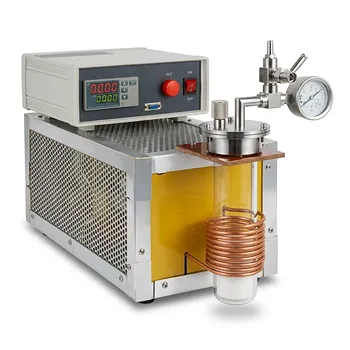
High Temperature Mini Induction Heating Furnace 1600C Laboratory Material Melting System
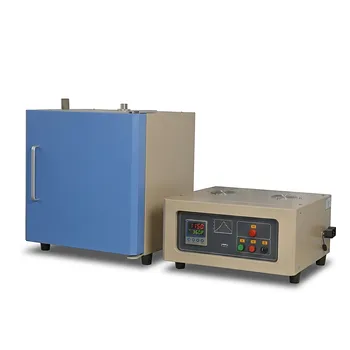
High Temperature Muffle Furnace with Alloy Chamber for Debinding and Sintering Applications
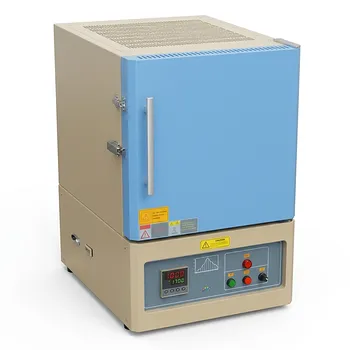
Large Bench Top 1700C High Temperature Muffle Furnace with 19L Chamber for Advanced Material Sintering and Annealing
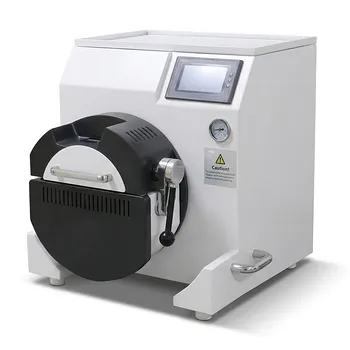
Desktop Induction Melting Furnace with Automatic Rotary Casting Function up to 1700C for Advanced Metal Alloy Research
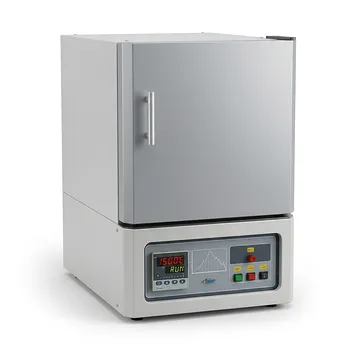
High Temperature 1500C Benchtop Muffle Furnace 3.6L Alumina Fiber Chamber Programmable Controller Sintering Annealing Carbonization Thermal Processing System
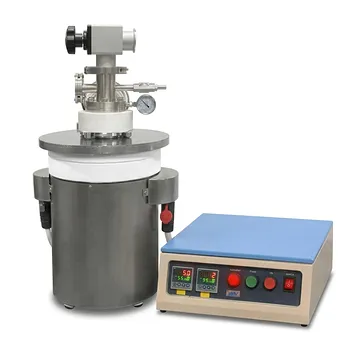
1100C High Temperature Vacuum Crucible Furnace with Quartz Chamber for Thermal Processing and Sintering
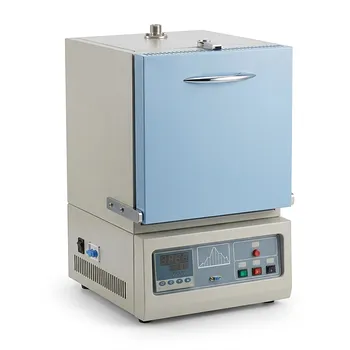
1750C Compact Muffle Furnace 1.7L Ultra High Temperature Laboratory Sintering System for Advanced Ceramics and Material Science Research
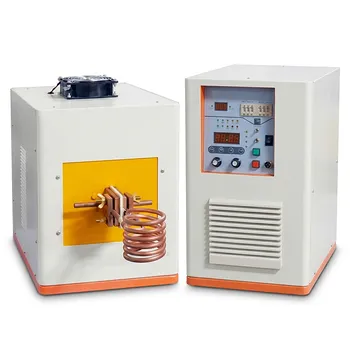
30KW High Frequency Induction Heater for Metal Melting and Industrial Heat Treatment 80-200kHz
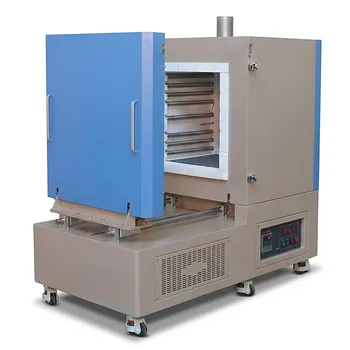
1200C Five Side Heating Muffle Furnace with Sliding Door 125L Volume High Temperature Heat Treatment System for Large Scale Sintering and Annealing
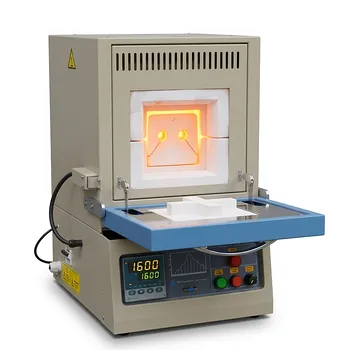
High Temperature Compact Muffle Furnace 1700 C with 30 Segment Programmable Controller and 1.7L Cubic Chamber
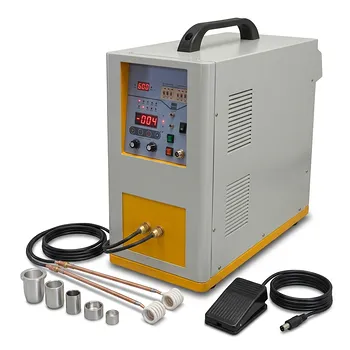
Desktop High Frequency Induction Heater 6KW 100-500kHz for Precision Metal Melting and Heat Treatment
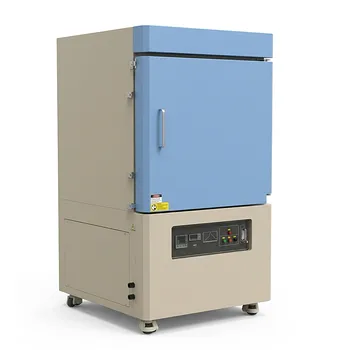
Industrial Large Box Furnace 1700C 216L High Temp Muffle Sintering System
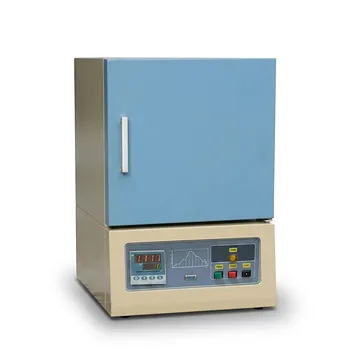
Ultra High Temperature Bench Top Muffle Furnace 1750C Sintering System with Kanthal Super Heating Elements and Precision Digital Control
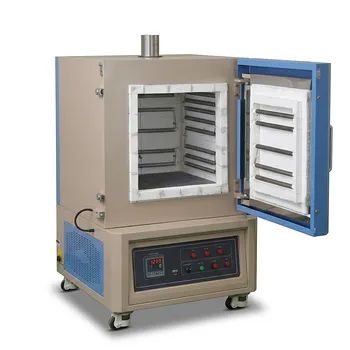
1200C High Temperature 125L Muffle Furnace 5 Side Heating for Large Batch Sintering with Optional Alloy Debinding Chamber
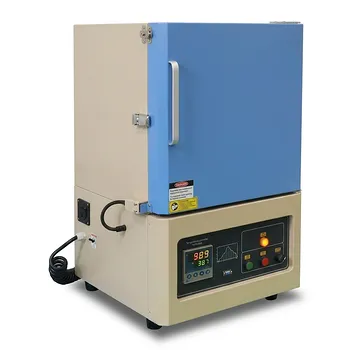
1200°C High Temperature Muffle Furnace 19L Chamber with 50 Segment Programmable Controller
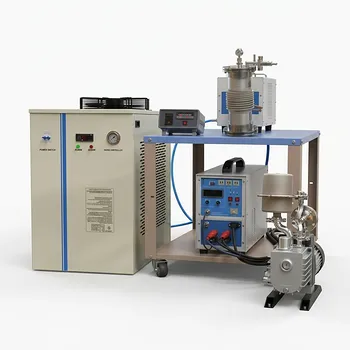
Induction Heating System with Temperature Control for High Temperature Vacuum Sintering and Melting
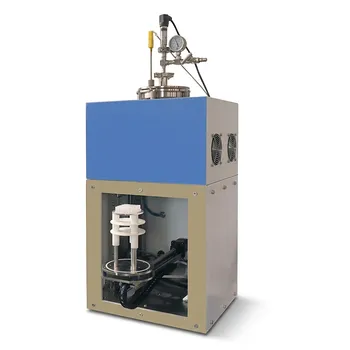
Rapid Thermal Processing RTP Atmosphere Controlled Bottom Loading Furnace 1100C High Throughput 50C per Second Heating Rate
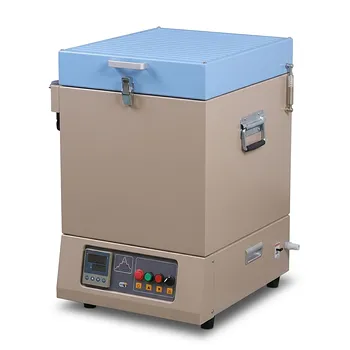
High Temperature Vertical Crucible Furnace with 22L Heating Chamber and 1200C Maximum Temperature
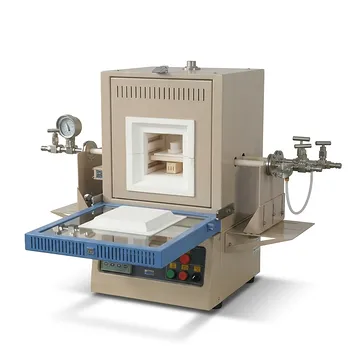
1700C Compact Hybrid Furnace with Dual Layer Box Sintering and Controlled Atmosphere Alumina Tubes