What is the function of a high-purity alumina gas lance during Jarosite smelting? Enhance Metal Recovery & Precision
Updated 3 months ago
A high-purity alumina gas lance is a precision delivery tool designed to inject reducing gases directly into molten slag during the smelting process. Its primary function is to transport a specific mixture of 70 vol% CO and 30 vol% CO2 into the melt to facilitate the chemical reduction of lead and silver oxides into their metallic forms.
The high-purity alumina gas lance serves as the critical interface between the gas supply and the 1400 °C melt, enabling targeted metal recovery while resisting the intense chemical and thermal degradation characteristic of Jarosite Residue smelting.
The Role of Gas Injection in Metal Recovery
Chemical Reduction of Lead and Silver Oxides
The gas lance is the primary mechanism for introducing reducing agents into the molten residue. By delivering carbon monoxide directly to the reaction zone, it facilitates the conversion of lead and silver oxides into liquid metals, which can then be recovered.
Precision Gas Composition Delivery
Maintaining the correct atmospheric balance is vital for efficient smelting. The lance allows for the precise control of a 70% CO and 30% CO2 ratio, ensuring that the chemical potential of the melt is optimized for metal separation without unnecessary waste.
Deep Melt Penetration
Unlike surface heating or ambient atmosphere control, the lance allows for subsurface injection. This ensures that the reducing gases interact thoroughly with the high-temperature melt, maximizing the surface area of the reaction and increasing the overall yield of the recovery process.
Why High-Purity Alumina is Essential
Surviving the 1400 °C Environment
Smelting Jarosite Residue requires extreme temperatures that would melt or deform most metallic delivery systems. High-purity alumina maintains its structural integrity at 1400 °C, providing a stable conduit for gas delivery over long service lives.
Resistance to Corrosive Iron-Silicate Slag
The byproduct of Jarosite smelting is a highly aggressive iron-silicate slag that chemically attacks many refractories. Alumina is chosen for its chemical inertness, which prevents the lance from dissolving into the melt and altering the experimental results.
Prevention of Melt Contamination
In a laboratory or industrial testing environment, purity is paramount. Because high-purity alumina is resistant to chemical attack, it ensures that no foreign elements from the lance contaminate the metal recovery testing, leading to more accurate data.
Understanding the Trade-offs
Thermal Shock Sensitivity
While alumina is chemically hardy and heat-resistant, it is a ceramic material prone to thermal shock. If the lance is introduced too quickly into the 1400 °C environment or cooled too rapidly, it may crack, requiring careful preheating protocols.
Mechanical Fragility
Unlike stainless steel or alloy lances, alumina lances are brittle. They cannot withstand significant mechanical impact or bending stresses, meaning they must be handled with extreme care and mounted in stable, vibration-free delivery systems.
How to Apply This to Your Smelting Project
The choice of a gas lance and its operation directly impacts the purity and volume of your recovered silver and lead.
- If your primary focus is Maximum Metal Recovery: Ensure the lance is positioned deep within the melt to maximize the contact time between the CO gas and the metal oxides.
- If your primary focus is Analytical Accuracy: Use only high-purity alumina (99%+) to prevent the introduction of iron or silica impurities that could skew your slag analysis.
- If your primary focus is Component Longevity: Implement a slow-immersion protocol to preheat the lance, reducing the risk of fracture due to thermal shock at the 1400 °C interface.
By precisely controlling the delivery of reducing gases through a chemically inert medium, you ensure a stable, repeatable, and efficient smelting environment.
Summary Table:
| Feature | Primary Function | Key Performance Benefit |
|---|---|---|
| Gas Delivery | Injects 70% CO / 30% CO2 | Facilitates chemical reduction of Pb and Ag oxides |
| Subsurface Injection | Deep melt penetration | Maximizes reaction surface area and metal yield |
| Thermal Stability | Operates at 1400 °C | Maintains structural integrity in extreme heat |
| Chemical Inertness | Resists iron-silicate slag | Prevents melt contamination and lance degradation |
| Material Purity | 99%+ Alumina content | Ensures analytical accuracy for R&D testing |
Optimize Your Material Research with THERMUNITS
At THERMUNITS, we understand that precision in thermal processing is the key to breakthroughs in material science and industrial R&D. As a leading manufacturer, we provide high-performance solutions including Muffle, Vacuum, Atmosphere, Tube, and Rotary furnaces, as well as CVD/PECVD systems and specialized Thermal Elements designed to withstand the most demanding environments like Jarosite smelting.
Whether you need robust High-Purity Alumina components or advanced Vacuum Induction Melting (VIM) systems, our engineering team is ready to support your project with equipment that ensures repeatability and purity.
Ready to upgrade your lab's thermal capabilities? Contact THERMUNITS Today to discuss your specific heat treatment requirements!
References
- Cancio Jiménez-Lugos, Eduardo Colin García. Recovery of Silver and Lead from Jarosite Residues by Roasting and Reducing Pyrometallurgical Processes. DOI: 10.3390/met14080954
Mentioned Products
- High Temperature 1700C Benchtop Tube Furnace with 5 Inch Heating Zone High Purity Alumina Tube and Vacuum Sealing Flanges
- High Temperature Induction Melting System with Integrated Ultra High Purity Glove Box for Metallic Alloy Processing
- Compact High Temperature 1600C Tube Furnace with 50mm Alumina Tube and Vacuum Flanges for Material Sintering
- 1700C Hydrogen Gas Tube Furnace with 60mm Alumina Process Tube and Integrated Hydrogen Safety Detector
- Vertical Hybrid High Temperature Furnace 1500C Alumina Tube SOFC Fuel Cell Testing Laboratory Heat Treatment Research Equipment
People Also Ask
- How are high-temperature tube furnaces utilized to repair etching damage? Precision Lattice Restoration Solutions
- What is the function of a high-temperature tube furnace in the synthesis of g-C3N4? Optimize Thermal Polycondensation
- What impact does the heating rate of a tube furnace have on biochar microstructure? Optimize Your Material R&D.
- What is the role of a high-temperature tube furnace in the calcination process of ZnO/In2O3 nanocomposites?
- Conditions for nZVI Synthesis in Tube Furnaces? Learn to Optimize Thermal and Atmospheric Control for High Purity.

Tech Team · ThermUnits
Last updated on Jun 02, 2026
Related Products

High Temperature 1700C Benchtop Tube Furnace with 5 Inch Heating Zone High Purity Alumina Tube and Vacuum Sealing Flanges
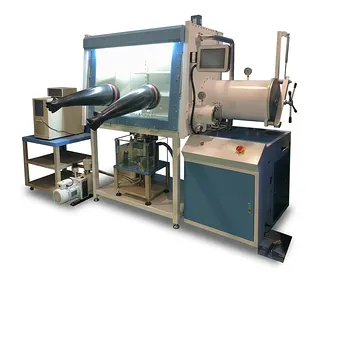
High Temperature Induction Melting System with Integrated Ultra High Purity Glove Box for Metallic Alloy Processing

Compact High Temperature 1600C Tube Furnace with 50mm Alumina Tube and Vacuum Flanges for Material Sintering

1700C Hydrogen Gas Tube Furnace with 60mm Alumina Process Tube and Integrated Hydrogen Safety Detector
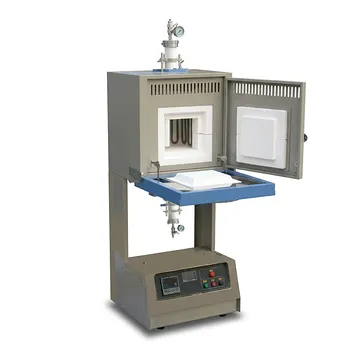
Vertical Hybrid High Temperature Furnace 1500C Alumina Tube SOFC Fuel Cell Testing Laboratory Heat Treatment Research Equipment
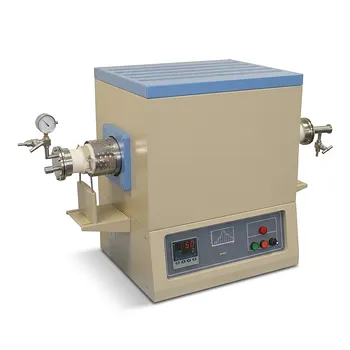
1700C High Temperature Alumina Tube Furnace with 18 Inch Heated Zone and Vacuum Sealing Flanges
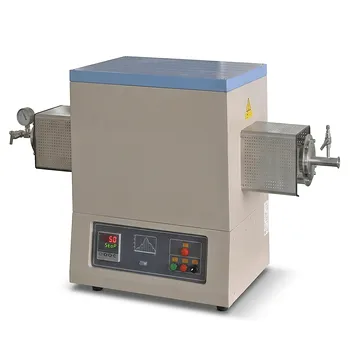
High Temperature 1700C Tube Furnace with 4 Inch OD Alumina Tube and Vacuum Sealing Flanges
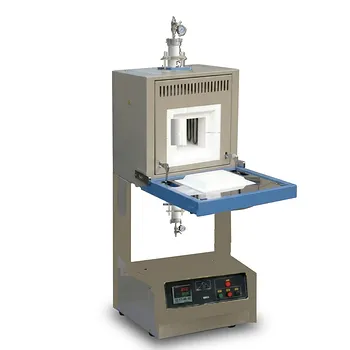
High Temperature Vertical Hybrid Furnace with Alumina Tube and SiC Heating for SOFC Coin Cell Testing and Atmosphere Processing
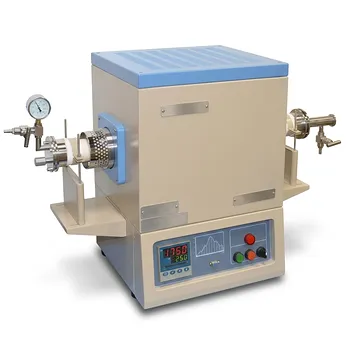
High Temperature Compact Vacuum Tube Furnace 1750C Max 60mm OD Alumina Tube
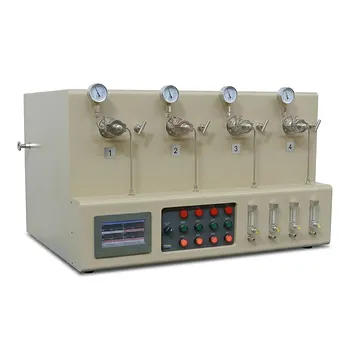
High Temperature 1700C 4 Channel Tube Furnace 1 Inch Alumina Tube for Hi-Throughput Annealing
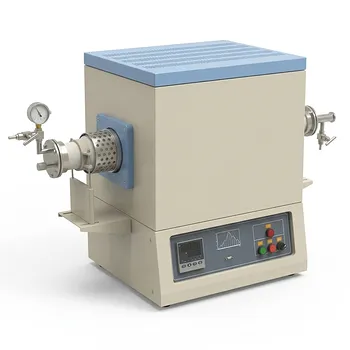
1750°C High Temperature Benchtop Vacuum Atmosphere Tube Furnace with Kanthal Super 1800 Heating Elements and 60mm Alumina Processing Tube
