What is the function of a tube furnace using an argon atmosphere during the sintering of glass vapor cells?
Updated 3 months ago
The primary function of a tube furnace using an argon atmosphere during the sintering of glass vapor cells is to transform porous silica "brown parts" into dense, transparent glass while strictly preventing crystallization. At high temperatures reaching 1150 °C, the furnace provides the thermal energy necessary for silica nanoparticles to melt and fuse into a unified amorphous structure. The argon atmosphere is indispensable because it inhibits devitrification, ensuring the final vapor cell maintains the optical transparency and mechanical stability required for its application.
The argon-shielded tube furnace facilitates a precise phase transition where silica nanoparticles merge into an amorphous glass state without forming crystals. This controlled environment is the only way to achieve the high optical clarity and structural integrity necessary for functional glass vapor cells.
Achieving Structural Transformation through Sintering
Consolidation of Nanoparticles
The tube furnace provides a controlled thermal environment to process porous "brown parts," which are essentially precursors made of silica nanoparticles. As the furnace reaches 1150 °C, these particles begin to undergo diffusion and fusion. This process eliminates the internal pores, resulting in a fully dense material.
Reaching the Amorphous State
Unlike crystalline materials, glass requires an amorphous (non-crystalline) structure to remain transparent. The high-temperature field uniformity of the tube furnace allows the silica to melt and merge into this specific state. This ensures the final cell is an "amorphous glass structure" rather than a white, opaque ceramic.
The Critical Role of the Argon Atmosphere
Prevention of Silica Crystallization
At the high temperatures required for sintering (1150 °C), silica is prone to crystallization, a process known as devitrification. The argon atmosphere acts as a protective barrier that suppresses this crystal growth. By keeping the silica in its amorphous state, the argon ensures the glass remains perfectly transparent for optical use.
Displacement of Atmospheric Contaminants
The furnace system uses high-purity argon to displace oxygen and other reactive gases from the chamber. This creates an inert environment that prevents uncontrolled secondary reactions. In glass processing, this purity is essential to prevent the introduction of impurities that could alter the glass's chemical or biological performance.
Maintaining Mechanical and Optical Integrity
Without the argon shield, the resulting material would likely become brittle or lose its "glanceable" clarity. The inert medium ensures that the structural bond between particles is "clean," leading to high mechanical stability. This allows the vapor cell to withstand the physical demands of its operating environment without fracturing.
Understanding the Trade-offs
Atmosphere Purity vs. Processing Cost
Maintaining a continuous flow of high-purity argon increases the operational cost of sintering compared to air-based heating. However, using a less expensive gas like nitrogen can be risky; in certain high-temperature applications, materials can absorb nitrogen to form brittle phases, such as nitrides. For glass vapor cells, the cost of argon is a necessary trade-off to avoid the catastrophic loss of transparency.
Temperature Precision and Thermal Stress
While the tube furnace offers multi-stage programmable control, the high temperatures involved create significant thermal gradients. If the cooling phase is not managed as precisely as the heating phase, the glass can develop internal stresses. The argon atmosphere helps provide a stable medium for this temperature control, but the programming must be exact to prevent cracking.
How to Apply This to Your Project
Recommendations for Success
To ensure the highest quality sintering results for glass or specialized composites, consider these strategic focuses:
- If your primary focus is Optical Clarity: Prioritize the purity of the argon gas and the seal integrity of the tube furnace to prevent even trace amounts of oxygen from triggering devitrification.
- If your primary focus is Mechanical Strength: Ensure the furnace utilizes multi-stage programmable temperature control to manage the diffusion of particles and the bonding of "fresh interfaces" without thermal shock.
- If your primary focus is Chemical Purity: Use a vacuum-purge cycle before introducing argon to ensure all atmospheric oxygen and moisture are completely displaced from the porous silica structure.
The argon-filled tube furnace is the definitive tool for converting silica precursors into high-performance glass, provided the balance between temperature uniformity and atmosphere purity is strictly maintained.
Summary Table:
| Feature | Role in Sintering Process | Impact on Final Glass Quality |
|---|---|---|
| 1150 °C Heat | Fusion of silica nanoparticles | Transforms porous "brown parts" into dense glass |
| Argon Shield | Inhibits crystallization (devitrification) | Maintains essential optical transparency |
| Inert Environment | Displaces oxygen and contaminants | Ensures high chemical purity and structural stability |
| Precise Cooling | Manages thermal gradients | Prevents internal stress and mechanical cracking |
Unlock Precision in Your Material R&D with THERMUNITS
Achieving perfect optical clarity and structural integrity in glass sintering requires world-class thermal control. THERMUNITS is a leading manufacturer of high-temperature laboratory equipment, providing the specialized tools needed for advanced material science and industrial R&D.
From high-purity Atmosphere and Tube furnaces to Vacuum, Muffle, Rotary, and Hot Press systems, we offer a comprehensive range of solutions including CVD/PECVD systems and vacuum induction melting furnaces (VIM). Our equipment is designed to provide the stable, inert environments necessary for your most sensitive heat treatment processes.
Ready to elevate your lab's performance? Contact our technical experts today to find the ideal thermal solution for your specific application!
References
- Feiran Wang, Lucia Hackermueller. Additive manufacturing of functionalised atomic vapour cells for next-generation quantum technologies. DOI: 10.1088/2058-9565/ad8678
Mentioned Products
- Compact Hybrid Muffle and Tube Furnace for 1000C Controlled Atmosphere Laboratory Material Sintering
- 1700C Compact Hybrid Furnace with Dual Layer Box Sintering and Controlled Atmosphere Alumina Tubes
- Compact High Temperature 1600C Tube Furnace with 50mm Alumina Tube and Vacuum Flanges for Material Sintering
- 1650C High Temperature Atmosphere Controlled Box Furnace with 65L Chamber for Advanced Material Sintering and Industrial Heat Treatment
- High Temperature Vertical Atmosphere Controlled Furnace with Automatic Bottom Loading and 1700°C Capacity for Advanced Material Research
People Also Ask
- Why is an atmosphere-controlled tube furnace required for the pre-sulfidation of NiMo/gamma-Al2O3 catalysts?
- Why is an atmosphere-controlled tube furnace required for 800 °C CNF annealing? Essential for Oxidative Protection.
- Why is an atmosphere-controlled tube furnace required for [email protected]/C preparation? Key for Purity & Structure
- Why is an atmosphere-controlled tube furnace required for single-atom sensor calcination? Ensure Atomic Dispersion.
- What is the function of a controlled atmosphere tube furnace in LiGa alloying? Achieving High-Purity Thermal Synthesis

Tech Team · ThermUnits
Last updated on Jun 02, 2026
Related Products
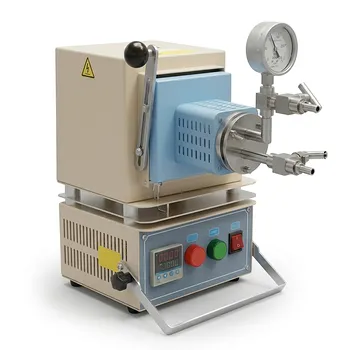
Compact Hybrid Muffle and Tube Furnace for 1000C Controlled Atmosphere Laboratory Material Sintering
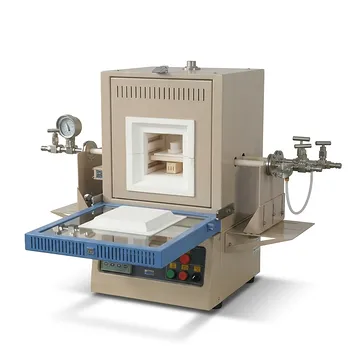
1700C Compact Hybrid Furnace with Dual Layer Box Sintering and Controlled Atmosphere Alumina Tubes

Compact High Temperature 1600C Tube Furnace with 50mm Alumina Tube and Vacuum Flanges for Material Sintering
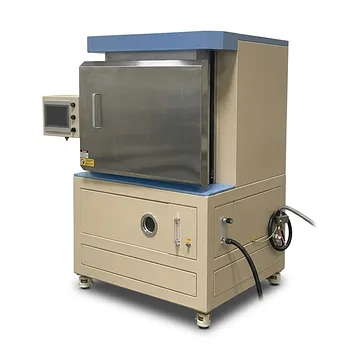
1650C High Temperature Atmosphere Controlled Box Furnace with 65L Chamber for Advanced Material Sintering and Industrial Heat Treatment
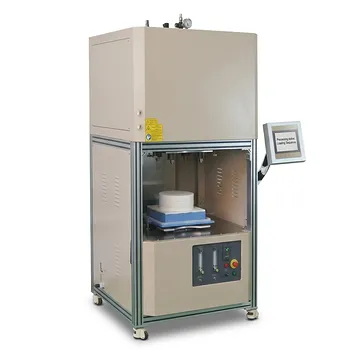
High Temperature Vertical Atmosphere Controlled Furnace with Automatic Bottom Loading and 1700°C Capacity for Advanced Material Research

High Temperature 1700C Vertical Tube Furnace for Powder Spherification and Material Sintering
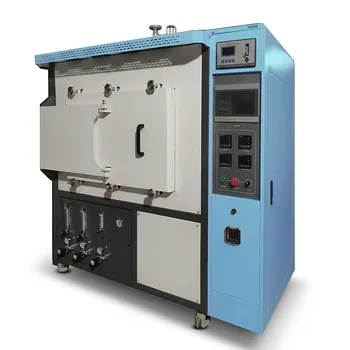
Roller Table Atmosphere Furnace 1500C High Temperature Battery Material Sintering System 112L Capacity
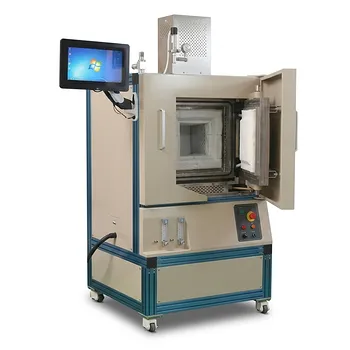
High Temperature Oxygen and Inert Atmosphere Controlled Furnace 8 Liter 1700C Sintering System for Advanced Materials RD
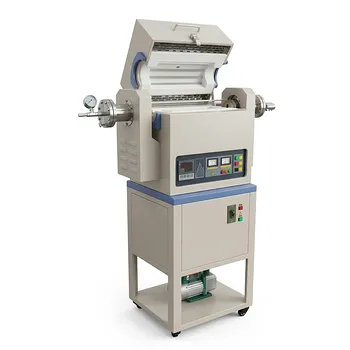
High Temperature Rotary Tilt Tubular Furnaces for Advanced Powder Sintering and Material Processing

Vertical 1700C Vacuum and Atmosphere Tube Furnace with 80mm Alumina Tube

Compact Vertical Split Quartz Tube Furnace with Stainless Steel Vacuum Flanges for Rapid Thermal Quenching and Controlled Atmosphere Material Processing
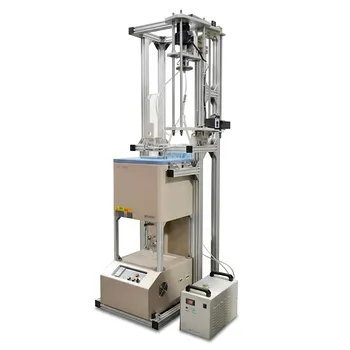
500C Vacuum Vertical Tube Furnace 84mm OD Sample Rotation Lifting System

1750°C High Temperature Benchtop Vacuum Atmosphere Tube Furnace with Kanthal Super 1800 Heating Elements and 60mm Alumina Processing Tube
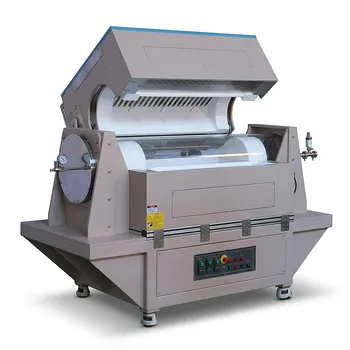
Three Zone Tube Furnace with 11 Inch or 15 Inch Quartz Tube and Hinged Flanges for Vacuum Atmosphere Heat Treatment
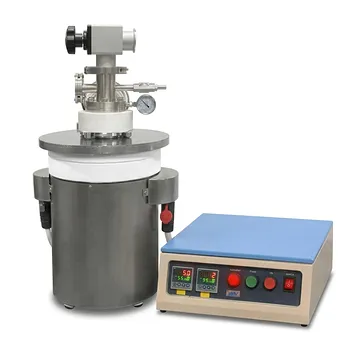
1100C High Temperature Vacuum Crucible Furnace with Quartz Chamber for Thermal Processing and Sintering
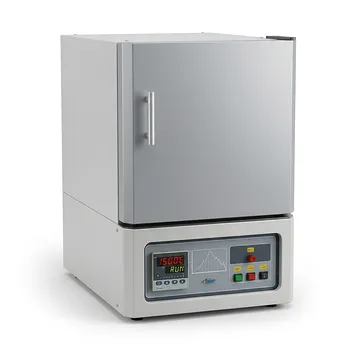
High Temperature 1500C Benchtop Muffle Furnace 3.6L Alumina Fiber Chamber Programmable Controller Sintering Annealing Carbonization Thermal Processing System
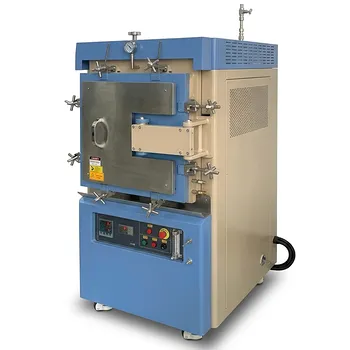
Atmosphere Controlled Muffle Furnace 1700C Maximum Temperature 80L High Capacity Vacuum Inert Gas Box Furnace

1200°C 5 Inch Vertical Quartz Tube Furnace with Stainless Steel Vacuum Flanges
High Temperature Three Zone Tube Furnace 1700C with Alumina Tube and Water Cooled Flanges
