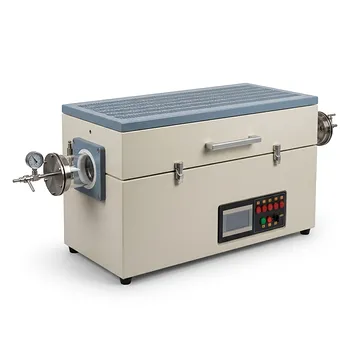
What is the function of an atmosphere tube furnace in RE-NiMo-PS@NF synthesis? Master Precise Thermal Processing.
Updated 3 months ago
The atmosphere tube furnace serves as the critical reactor for gas-solid phase transformation during the synthesis of RE-NiMo-PS@NF. It provides the precise thermal energy and inert nitrogen environment required to sublimate solid phosphorus and sulfur precursors into a gaseous state. This controlled environment ensures that these elements penetrate the metal crystal lattice uniformly, successfully modulating the multiphase phosphorus/sulfur heterostructures necessary for high-performance electrocatalysis.
Core Takeaway: The atmosphere tube furnace acts as both a thermal driver for precursor sublimation and a protective environment, enabling the precise chemical "tuning" of the catalyst's atomic structure without allowing unintended oxidation.
Driving Gas-Solid Phase Reactions
Sublimation of Precursors
The furnace provides the high-temperature environment necessary to drive the sublimation of sodium hypophosphite and sulfur powder. By heating these solid precursors, the furnace converts them into reactive vapors that can interact with the solid RE-NiMo nanorods.
Controlled Vapor Transport
Under a steady nitrogen flow, the furnace facilitates the transport of vaporized phosphorus and sulfur elements. This ensures a continuous and consistent supply of reactive species to the surface of the nickel foam substrate throughout the phosphidation and sulfidation stages.
Structural Modulation and Lattice Engineering
Uniform Lattice Penetration
Precise temperature control within the tube allows phosphorus and sulfur atoms to penetrate the crystal lattice of the RE-NiMo precursor. This atomic-level integration is essential for changing the electronic environment of the catalyst.
Heterostructure Formation
The furnace environment enables the modulation of multiphase phosphorus/sulfur heterostructures onto nanorod arrays. These complex interfaces between different phases are known to significantly enhance the catalytic activity of the material for water splitting or other electrochemical reactions.
Environmental Protection and Phase Purity
Prevention of Oxidation
By maintaining a strict inert gas protective environment, the furnace prevents the metallic nickel foam and RE-NiMo components from reacting with oxygen. This ensures the final catalyst maintains high metallic conductivity and the specific desired chemical phases.
Thermal Stability and Phase Evolution
The furnace provides a constant temperature zone that is critical for the phase transition from simple oxides or alloys to complex phosphides and sulfides. Consistent heating prevents the formation of "dead zones" or impure phases that would degrade catalyst performance.
Understanding the Trade-offs
Precursor Placement and Concentration
If precursors are not positioned correctly within the furnace's temperature zones, sublimation may be uneven. This can lead to inhomogeneous loading, where some parts of the nickel foam are over-phosphidized while others remain unreacted.
Temperature Ramping Risks
Heating the furnace too quickly can lead to structural collapse of the nanorod arrays or the formation of large, inactive crystals. Conversely, a temperature that is too low may fail to decompose precursors like sodium hypophosphite entirely, leaving behind impurities that block active sites.
Gas Flow Dynamics
The velocity of the nitrogen flow must be carefully balanced; too fast a flow may carry the reactant vapors out of the tube before they can react. Too slow a flow can result in a stagnant atmosphere, leading to localized saturation and inconsistent catalyst thickness.
Applying This to Your Catalyst Preparation
Recommendations for Optimal Synthesis
- If your primary focus is phase purity: Prioritize the calibration of the furnace's constant temperature zone to ensure the entire substrate experiences the exact reaction temperature.
- If your primary focus is uniform nanostructure: Optimize the nitrogen flow rate to ensure the vaporized P and S species are distributed evenly across the entire surface of the nickel foam.
- If your primary focus is high catalytic activity: Focus on the precise ratio of P and S precursors and their sublimation timing to maximize the density of heterostructure interfaces.
The atmosphere tube furnace is the indispensable tool that transforms simple precursors into a sophisticated, lattice-engineered electrocatalyst through the mastery of temperature and environment.
Summary Table:
| Furnace Function | Mechanism | Impact on Catalyst |
|---|---|---|
| Sublimation Drive | Heats solid P/S precursors into reactive vapors | Ensures continuous chemical supply for reactions |
| Atmosphere Control | Provides inert N₂ environment | Prevents oxidation; maintains high metallic conductivity |
| Vapor Transport | Regulated gas flow dynamics | Facilitates uniform loading on nickel foam substrates |
| Lattice Engineering | High-precision thermal energy | Enables uniform penetration and heterostructure formation |
Elevate Your Electrocatalyst Research with THERMUNITS
Precision is paramount in material science and industrial R&D. As a leading manufacturer of high-temperature laboratory equipment, THERMUNITS provides the advanced thermal processing solutions required for complex synthesis like phosphidation and sulfidation.
Whether you are developing RE-NiMo-PS@NF catalysts or exploring new energy materials, our comprehensive range of equipment—including Atmosphere Tube Furnaces, Vacuum & Muffle Furnaces, CVD/PECVD systems, and Rotary Kilns—offers the stability and control your research demands.
Ready to optimize your lab's performance? Contact our technical experts today to find the perfect furnace for your application.
References
- Yikun Cheng, Long Chen. Modulation of the multiphase phosphorus/sulfide heterogeneous interface via rare earth for solar‐enhanced water splitting at industrial‐level current densities. DOI: 10.1002/cnl2.157
Mentioned Products
- Vertical 1700C Vacuum and Atmosphere Tube Furnace with 80mm Alumina Tube
- 1200C Hybrid Muffle and Tube Furnace for Material Research with Dual Atmosphere Control Quartz Tubes
- 1200°C Atmosphere Controlled Automatic Bottom Loading Furnace with 6 Inch Quartz Tube
- Compact Hybrid Muffle and Tube Furnace for 1000C Controlled Atmosphere Laboratory Material Sintering
- Compact Vertical Split Quartz Tube Furnace with Stainless Steel Vacuum Flanges for Rapid Thermal Quenching and Controlled Atmosphere Material Processing
People Also Ask
- How is an industrial-grade vertical tube furnace utilized in smelting leaching residues? Enhance Metal Recovery Efficiency
- What is the function of a laboratory-grade vertical tube furnace in fast pyrolysis? Optimize Composite Research.
- How does a vertical tube furnace facilitate thermoelectric alloy melting? Precision synthesis for material homogeneity.
- Why is a thermocouple sensor indispensable for monitoring the vertical tube furnace during gallium oxide nanowire production? Optimize VLS Growth
- What are the advantages of using a vertical tube furnace for crucible experiments simulating steel-slag interactions?

Tech Team · ThermUnits
Last updated on Jun 02, 2026
Related Products

Vertical 1700C Vacuum and Atmosphere Tube Furnace with 80mm Alumina Tube
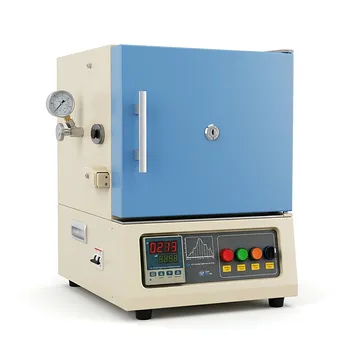
1200C Hybrid Muffle and Tube Furnace for Material Research with Dual Atmosphere Control Quartz Tubes
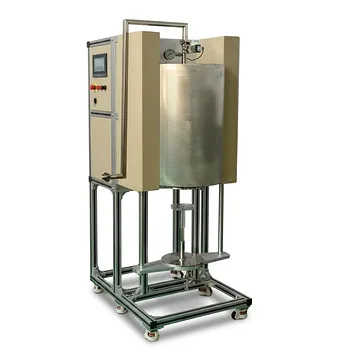
1200°C Atmosphere Controlled Automatic Bottom Loading Furnace with 6 Inch Quartz Tube
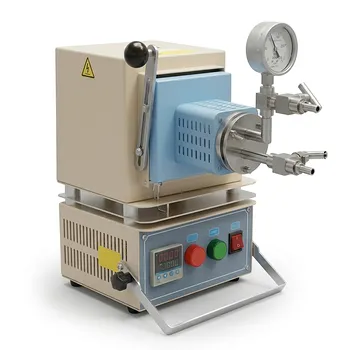
Compact Hybrid Muffle and Tube Furnace for 1000C Controlled Atmosphere Laboratory Material Sintering

Compact Vertical Split Quartz Tube Furnace with Stainless Steel Vacuum Flanges for Rapid Thermal Quenching and Controlled Atmosphere Material Processing
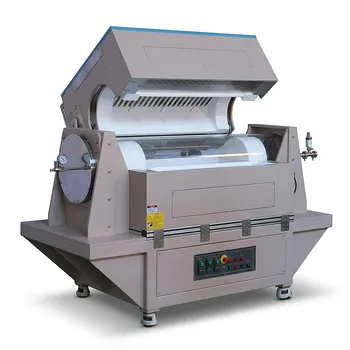
Three Zone Tube Furnace with 11 Inch or 15 Inch Quartz Tube and Hinged Flanges for Vacuum Atmosphere Heat Treatment
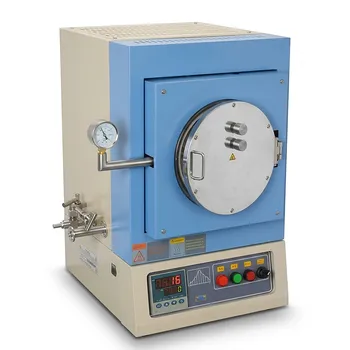
1100°C High Temperature Quartz Chamber Furnace 8 Inch OD with 7.6 Liter Capacity and Vacuum Atmosphere Capability
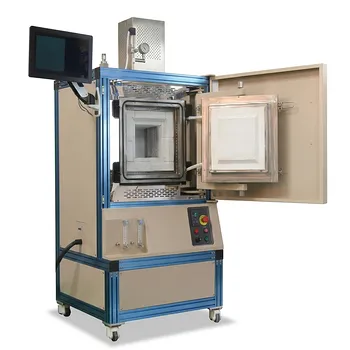
High Temperature Hydrogen Atmosphere Box Furnace 1650C Max Reducing Environment Material Synthesis System 8x8x8 Chamber

High Temperature 1700C Vertical Tube Furnace for Powder Spherification and Material Sintering

Compact High Temperature 1600C Tube Furnace with 50mm Alumina Tube and Vacuum Flanges for Material Sintering

High Temperature 1700C Tube Furnace with High Vacuum Turbomolecular Pump System and Multi Channel Mass Flow Controller Gas Mixer

High Temperature 1700C Six Zone Split Tube Furnace with Alumina Tube and Water Cooled Flanges

1800C High Temperature Compact Vacuum Tube Furnace with 60mm OD Alumina Tube and Kanthal MoSi2 Heating Elements

1100C Tube Furnace with Vacuum Flange and Programmable Temperature Controller for Material Science and Industrial Heat Treatment

High Temperature 1700C Benchtop Tube Furnace with 5 Inch Heating Zone High Purity Alumina Tube and Vacuum Sealing Flanges

1200C High Throughput Multi Channel Tube Furnace with 50mm Quartz Tubes for Annealing and Material Phase Diagram Research
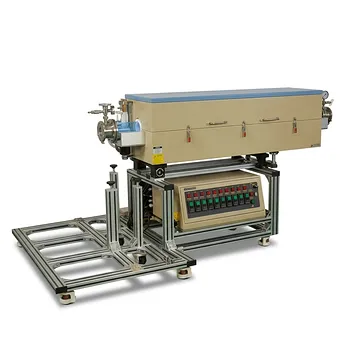
Ten Zone Multi Orientation Laboratory Tube Furnace for 1200C High Temperature Gradient Thermal Processing

High Temperature Automated 5 Inch Tube Furnace for Autonomous Material Research and Advanced Laboratory R&D

1700C Hydrogen Gas Tube Furnace with 60mm Alumina Process Tube and Integrated Hydrogen Safety Detector