What is the primary application of a Vacuum Tube Furnace in the post-processing of Nd-Fe-B magnets? PSA & GBD Explained
Updated 3 months ago
The primary application of a Vacuum Tube Furnace in the post-processing of Nd-Fe-B magnets is Post-Sintering Annealing (PSA). This essential heat treatment involves precisely controlling holding times and cooling rates at specific temperatures, such as 520 °C, to facilitate the redistribution of the neodymium-rich phase. This process results in the formation of thin, continuous grain boundary layers, which is a critical requirement for enhancing the coercivity of the magnet.
The Vacuum Tube Furnace serves as a controlled environment to optimize the microstructure of Nd-Fe-B magnets after they have been sintered. By managing the grain boundary phase and preventing oxidation, the furnace enables the magnet to reach its full potential for magnetic strength and stability.
Enhancing Magnetic Performance via PSA
Redistributing the Neodymium-Rich Phase
During the annealing process, the furnace provides the thermal energy necessary for the Nd-rich phase to flow and settle between the magnetic grains. This redistribution creates a more uniform and continuous layer at the grain boundaries.
Boosting Coercivity and Loop Squareness
A well-distributed grain boundary phase effectively "decouples" individual magnetic grains, preventing the spread of magnetic reversal. This structural refinement leads to a significant increase in coercivity and improves the squareness of the magnetic hysteresis loop.
Relieving Residual Stress
High-vacuum environments help release internal stresses that accumulate during previous manufacturing steps, such as hot deformation. Repairing these microstructural defects ensures the magnet maintains its performance under operational stress.
Advanced Grain Boundary Applications
Facilitating Grain Boundary Diffusion (GBD)
In the GBD process, the vacuum furnace creates a low-pressure environment (typically around 10^-2 mbar) that allows heavy rare earth elements to penetrate the magnet. The vacuum prevents the oxidation of these expensive coatings, allowing them to diffuse through the liquid grain boundary phase to increase coercivity without losing remanence.
Degassing and Hydrogen Management
Vacuum tube furnaces are also used to degas Nd-Fe-B powders at approximately 500 °C to stabilize the hydride state. By removing excess hydrogen under vacuum, the powder becomes more resistant to carbon impurities, preventing the formation of neodymium carbides that would otherwise degrade performance.
Controlled Crystallization of Amorphous Precursors
For specialized magnets, these furnaces trigger the controlled crystallization of amorphous matrices at temperatures between 973 K and 1023 K. This precise thermal control allows for the uniform precipitation of hard and soft magnetic phases, achieving nanoscale exchange coupling.
Understanding the Trade-offs
Vacuum Precision vs. Oxidation Risks
The primary trade-off in vacuum furnace operation is the requirement for extreme pressure control. While a high vacuum (exceeding 10^-5 mbar) is necessary to prevent oxidation and sample degradation, any leak or failure in the vacuum system at high temperatures can lead to the immediate loss of the entire batch.
Temperature Uniformity vs. Throughput
Maintaining a perfectly uniform temperature across a tube furnace is vital for consistent grain boundary redistribution. However, achieving this level of precision often requires smaller batch sizes or slower heating cycles, which can limit overall production throughput compared to atmospheric furnaces.
Applying This to Your Magnet Production
How to Apply This to Your Project
To determine the best use of a Vacuum Tube Furnace for your specific needs, consider your primary performance goal:
- If your primary focus is maximizing Coercivity: Utilize the furnace for Grain Boundary Diffusion (GBD) with heavy rare earth elements in a high-vacuum environment.
- If your primary focus is Recycling Scrap Magnets: Use the furnace at higher temperatures (approx. 750 °C) for demagnetization of crushed powders before chemical processing.
- If your primary focus is Microstructural Stability: Prioritize a Post-Sintering Annealing (PSA) cycle at 520 °C to ensure a continuous and thin Nd-rich grain boundary layer.
Selecting the correct vacuum level and temperature profile is the definitive factor in transforming a raw sintered block into a high-performance industrial magnet.
Summary Table:
| Application | Process Goal | Impact on Magnet Performance |
|---|---|---|
| Post-Sintering Annealing (PSA) | Redistribute Nd-rich phase at ~520°C | Increases coercivity and improves loop squareness. |
| Grain Boundary Diffusion (GBD) | Penetrate heavy rare earth elements | Enhances coercivity without losing remanence. |
| Degassing & Hydrogen Mgmt. | Remove hydrogen under high vacuum | Prevents neodymium carbides and stabilizes powder. |
| Stress Relief | Release internal manufacturing stress | Repairs defects to ensure stability under load. |
| Crystallization | Control amorphous matrix precipitation | Achieves nanoscale exchange coupling for specialists. |
Elevate Your Material Research with THERMUNITS High-Performance Furnaces
Precision is the defining factor in transforming raw sintered blocks into high-performance industrial magnets. THERMUNITS is a leading manufacturer of high-temperature laboratory equipment for material science and industrial R&D. We provide the advanced thermal processing solutions required for critical applications like PSA and Grain Boundary Diffusion.
Our comprehensive product range includes:
- Specialized Furnaces: Vacuum, Tube, Muffle, Atmosphere, Rotary, and Hot Press Furnaces.
- Advanced Systems: CVD/PECVD systems, Dental Furnaces, and Vacuum Induction Melting (VIM) furnaces.
- Industrial & Components: Electric rotary kilns and high-grade Thermal Elements.
Whether you are focusing on maximizing coercivity or stabilizing microstructures, our expert team is ready to help you select the ideal equipment for your specific needs.
Contact THERMUNITS Today for a Custom Solution
References
- Tomaž Tomše, Kristina Žužek. A Rapid Thermal‐Radiation‐Assisted Sintering Strategy for Nd–Fe–B‐Type Magnets. DOI: 10.1002/adem.202401404
Mentioned Products
- High Magnetic Field Tube Furnace with Triple Layer Vacuum Jacket and Non Magnetic SS316L Construction for Material Annealing
- 1200C Tube Furnace with Internal Magnetic Sample Sliding for Direct Vaporizing Deposition and Rapid Thermal Processing
- High Temperature Dual Zone Vacuum Tube Furnace for Material Research and CVD Processing
- Compact Vertical Split Quartz Tube Furnace with Stainless Steel Vacuum Flanges for Rapid Thermal Quenching and Controlled Atmosphere Material Processing
- High Magnetic Field Compatible Tube Furnace for 1100C Material Research with Controlled Atmosphere and Water Cooled Non Magnetic Case
People Also Ask

Tech Team · ThermUnits
Last updated on Jun 03, 2026
Related Products
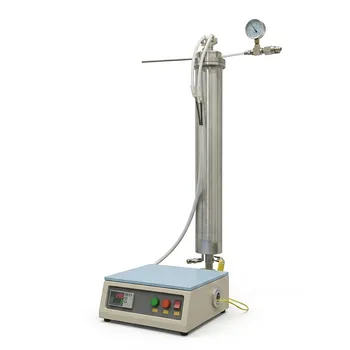
High Magnetic Field Tube Furnace with Triple Layer Vacuum Jacket and Non Magnetic SS316L Construction for Material Annealing
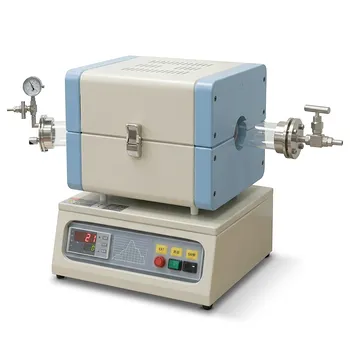
1200C Tube Furnace with Internal Magnetic Sample Sliding for Direct Vaporizing Deposition and Rapid Thermal Processing
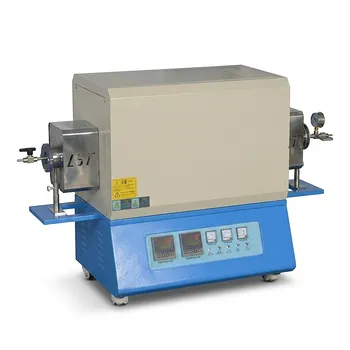
High Temperature Dual Zone Vacuum Tube Furnace for Material Research and CVD Processing

Compact Vertical Split Quartz Tube Furnace with Stainless Steel Vacuum Flanges for Rapid Thermal Quenching and Controlled Atmosphere Material Processing
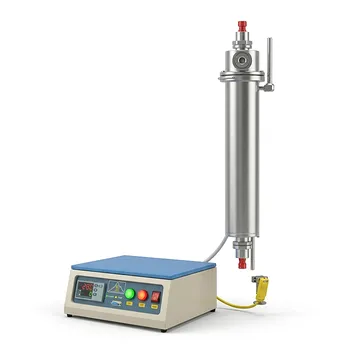
High Magnetic Field Compatible Tube Furnace for 1100C Material Research with Controlled Atmosphere and Water Cooled Non Magnetic Case
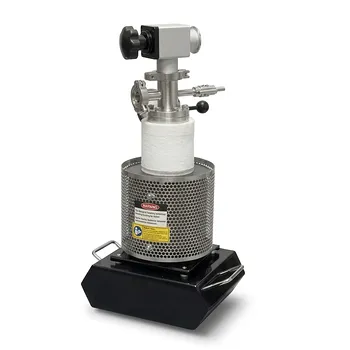
High Temperature 1100C Compact Top Loading Vertical Vacuum Tube Furnace for High Vacuum Noble Metal Melting and Material Research
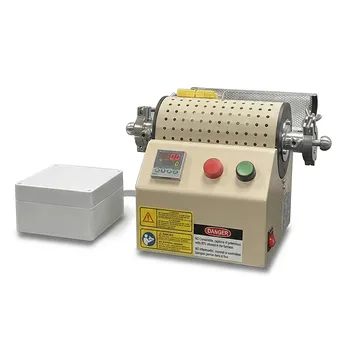
1000C Mini Tube Furnace with 20mm Quartz Tube and Vacuum Flanges for Material Science Research and Controlled Atmosphere Small Sample Processing
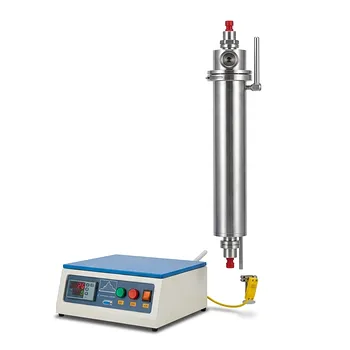
800C High Magnetic Field Compatible Tube Furnace 100mm ID 190mm OD Inert Atmosphere Research System
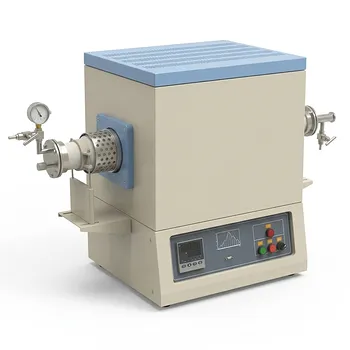
1750°C High Temperature Benchtop Vacuum Atmosphere Tube Furnace with Kanthal Super 1800 Heating Elements and 60mm Alumina Processing Tube
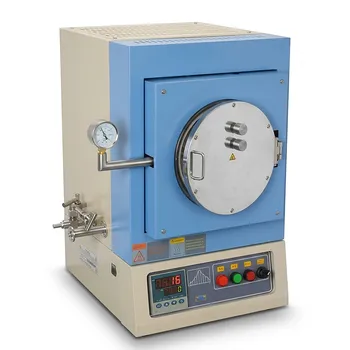
1100°C High Temperature Quartz Chamber Furnace 8 Inch OD with 7.6 Liter Capacity and Vacuum Atmosphere Capability

High Temperature Automated 5 Inch Tube Furnace for Autonomous Material Research and Advanced Laboratory R&D

1800C High Temperature Compact Vacuum Tube Furnace with 60mm OD Alumina Tube and Kanthal MoSi2 Heating Elements

Vertical 1700C Vacuum and Atmosphere Tube Furnace with 80mm Alumina Tube

1200°C 5 Inch Vertical Quartz Tube Furnace with Stainless Steel Vacuum Flanges
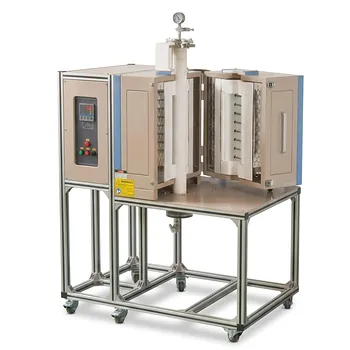
High Temperature 1700C Vertical Split Tube Furnace for Material Quenching and Single Crystal Growth

1100C Tube Furnace with Vacuum Flange and Programmable Temperature Controller for Material Science and Industrial Heat Treatment
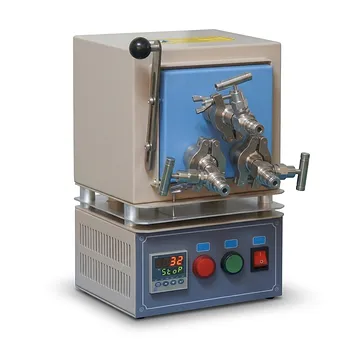
Triple Tube Compact Hybrid Muffle Furnace 1000C High Vacuum Thermal Processing System
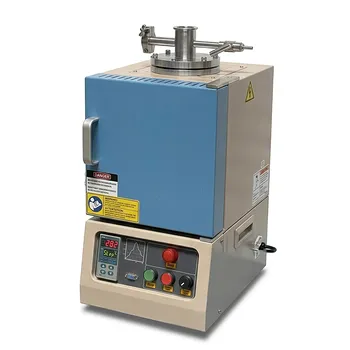
High Temperature Hybrid Muffle and Tube Furnace with Vacuum Capability and PID Control
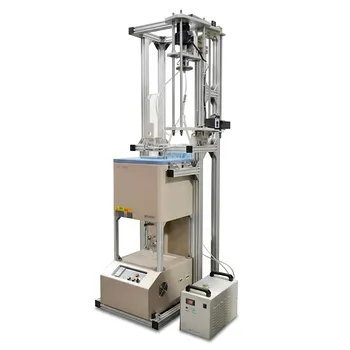
500C Vacuum Vertical Tube Furnace 84mm OD Sample Rotation Lifting System
