What is the primary function of a tube atmosphere furnace for VPO@CNFs? Precision Synthesis Guide
Updated 3 months ago
The tube atmosphere furnace is the critical catalyst for structural transformation in composite materials. It provides the strictly controlled thermal and chemical environment required to convert organic precursors into a conductive carbon nanofiber (CNF) scaffold. Simultaneously, it facilitates the in-situ crystallization of vanadium phosphate (VPO), ensuring the two components form stable chemical bonds and a layered mesoporous architecture essential for high-performance electrode materials.
The primary function of the tube atmosphere furnace is to manage the dual-phase transition of polymer precursors into conductive carbon scaffolds and vanadium salts into crystalline phosphates within a protected, oxygen-free environment. This precise control over temperature and atmosphere determines the final material's conductivity, structural integrity, and electrochemical stability.
The Role of Atmospheric Control in Carbonization
Preventing Oxidative Degradation
The furnace maintains a strict inert atmosphere, typically using nitrogen (N2) or argon, to create an oxygen-free environment. This protection is vital because carbon fibers and organic precursors will readily oxidize and vanish as CO2 at high temperatures if oxygen is present. By excluding oxygen, the furnace ensures high chemical stability and maximizes the yield of the final carbon framework.
Facilitating the Pyrolysis of Precursors
High temperatures, often exceeding 800°C, drive the elimination of non-carbon elements (like hydrogen and oxygen) from the polymer matrix. This process, known as pyrolysis, triggers the reorganization of carbon chains into a high-strength, conductive scaffold. The furnace provides the energy necessary to transform a soft polymer filler into a rigid, electronically active substrate.
Facilitating In-Situ Crystallization of VPO
Formation of Stable Chemical Bonds
As the carbon scaffold forms, the vanadium phosphate components undergo in-situ crystallization within the furnace. The controlled heat allows the VPO to bond chemically with the carbon substrate rather than merely sitting on the surface. These strong bonds are critical for maintaining the structural integrity of the electrode during repeated charging cycles.
Architecting Layered Mesoporous Structures
The furnace's ability to maintain constant temperatures allows for the deliberate growth of layered mesoporous structures. These pores provide a high surface area and pathways for ion transport, which significantly improves the cycling stability of the composite. Without precise temperature control, the material might collapse into a dense, non-porous mass with poor electrochemical properties.
Precision Thermal Management
Controlling Heating Curves and Rates
The tube furnace allows researchers to program specific heating curves, such as a slow ramp-up of 5°C per minute. Controlling the rate of temperature increase prevents structural defects that can occur if gases escape the material too violently during decomposition. This gradual heating ensures the specific morphology of the nanofibers is preserved throughout the transition.
Ensuring Phase Purity and Uniformity
Uniform airflow dynamics and temperature distribution within the furnace chamber are essential for producing a consistent product. Even slight variations in temperature can lead to impurities or uneven crystallization of the vanadium phosphate. High-quality tube furnaces ensure that every part of the composite membrane undergoes the same physicochemical transition.
Understanding the Trade-offs
Thermal Stress vs. Structural Integrity
While higher temperatures generally improve the conductivity of the carbon scaffold, they can also cause excessive grain growth in the VPO crystals. If crystals grow too large, they can bridge pores and reduce the active surface area of the electrode. Finding the balance between carbon maturity and crystal size is the primary challenge in furnace calibration.
Atmosphere Purity and Sealing Performance
The effectiveness of the carbonization process is entirely dependent on the sealing performance of the tube furnace. Even a minor leak can introduce trace oxygen, leading to the "pitting" of nanofibers and a significant drop in electrical conductivity. This makes the quality of the furnace gaskets and gas delivery systems as important as the heating elements themselves.
How to Apply This to Your Project
When utilizing a tube atmosphere furnace for VPO@CNF synthesis, your settings should be dictated by your specific performance requirements.
- If your primary focus is Maximum Conductivity: Prioritize higher carbonization temperatures and longer hold times to ensure the complete removal of non-carbon elements.
- If your primary focus is High Surface Area: Use slower heating rates (2-5°C/min) to allow for the controlled decomposition of pore-forming agents without collapsing the structure.
- If your primary focus is Phase Purity: Ensure the furnace is purged with inert gas for at least 30 minutes prior to heating to guarantee a completely oxygen-free environment.
By mastering the furnace's atmospheric and thermal controls, you can precisely engineer the interface between vanadium phosphate and carbon for optimal electrochemical performance.
Summary Table:
| Key Function | Role in VPO@CNF Synthesis | Impact on Final Material |
|---|---|---|
| Inert Atmosphere | Prevents oxidation of carbon precursors | High conductivity and carbon yield |
| Pyrolysis Control | Converts polymers into conductive scaffolds | Enhanced structural integrity |
| In-situ Crystallization | Facilitates VPO bonding with carbon | Superior cycling stability |
| Thermal Precision | Architects layered mesoporous structures | Optimized ion transport & surface area |
Elevate Your Material Research with THERMUNITS
Precision is paramount when synthesizing advanced VPO@CNFs composites. As a leading manufacturer of high-temperature laboratory equipment, THERMUNITS offers the specialized thermal solutions required for complex R&D and industrial material science.
Whether you need a high-precision Tube furnace for atmosphere-controlled carbonization, or other advanced systems like Vacuum, Muffle, Atmosphere, Rotary, or Hot Press furnaces, our equipment ensures the temperature uniformity and phase purity your research demands. We also provide CVD/PECVD systems, Vacuum Induction Melting (VIM) furnaces, and high-quality Thermal Elements tailored for heat treatment excellence.
Ready to optimize your carbonization and crystallization processes?
Contact THERMUNITS today to discuss your specific requirements and discover how our comprehensive thermal solutions can accelerate your project’s success.
References
- Muhammad Ramzan Abdul Karim, Y Haroon. Elucidating Electrochemical Energy Storage Performance of Unary, Binary, and Ternary Transition Metal Phosphates and their Composites with Carbonaceous Materials for Supercapacitor Applications. DOI: 10.33961/jecst.2024.00024
Mentioned Products
- 1750°C High Temperature Benchtop Vacuum Atmosphere Tube Furnace with Kanthal Super 1800 Heating Elements and 60mm Alumina Processing Tube
- Vertical 1700C Vacuum and Atmosphere Tube Furnace with 80mm Alumina Tube
- 1200C Hybrid Muffle and Tube Furnace for Material Research with Dual Atmosphere Control Quartz Tubes
- Compact Hybrid Muffle and Tube Furnace for 1000C Controlled Atmosphere Laboratory Material Sintering
- Compact Vertical Split Quartz Tube Furnace with Stainless Steel Vacuum Flanges for Rapid Thermal Quenching and Controlled Atmosphere Material Processing
People Also Ask
- What core functions does a high-temperature vacuum tube furnace provide? Optimize np-CuSn Sintering & Joint Integrity
- What is the role of a high-temperature tube furnace in the calcination process of ZnO/In2O3 nanocomposites?
- What role does a high-temperature tube furnace play in the sulfidation heat treatment of CoS@C/MXene nanocomposites? Guide
- Why is a high-temperature tube furnace required for CuAlO2 heat treatment? Master Phase Transformation Today
- What role does a high-temperature tube furnace play in executing nitrogen absorption kinetic experiments? Expert Insights

Tech Team · ThermUnits
Last updated on Jun 02, 2026
Related Products

1750°C High Temperature Benchtop Vacuum Atmosphere Tube Furnace with Kanthal Super 1800 Heating Elements and 60mm Alumina Processing Tube

Vertical 1700C Vacuum and Atmosphere Tube Furnace with 80mm Alumina Tube
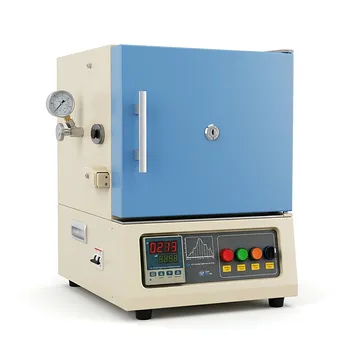
1200C Hybrid Muffle and Tube Furnace for Material Research with Dual Atmosphere Control Quartz Tubes
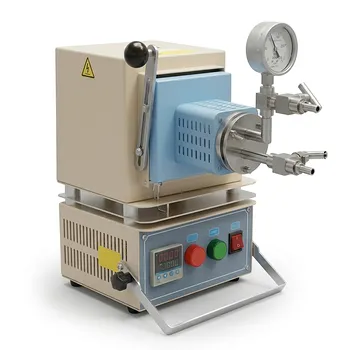
Compact Hybrid Muffle and Tube Furnace for 1000C Controlled Atmosphere Laboratory Material Sintering

Compact Vertical Split Quartz Tube Furnace with Stainless Steel Vacuum Flanges for Rapid Thermal Quenching and Controlled Atmosphere Material Processing
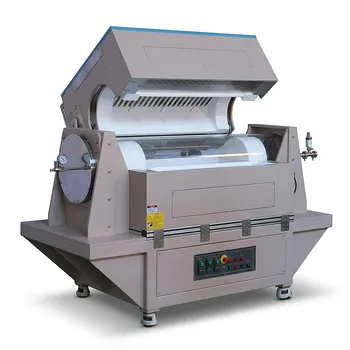
Three Zone Tube Furnace with 11 Inch or 15 Inch Quartz Tube and Hinged Flanges for Vacuum Atmosphere Heat Treatment
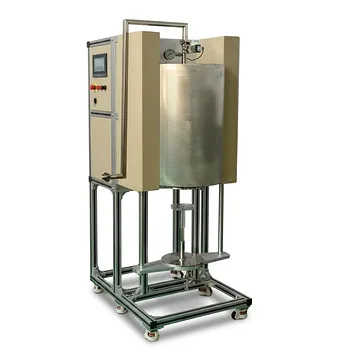
1200°C Atmosphere Controlled Automatic Bottom Loading Furnace with 6 Inch Quartz Tube
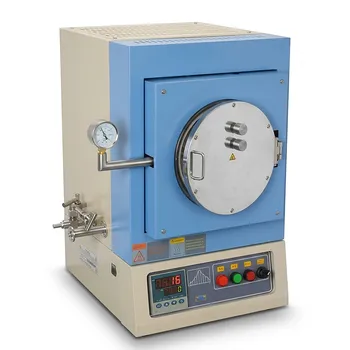
1100°C High Temperature Quartz Chamber Furnace 8 Inch OD with 7.6 Liter Capacity and Vacuum Atmosphere Capability
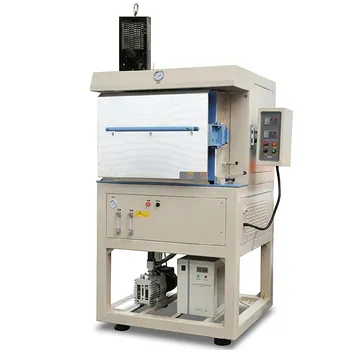
1200C Hydrogen Atmosphere Box Furnace with 5 Heated Sides and 64L Chamber
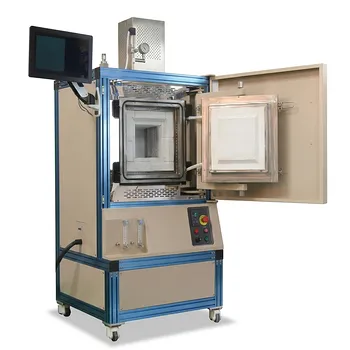
High Temperature Hydrogen Atmosphere Box Furnace 1650C Max Reducing Environment Material Synthesis System 8x8x8 Chamber
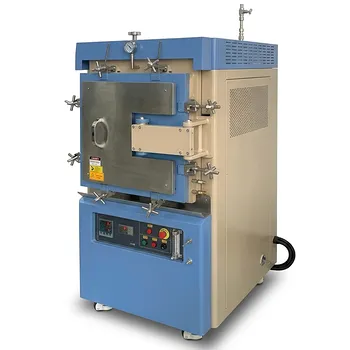
Atmosphere Controlled Muffle Furnace 1700C Maximum Temperature 80L High Capacity Vacuum Inert Gas Box Furnace

High Temperature 1700C Vertical Tube Furnace for Powder Spherification and Material Sintering

High Temperature 1700C Six Zone Split Tube Furnace with Alumina Tube and Water Cooled Flanges
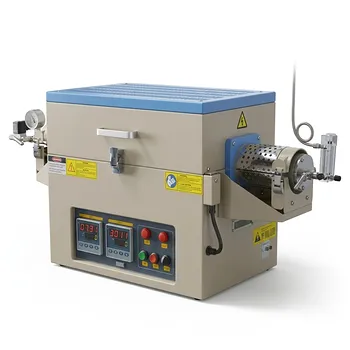
1100C Dual Zone Hydrogen Gas Tube Furnace with Quartz Tube and Integrated H2 Leak Detection System

High Temperature 1700C Tube Furnace with High Vacuum Turbomolecular Pump System and Multi Channel Mass Flow Controller Gas Mixer

1800C High Temperature Compact Vacuum Tube Furnace with 60mm OD Alumina Tube and Kanthal MoSi2 Heating Elements
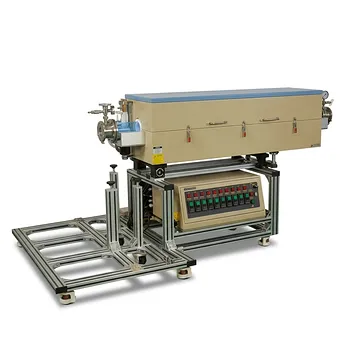
Ten Zone Multi Orientation Laboratory Tube Furnace for 1200C High Temperature Gradient Thermal Processing
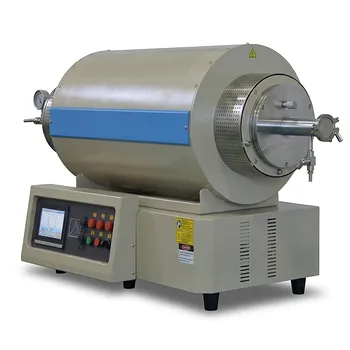
1200C Max Three Zone Tube Furnace 6 Inch OD Max with Tube and Flange

High Temperature 1700C Benchtop Tube Furnace with 5 Inch Heating Zone High Purity Alumina Tube and Vacuum Sealing Flanges
