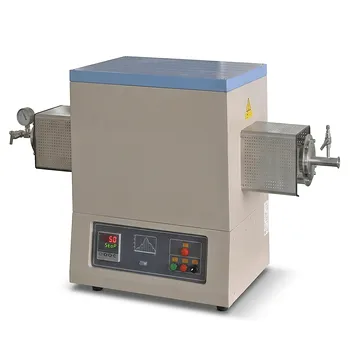
Function of 1000°C Furnaces for Fe-Pd Alloy Annealing: Achieving Perfect Homogeneity
Updated 3 months ago
The primary function of an industrial-grade high-temperature furnace during Fe-Pd alloy annealing is to maintain a constant 1000°C thermal environment for a 24-hour duration. This sustained heat provides the necessary energy to promote long-range atomic diffusion, which is essential for eliminating compositional segregation introduced during the melting process. By ensuring thermodynamic consistency, the furnace allows the material to achieve a uniform state and facilitates complete recrystallization, effectively removing work hardening.
Core Takeaway: The furnace acts as a controlled thermal reactor that uses precise, long-term heat to resolve chemical imbalances and structural stresses. This process establishes a homogenous microstructural foundation, which is a non-negotiable prerequisite for observing subsequent ordering phase transformations in the alloy.
Driving Microstructural Homogeneity through Diffusion
Facilitating Long-Range Atomic Movement
The furnace provides the thermal activation energy required for atoms within the Fe-Pd alloy to migrate over significant distances. This long-range diffusion is the mechanism that allows elements to redistribute themselves evenly throughout the material's crystalline lattice.
Eliminating Compositional Segregation
During the initial melting and casting of alloys, elements often "clump" or separate, a phenomenon known as segregation. The 1000°C environment forces these concentrated regions to dissolve, ensuring the chemical composition is identical across every region of the ingot.
Achieving Thermodynamic Consistency
By holding the alloy at a high, stable temperature for 24 hours, the furnace brings the material to a state of thermodynamic equilibrium. This consistency is vital for the material's performance, as it ensures the alloy reacts predictably to future thermal or mechanical stresses.
Managing Structural Integrity and Future Processing
Inducing Complete Recrystallization
For Fe-Pd alloys that have undergone cold rolling, the furnace plays a critical role in inducing recrystallization. The heat allows new, strain-free grains to form and grow, which replaces the distorted grain structure caused by mechanical deformation.
Elimination of Work Hardening
The recrystallization process effectively "resets" the material's mechanical properties by eliminating work hardening. This softens the alloy, making it more stable and preventing brittle failure during subsequent handling or testing.
Preparing for Phase Transformations
A successful 1000°C homogenization creates the "blank slate" necessary for researchers and engineers. Without this uniform starting point, it would be impossible to precisely observe or control how the alloy's atoms order themselves during later, lower-temperature phase transformations.
Understanding the Trade-offs and Technical Challenges
Temperature Uniformity vs. Energy Consumption
Maintaining a massive industrial furnace at exactly 1000°C for 24 hours requires significant energy and sophisticated control systems. Any fluctuation in temperature can lead to "under-diffused" zones, which compromises the integrity of the entire batch.
Risk of Excessive Grain Growth
While long soaking times are necessary to eliminate segregation, staying at high temperatures for too long can lead to undesirable grain coarsening. If grains grow too large, the mechanical strength of the alloy may decrease, highlighting the need for precise timing and temperature control.
Atmosphere Control and Surface Oxidation
At 1000°C, many alloys are highly susceptible to oxidation or contamination from the ambient air. Depending on the furnace type, engineers must often use vacuum environments or inert gases (like argon) to protect the surface of the Fe-Pd alloy from degrading during the long treatment.
Applying Heat Treatment Strategies to Your Goals
To achieve the best results with high-temperature homogenization, your approach should be dictated by your specific material requirements:
- If your primary focus is eliminating chemical defects: Prioritize the duration of the soak (e.g., the full 24 hours) to ensure that even the most stubborn dendritic segregation is fully dissolved.
- If your primary focus is subsequent mechanical forming: Ensure the furnace temperature is high enough to trigger complete recrystallization, which restores the plasticity needed for forging or rolling.
- If your primary focus is phase transformation research: Focus on temperature stability and uniformity across the heating zone to ensure the entire sample has the same thermodynamic starting point.
Precise thermal control is the bridge between a raw, segregated ingot and a high-performance engineered material.
Summary Table:
| Key Function | Benefit for Fe-Pd Alloys | Technical Outcome |
|---|---|---|
| Atomic Diffusion | Eliminates Compositional Segregation | Ensures chemical uniformity across the ingot |
| Recrystallization | Removes Work Hardening | Resets mechanical properties for future processing |
| Thermodynamic Stability | Consistent Microstructure | Creates a "blank slate" for phase transformations |
| Atmosphere Control | Prevents Surface Oxidation | Protects alloy integrity at high temperatures |
Elevate Your Material Research with THERMUNITS
Precision is non-negotiable when performing 1000°C homogenization on advanced alloys like Fe-Pd. THERMUNITS provides the industrial-grade thermal stability and atmosphere control required to eliminate segregation and achieve perfect recrystallization.
As a leading manufacturer of high-temperature laboratory equipment, we offer a comprehensive range of solutions including Muffle, Vacuum, Atmosphere, Tube, and Rotary furnaces, as well as CVD/PECVD systems and VIM furnaces. Our equipment is engineered for material science and industrial R&D, ensuring your heat treatment processes are consistent, reliable, and scalable.
Ready to optimize your thermal processing? Contact our engineering team today to discuss the ideal furnace configuration for your specific research goals!
References
- Adrian Savovici, Jerrold A. Floro. Ordered-Phase Equilibria in the Eutectoid Region of Bulk Fe-Pd. DOI: 10.1007/s11661-024-07577-4
Mentioned Products
- 1200C Five Side Heating Muffle Furnace with Sliding Door 125L Volume High Temperature Heat Treatment System for Large Scale Sintering and Annealing
- High Temperature Muffle Furnace with Alloy Chamber for Debinding and Sintering Applications
- High Temperature 1700C Bench Top Muffle Furnace with Alumina Fiber Insulation and 3.6L Chamber Capacity for Precision Sintering and Heat Treatment
- High Temperature 1500C Benchtop Muffle Furnace 3.6L Alumina Fiber Chamber Programmable Controller Sintering Annealing Carbonization Thermal Processing System
- Vertical Hybrid High Temperature Furnace 1500C Alumina Tube SOFC Fuel Cell Testing Laboratory Heat Treatment Research Equipment
People Also Ask
- What is the role of the muffle furnace in h-BN precursor preparation? Optimize Morphology and Chemical Purity.
- How does the heating mechanism of a muffle furnace differ from that of an open-flame furnace? Indirect vs Direct Heat
- Why is the muffle design advantageous for the production of ceramics and glass? Ensure Purity and Structural Integrity
- What are the benefits of using muffle furnaces in pharmaceutical and biomedical applications? Maximize Purity & Compliance
- What are the typical operating temperature ranges for standard and advanced muffle furnaces? Expert Temperature Guide.

Tech Team · ThermUnits
Last updated on Jun 03, 2026
Related Products
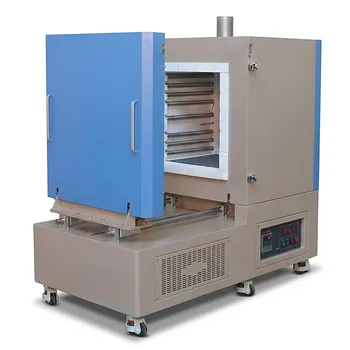
1200C Five Side Heating Muffle Furnace with Sliding Door 125L Volume High Temperature Heat Treatment System for Large Scale Sintering and Annealing
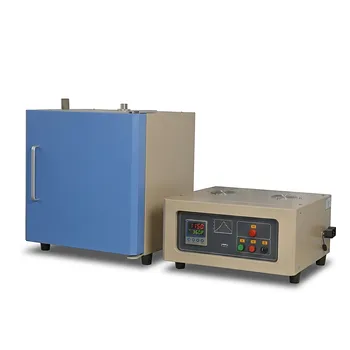
High Temperature Muffle Furnace with Alloy Chamber for Debinding and Sintering Applications
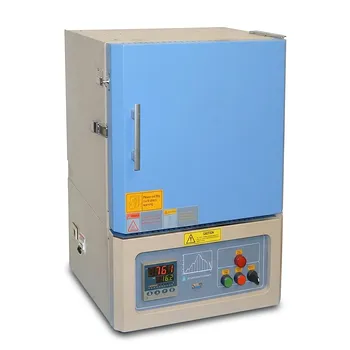
High Temperature 1700C Bench Top Muffle Furnace with Alumina Fiber Insulation and 3.6L Chamber Capacity for Precision Sintering and Heat Treatment
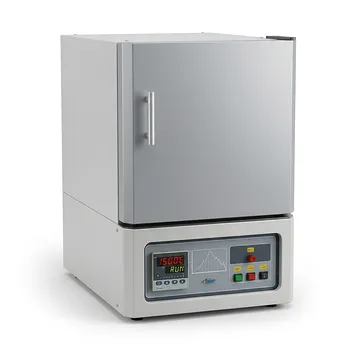
High Temperature 1500C Benchtop Muffle Furnace 3.6L Alumina Fiber Chamber Programmable Controller Sintering Annealing Carbonization Thermal Processing System
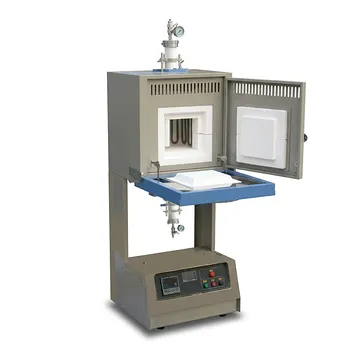
Vertical Hybrid High Temperature Furnace 1500C Alumina Tube SOFC Fuel Cell Testing Laboratory Heat Treatment Research Equipment
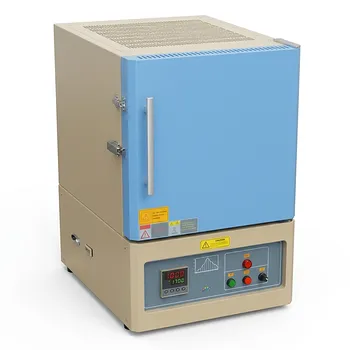
Large Bench Top 1700C High Temperature Muffle Furnace with 19L Chamber for Advanced Material Sintering and Annealing
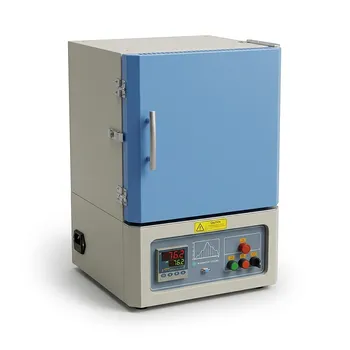
1750C Bench Top Muffle Furnace 3.6L High Grade Molybdenum Disilicide Heating Elements Laboratory Heat Treatment Equipment
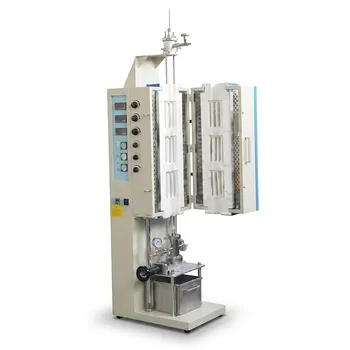
High Temperature Dual Zone Tube Furnace for Material Science Research and Professional Thermal Processing

High Temperature Tube Furnace 1500C with Sliding Flanges and 50mm OD for Rapid Thermal Processing Fast Heating and Cooling
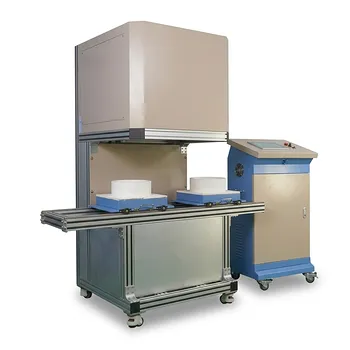
High Temperature Bottom Loading Vertical Furnace 1700C Dual Stage Sample Processing System 18L Large Capacity Thermal Treatment Equipment
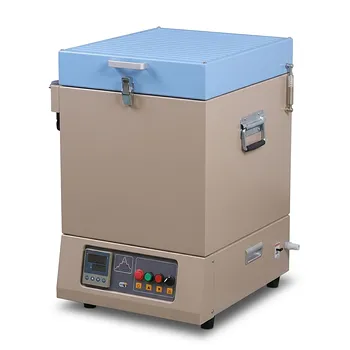
High Temperature Vertical Crucible Furnace with 22L Heating Chamber and 1200C Maximum Temperature
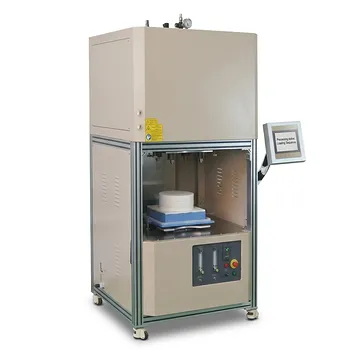
High Temperature Vertical Atmosphere Controlled Furnace with Automatic Bottom Loading and 1700°C Capacity for Advanced Material Research

High Temperature 1700C Benchtop Tube Furnace with 5 Inch Heating Zone High Purity Alumina Tube and Vacuum Sealing Flanges
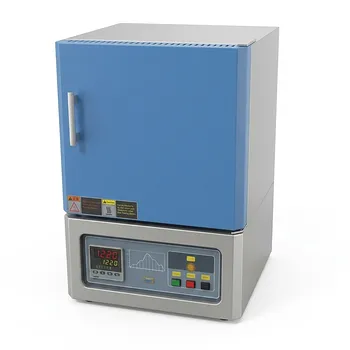
High Temperature Benchtop Muffle Furnace 1700C 10L Chamber Alumina Fiber Insulation MoSi2 Heating Elements
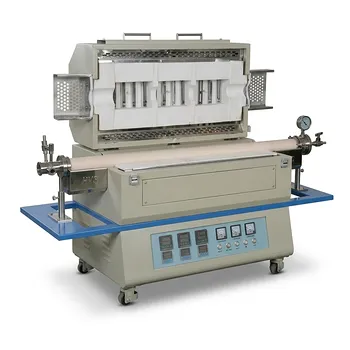
Three Temperature Zone Fast Heating Furnace 1500C Laboratory High Precision Thermal Processing System
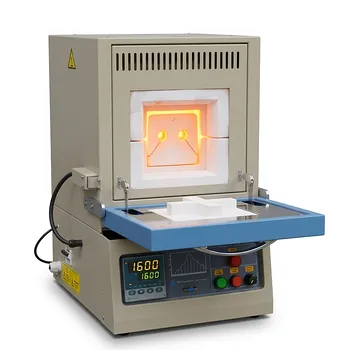
High Temperature Compact Muffle Furnace 1700 C with 30 Segment Programmable Controller and 1.7L Cubic Chamber

High Temperature 1700C Tube Furnace with High Vacuum Turbomolecular Pump System and Multi Channel Mass Flow Controller Gas Mixer
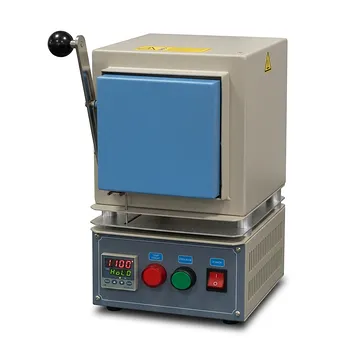
Compact 1100C Muffle Furnace with Programmable Temperature Control and High Purity Alumina Insulation for Material Research
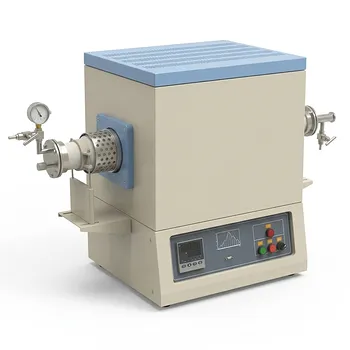
1750°C High Temperature Benchtop Vacuum Atmosphere Tube Furnace with Kanthal Super 1800 Heating Elements and 60mm Alumina Processing Tube