What is the purpose of Ar/H2 annealing? Enhancing Pt-Co3O4 Catalytic Performance via Precision EMSI Tuning
Updated 3 months ago
The primary purpose of Ar/H2 annealing for Pt-Co3O4 catalysts is to optimize the Electronic Metal-Support Interaction (EMSI) between the platinum and the cobalt oxide. This specific thermal treatment at 450°C induces a controlled migration of electrons from the Co3O4 carrier to the Pt nanoparticles. By doing so, it fine-tunes the catalyst’s electronic structure to optimize hydrogen adsorption energy and accelerate charge transfer kinetics.
This annealing process acts as a precision "electronic tuning" step, transforming a simple metal-on-oxide structure into a high-performance synergistic system. It ensures the platinum active sites are electronically primed for maximum catalytic efficiency while maintaining the structural integrity of the support.
Engineering the Electronic Interface
The Role of Electronic Metal-Support Interaction (EMSI)
The interaction between the platinum nanoparticles and the cobalt oxide support is the primary driver of catalytic activity. EMSI dictates how strongly the catalyst binds to reactants and how easily it releases products.
Annealing provides the required thermal energy to establish this bond, ensuring the platinum is not just physically resting on the support but is chemically integrated with it. This interaction is critical for achieving the high stability required during rigorous catalytic cycles.
Inducing Electron Migration
During the 450°C treatment, electrons migrate from the cobalt oxide interface toward the platinum nanoparticles. This shift modifies the d-band center of the platinum, which directly influences its chemical reactivity.
This redistribution of charge prevents the platinum from being too "sticky" or too inert toward hydrogen molecules. By balancing this charge, the catalyst achieves an ideal state for efficient bond breaking and forming.
The Necessity of an Atmosphere-Protected Environment
Excluding Atmospheric Interference
A tube furnace provides a sealed environment that is essential for excluding oxygen and moisture from the reaction zone. Without atmosphere protection, high-temperature treatment would cause uncontrolled oxidation of the cobalt oxide or the platinum itself.
Precise control allows the use of high-flow Argon (Ar) to purge the system before the reaction begins. This ensures that any chemical changes observed are the result of the intended H2 interaction rather than external "corrosion" from the air.
In-Situ Reduction of Metal Precursors
The 5% H2 mixture serves as a mild reducing agent that converts platinum precursors into metallic nanoparticles. This in-situ reduction ensures that the active metal centers are formed in direct contact with the support.
Because the reduction happens during the annealing phase, the resulting nanoparticles often exhibit better dispersion and stronger attachment to the Co3O4. This prevents the metal from leaching or aggregating into larger, less active clumps.
Impact on Catalytic Kinetics
Optimizing Hydrogen Adsorption Energy
The ultimate goal of adjusting the electronic structure is to find the "Goldilocks" zone for hydrogen adsorption energy. If the bond is too weak, the reaction cannot start; if it is too strong, the product cannot leave the surface.
The Ar/H2 treatment ensures that the platinum surface has the exact electronic density required to facilitate rapid hydrogen turnover. This is vital for applications where hydrogen evolution or oxidation is the primary reaction.
Enhancing Charge Transfer Kinetics
Efficient catalysts must move electrons quickly between the active site and the support. The thermal treatment reduces interfacial resistance by creating a more seamless electronic bridge between the Pt and Co3O4.
This enhancement in charge transfer kinetics allows the catalyst to operate at lower overpotentials. Consequently, the energy efficiency of the overall chemical process is significantly improved.
Understanding the Trade-offs and Risks
Risks of Over-Reduction
While a reducing atmosphere is necessary, excessive H2 concentration or higher temperatures can lead to the over-reduction of the Co3O4 support. If the cobalt oxide is reduced to metallic cobalt, the specific EMSI effect is lost, and the catalyst may lose its selectivity.
Sintering and Surface Area Loss
High-temperature annealing always carries the risk of sintering, where nanoparticles merge to reduce surface energy. If the temperature exceeds the stable threshold for the Pt-Co3O4 system, the total active surface area will decrease, negating the benefits of the improved electronic structure.
Precision of the Gas Mixture
The ratio of Ar to H2 must be strictly maintained to ensure a uniform reducing environment. Inconsistent gas flow or temperature fluctuations within the tube furnace can lead to "hot spots" where the catalyst properties vary across the batch, resulting in unreliable performance.
How to Apply This to Your Synthesis
Making the Right Choice for Your Goal
- If your primary focus is maximizing turnover frequency: Prioritize the 450°C Ar/H2 treatment to ensure the d-band center of the Pt is perfectly aligned for hydrogen adsorption.
- If your primary focus is long-term catalyst stability: Focus on the "atmosphere protection" phase to ensure no unwanted oxide layers form at the interface during the heating ramp.
- If your primary focus is preventing metal aggregation: Use a consistent, low-concentration H2 mixture (such as 5%) to slow the reduction process and promote smaller nanoparticle formation.
By mastering the balance of temperature and atmosphere, you can precisely engineer the interface of the Pt-Co3O4 catalyst for peak electronic performance.
Summary Table:
| Process Component | Role in Pt-Co3O4 Synthesis | Primary Benefit |
|---|---|---|
| Ar/H2 Atmosphere | In-situ reduction of Pt precursors | Uniform metal dispersion & strong bonding |
| 450°C Annealing | Establishes Electronic Metal-Support Interaction (EMSI) | Optimizes bond breaking/forming energy |
| Electron Migration | Shift from Co3O4 carrier to Pt nanoparticles | Fine-tuned d-band center for faster reactions |
| Atmosphere Protection | Excludes oxygen and moisture | Prevents unwanted oxidation and sintering |
Elevate Your Material Research with THERMUNITS Precision Furnaces
Precise control over atmosphere and temperature is critical for mastering Electronic Metal-Support Interaction (EMSI) in advanced catalysts. As a leading manufacturer of high-temperature laboratory equipment, THERMUNITS provides the stability and uniformity required for sensitive treatments like Ar/H2 annealing.
Whether you are scaling up industrial R&D or conducting fundamental material science research, our comprehensive range of thermal solutions—including Atmosphere-Protected Tube Furnaces, Vacuum Furnaces, CVD/PECVD systems, and Rotary Kilns—ensures your synthesis is reproducible and optimized for peak performance.
Unlock superior catalytic efficiency today.
Contact our engineering team to find the perfect thermal solution for your lab.
References
- Peijia Wang, Junlei Qi. Rational Construction of Pt Incorporated Co3O4 as High-Performance Electrocatalyst for Hydrogen Evolution Reaction. DOI: 10.3390/nano14110898
Mentioned Products
- 1750°C High Temperature Benchtop Vacuum Atmosphere Tube Furnace with Kanthal Super 1800 Heating Elements and 60mm Alumina Processing Tube
- Vertical 1700C Vacuum and Atmosphere Tube Furnace with 80mm Alumina Tube
- 1200°C Atmosphere Controlled Automatic Bottom Loading Furnace with 6 Inch Quartz Tube
- 1200C Hybrid Muffle and Tube Furnace for Material Research with Dual Atmosphere Control Quartz Tubes
- Compact Hybrid Muffle and Tube Furnace for 1000C Controlled Atmosphere Laboratory Material Sintering
People Also Ask
- What core functions does a high-temperature vacuum tube furnace provide? Optimize np-CuSn Sintering & Joint Integrity
- What is the role of a high-temperature tube furnace in the calcination process of ZnO/In2O3 nanocomposites?
- What role does a high-temperature tube furnace play in the sulfidation heat treatment of CoS@C/MXene nanocomposites? Guide
- Why is a high-temperature tube furnace required for CuAlO2 heat treatment? Master Phase Transformation Today
- What role does a high-temperature tube furnace play in executing nitrogen absorption kinetic experiments? Expert Insights

Tech Team · ThermUnits
Last updated on Jun 02, 2026
Related Products
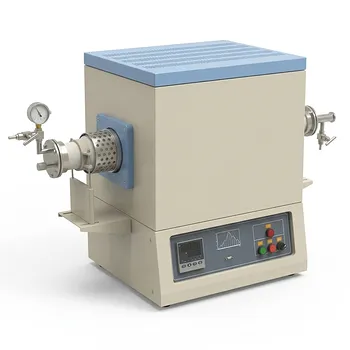
1750°C High Temperature Benchtop Vacuum Atmosphere Tube Furnace with Kanthal Super 1800 Heating Elements and 60mm Alumina Processing Tube

Vertical 1700C Vacuum and Atmosphere Tube Furnace with 80mm Alumina Tube
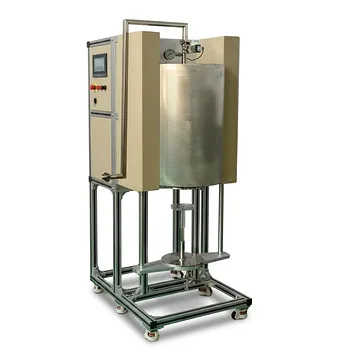
1200°C Atmosphere Controlled Automatic Bottom Loading Furnace with 6 Inch Quartz Tube
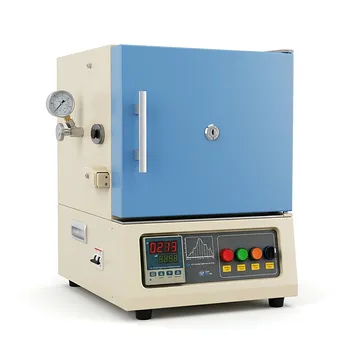
1200C Hybrid Muffle and Tube Furnace for Material Research with Dual Atmosphere Control Quartz Tubes
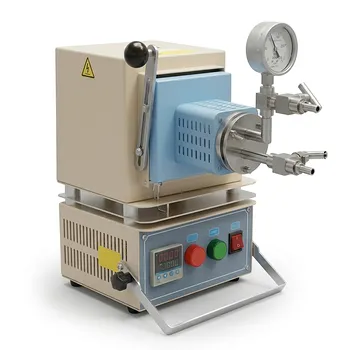
Compact Hybrid Muffle and Tube Furnace for 1000C Controlled Atmosphere Laboratory Material Sintering

Three Zone Tube Furnace with 11 Inch or 15 Inch Quartz Tube and Hinged Flanges for Vacuum Atmosphere Heat Treatment
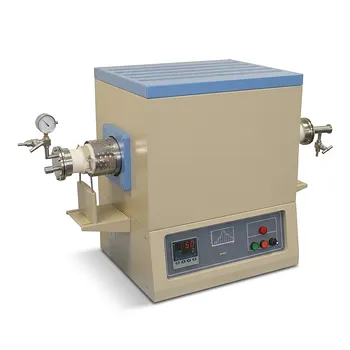
1700C High Temperature Alumina Tube Furnace with 18 Inch Heated Zone and Vacuum Sealing Flanges
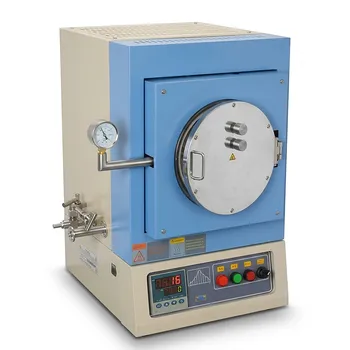
1100°C High Temperature Quartz Chamber Furnace 8 Inch OD with 7.6 Liter Capacity and Vacuum Atmosphere Capability

High Temperature 1700C Vertical Tube Furnace for Powder Spherification and Material Sintering

Compact High Temperature 1600C Tube Furnace with 50mm Alumina Tube and Vacuum Flanges for Material Sintering

High Temperature 1700C Six Zone Split Tube Furnace with Alumina Tube and Water Cooled Flanges
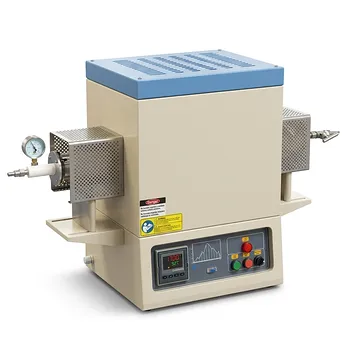
High Temperature Three Zone Tube Furnace 1700C with Alumina Tube and Water Cooled Flanges

1800C High Temperature Compact Vacuum Tube Furnace with 60mm OD Alumina Tube and Kanthal MoSi2 Heating Elements

1200C High Throughput Multi Channel Tube Furnace with 50mm Quartz Tubes for Annealing and Material Phase Diagram Research

High Temperature 1700C Tube Furnace with High Vacuum Turbomolecular Pump System and Multi Channel Mass Flow Controller Gas Mixer

1100C Tube Furnace with Vacuum Flange and Programmable Temperature Controller for Material Science and Industrial Heat Treatment
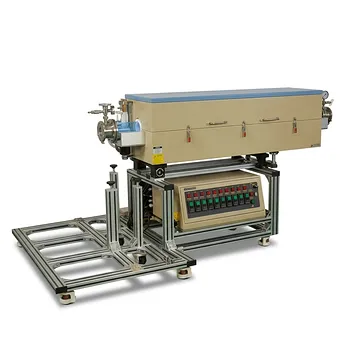
Ten Zone Multi Orientation Laboratory Tube Furnace for 1200C High Temperature Gradient Thermal Processing

1700C Hydrogen Gas Tube Furnace with 60mm Alumina Process Tube and Integrated Hydrogen Safety Detector

High Temperature 1700C Benchtop Tube Furnace with 5 Inch Heating Zone High Purity Alumina Tube and Vacuum Sealing Flanges
