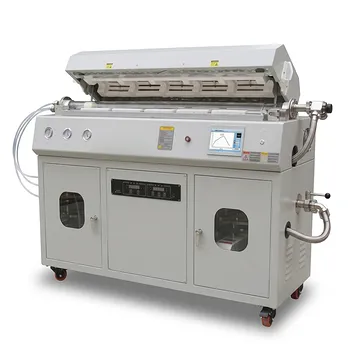
What is the purpose of using dual-frequency RF power in advanced PECVD systems? - Optimize Film Stress
Updated 5 months ago
Dual-frequency RF power provides the critical ability to decouple plasma generation from ion bombardment. In advanced Plasma-Enhanced Chemical Vapor Deposition (PECVD), this involves applying two distinct frequencies—typically 13.56 MHz and 100–400 kHz—to the reaction chamber. This configuration allows engineers to independently tune a film's physical and chemical properties without compromising the deposition rate.
The primary purpose of dual-frequency PECVD is to achieve independent control over plasma density and ion energy. This enables precise tuning of film characteristics like internal stress and chemical composition, which is impossible with a single-frequency source.
The Mechanics of Independent Control
High-Frequency (HF) and Plasma Density
The high-frequency source, usually operating at 13.56 MHz, is primarily responsible for the dissociation of precursor gases. It creates a high density of reactive radicals, which directly governs the deposition rate of the film.
Low-Frequency (LF) and Ion Energy
The low-frequency source, typically between 100 and 400 kHz, has a longer period that allows ions to respond to the oscillating electric field. This gives ions significantly more kinetic energy, allowing for controlled bombardment of the film surface as it grows.
Decoupling the Process Variables
In a single-frequency system, increasing power increases both density and ion energy simultaneously. Dual-frequency systems break this link, allowing for high-density plasma with low-energy ions, or vice versa, depending on the application.
Tuning Thin-Film Properties
Managing Mechanical Stress
Ion bombardment from the LF source physically "tamps" the depositing atoms, increasing the film's density. By adjusting the ratio of LF to HF power, engineers can transition a film from tensile stress to compressive stress to prevent cracking or peeling.
Adjusting Chemical Composition
The energy provided by LF bombardment can help drive out impurities or modify the hydrogen content within the film. This is essential for creating stable dielectric layers that do not outgas during subsequent high-temperature steps.
Optimizing Optical Properties
By densifying the film through ion bombardment, the refractive index can be precisely controlled. This is a vital capability for manufacturing optical coatings and specialized waveguides in photonics.
Understanding the Trade-offs
Increased System Complexity
Implementing two RF sources requires sophisticated matching networks and filters to prevent the frequencies from interfering with each other. This increases the initial capital cost and the complexity of process calibration.
Risk of Substrate Damage
While ion bombardment is useful for densification, excessive LF power can lead to lattice damage in the underlying substrate. Finding the "sweet spot" requires rigorous testing to ensure film quality doesn't come at the cost of device performance.
Process Stability Challenges
The interaction between two different frequencies can sometimes create unstable plasma regimes or "beats." Maintaining a consistent plasma sheath across a large wafer requires high-precision RF generators and advanced control software.
How to Apply This to Your Project
Selecting the right balance between high and low frequency depends entirely on your material requirements.
- If your primary focus is maximizing throughput: Prioritize the HF power to increase radical generation and deposition speed, using only enough LF to maintain basic film integrity.
- If your primary focus is film adhesion and reliability: Carefully tune the LF power to reach a "neutral stress" state, which prevents the film from delaminating during thermal cycling.
- If your primary focus is high-quality gate dielectrics: Use a low LF-to-HF ratio to minimize ion-induced damage to the sensitive silicon interface while maintaining a dense film structure.
Mastering dual-frequency control is the definitive path to producing the high-performance, stable thin films required for modern semiconductor fabrication.
Summary Table:
| Frequency Component | Key Role | Impact on Thin-Film |
|---|---|---|
| High Frequency (HF) | Dissociates precursor gases | Governs deposition rate |
| Low Frequency (LF) | Controls ion bombardment | Manages internal stress & density |
| Dual Integration | Decouples density from energy | Enables precise property tuning |
Precision Heat Treatment Solutions by THERMUNITS
Take total control over your material synthesis with THERMUNITS, a leading manufacturer of high-temperature laboratory equipment. Our advanced CVD/PECVD systems and comprehensive range of thermal solutions—including Muffle, Vacuum, Atmosphere, Tube, and Rotary furnaces—are designed to meet the rigorous demands of industrial R&D and material science.
Whether you are developing next-generation semiconductors, optical coatings, or dental materials, our equipment ensures uniform results and superior process stability. We also offer specialized Hot Press furnaces, electric rotary kilns, and Vacuum Induction Melting (VIM) furnaces to support your innovation. Contact our technical team today to discuss your specific heat treatment needs and discover how our expertise can drive your research forward.
Mentioned Products
- Radio Frequency Plasma Enhanced Chemical Vapor Deposition RF PECVD System for Laboratory and Industrial Thin Film Growth
- 1200C Max Compact Auto-Sliding PECVD Furnace with 2 Inch Tube and Vacuum Pump
- Chemical Vapor Deposition CVD System Slide PECVD Tube Furnace with Liquid Gasifier PECVD Machine
- Inclined Rotary Plasma Enhanced Chemical Vapor Deposition PECVD System for Thin Film Deposition and Nanomaterial Synthesis
- 1200C Dual Sliding Tube Furnace with Dual Tubes and Flanges for PECVD Processes
People Also Ask
- What are the advantages of PECVD systems for nano flame retardant films? Protect Heat-Sensitive Polymers with Precision
- How does PECVD differ from conventional thermal CVD? Key Advantages of Low-Temperature Deposition for R&D
- What is the role of CVD/PECVD systems in the research of optoelectronic materials and functional coatings? Expert Guide
- What are the benefits of using PECVD for optical and photonic coatings? Achieve High-Precision Thin-Film Deposition
- How do RF frequency and power settings influence the characteristics of a PECVD process? Master Quality & Efficiency

Tech Team · ThermUnits
Last updated on Apr 14, 2026
Related Products
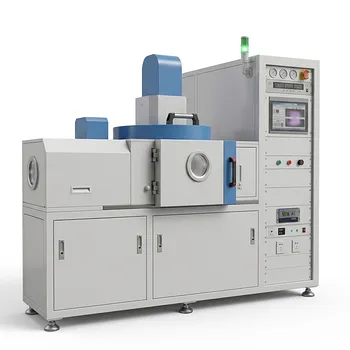
Radio Frequency Plasma Enhanced Chemical Vapor Deposition RF PECVD System for Laboratory and Industrial Thin Film Growth
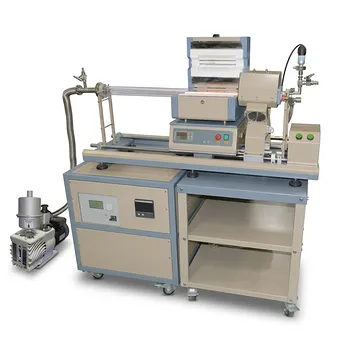
1200C Max Compact Auto-Sliding PECVD Furnace with 2 Inch Tube and Vacuum Pump
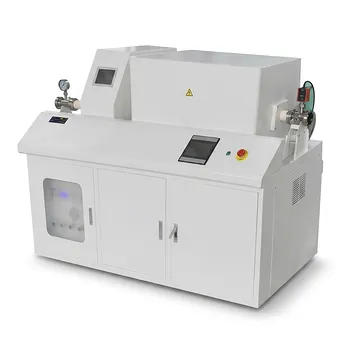
Chemical Vapor Deposition CVD System Slide PECVD Tube Furnace with Liquid Gasifier PECVD Machine
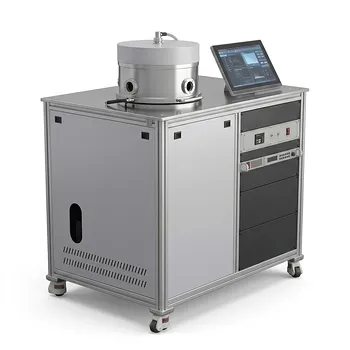
Inclined Rotary Plasma Enhanced Chemical Vapor Deposition PECVD System for Thin Film Deposition and Nanomaterial Synthesis
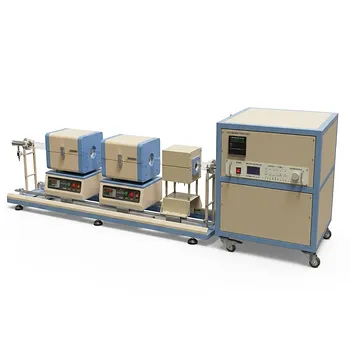
1200C Dual Sliding Tube Furnace with Dual Tubes and Flanges for PECVD Processes
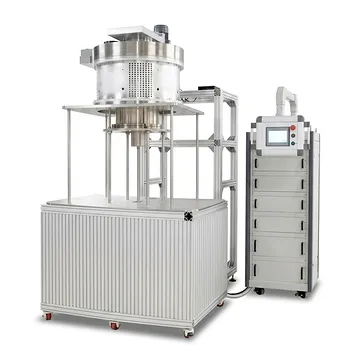
915MHz MPCVD Diamond Machine Microwave Plasma Chemical Vapor Deposition System Reactor
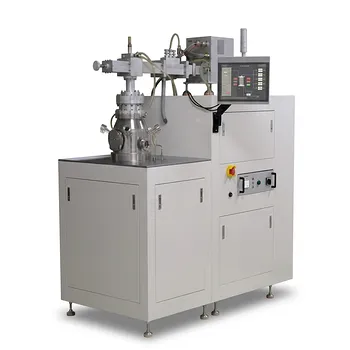
Cylindrical Resonator MPCVD Machine System for Microwave Plasma Chemical Vapor Deposition and Lab Diamond Growth
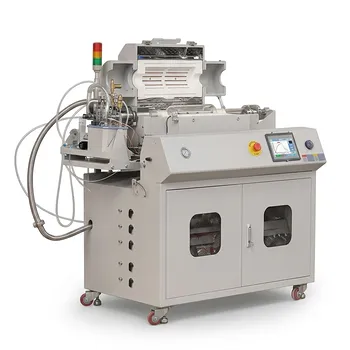
Versatile Chemical Vapor Deposition Tube Furnace System for Advanced Material Research and Industrial Coating Processes
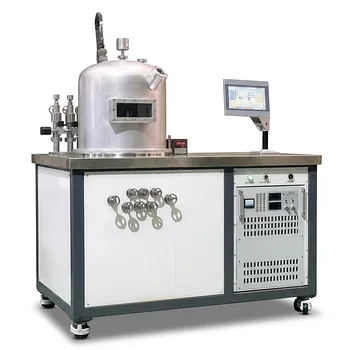
HFCVD Machine System for Nano Diamond Coating on Drawing Dies and Industrial Tools