What is the role of a high-purity Quartz Boat in semiconductor sulfidation? Ensure high purity and reaction precision.
Updated 3 months ago
High-purity quartz boats are foundational components in semiconductor fabrication, acting as chemically inert carriers for precursors such as sulfur powder and metal oxides. Their primary role is to maintain the chemical integrity of the reaction by resisting extreme temperatures and preventing unwanted chemical side reactions with corrosive sulfur vapors. This ensures that the final semiconductor material achieves the precise stoichiometric composition and high purity required for high-performance electronic applications.
The high-purity quartz boat provides a stable, non-reactive environment that protects semiconductor precursors from contamination while facilitating the uniform thermal and gas distribution necessary for high-quality material synthesis.
Ensuring Chemical Purity in Corrosive Environments
Resistance to Corrosive Sulfur Vapors
During sulfidation, the carrier is exposed to highly reactive sulfur vapor or corrosive gases like carbon disulfide ($CS_2$). High-purity quartz is uniquely chemically inert, meaning it does not react with these vapours even at elevated temperatures. This prevents the degradation of the carrier and ensures that the sulfur remains available solely for the intended reaction with the precursor.
Prevention of Impurity Migration
The use of high-purity quartz (reaching 99.9% or higher) is critical to prevent the introduction of metallic or non-metallic impurities into the semiconductor. Because the boat does not break down or react with the materials it holds, such as molybdenum trioxide ($MoO_3$) or tungsten oxides, the resulting crystals maintain their intended electronic properties. This is vital for the production of high-conductivity materials like perovskite powders or transition metal dichalcogenides.
Thermal Stability and Precision Control
High-Temperature Structural Integrity
Sulfidation processes often occur at temperatures ranging from 800°C to 1000°C. High-purity quartz boats exhibit exceptional thermal resistance, allowing them to maintain their shape and structural integrity without deformation. This stability ensures that the precursors remain in their designated zones within the furnace, which is essential for repeatable, high-yield manufacturing.
Optimizing Reactant Concentration
The geometry of the boat plays a significant role in Chemical Vapor Deposition (CVD). By acting as a physical boundary, the boat—and sometimes internal quartz liners—restricts the flow space for carrier gases. This increases the local concentration of reactants near the substrate, which directly improves the uniformity and growth rate of thin-film depositions.
Uniform Heating and Gas Diffusion
The flat, shallow design of most quartz boats maximizes the contact area between solid catalyst powders and reaction gases. This design promotes efficient gas diffusion and ensures that the sample is heated uniformly within the furnace chamber. Such consistency is critical for regulating the morphology and growth rate of crystals, such as Molybdenum Disulfide ($MoS_2$).
Understanding the Trade-offs
Fragility and Thermal Shock
While quartz is thermally resistant, it is inherently brittle and susceptible to mechanical failure if handled improperly. Rapid cooling or heating cycles can induce thermal shock, leading to cracks that may compromise the vacuum or introduce contaminants in future runs.
Chemical Limitations with Alkaline Agents
Although quartz is inert to most acids and sulfur compounds, it can be vulnerable to strong alkaline activators (like KOH) at very high temperatures. In these specific environments, while it may still be the best available option for preventing cross-contamination, the boat itself may undergo slow surface etching. Users must balance the need for purity with the gradual degradation of the quartz hardware in these specialized conditions.
How to Apply This to Your Project
Recommendations for Material Synthesis
- If your primary focus is Phase Purity: Use a high-purity quartz boat to ensure no metallic ions migrate from the container into your semiconductor lattice during high-temperature annealing.
- If your primary focus is Uniform Thin-Film Growth: Select a boat with a geometry that optimizes local vapor pressure and place it strategically within the furnace to control the concentration of precursor vapors.
- If your primary focus is Scalability: Prioritize boats with a high surface-area-to-volume ratio to ensure entire batches of precursor powders react uniformly with the sulfurizing atmosphere.
The high-purity quartz boat is not merely a container, but a critical process tool that secures the chemical and structural excellence of modern semiconductor materials.
Summary Table:
| Key Feature | Role in Sulfidation Process | Primary Material Benefit |
|---|---|---|
| Chemical Inertness | Resists corrosive sulfur & CS2 vapors | Prevents precursor contamination |
| 99.9% High Purity | Eliminates metallic ion migration | Maintains stoichiometric precision |
| Thermal Stability | Sustains 800°C to 1000°C environments | Ensures consistent reactant placement |
| Optimized Geometry | Restricts gas flow/increases local pressure | Improves thin-film deposition rates |
| Surface Design | Maximizes gas-solid contact area | Promotes uniform crystal morphology |
Elevate Your Material Synthesis with THERMUNITS Precision
Achieving the perfect stoichiometric composition in semiconductors requires both high-purity quartz carriers and the most reliable thermal environments. THERMUNITS is a leading manufacturer of high-temperature laboratory equipment for material science and industrial R&D. We empower researchers and manufacturers with a comprehensive range of thermal processing solutions tailored for advanced synthesis.
How We Add Value to Your Process:
- Advanced CVD/PECVD Systems: Perfectly engineered for thin-film growth and complex sulfidation processes.
- Versatile Furnace Range: We offer Muffle, Vacuum, Atmosphere, Tube, Rotary, and Hot Press furnaces designed for uniform heat distribution.
- Specialized Industrial Solutions: From Electric Rotary Kilns and Vacuum Induction Melting (VIM) to high-precision Dental Furnaces and Thermal Elements.
- R&D Excellence: Our equipment provides the thermal stability and precision control necessary for high-performance electronic applications.
Ready to optimize your heat treatment workflow? Contact our technical team today to discuss how our solutions can enhance your lab's efficiency and material quality!
References
- Long Chen, Hongyan Wang. Improvement of Photocatalytic and Photodegradable ZnSe Nanorods by a Vulcanization Strategy. DOI: 10.1021/acsomega.4c05603
Mentioned Products
- 1100°C High Temperature Quartz Chamber Furnace 8 Inch OD with 7.6 Liter Capacity and Vacuum Atmosphere Capability
- High Temperature Vertical Atmosphere Controlled Furnace with Automatic Bottom Loading and 1700°C Capacity for Advanced Material Research
- High Temperature Cold Wall High Vacuum Chamber Furnace 1400C for Advanced Material Processing
- 1100C High Temperature Vacuum Crucible Furnace with Quartz Chamber for Thermal Processing and Sintering
- High Throughput 1200C Four Channel Tube Furnace with 3 Inch Quartz Tubes for Multi Zone Annealing and Material Research
People Also Ask
- Why is a quartz tube furnace necessary for phosphorus-doped MoS2/GO preparation? Ensure Purity & Precise Synthesis
- Benefits of high-vacuum quartz tube furnaces with N2 for Co3O4 nanosheets: Purity and Structural Integrity.
- What conditions does a quartz tube furnace provide for AlxCoCrFeNi steam corrosion tests? Achieve Precise R&D Control.
- Why is high-temperature annealing in a quartz tube furnace done after HfO2 deposition? Unlock peak film performance.
- Why is a high-purity quartz tube used for SP-Fe3O4-C? Ensure Chemical Purity & Catalytic Stability

Tech Team · ThermUnits
Last updated on Jun 03, 2026
Related Products
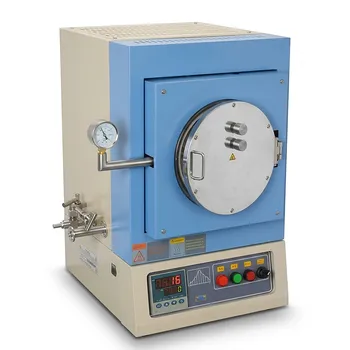
1100°C High Temperature Quartz Chamber Furnace 8 Inch OD with 7.6 Liter Capacity and Vacuum Atmosphere Capability
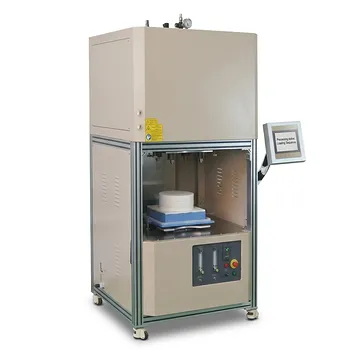
High Temperature Vertical Atmosphere Controlled Furnace with Automatic Bottom Loading and 1700°C Capacity for Advanced Material Research
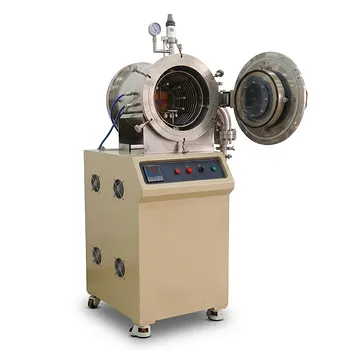
High Temperature Cold Wall High Vacuum Chamber Furnace 1400C for Advanced Material Processing
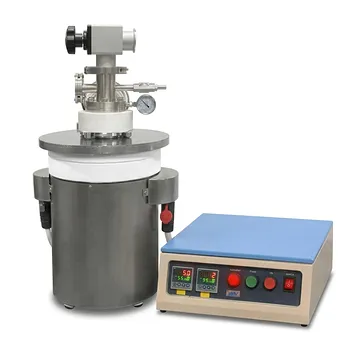
1100C High Temperature Vacuum Crucible Furnace with Quartz Chamber for Thermal Processing and Sintering
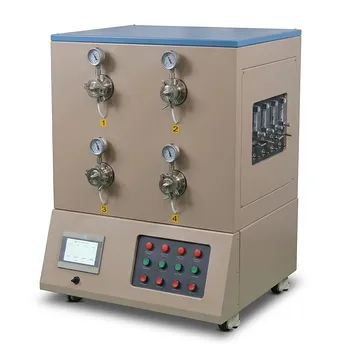
High Throughput 1200C Four Channel Tube Furnace with 3 Inch Quartz Tubes for Multi Zone Annealing and Material Research
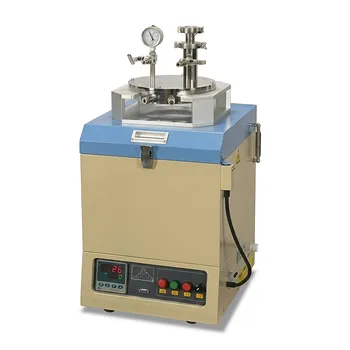
Vertical Vacuum Furnace 1100C High Temperature 8 Inch Quartz Chamber Water Cold Flange System
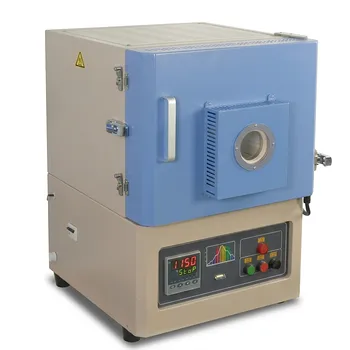
High Temperature Benchtop Muffle Furnace with Quartz Observation Window for Thermal Imaging and Material Analysis

High Temperature Automated 5 Inch Tube Furnace for Autonomous Material Research and Advanced Laboratory R&D
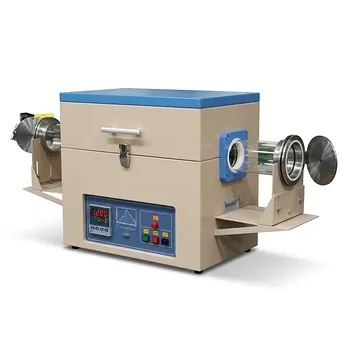
High Temperature 1200C Split Tube Furnace with Hinged Vacuum Flanges and 4 Inch Quartz Tube for Laboratory Research

1200°C 5 Inch Vertical Quartz Tube Furnace with Stainless Steel Vacuum Flanges